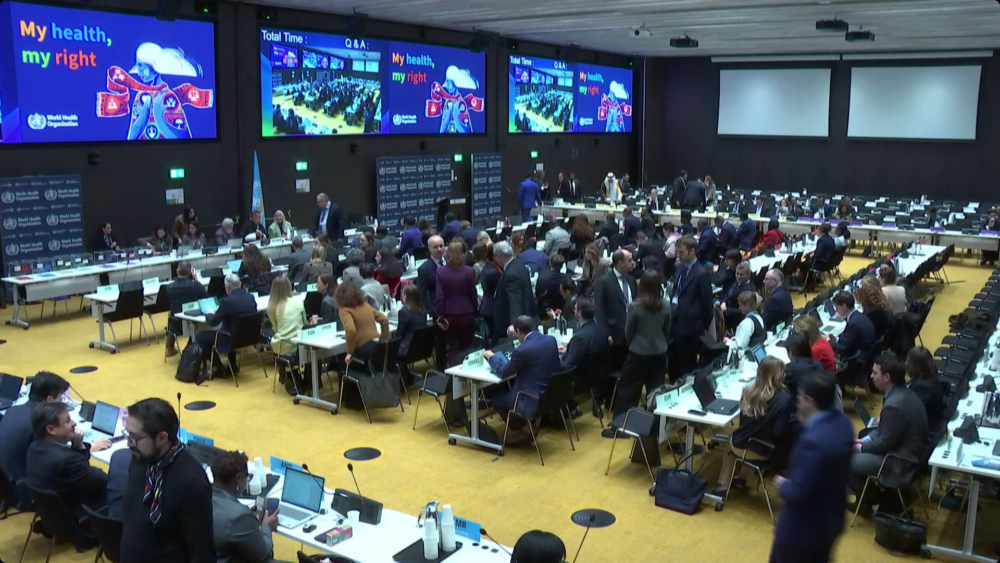
Two months ahead of January’s closed-door shortlisting vote, only Belgium and Spain have filed official campaign expenditure records for their candidates with WHO. While cross-regional contender Gevorg Tamamyan disclosed his budget to Health Policy Watch and two candidates pledged future filings, two remain completely unaccounted for.
Only two of seven candidates seeking to lead the World Health Organization (WHO) have filed official campaign spending reports with the secretariat so far, and only one other has disclosed budget figures publicly. This uneven compliance shows that the WHO election transparency is sharply divided as contenders head into the decisive January shortlisting vote.
The World Health Assembly established the electoral code of conduct in 2013, and updated it in 2020, urging contenders to disclose their campaign activities, funding amounts, and financial sources on a dedicated public WHO portal.
“All member states and candidates should consider promptly disclosing their campaign activities … together with the amount and source of all funding,” states the code.
Yet, official portal records and enquiries by Health Policy Watch show that four candidates have released no financial figures whatsoever.
Belgium and Spain lead with partial campaign spending filings
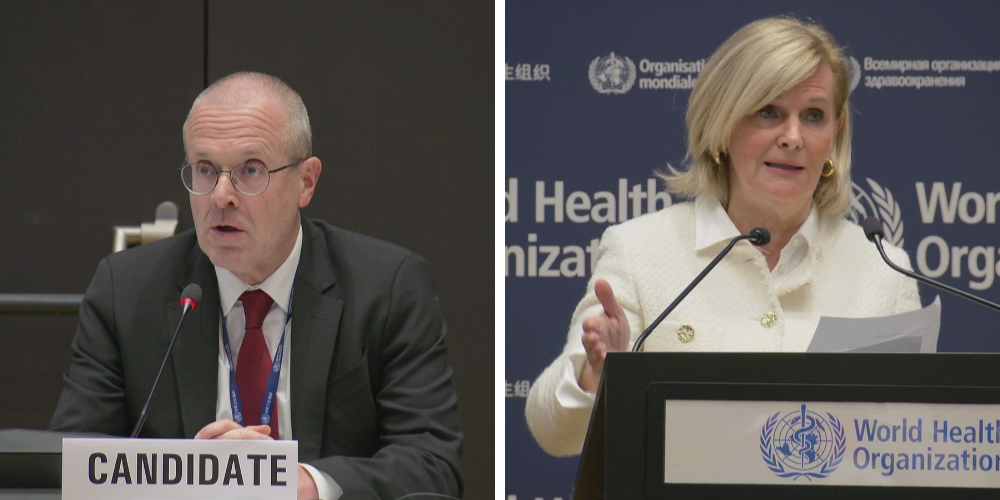
The compliance gap creates a stark contrast between European contenders and the rest of the field. Official disclosures submitted to the secretariat reveal itemised promotional expenditures for only two candidates.
Belgium submitted financial filings for Hans Kluge, reporting approximately $29,900 in travel and promotional events between August and 11 November. Public health funds and personal contributions financed these activities, with diplomatic logistical assistance from Belgium’s foreign ministry.
Spain’s nominee, María Neira, itemised €14,510 for activities between August and mid-November, alongside CHF1,210 for flights, hotels, and diplomatic receptions. Spain’s health ministry covered her team costs, while the candidate funded several of her travel legs herself.
Neither filing provides an overall campaign budget ceiling through the May 2027 election. Both submissions capture only retrospective travel and hospitality costs incurred through mid-November.
Tamamyan is sole candidate to disclose budget ceiling
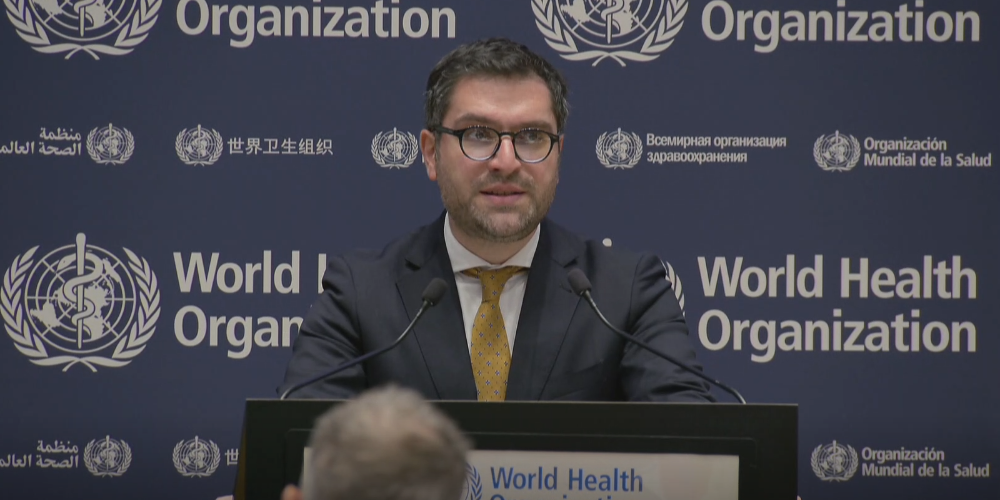
By contrast, Gevorg Tamamyan disclosed his campaign budget exclusively in response to a query by Health Policy Watch. Nominated cross-regionally by Botswana, the Armenian paediatric oncologist estimated an overall campaign ceiling of $500,000 through May 2027.
Total expenditure has reached approximately $60,000 by mid-November, including $40,000 dedicated to international travel and promotional materials.
“So far, I have financed the campaign primarily from my own funds, with additional support from friends and family,” said Tamamyan in a written response.
He stated that Botswana has provided no public money nor assigned diplomatic personnel to his bid, adding that he will submit an itemised financial filing to the secretariat ahead of the WHO Executive Board session.
To finance the remainder of his bid, Tamamyan has established a dedicated foundation in Armenia to collect philanthropic and individual donations, making him the only contender relying on a formal external fundraising vehicle. He pledged that the entity will publicly disclose donor identities and screen contributions against WHO non-state actor rules to prevent conflicts of interest.
Major powers yet to disclose financial figures
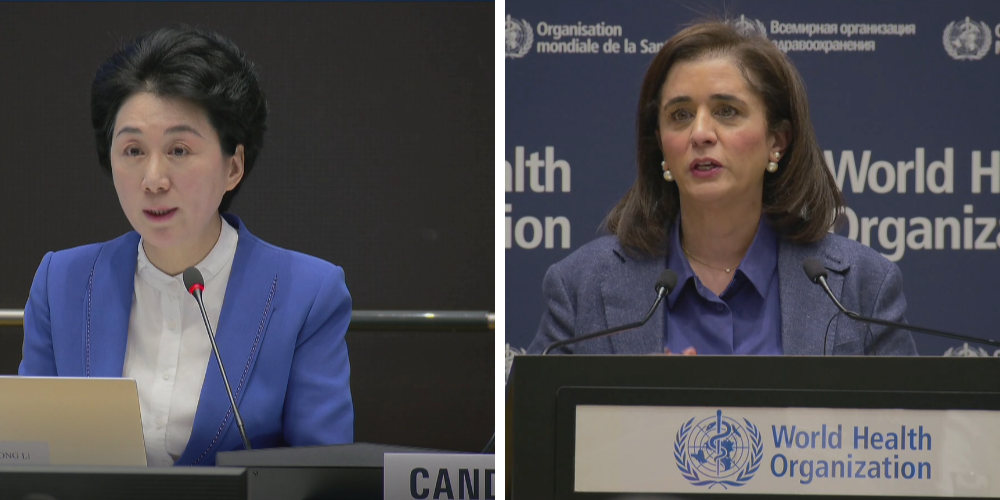
Other major contenders have released neither budget totals nor expense sheets. Candidates nominated by regional powers and emerging economies have kept their campaign treasuries confidential.
In a written response to Health Policy Watch, Saudi Arabia’s nominee, Hanan Balkhy, affirmed that trust must begin with the electoral process itself. Her platform emphasised institutional integrity ahead of the Geneva candidate forums.
“The campaign is committed to meeting the disclosure expectations set out in the WHO’s Code of Conduct,” said Balkhy’s campaign in a written statement.
Her team added that relevant information will reach the secretariat through established channels, but the campaign declined to provide figures regarding public funds or overall spending.
China’s nominee, Song Li, adopted a similar procedural stance in response to questions about her finances. She affirmed that all her campaign activities comply with the WHO Code of Conduct.
“Information regarding the enquiries on campaign expenditures, funding sources, and related disclosures will be published to the WHO,” said Song in a written response. She added that all disclosures will follow official WHO rules and procedures.
Silence from Qatar and Indonesia
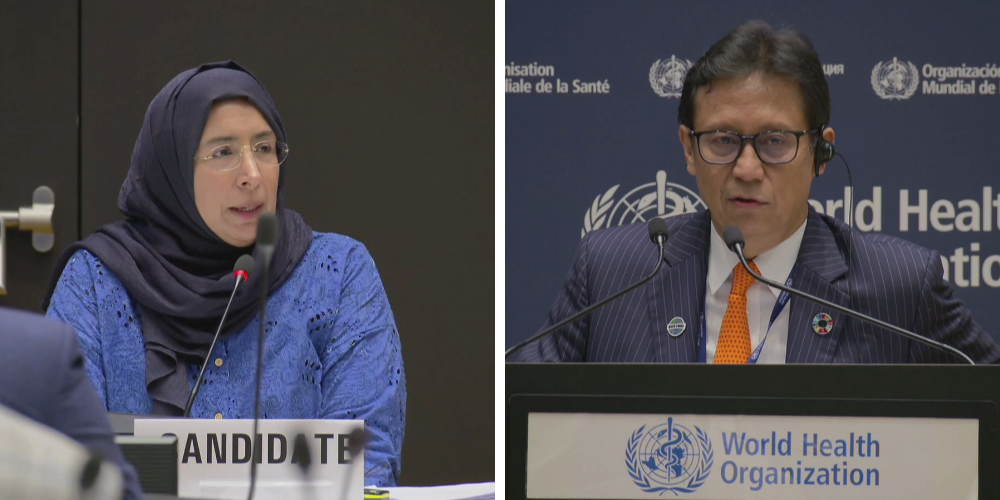
Two prominent candidates have remained silent regarding their promotional financing. Neither nominee has filed disclosures with the secretariat nor answered inquiries.
Qatar’s contender, Hanan Al Kuwari, did not respond to formal inquiries sent to her campaign and Qatar’s mission in Geneva. Follow-up requests sent ahead of the November candidate forum also went unanswered.
The former Qatari health minister serves as public health adviser to Qatar’s prime minister. Her campaign has not clarified whether state advisory resources remain separate from electoral outreach.
Indonesia’s Health Minister, Budi Gunadi Sadikin, also did not respond to repeated requests for comment. Detailed questions submitted to his team and Indonesia’s diplomatic mission in Geneva produced no financial details.
Sadikin has campaigned actively at international gatherings, pointing to his private banking background and managerial discipline. Yet, his campaign has published no records detailing how government resources support his international travel.
Public travels challenge election equity
The lack of financial filings contrasts sharply with intensive campaigning documented across the globe. Several contenders logged dozens of foreign stops on public social media accounts without filing corresponding expenses.
The World Health Assembly urged restraint regarding campaign travel. The code explicitly requests that candidates limit bilateral visits to prevent excessive expenditure and inequality.
Yet independent tracking indicates that leading contenders engaged health delegations representing more than 100 countries through high-level bilateral outreach and regional summits between August and November. Candidates frequently arranged meetings alongside technical conferences rather than relying solely on statutory governing body sessions.
This global travel pace exposes structural differences between internal WHO officials and external government ministers. Internal contenders took special leave from regional director posts to separate their official duties from campaigning. But sitting ministers face no comparable obligation under national laws. Government officials continue with routine state diplomacy, making campaign engagements difficult to distinguish from official state missions.
Legal blind spots weaken accountability
The widespread absence of published financial records highlights systemic weaknesses within the electoral framework. Member states never gave the secretariat the legal authority to investigate candidates or compel disclosures.
Legal experts note that the code functions strictly as a non-binding political understanding. The secretariat serves merely as a passive bulletin board for documents submitted voluntarily by member states.
The code explicitly urges member states and contenders to disclose their campaign activities and funding sources “promptly” to the Secretariat. That requirement anchors expectations of real-time transparency across the electoral period.
Former WHO legal counsel Gian Luca Burci, now an adjunct professor at the Geneva Graduate Institute, pointed directly to this operative standard.
“‘Promptly’ is a rather demanding adverb,” said Burci, responding to a Health Policy Watch query. “In my view, it means disclosing funding and activities as they are planned or implemented or as shortly thereafter as possible.”
He observed that retrospective reporting, long after events occur, undermines the purpose of public transparency. Leaving the official portal blank while campaigns proceed across multiple continents bypasses the spirit of the code.
Bilateral aid disclosures remain sparse
Transparency around bilateral state assistance remains equally limited. The electoral framework asks proposing governments to reveal foreign assistance to prevent perceptions of vote-buying.
“Member states proposing persons for the post of Director-General should consider promptly disclosing grants or aid funding… in order to ensure full transparency,” states the code.
Thus far, only the Belgian government has submitted an official report documenting bilateral financial assistance. Its disclosure detailed multi-year development aid distributed across 21 partner nations, including extensive cooperation with African states.
Belgium stated that all cooperation funds reflect pre-existing commitments rather than electoral inducements. None of the other six nominating governments has published bilateral assistance records through the election portal.
Asked about the lack of published filings, a WHO spokesperson told Health Policy Watch that the portal remains up to date. The spokesperson explained that submissions appear publicly as soon as the secretariat receives and translates them into all six official languages.
Candidates have less than two months to disclose their finances before member states convene in Geneva. The Executive Board will gather on 25 January 2027 to shortlist candidates behind closed doors.
Follow Health Policy Watch’s full coverage of the 2027 race on our WHO Director-General election page:
Image Credits: WHO, Felix Sassmannshausen/HPW, Thorkild Tylleskar.
Combat the infodemic in health information and support health policy reporting from the global South. Our growing network of journalists in Africa, Asia, Geneva and New York connect the dots between regional realities and the big global debates, with evidence-based, open access news and analysis. To make a personal or organisational contribution click the donate button below.