‘WHO’s Biggest Advocate, Most Candid Critic’ – And an Inside Reformer?
Nominated by Belgium, Dr Hans H. Kluge enters the contest for WHO Director-General after a career spanning frontline missions to leading WHO’s 53-nation European region through COVID-19 and the war in Ukraine. Re-elected as regional director in 2024, the Belgian physician brings a quarter-century of WHO insider experience to an election defined by severe financial contraction and geopolitical strain.
Rather than adopting the bureaucratic caution typical of senior WHO leadership, Kluge grounds his campaign in a direct critique of the agency he serves. In his election manifesto, “Rebuilding the World Health Organization Together”, he positions himself as WHO’s “biggest advocate, yet also its most candid critic”.
However, his central challenge will be proving that a 25-year institutional insider can convincingly dismantle WHO’s bureaucratic inertia, while reassuring Global South member states that a European candidate can deliver genuine decentralisation and equity.
Four reform pillars and a primary care signature initiative

Kluge’s campaign platform centres on the argument that WHO must undergo structural reform to preserve its technical authority and political neutrality in an increasingly multipolar world. Bluntly characterising the organisation as “overstretched, under-focused, overly bureaucratic, with rising inefficiencies, fragmented financing and complex governance,” Kluge presents an ambitious platform for structural renewal.
To move beyond what he terms “yesterday’s model,” his platform articulates four foundational pillars of institutional restructuring – modern governance, sustainable financing, a networked “One WHO”, and workforce modernisation – designed to support four substantive global health priorities.
His core operational commitments focus on:
- Devolving Geneva’s power: Kluge promises to shift operational weight and financial resources away from Geneva towards country offices and regional structures. A compact headquarters will focus strictly on core normative functions and global standards. To reduce administrative overhead, he advocates leveraging national public health institutes and WHO Collaborating Centres, while deepening ties between regional directors and WHO representatives to create interregional networks linking nations facing shared challenges.
- Overhauling the funding model: To address chronic underfunding and donor earmarking, Kluge commits to securing the agreed baseline of 50% assessed contributions while expanding flexible, multi-year voluntary funding aligned with member state priorities.
- Modernising governance: Kluge pledges a review of the governing body working methods within his first months in office to streamline decision-making. Aligning his platform with Global South initiatives like the Accra Reset, he advocates for affordable technology tailored to low-resource settings, proposes appointing a WHO special envoy for Small Island Developing States (SIDS), and aims to scale up regional mechanisms such as pooled procurement frameworks.
- Workforce and organisational modernisation: Updating WHO’s human resources framework, Kluge commits to enforcing zero tolerance for harassment, improving geographic representation, and upskilling staff in artificial intelligence and emotional intelligence. Crucially, his updated platform emphasises that retaining healthcare workers requires professional development, improved working conditions, and family support, rather than relying solely on pay adjustments.
These structural pillars support four substantive health priorities: strengthening health security, tackling the triple health agenda (maternal/child health, infectious diseases, and NCDs), framing disease prevention as a core economic policy, and advancing universal health coverage (UHC). To turn prevention into economic strategy, Kluge calls for lifting the current 2-3% budget allocation for primary prevention into broader fiscal planning, explicitly integrating youth mental health and social media impacts, while establishing national workforce investment compacts with the International Labour Organization (ILO) and the Organisation for Economic Co-operation and Development (OECD).
Uniting these priorities, primary health care (PHC) serves as his signature initiative heading into the 50th anniversary of Alma-Ata in 2028, backed by a unified PHC data dashboard and responsible frontline medical AI. Finally, his health security agenda introduces three concrete protection mechanisms for health workers in conflict zones: a head-of-state coalition, an independent WHO rapporteur, and a “Park of Remembrance” at Geneva headquarters.
Seventeen years at WHO European region, shaped by crisis response

This focus on the security of healthcare personnel in conflict zones is forged by Kluge’s own formative experiences on the humanitarian front lines.
Born in Belgium in 1968 into a family of medical professionals, Kluge qualified in medicine, surgery, and obstetrics at the Catholic University of Leuven in 1994 before specialising in tropical medicine at the Institute of Tropical Medicine in Antwerp. Following a brief period as a general practitioner in Belgium, he joined Médecins Sans Frontières (MSF), coordinating frontline emergency health interventions during civil conflicts in Liberia and Somalia.
He subsequently moved to the post-Soviet region to direct tuberculosis control programmes across Siberian prisons, joining WHO in 1999 at its Moscow office as head of the TB and TB-HIV Project. Serving in Myanmar from 2004 to 2009, he co-created the $100 million Three Diseases Fund to preserve HIV, TB, and malaria care following the Global Fund’s withdrawal, safely bypassing state payment barriers to initiate the country’s first multidrug-resistant TB treatment programme.
In 2009, Kluge transferred to the WHO Regional Office for Europe in Copenhagen, and was appointed as director of health systems and public health in 2010. In this role, he worked directly with Greece to preserve primary healthcare services during the European debt crisis and coordinated implementation of the 2018 Astana Declaration on Primary Health Care.
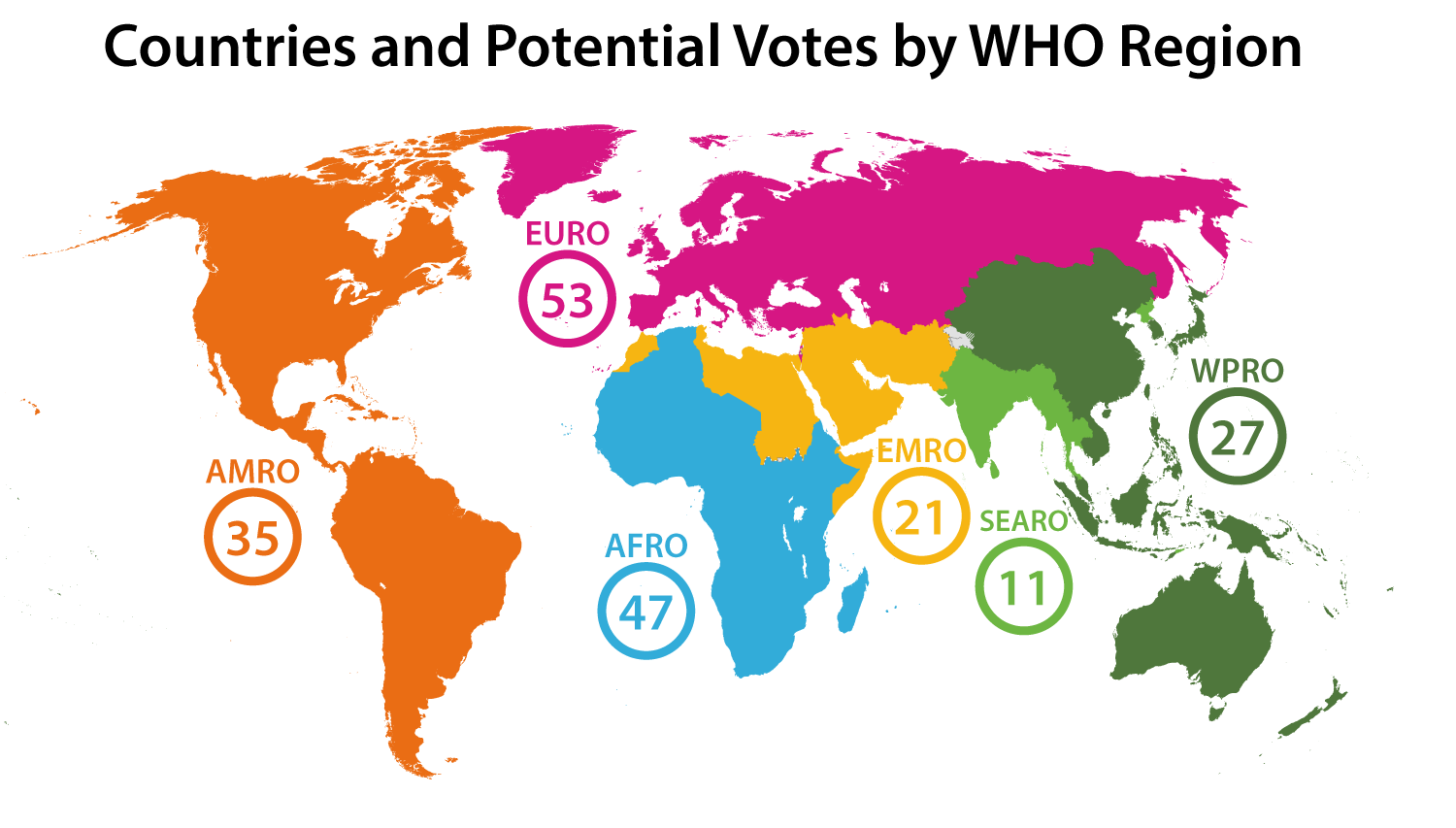
Leveraging a multilingual diplomatic profile – he is fluent in English, French, German, Russian, and Dutch – Kluge was appointed regional director for Europe in 2019 and unanimously re-elected for a second term in 2024. Under his leadership, Kluge guided 53 Member States through the COVID-19 pandemic, mpox outbreaks, and the health crisis arising from the war in Ukraine, while establishing the Pan-European Commission on Climate and Health to build community resilience against extreme weather.
Uphill battle for a European candidacy

While Kluge’s track record in Copenhagen speaks to his standing as a capable regional executive, his candidacy sits at the intersection of European financial support and shifting multilateral dynamics.
Following the withdrawal of the United States, European member states collectively represent WHO’s most vital public funding base. Belgium itself has demonstrated financial stability: while its overall recorded envelope contracted slightly from $28.15 million (2024-2025) to $25.32 million (2026-2027) due to lower earmarked voluntary contributions, Brussels actively increased its compulsory assessed dues from $9.51 million to $10.65 million and maintained steady, flexible Core Voluntary funding ($9.41 million, up from $9.30 million).
However, translating this donor stability into votes at the World Health Assembly and across the Global South in particular remains Kluge’s central campaign challenge, as competing candidates from the Eastern Mediterranean, South-East Asia, and Western Pacific regions push for leadership.
This is further complicated by Belgium’s prominent footprint in United Nations executive leadership – highlighted by former Prime Minister Alexander De Croo assuming leadership of UNDP in December 2025 – and compounded by diplomatic reservations toward Europe amidst broader North-South equity divides over technology access.
Struggle for credible reform from the inside

Crucially, Kluge must overcome fundamental questions regarding his status as an established institutional insider. Having served as WHO regional director for Europe under Dr Tedros Adhanom Ghebreyesus since 2020, he has participated directly in shaping the administrative and leadership structures he now pledges to overhaul.
Notably, the controversy surrounding the withdrawal of WHO Europe’s report on Italy’s early COVID-19 response raised lasting questions regarding how his leadership would insulate public health data and technical evaluations from political and administrative leverage.
Navigating such political friction is already central to his executive record. His diplomatic engagements with senior Russian officials following the 2022 invasion of Ukraine triggered sharp backlash among Ukrainian officials as well as Baltic and Nordic delegations, who argued that the high-level contact crossed red lines of political legitimisation. However, senior European officials, speaking to Health Policy Watch on condition of anonymity, defended the outreach as pragmatic diplomacy essential for maintaining vital technical health channels and humanitarian dialogue.
Beyond these broader political hurdles, Kluge faces scrutiny regarding the concrete operational realism of his reform roadmap. He must prove that shifting financial and operational weight to country offices can work despite heavily earmarked voluntary funding, while demonstrating how new mechanisms – such as appointing an independent WHO rapporteur to monitor facility attacks – can avoid introducing further political friction into WHO’s technical mandate.
Global outreach to assemble a cross-regional coalition

Following his transition to formal campaign leave in August, Kluge launched an intensive global campaign tour to assemble a cross-regional coalition beyond his European base. This international itinerary – taking him across Latin America, East Asia, North America, and the Middle East – prevented his in-person attendance at the World Health Summit candidate exchange in Berlin.
Rather than conducting routine courtesy calls, he engaged in direct caucusing across key geopolitical caucuses: signalling efforts to re-engage the United States through meetings in Washington with National Institutes of Health Director Dr Jayanta Bhattacharya on lives-saved metrics and AI governance; presenting his manifesto to 15 Eastern Mediterranean Member States in Cairo on country-first delivery in fragile settings; endorsing the Accra Reset and voluntary mRNA technology transfer in Beijing and Haikou with Chinese health leadership; and reviewing frontline crisis response with Central American delegates in Panama.
Pitching himself as “WHO’s biggest advocate, yet also its most candid critic”, Kluge presents member states with a central question: whether a veteran insider can deliver genuine structural reform from within, or whether his background represents institutional continuity at a time of severe financial and governance challenges.
Note: Health Policy Watch reached out to Kluge and his campaign for comments but had not received a response by the time of publication.
Image Credits: WHO, WHO/Adam Mørk, Hans Kluge/LinkedIn.