Planetary Health Pioneer, Geneva Veteran, Civil Society Candidate – And a Realist in a Changing Climate?
The nomination of Dr María Neira by Spain introduces a distinct leadership paradigm to the WHO Director-General race. As former director of WHO’s Department of Environment, Climate Change and Health (2005-2025) and a former Spanish vice minister of health, she enters the election as an internationally recognised authority on primary prevention and planetary health.
Backed by a broad coalition of civil society groups and scientific networks, Neira has formally launched her official manifesto, “Global Health Vision,” alongside her presentations at the World Health Summit in Berlin and responses to Health Policy Watch. Anchored by her central proposition that “health should be the compass for a changing world,” her platform asserts that WHO must move beyond reactive emergency response to drive primary prevention and strengthen country-level capacity to act.
Positioning environmental health as the frontline of disease control, Neira frames climate resilience, clean water, and primary prevention not merely as environmental policies, but as WHO’s most essential bulwark against cascading global health emergencies and increased pandemic threats. However, her central challenge will be convincing sceptical and disengaged member states that a candidate propelled by civil society can govern as a pragmatic realist, capable of steering an agency confronting severe budget contraction, geopolitical pushback against climate policies, and structural overextension.
Blueprint for primary prevention and planetary health

Anchored in primary prevention, planetary health governance, and normative leverage, Neira’s official manifesto sets out five commitments to guide the WHO towards a more focused and accountable future:
- Primary prevention as a fiscal strategy: Her platform elevates clean air, heat protection, universal safe drinking water, and sanitation as non-negotiable health baselines, while addressing NCD risk factors (tobacco, alcohol, unhealthy diets, physical inactivity). She advocates using WHO’s normative authority to evaluate the health impact of investments in non-health sectors – such as energy, agriculture, transport, and urban planning – reframing prevention not as a financial burden, but as a foundation for prosperous, resilient economies.
- Data integration and AI governance: The manifesto calls for deploying artificial intelligence and advanced analytics to consolidate WHO’s dispersed technical guidance and databases, making actionable evidence directly accessible to country ministries. It also advocates for WHO to lead in setting global governance standards for AI in healthcare while safeguarding independent scientific advice from political or financial interference.
- Country-level delivery over headquarters directives: Shifting evaluation toward measurable national outcomes, Neira’s platform focuses on building sustainable local capabilities – including public health institutions, surveillance networks, regulatory bodies, and supply chains. It explicitly emphasises investment in the full multidisciplinary health workforce, from clinical specialists to community health workers, as essential to national health security.
- Institutional focus and predictable financing: Addressing WHO’s structural and financial constraints, the platform proposes concentrating resources on core areas of unique organisational value while consolidating or sunsetting redundant activities. On financing, Neira supports the agreed target of funding 50% of WHO’s base budget through assessed contributions, alongside flexible voluntary funding and regular Executive Board performance reviews.
- Workplace integrity and technical impartiality: Regarding internal administration, the manifesto outlines zero-tolerance policies for harassment, bullying, and discrimination, backed by independent reporting and anti-retaliation mechanisms. Neira stresses that WHO must maintain technical impartiality across all member states and conflict zones, keeping assessments independent of political considerations.
To translate these principles into immediate momentum, Neira pledged in Berlin that within her first 100 days she will establish a specialised internal “antenna” permanently switched on to detect non-traditional health risks – specifically targeting declining global fertility rates, endocrine-disrupting chemicals, microplastics, and artificial intelligence (AI).
By placing normative leverage and primary prevention at the heart of her programme, Neira offers a blueprint designed to maximise WHO’s global reach even within the sharp realities of multilateral austerity.
From conflict zones to two decades at WHO’s Geneva core

Her campaign focus is grounded in a career that bridges frontline medical crises and top-tier global health diplomacy.
A native of Asturias, Spain, Neira completed her medical degree at the University of Oviedo before specialising in endocrinology in Paris. She forged her early professional commitment in active conflict zones, serving as medical coordinator for Médecins Sans Frontières (MSF) in refugee camps across El Salvador and Honduras. Subsequently, Neira spent five years as a public health adviser to the Ministry of Health in Mozambique, followed by service as a UN public health adviser for UNDP in Rwanda.
Her multilateral career began in 1993 when she joined WHO in Geneva as coordinator of the Global Task Force on Cholera Control, later directing the Department of Control, Prevention and Eradication. In 2002, she returned to Spain to serve as vice minister for health and consumer affairs and founding president of the Spanish Food Safety Agency (AESA, now the Food Safety and Nutrition Agency AESAN). Here, she managed national health protection and nutrition policy grounded in the universal, publicly funded principles of Spain’s National Health System.
Recruited back to Geneva in 2005 as director of WHO’s Department of Environment, Climate Change and Health, Neira spent two decades leading global initiatives on climate change, air pollution, sanitation, and occupational safety. During this tenure, she played a central role in embedding public health commitments within the Paris Climate Agreement, establishing the Alliance for Transformative Action on Climate and Health, and spearheading the global One Health framework.
Domestic campaign challenges

Notwithstanding her technical credentials, Neira’s candidacy faces distinct political and strategic hurdles as the election campaign unfolds.
Spain presents a mixed financial backdrop: Madrid’s overall recorded WHO budget envelope contracted from $42.81 million (2024-2025) to $37.57 million (2026-2027) due to shrinking voluntary contributions. Aligning with Neira’s emphasis on sustainable core financing, the Spanish government has simultaneously demonstrated firm statutory commitment by steadily raising its mandated assessed contributions from $20.54 million to $26.11 million over the same period.
Despite this financial track record, domestic political dynamics in Madrid reportedly created ministerial delays regarding her nomination. The Spanish government had simultaneously mounted high-profile campaigns for other UN agency leadership posts – nominating labour minister Yolanda Díaz to lead the International Labour Organization (ILO) and agriculture minister Luis Planas to head the Food and Agriculture Organization (FAO). Running multiple parallel UN campaigns risks diluting Spain’s political leverage across voting caucuses, a challenge further complicated by domestic political headwinds facing the Spanish government.
Multilateral headwinds and the civil society counterweight

Institutionally, Neira faces scrutiny over her background as a two-decade Geneva insider (2005-2025). Despite her standing as a planetary health authority, health’s share of multilateral climate finance stagnated during her tenure, while her WHO department faced administrative downsizing and a structural merger into a broader unit.
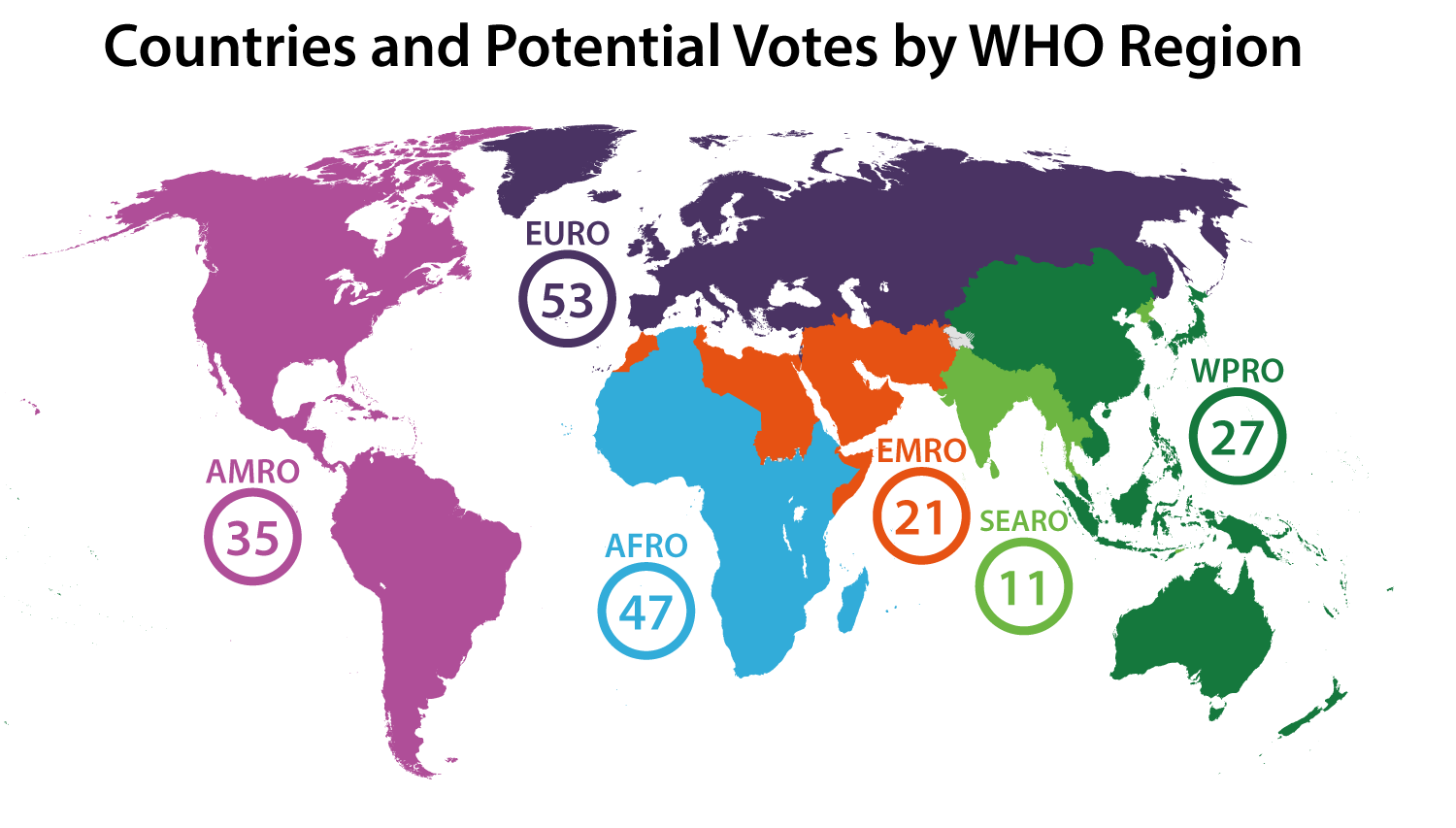
Politically, European member states do not vote as a unified regional bloc, and with two candidates nominated by European countries – Neira and Belgium’s Hans Kluge – the bloc’s support is further fragmented. A European candidacy may also face resistance among Global South member states seeking a shift away from traditional Western-centric multilateral governance.
Beyond European vote-splitting, a main hurdle will be navigating re-engagement with key states, including the United States, amid shifting domestic priorities on international climate protection and multilateral funding. Neira might also face scepticism from member states wary of a European environmental health and climate agenda that they fear could constrain industrial and broader economic development.
Addressing these concerns in a response to Health Policy Watch, she reframes planetary health as a “positive agenda.” Pointing out that “health is increasingly engineered outside the health sector,” she advocates using WHO’s normative authority to demonstrate the direct economic dividends of primary prevention before populations become patients. Investments in clean air, extreme heat protection, universal safe water, and climate-resilient hospitals represent “no-regrets investments” that safeguard fiscal budgets and national productivity regardless of a government’s stance in international climate negotiations.
While providing a strong counterweight and momentum, this civil society backing also acts as a polarising factor – propelling her candidacy while potentially heightening reservations among sceptical member states. Crucially, women’s advocacy networks and global health gender equity groups will likely also rally behind female leadership at the helm of the WHO, where only two women have served as Director-General in the organisation’s history.
A ‘compass for a changing world’?

By formally registering Neira’s nomination, Madrid provided the official statutory vehicle for a campaign underpinned by a broad global coalition of scientific societies, indigenous advocates, elders’ rights coalitions, and environmental health networks across the Global North and Global South.
Yet her status as a two-decade Geneva headquarters veteran remains a significant point of friction. To member states demanding operational decentralisation, fiscal austerity, and an end to top-down directives, an executive rooted in Geneva’s normative corridors and propelled by activist networks risks being perceived as detached from frontline, country-level realities.
Her viability hinges on convincing sceptical capitals that a headquarters insider can step outside the Geneva bubble to govern with clear-eyed pragmatism – proving that primary prevention and planetary health are hard-nosed fiscal buffers against disease. Ultimately, her candidacy offers member states a distinct strategic choice: electing a physician-environmentalist who asserts that “health should be the compass for a changing world” to reposition primary prevention and planetary health as central drivers of global health policy.
Note: This article incorporates research findings and comparative evaluations from Rifat Hossain.
Image Credits: WHO, Pixelshot via Canva, Yeray Díaz Zbida, WHO/Antoine Tardy .