Paediatric Oncologist, System Builder, Transregional Nominee – And a Test for Geneva’s Entrenched Machinery?
Dr Gevorg Tamamyan, an Armenian paediatric oncologist and professor at Yerevan State Medical University, has joined the race for WHO Director-General under a unique cross-regional nomination by the Republic of Botswana. Entering a competitive field of seven candidates as a clinician-academic and the youngest contender (born in 1987), his candidacy introduces a distinct frontline perspective to the 2027-2032 election.
His career spans clinical practice, national health system consolidation, global diplomacy, and humanitarian protection in conflict zones, and Tamamyan anchors his bid in a central thesis: “humanity first” and the principle that “geography must not decide who lives.” In response to the acute financial contraction, geopolitical rifts, administrative bloat, and emergency aid models that perpetuate dependency, he envisions a WHO that empowers countries, evaluates performance by measurable population health outcomes, communicates transparently, and restores institutional trust through delivery.
However, his central challenge will be convincing member states that a clinician-academic without sovereign ministry or UN executive experience can govern the world’s premier health agency. While his sweeping platform offers bold prescriptions for an overextended organisation, his wide-ranging proposals could conflict with operational command of dense UN statutory frameworks, civil service rules, and entrenched national interests.
From clinical execution to global reform

Translating his central campaign thesis into operational pillars – articulated in response to a candidate query by Health Policy Watch, across his social media communications and at the World Health Summit (WHS) in Berlin – his platform rests on four core commitments:
- Patient-centred governance and delivery over process: Under his “WHO for U” vision (representing the individual, unity, and universal health), Tamamyan argues that institutional trust has become dangerously fragile. He asserts that WHO must adopt the patient as its non-negotiable “North Star,” measuring success by frontline health outcomes rather than administrative activity. While member states own health delivery, he posits that WHO’s normative impact can be operationally traced through stronger national plans, disease registries, access to essential medicines, standards of care, and targeted technical support.
- Health sovereignty and the Accra Reset: Aligning directly with the principles of the Accra Reset and his nominating state, Botswana, Tamamyan advocates for country ownership over external aid dependency. He supports establishing local biomanufacturing, regional laboratory networks, and costed national health strategies across the Global South.
- Transparency, accountability, and refocused scaling: Tamamyan advocates testing interventions against real-world evidence, openly acknowledging when strategies fail, and reducing unfunded mandates. Responding to Health Policy Watch regarding which specific mandates WHO should scale back, he emphasised that scaling back cannot be a unilateral decision by the Director-General, but must be conducted transparently in partnership with member states to restore trust and unlock flexible, unearmarked financing.
- Workforce modernisation and operational HR reform: Addressing WHO’s 154-day recruitment average and demographic gap (under 1% of staff under 30), Tamamyan outlines a targeted HR overhaul. His “No Empty Desks” policy enforces a 60-day hiring cap, reclassifies interim roles as open vacancies, and mandates quarterly public tracking. Concurrently, drawing on his trajectory leading a national department at 31, he advocates giving young talent real decision-making authority and governance seats rather than awaiting conventional seniority.
To translate these principles into immediate momentum, Tamamyan outlined a focused first 100 days roadmap in Berlin. His priorities centre on empowering WHO’s internal workforce and launching direct diplomatic outreach to non-participating nations – specifically visiting the United States and Argentina to listen, address concerns, and encourage their full return to the organisation.
From paediatric oncology to health system building

By anchoring global governance reform in clinical urgency, empirical rigour, and fresh system-building, his policy roadmap directly mirrors his own professional trajectory, moving from paediatric oncology wards and hospital consolidation in Armenia to international health networks and crisis management in active conflict zones.
After earning his MD, PhD, and DSc degrees from Yerevan State Medical University (YSMU) alongside an MSc in Advanced Oncology from the University of Ulm, he completed postdoctoral research and fellowships across leading global institutions, including UT MD Anderson Cancer Center, St. Anna Children’s Hospital in Vienna, EORTC in Brussels, and Dana-Farber/Boston Children’s Cancer Center.
At the age of 31, Tamamyan translated this academic preparation into national-scale execution by leading the consolidation of Armenia’s fragmented paediatric cancer services into the unified Pediatric Cancer and Blood Disorders Center, serving as its head from 2019 to 2024. Under his direction, the centre introduced standardised multidisciplinary care protocols and established Armenia’s first dedicated paediatric oncology fellowship programme, with reported survival rates for childhood malignancies rising to approximately 80%.
Extending his system-building internationally, Tamamyan leads multi-country technical cooperation across resource-constrained settings. He serves as President of the International Society of Pediatric Oncology Asia Continental Branch (SIOP Asia) and President of Pediatric Oncology East and Mediterranean (POEM) Group, a network that encompasses 110 cancer centres across 28 countries.
Alongside his academic and clinical responsibilities, he co-founded the City of Smile Charitable Foundation to guarantee financial coverage for paediatric cancer treatment. To expand local clinical trials, he established the Armenian-based Immune Oncology Research Institute. He also co-founded OncoDaily, a global oncology media platform.
Non-aligned bid for global health sovereignty

A surprise candidate, Tamamyan’s nomination introduces an unconventional geopolitical manoeuvre: an Armenian clinician-academic nominated by the southern African nation of Botswana. He leverages his positioning as a complete outsider to WHO headquarters and national ministries to differentiate his bid from his competitors.
Reinforcing this platform, he asserts that WHO must maintain a direct physical presence in conflict zones to enforce the protection of health facilities and workers, defining WHO neutrality as active engagement with all combatant parties. He advocates for real-time mapping of vulnerable chronic care facilities before conflicts escalate and establishing protected health corridors to maintain the flow of cancer therapeutics, dialysis, and emergency evacuations.
Facing WHO’s budget contraction and recent external audit scrutiny over the WHO Foundation’s low transfer rates and heavy earmarking, Tamamyan proposes reforming the Foundation into a mass public-giving instrument. Citing the WHO Foundation’s reported $215 million mobilised across its first five years, he envisions cultivating millions of regular individual donors to generate flexible, unearmarked support for WHO’s core budget – backed by full public transparency regarding administration costs, donor acquisition, and net transfers.
Finally, addressing the declared retreat of the United States and Argentina from the WHO, Tamamyan leverages his non-aligned positioning to spearhead diplomatic outreach aimed at bringing both countries back into full WHO participation. Choosing Boston as the first stop on his campaign tour, he argues that an outsider unencumbered by regional bloc politics can restore fractured trust by listening, eliminating administrative bloat, and demonstrating that WHO membership delivers undeniable frontline value.
Political challenges for a diplomatic outsider

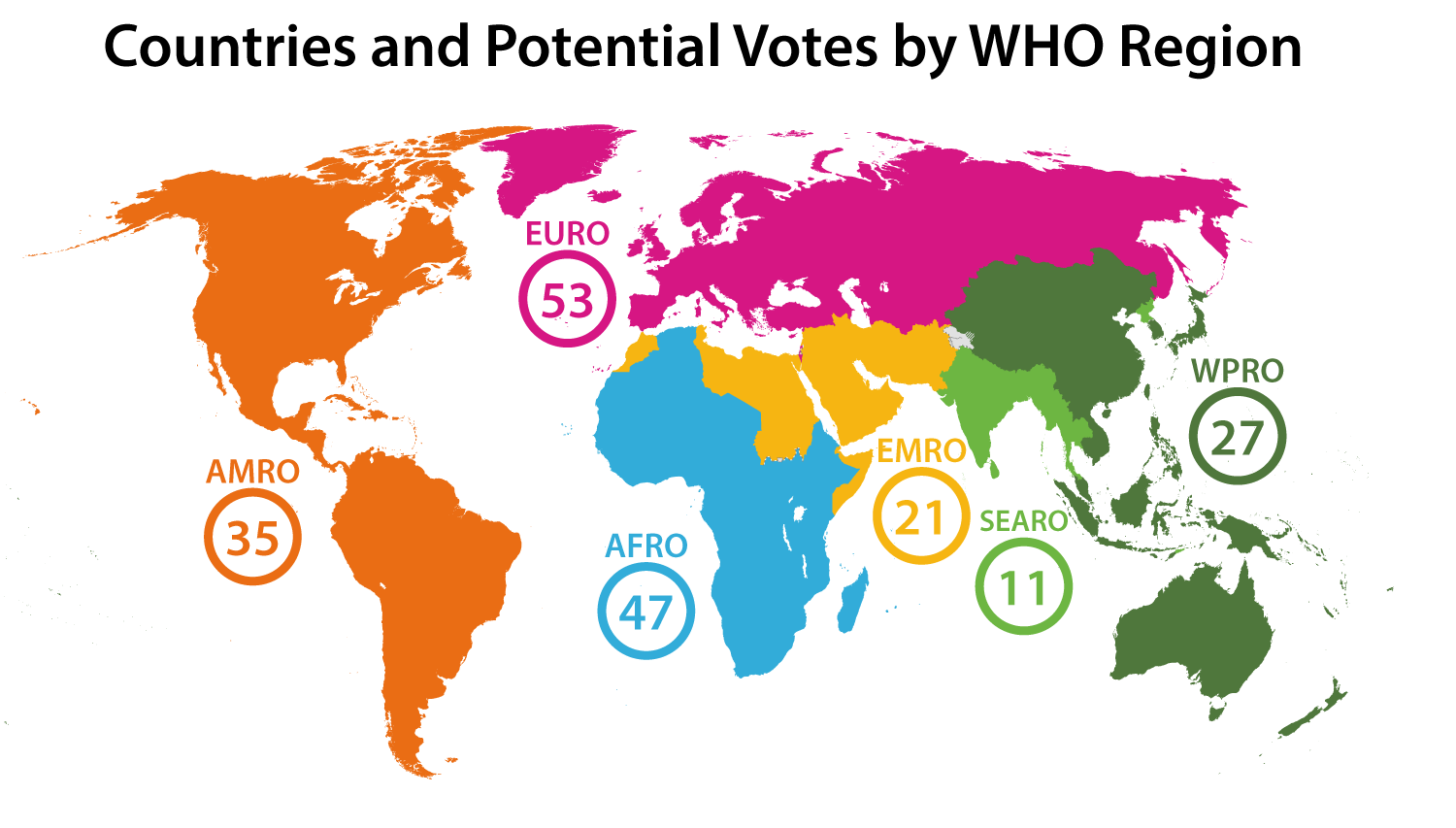
Tamamyan’s non-aligned bid faces complex geopolitical dynamics across member states accustomed to traditional regional caucuses. His nomination by Botswana challenges African Union caucuses that typically seek pan-African consensus, while his Armenian nationality adds a third European Region contender alongside Dr Hans Kluge (Belgium) and Dr María Neira (Spain).
Responding to this scrutiny, Tamamyan asserts that “health is not a bloc,” arguing that Botswana’s sponsorship reflects shared Global South alignment – specifically around country ownership, local biomanufacturing, and the Accra Reset – rather than geographic origin.
However, his lack of ministry- or UN-scale governance experience presents a central hurdle for a candidate seeking to manage a multi-billion-dollar international bureaucracy. Pushing back against this concern, Tamamyan frames the Director-General role as a system-level orchestrator: “I have never tried to be the smartest person in the room. My mission has always been to surround myself with the smartest people, empower them… and hold them accountable,” he maintains.
Finally, his clinician-first instinct exposes potential vulnerabilities regarding institutional discipline. During the World Health Summit in Berlin, Tamamyan asserted that WHO should prioritise frontline responsiveness over rigid jurisdictional limits: “We should be the place where anyone can call, can say, ‘Okay, I have this problem,’ even if it is not within our mandate, but we are able to help”. While demonstrating an agile, patient-centred ethos, this willingness to step outside formal mandates could clash with member state demands for strict focus, fiscal restraint, and an end to organisational mission creep.
Test case for transregional outsider reform

Grounding his campaign in an unconventional cross-regional nomination by Botswana, Tamamyan rejects traditional regional bloc politics in favour of his “WHO for U” platform. Setting out his core rationale for organisational reform – that “architecture begins with who we are building for” – he argues that a WHO built for people must lead rather than compete.
His diagnostic of WHO’s vulnerabilities – sluggish recruitment, unfunded mandates, and operational drag – strikes a chord across capitals eager for change.
Yet the critical friction running through his candidacy remains the divide between expansive frontline vision and granular institutional execution. In Geneva, promises of unbureaucratic overhaul inevitably collide with rigid civil service statutes, binding legal frameworks, and the fiscal discipline demanded by member states.
Ultimately, Member States face a fundamental choice between seasoned political executives and an outsider offering bold, unvetted ambition.
Image Credits: Global Health Dialogues/Youtube, Felix Sassmannshausen/HPW, Diana2198 via Wikipedia, Yuri Shkoda via Canva, WHO/Antoine Tardy , Gevorg Tamamyan via LinkedIn .