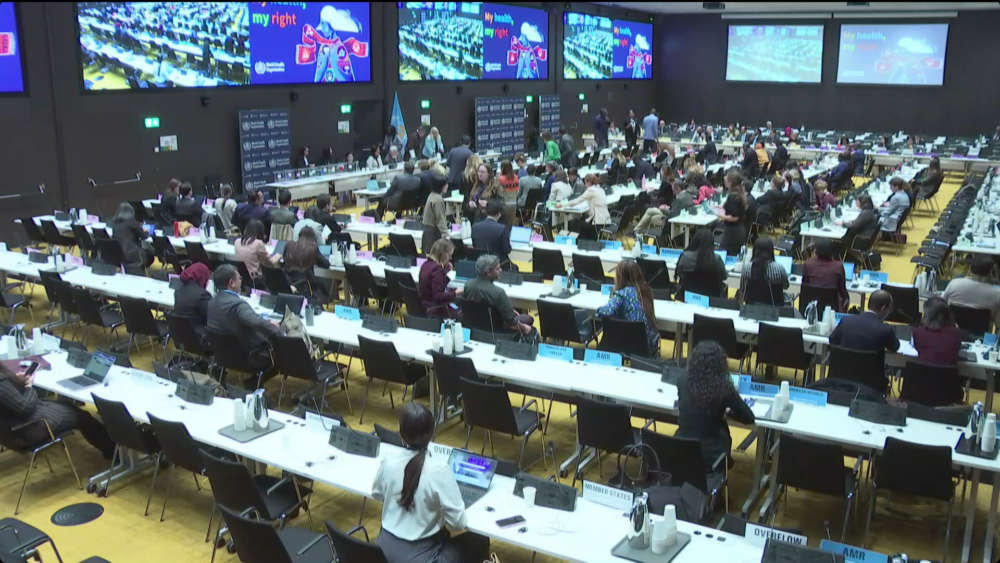
Across two days of questioning, the seven WHO Director-General candidates united around scientific independence and country-level delivery – but diverged on how to fund the cash-strapped agency as the Geneva forum wrapped up on Thursday. Meanwhile, member states revealed their priorities for the coming years.
Thursday’s closing World Health Organization (WHO) candidates’ forum pitted a former banker, a Geneva veteran and a regional chief against each other. Budi Gunadi Sadikin (Indonesia), María Neira (Spain) and Hanan Balkhy (Saudi Arabia) fielded 43 questions across three sessions.
Each offered a distinct prescription for restoring WHO’s authority amid shrinking aid and deep budget cuts. Sadikin pitched development-bank leverage and pooled procurement, while Neira bet on climate-focused primary prevention and cross-sector persuasion. Balkhy, by contrast, leaned on measurable delivery tests, leadership accountability and building country self-reliance, drawing on her Eastern Mediterranean crisis record.
Indonesia’s deal-making banker
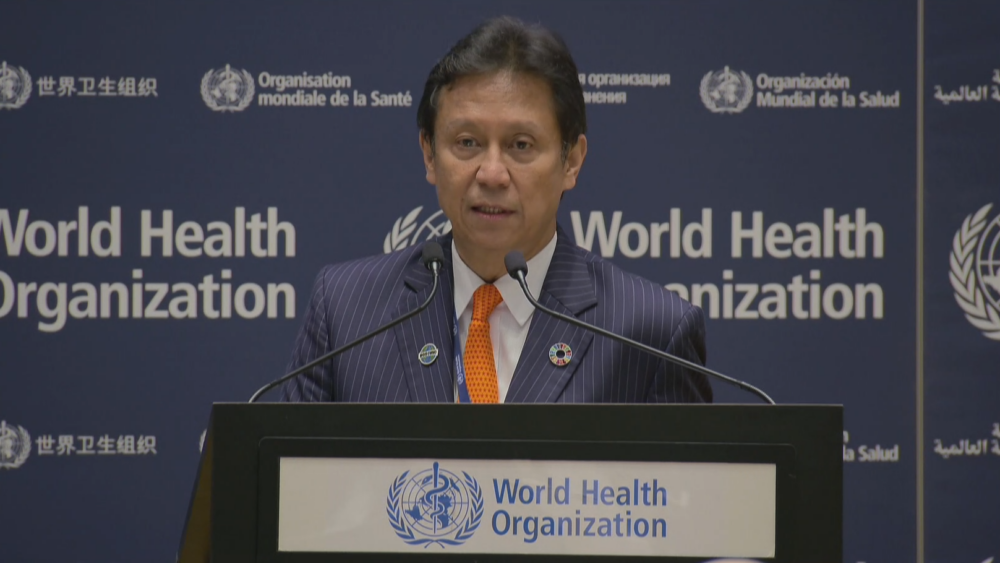
Across his session, Sadikin pitched WHO as a financial broker rather than a cash-strapped health agency. Drawing on his banking background, he told delegates that global health does not lack money – health ministers simply struggle to translate national plans into returns finance ministries understand.
He cited over $8.7 billion mobilised for Indonesia and claimed a call to the Asian Development Bank’s president helped the Philippines secure $1.2 billion. As Director-General, he pledged to help health ministers build single national plans and convene development-bank experts to fund them.
WHO “make[s] you healthy, [the] World Bank make[s] you wealthy,” he said, urging closer cooperation between the two institutions.
Despite telling delegates that as a banker, he believes in “underpromis[ing] and overdeliver[ing],” Sadikin laid out a sweeping set of pledges.
He promised to review and prioritise over 3,000 WHO resolutions with member states. He also proposed a dedicated team, remote robotics and fast emergency bank withdrawals for small island states.
On regional manufacturing beyond voluntary licensing, he pointed to pooled procurement – pledging to replicate the Pan American Health Organization’s Revolving Fund and the Global Fund’s Wambo system, alongside Gavi and UNICEF, to cut vaccine and cancer-drug prices.
However, on governance and treaty rules, Sadikin remained less specific. Asked for Year 1 reforms, he pivoted to grouping countries by chronic disease profiles. Pressed on binding benefit-sharing in the Pathogen Access and Benefit-Sharing (PABS) annex, he avoided committing – favouring “reasonable” not “abusive” investor returns.
Asked how an outsider would safeguard WHO’s scientific authority, Sadikin leaned into his lack of clinical credentials. Conceding he had “no medical background,” he said: “I have no intention to be the smartest [person] in the room.” Citing his pandemic tenure, he framed his job as funding scientists and shielding them from political interference.
Spain’s climate crisis candidate
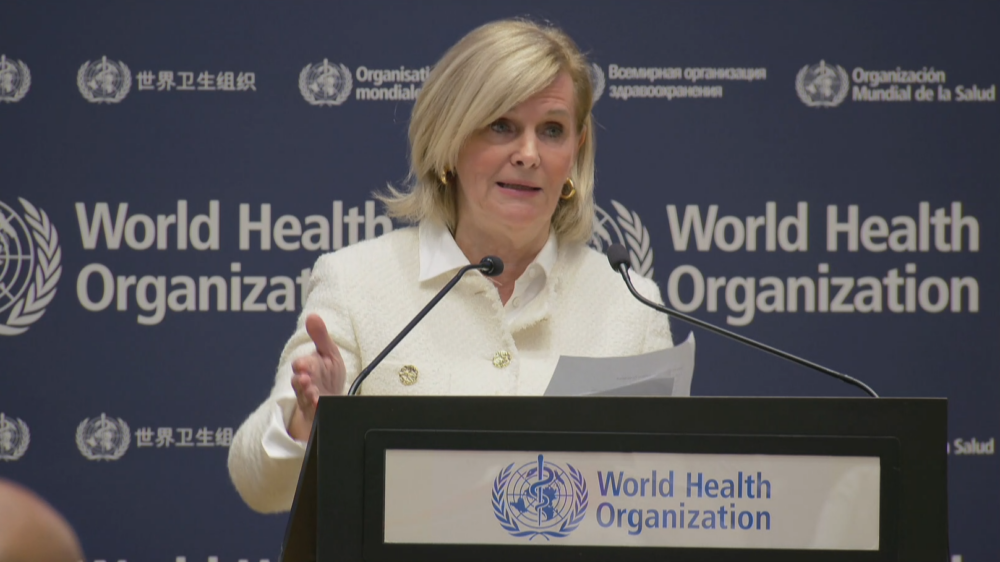
Despite Sadikin and Neira sharing common ground on protecting scientific independence, their perspectives on finances diverge. Neira argued that WHO’s clout comes from evidence rather than money.
“WHO’s authority has never come from the size of its budget,” the former WHO environment and health chief told delegates, echoing her campaign. “WHO’s authority comes from evidence,” she explained.
Having led WHO’s environment and climate change department for two decades, Neira used environmental health to prove that point. Tackling environmental risks could prevent 25% of global disease and death, cutting “around 13 million deaths every year,” she said. That includes “more than seven million deaths” linked to air pollution and climate change.
Rather than spending heavily, she bet on cross-sector persuasion – packaging health data for energy, transport and agriculture ministries at little cost to WHO. As proof, she credited London’s ultra-low emission zone with cutting air-pollution mortality by 40%, and China’s falling pollution alongside rising GDP.
She also urged building climate-resilient, low-carbon health systems to protect care during floods and heatwaves while cutting emissions. Even on artificial intelligence, she brought the focus back to basics: backing a global framework while noting remote clinics first need electricity.
Turning to internal governance, Neira promised “radical reform” and “precision surgery” informed by 20 years inside Geneva. In her first year, she pledged to build “One WHO” by aligning headquarters, regional and country offices. She also promised to link the chief scientist’s office with regional and country experts. Clearing an “unacceptable” backlog of internal justice cases would set “the tone for a culture that is more creative and respectful,” she added.
Yet for all her talk of precision cuts, Neira avoided naming what WHO itself would surrender. Instead, she argued WHO must sit at the centre of the global health architecture while donors and partners accept tighter discipline.
Saudi Arabia’s delivery-focused reformer
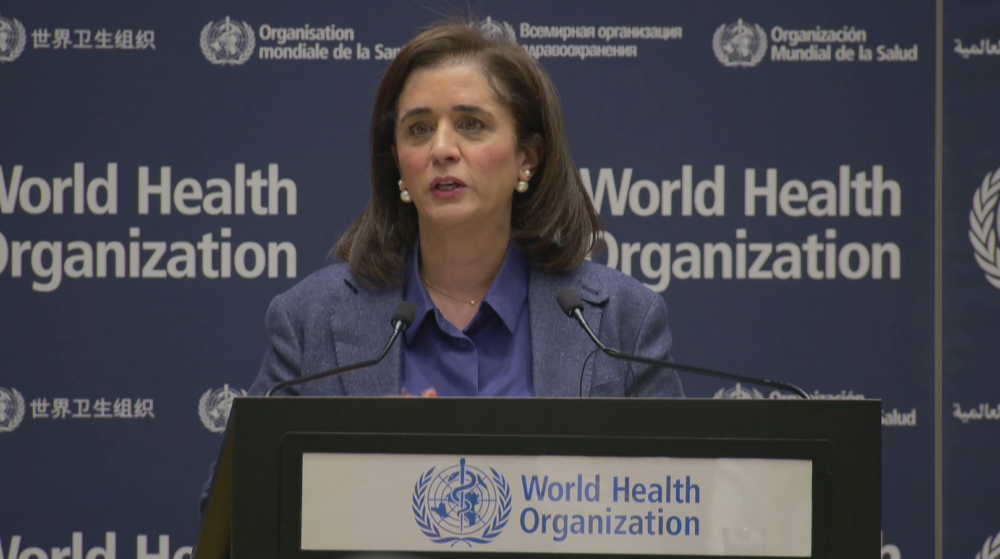
Saudi Arabia’s Hanan Balkhy pitched managerial discipline over sweeping promises. Calling herself a “hybrid candidate,” she asked delegates to judge her on “six tests of delivery.” She pledged to report back within 100 days, annually and at the end of her term, while creating a dedicated platform for small island developing states.
To show what that discipline looks like in practice, Balkhy pointed to her own regional overhaul. She revealed that she froze recruitments on arrival to audit overlaps and merged three dispersed immunisation and polio units. Globally, she promised to expand country-director training, building on her regional “boot camp”, and tie senior posts to transparent job descriptions, competitive selection and delivery compacts.
That same push against duplication shaped her view of the wider UN system. Proposing to replicate the Eastern Mediterranean Regional Health Alliance globally, Balkhy argued agencies must align operations beyond paper mandates.
Led by WHO, the alliance brings together 18 UN health, development and humanitarian agencies – mirroring UN country teams – to coordinate joint action on the health-related Sustainable Development Goals without encroaching on each other’s mandates.
Her crisis and pandemic pitch similarly centred on shifting resources to countries. She cited mobilising $1.6 billion in 2024–2025 – with 90% reaching country level – alongside $153 million from the Pandemic Fund and new Islamic “faith-based financing.”
However, she framed her ultimate goal as helping countries graduate from external aid altogether. “I shouldn’t say this openly, but I want to drive us out of business if I could,” she told delegates.
Where questions touched politically sensitive ground, Balkhy turned cautious. Pressed by Australia on sexual and reproductive health and rights, she avoided the phrase – promising science-based guidelines agnostic to “background” and applied under national policies.
Where the seven contenders agree – and where they split
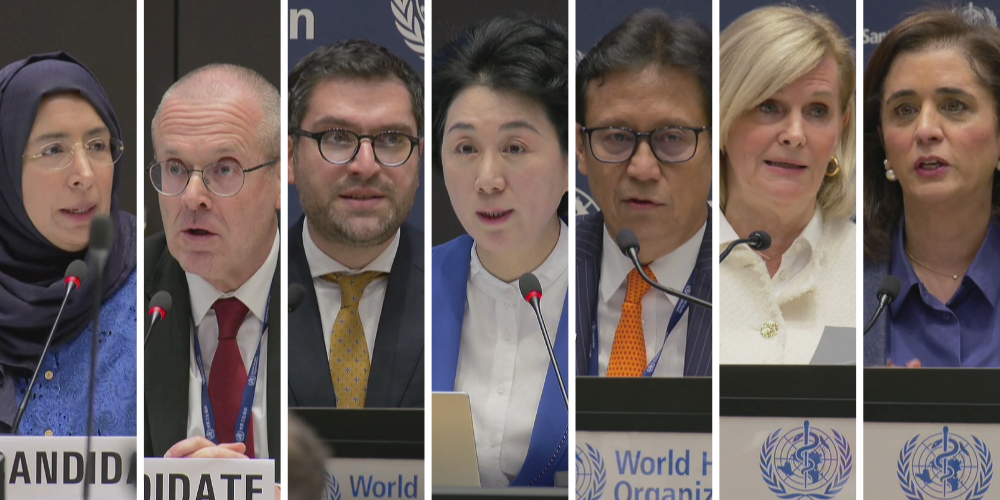
Across two days of questioning, all seven contenders diagnosed the same crisis of trust and shrinking aid. Every candidate promised to shift weight toward country offices and anchor universal health coverage in primary healthcare. All seven pledged to protect scientific independence, while most backed reaching 50% assessed contributions and expanding flexible funding.
They also shared a reluctance to name specific global programmes to cut. Pressed on trade-offs, candidates pointed instead to future functional reviews, member-state priority-setting or partnerships with other agencies. Beneath that consensus, however, sharp divides emerged over who should lead WHO – and how to pay for it.
The field split cleanly along career lines. Three WHO insiders – Kluge, Balkhy and Neira – pitched institutional experience from Europe, the Eastern Mediterranean and Geneva. Three national health leaders – Al Kuwari, Sadikin and Song – leaned on domestic system delivery. Tamamyan stood alone as a clinical outsider, nominated cross-regionally by Botswana to challenge bloc politics.
Those backgrounds shaped starkly different financing pitches, even though all contenders backed aligning partners behind country-led plans. Sadikin bet on development banks, while Al Kuwari pushed the WHO Foundation and unearmarked funds. Balkhy cited faith-based financing coalitions, and Tamamyan proposed mass public giving alongside outreach to Washington.
On pandemic equity, all seven backed expanding regional manufacturing, and most urged finishing the PABS annex. Yet they split on how aggressively to confront industry and intellectual property rules. Al Kuwari urged completing PABS by May, while Kluge vowed to summon pharma chiefs to Geneva. Sadikin pointed to Indonesia’s vaccine technology transfer with Senegal and talks with Ghana and Nigeria. Song backed voluntary licensing through the Medicines Patent Pool, whereas Neira argued WHO’s role is accelerating access rather than transferring technology directly.
The contenders also diverged on how quickly member states could hold them to account at the forum. Balkhy offered 100-day reporting and leadership compacts, while Tamamyan pledged annual public reporting assessed by the Executive Board. Al Kuwari promised a functional review, and Neira asked to be judged after one year on efficiency and culture. Kluge proposed a member-state review in his first months alongside a heads-of-state coalition against healthcare attacks. By contrast, Sadikin and Song offered no comparable 100-day mechanisms.
Multilingual banter and lottery luck lighten the room
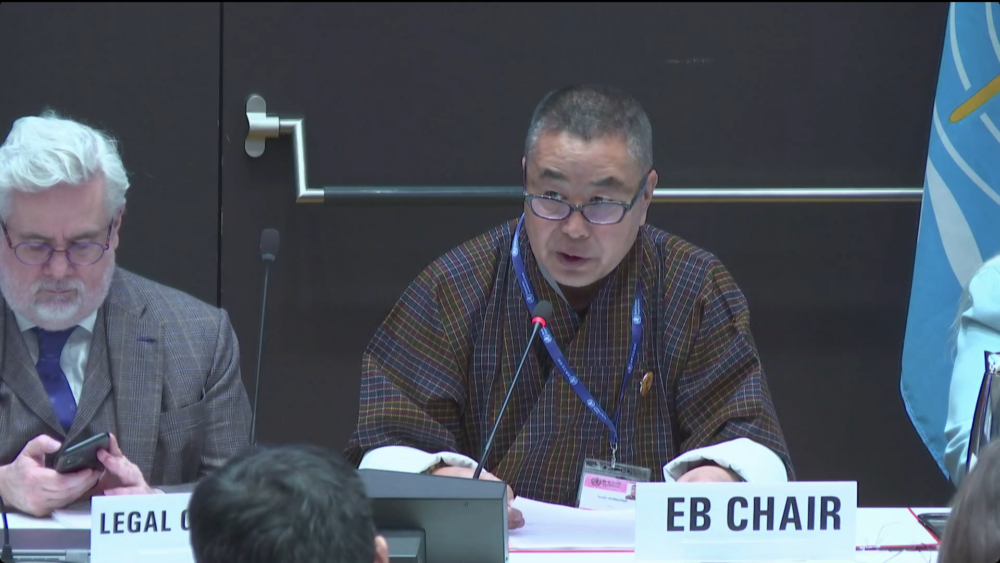
Open questioning offered a rare human glimpse behind the diplomatic formalities of Geneva, with Thursday’s sessions delivering moments of levity – from multilingual banter to jokes about the luck of the draw.
During Neira’s interview, a question from Colombia prompted her to celebrate answering in Spanish, calling it “one of the most beautiful” languages. China’s delegate praised Chinese in turn, sparking laughter and a joke from Neira about holding a contest for the world’s top tongue.
She regretted not speaking Chinese, adding: “The important thing is that we can communicate.” Encouraged by the exchange, Executive Board chair, Bhutan’s Tandin Wangchuk, thanked Neira in his own language before suspending the session.
Wangchuk’s humour also punctuated Sadikin’s session as familiar delegations kept emerging from the six regional receptacles.
“Those member states who are getting [drawn] again and again, I think they should try some lottery,” he remarked, triggering joy among the delegates.
Malaysia’s delegation played along after missing out on several earlier draws, thanking the chair “for finally picking Malaysia” before turning to substance and offering a glimpse into member states’ priorities.
Member states reveal policy priorities
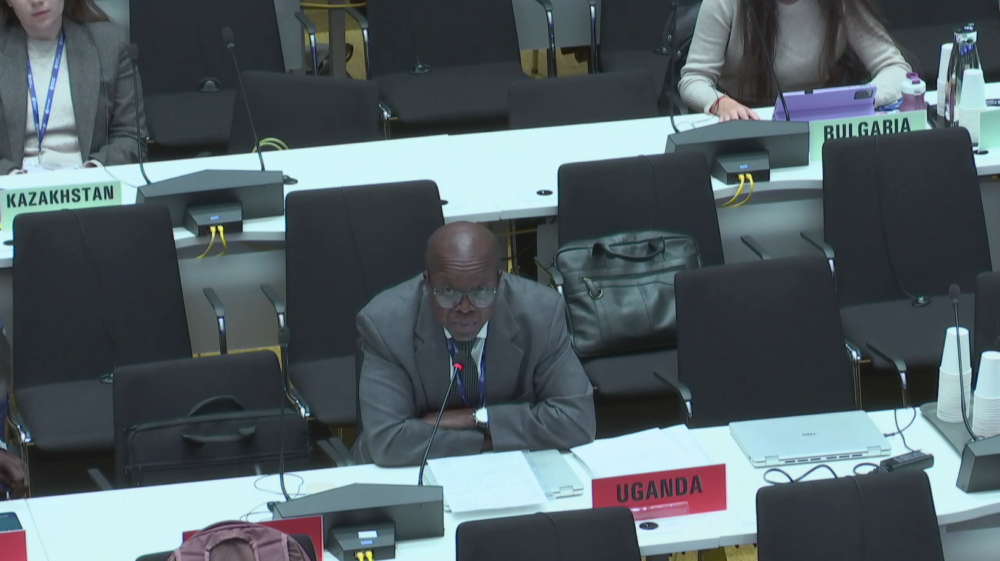
Over the two days, delegations across regions demanded stronger country offices, primary healthcare and emergency preparedness. They also united around protecting scientific independence, curbing agency overlap and securing sustainable financing.
Vulnerable nations pressed for urgent action on climate change. Caribbean island states and Egypt demanded climate-resilient health infrastructure, dedicated financing and cross-sector commitments. Thailand urged moving climate and prevention into core universal health coverage, while the Netherlands sought to shield climate science and reproductive-health standards from political pressure.
Member states diverged sharply on WHO’s scope and priorities. The United Kingdom, Iceland, India and South Sudan pressed WHO to shrink to core mandates and shed overlapping functions. By contrast, Malaysia, Brazil, Colombia and Uganda pushed for local manufacturing, technology transfer beyond voluntary licensing and binding benefit-sharing.
Middle-income and island nations also flagged being squeezed out of concessional financing and pooled procurement despite acute vulnerabilities. Meanwhile, sharp questions from India and Indonesia on artificial intelligence governance underscored deeper North-South divides over who writes global rules.
The road to January and May
With the end of the first public forum, attention now turns to the 34-member Executive Board, which meets from 25 January to 2 February 2027. The Board will shortlist five candidates, interview them behind closed doors and nominate up to three finalists by secret ballot.
Those three finalists will return for a second, more interactive candidates’ forum on 15 March. The full World Health Assembly will then vote by secret ballot during its 23-30 May session. Unless they clear back dues, 20 member states remain barred from voting under constitutional arrears rules.
WHO’s next Director-General will take office on 16 August 2027 for a five-year term.
Follow full candidate profiles and ongoing election coverage on the Health Policy Watch microsite.
See related story:
WHO Director-General Candidates Put to the Test in First Public Forum
Image Credits: WHO, Felix Sassmannshausen/HPW.
Combat the infodemic in health information and support health policy reporting from the global South. Our growing network of journalists in Africa, Asia, Geneva and New York connect the dots between regional realities and the big global debates, with evidence-based, open access news and analysis. To make a personal or organisational contribution click the donate button below.