Hospital Executive, Health Minister, Diplomat – And Middle-Power Mediator?
The State of Qatar has nominated former minister of public health Dr Hanan Mohamed Al Kuwari for Director-General of the World Health Organization (WHO). Entering a competitive contest alongside six other candidates as the WHO faces financial instability, workforce restructuring, and geopolitical fragmentation, her campaign positions her as a pragmatic, delivery-focused nominee.
During the first public candidate exchange at the World Health Summit in Berlin with four of the seven candidates, Al Kuwari articulated an operational roadmap centred on country-facing impact, emergency preparedness, and institutional reform. Central to her pitch is the assertion that WHO’s ultimate success must be measured in countries rather than in Geneva, arguing that member states are “not choosing an administrator; they are choosing a direction.”
Yet her candidacy raises fundamental questions for the member states: can a hospital and ministry executive safeguard WHO’s normative authority and scientific independence, and can middle-power mediation build lasting multilateral consensus amid escalating geopolitical superpower competition and persistent North-South divides?
Turning knowledge into country results: four pillars of change

In her election manifesto, “A healthier, fairer, better-prepared world”, Al Kuwari presents a four-pillar roadmap for the future of the WHO.
- Rebuilding institutional trust and independent authority: To address institutional distrust, Al Kuwari’s platform proposes strengthening WHO’s technical authority through open communication and objective governance. During the conversation in Berlin, she stated that “trust is built by process” and pledged to extend transparency standards to emergency and interim technical guidance while establishing independent oversight of WHO’s scientific advice with published reports.
- Ensuring political independence through stable financing: Confronting WHO’s ongoing fiscal crisis, her platform contends that an agency reliant on a narrow set of donors cannot maintain true political independence. She commits to working with member states to achieve the target of 50% assessed contributions (members’ fees) to the base budget by 2031 at the latest, while expanding flexible funding through the investment round and the WHO Foundation.
- Country-level delivery and primary healthcare execution: Emphasising that WHO’s value is ultimately demonstrated in country-level outcomes, her platform positions primary healthcare (PHC) as the core delivery vehicle for universal health coverage (UHC). She prioritises health workforce protection alongside targeted commitments to women’s, children’s, and adolescent health. Her agenda integrates non-communicable disease prevention, mental health, and polio eradication with emergency preparedness – operationalised through the amended International Health Regulations, One Health frameworks, and the WHO Pandemic Agreement.
- Preparing for future health threats: To address evolving health determinants, Al Kuwari proposes aligning global health research with equitable access, aiming to ensure lower-income countries receive vaccines, therapeutics, and diagnostics on the same timeline as high-income nations through regional manufacturing and streamlined WHO pre-qualification. Her platform also pledges to translate WHO’s digital health and artificial intelligence guidance into practical operational tools for member states, while framing climate change as a health emergency that requires WHO to supply the scientific evidence for climate negotiations.
To translate these four pillars into early operational reform, Al Kuwari pledged in Berlin to commission an independent functional review across WHO’s three organisational tiers within her first 100 days. Aiming to publish the findings within a year to eliminate bureaucratic overlap, she framed her benchmark for the end of a five-year mandate in 2032 not around Geneva administrative outputs, but around delivering tangible health results where people live.
From hospital operational leadership to crisis governance

Long before navigating Geneva’s diplomatic corridors, Al Kuwari built her executive credentials across nearly three decades of frontline institutional management and national crisis response in Doha.
Her early career encompassed freelance health reporting for Reuters and professional engagement with WHO, before she entered healthcare management in 1996 at Hamad Medical Corporation’s (HMC) Women’s Hospital. After earning a PhD in healthcare management from Brunel University in the United Kingdom in 2002, she was appointed managing director of HMC in 2007. Over a 17-year tenure, she expanded Qatar’s principal public healthcare provider into an integrated academic health system comprising 17 hospitals and specialised centres employing over 31,000 health workers.
Appointed Minister of Public Health in 2016, Al Kuwari steered Qatar’s health system through dual high-stakes emergencies. She chaired the national COVID-19 committee and directed emergency medical readiness for the FIFA World Cup in 2022. This three-year WHO-FIFA-Qatar “Sport for Health” partnership produced the global blueprint report, Changing the Game, which established international health security standards for mega-sporting events. Following an eight-year ministerial tenure, she was appointed advisor to the prime minister for public health affairs in late 2024.
Under her ministerial leadership, Qatar became the first country in the Eastern Mediterranean Region to achieve WHO “Healthy City” status across all of its municipalities, alongside two “Healthy University” certifications. Grounding her vision in Qatar’s National Health Strategy 2024-2030, she systematically embedded WHO normative standards nationally by establishing WHO Collaborating Centres spanning trauma, tobacco dependence, healthy ageing, zoonotic threats, and infectious disease research.
Global health governance and international leadership

Al Kuwari’s global health governance record spans senior leadership positions across WHO’s highest governing bodies and multilateral treaty negotiations in Geneva. As chair of the WHO Executive Board (2023-2024), she guided the organisation through a critical reform period, finalised the 14th General Programme of Work, and championed procedural changes to ensure greater transparency and accountability in the election of WHO regional directors.
On the treaty front, Al Kuwari served as vice-chair of the Intergovernmental Working Group (IGWG) on the WHO Pandemic Agreement, where she helped broker delicate consensus around the Pathogen Access and Benefit-Sharing (PABS) framework. She previously presided over deliberations during the 2021 special session of the World Health Assembly that initiated the accord, establishing her reputation among Member State delegations as a mediator capable of bridging North-South divides.
She rounded out her institutional footprint by chairing the WHO Eastern Mediterranean Regional Committee (2024–2025), anchoring her experience across the agency’s headquarters and regional tiers. That executive performance has drawn peer recognition beyond Geneva, including election to the US National Academy of Medicine in 2018, the WHO Director-General’s Health Champions Award in 2022, and the Best Minister Award at the 2024 World Governments Summit.
That delivery-oriented philosophy anchors her overarching campaign pitch: “The world already knows how to prevent most of the diseases that still occur,” Al Kuwari noted. “What it needs now is a WHO strong enough to turn that knowledge into results, in every country.”
Gulf competition and regional voting caucuses

Beyond individual credentials, Al Kuwari’s candidacy highlights the expanding financial and diplomatic footprint of the Gulf Cooperation Council (GCC) within the multilateral system. Qatar’s contribution to the WHO Programme Budget for the 2024-2025 biennium stands at $10.24 million – a figure modest in absolute terms compared to major sovereign donors like China ($201.82 million), Saudi Arabia ($100.12 million), or Belgium ($28.15 million), but distinguished by its internal structure. Crucially, $6 million of Qatar’s contribution was delivered as fully unearmarked core voluntary funding, providing WHO with flexible capital during an era of severe organisational downsizing and budget deficits.
Converting that financial commitment into an electoral majority, however, requires building broad coalitions far beyond Geneva and the Gulf. To secure WHO’s top post, Al Kuwari has pursued a cross-regional campaign strategy, aligning her platform with Global South priorities during high-level discussions in Addis Ababa with African Union Commission leadership. She followed this with extensive engagements at the Pan American Health Organization’s 63rd Directing Council in Washington, D.C., consulting PAHO Director Dr Jarbas Barbosa and regional health ministers on antimicrobial resistance, digital innovation, and equitable technology access.
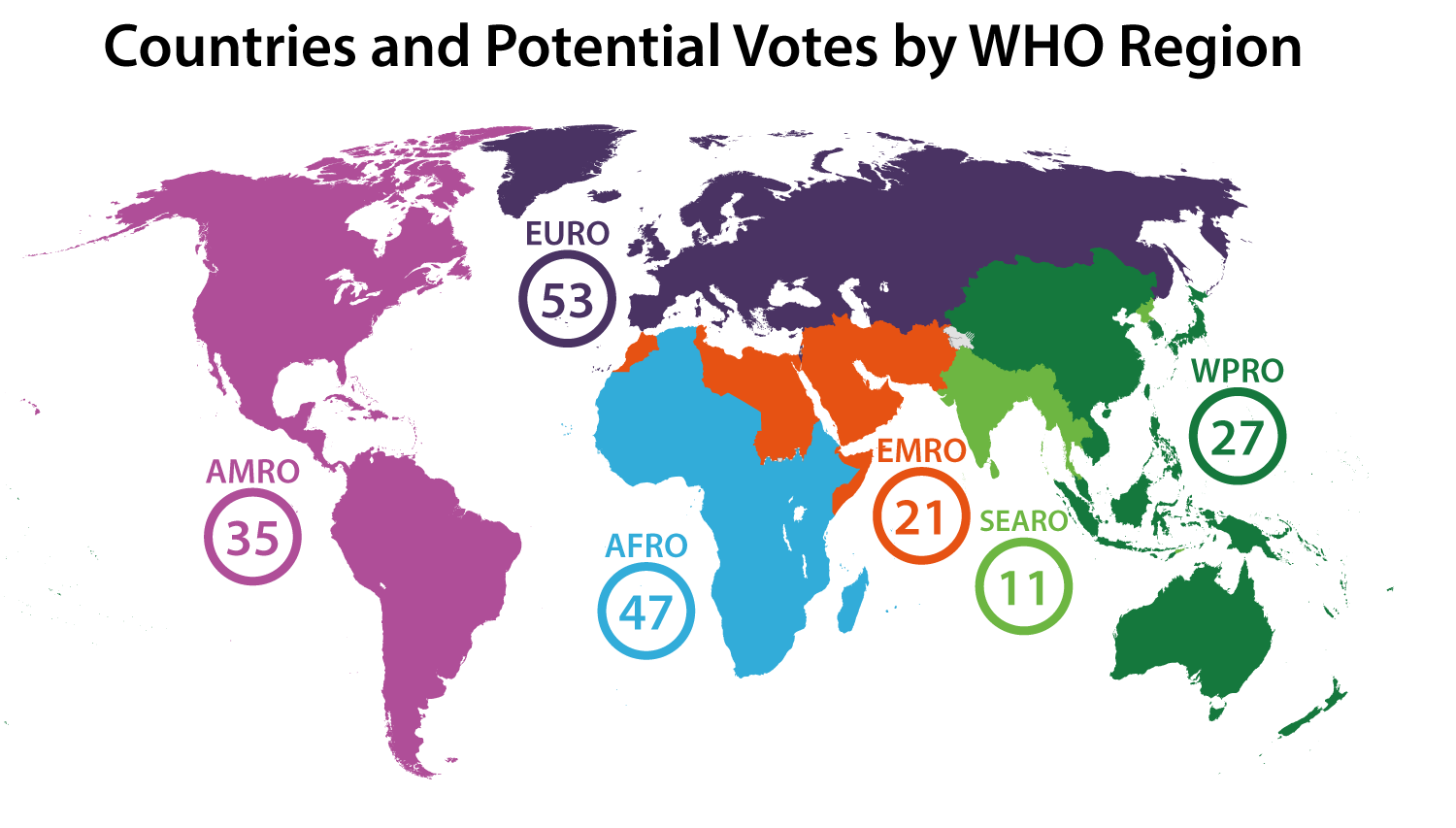
Securing cross-regional backing is critical because Middle Eastern delegations rarely vote as a monolithic bloc. While Qatar leverages its profile as a diplomatic middle-power mediator – attempting to broker ceasefires and protect humanitarian medical delivery channels – the concurrent nomination of Saudi Arabia’s Dr Hanan Balkhy creates an immediate vote-splitting risk across regional capitals.
At the same time, both candidates stand to benefit from major structural tailwinds: a Director-General has never before been elected from the Eastern Mediterranean region. Furthermore, with only two women having served as WHO Director-General in the agency’s history, gender equity advocacy groups and women’s health coalitions will be actively pushing for female executive leadership at the helm of the UN health agency.
Key campaign challenges and diplomatic scrutiny

However, to secure broad member state backing, Al Kuwari must navigate significant diplomatic scrutiny across structural, normative, and operational fronts. Amid the expanding footprint of the Gulf Cooperation Council in global health, observers are closely examining whether her push for administrative decentralisation could shift operational weight and decision-making authority away from WHO headquarters in Geneva toward the Gulf region.
Her proposed financing model also intersects with ongoing institutional debates. While her platform proposes expanding flexible funding through the Investment Round and the WHO Foundation, WHO’s external auditors have highlighted governance and disbursement shortfalls regarding the Foundation. Auditors have urged WHO to enforce contractual transfer targets, formalise donor engagement protocols under a Joint Strategic Plan to avoid donor overlap, and conduct regular joint performance assessments. To build donor trust, Al Kuwari will need to show that her financing proposal is accompanied by stronger, more transparent oversight.
On normative policy, while Al Kuwari has established strong credentials as a champion of maternal, newborn, and women’s health, liberal member states draw a sharp distinction between clinical health programmes and rights-based sexual and reproductive health and rights (SRHR). As a candidate nominated by a conservative Gulf state, she will have to prove that WHO’s global technical guidance on rights-based civil society partnerships, safe abortion access, and contraception would remain fully insulated from domestic political pressures.
Simultaneously, her ministerial record invites scrutiny from international human rights bodies. Despite international recognition for leading the FIFA World Cup health security partnership, Qatar’s handling of the tournament raised persistent questions regarding migrant worker health and safety. Human rights organisations pointed to unaddressed gaps in extreme heat enforcement, occupational safety, and transparent mortality reporting among migrant construction workers, challenging her to articulate how a future WHO under her leadership would safeguard vulnerable workforces and uphold universal human rights standards globally.
A middle-power bridge builder for a fractured WHO?

As Qatar positions itself at the intersection of Global South advocacy and multilateral governance, Al Kuwari’s platform offers a synthesis: combining pragmatic executive management with non-aligned mediation to deliver a WHO that is “trusted because it is independent, sustainably financed, and valued because it delivers where people live.”
Having established a reputation in Geneva as a pragmatic consensus builder, she offers the operational discipline and non-aligned posture an overextended WHO requires. Yet her candidacy ultimately tests whether middle-power diplomacy can bridge deepening geopolitical fractures without diluting the agency’s technical rigour and independent normative authority.
Note: This article incorporates research findings and comparative evaluations from Rifat Hossain. Health Policy Watch reached out to Al Kuwari for comments but did not receive a response ahead of publication.
Image Credits: WHO, Felix Sassmannshausen/HPW.