Maternal And Primary Health Expert, Senior Public Health Official – And a Test Case for Post-US Multilateralism?
The formal confirmation of Dr Song Li’s candidacy by the People’s Republic of China on 8 October expands the official election field for WHO Director-General to seven candidates, following an initially tight-lipped rollout by Beijing. Her bid introduces into the race a senior public health administrator and physician-scientist whose two-decade career at China’s National Health Commission (NHC) has centred on scaling primary healthcare, maternal and child health, and integrated disease prevention.
Her nomination fundamentally reshuffles the candidate field amid escalating US-China superpower competition, a geopolitical backdrop underscored by her political role on the Secretariat of the Communist Party-led All-China Women’s Federation (ACWF).
While Song has not released a standalone campaign manifesto, China’s Ministry of Foreign Affairs framed her bid around reinforcing multilateralism upon confirming her candidacy. Outlining her administrative record in a subsequent written response to Health Policy Watch, the country’s Permanent Mission in Geneva stated: “She has a strong track record of translating policies into concrete actions, with demonstrated capabilities in strategic leadership, policy development, programme implementation, organizational management and cross-sectoral coordination.”
Prospective programmatic framework

In the absence of a formal campaign manifesto, Song’s prospective platform can be anticipated across four core public health pillars – drawn from the Mission’s statement, her administrative background at the NHC, and disclosures from her unsuccessful 2023 campaign for Western Pacific regional director:
- Primary healthcare and maternal-child health equity: Grounded in her decades long record contributing to national maternal and child health programmes at the NHC, Song’s prospective platform is expected to prioritise primary healthcare (PHC) as the core engine for Universal Health Coverage (UHC). Her field leadership – which included scaling hospital delivery subsidies to 100 million rural women and advancing mother-to-child disease elimination – reflects a long-standing domestic emphasis on strengthening frontline community health services to reduce geographical and economic barriers for vulnerable populations.
- Healthy ageing and NCD prevention: Addressing rapid demographic change and non-communicable diseases in her 2023 WPRO bid, Song rejected viewing ageing as an economic liability, advocating instead for “elderly-friendly societies, communities, and hospitals.” Her technical background highlights life-course prevention – integrating NCD management directly into primary care systems to “turn silver into gold” through healthy longevity.
- Pathogen Access and Benefit-Sharing (PABS): Drawing on her two decades leading national health administration and epidemic response (SARS, COVID-19 protocols), Song explicitly aligned herself with calls to strengthen global health security governance through the Pandemic Agreement. In PABS negotiations, her record aligns with Global South demands for mandatory benefit-sharing and equitable access to emergency countermeasures.
- South-South cooperation: Having contributed to the China-Africa Health Cooperation Framework through its Women and Children’s Health Action Plan, and worked on Belt and Road health cooperation, Song brings a record that directly reflects Beijing’s health diplomacy and expanding soft-power footprint. This points to a prospective platform centred on country-led health capacity. During her 2023 candidate remarks, she emphasised moving away from donor dependency toward sustainable national self-reliance, supporting regional laboratory networks, local vaccine and diagnostic manufacturing, and costed national health plans.
This vision for a decentralised global health architecture extends beyond her individual technical record. Her candidacy is fundamentally anchored in China’s active steering of broader institutional restructuring. As co-chair of WHO’s Joint Task Force on Global Health Architecture Reform alongside Germany, Beijing has positioned itself as a direct architect of future governance, institutional realignment, and multilateral funding mechanisms.
From clinical care to national public health

Born in 1974, Song began her career in clinical medicine, earning a Master’s degree in Obstetrics and Gynaecology from Shandong Medical University (1997-2000) and practising in gynaecologic oncology. Seeking to address systemic disease drivers at population scale rather than through bedside care alone, she transitioned to public health policy, joining the Ministry of Health (now the National Health Commission) in June 2002 as a programme officer in the women’s health division.
Her early administrative career was quickly defined by crisis management and academic accomplishments. During the 2003 SARS outbreak, she served in the national Emergency Operations Center, and following the 2008 Wenchuan earthquake in Sichuan Province, she led an on-site medical emergency team to oversee post-disaster maternal healthcare reconstruction. While advancing through the ministry, she deepened her technical credentials, completing a PhD at Peking University (2006-2010) alongside a visiting scholarship in global health at Harvard University in 2010.
During the COVID-19 pandemic, Song authored national protection protocols for pregnant women, published national guidance Q&As for maternal care, and facilitated international experience-sharing with global health partners. Her two-decade ascent through the ministry culminated in March 2021 with her appointment as Director-General of the Department of Women and Child Health, where she directed national strategic policies, legislation, and public budgets.
Building maternal care and national programmes

Beyond acute emergency response, Song’s domestic legacy centres on converting targeted interventions into permanent primary healthcare infrastructure. Her signature operational initiative directed hospital delivery subsidies to 100 million rural pregnant women.
According to official Chinese statistics, this initiative raised rural hospital birth rates from under 50% to over 99%, driving national maternal mortality down to 15.7 per 100,000 live births in 2022 – well ahead of the global UN Sustainable Development Goal 3.1 target of fewer than 70, though significant disparities persist between affluent eastern provinces and remote western regions.
Her technical work also centred on disease elimination and inter-ministerial financing. In 2002, Song contributed to China’s first integrated pilot programme in Henan Province to prevent mother-to-child transmission of HIV, syphilis, and hepatitis B, expanding it to nearly 3000 counties nationwide.
To reduce care delays, she advocated the adoption of rapid diagnostic testing that cut result waiting times from 14 days to 30 minutes – a key operational shift within the comprehensive national prevention package, which official records credit with driving HIV mother-to-child transmission down from 34.8% to 3%.
Song sustained these programmes by embedding maternal health priorities directly into China’s Five-Year Plans, leveraging the State Council’s Working Committee for Women and Children to secure multi-ministerial funding from the Ministry of Finance and the National Development and Reform Commission.
Financial and political weight of an emerging superpower

Song’s nomination coincides with a major shift in global health governance following the declared withdrawal of the United States from WHO. Beijing has stepped into this funding landscape with significant financial weight, backed by $320.1 million in projected biennial WHO contributions for 2026-2027. This includes $275.7 million in mandatory assessed dues, making China the largest active state contributor in assessed funding. However, China is not the largest donor overall; it ranks fourth behind non-state and multilateral entities like the Gates Foundation, the European Commission, and the World Bank.
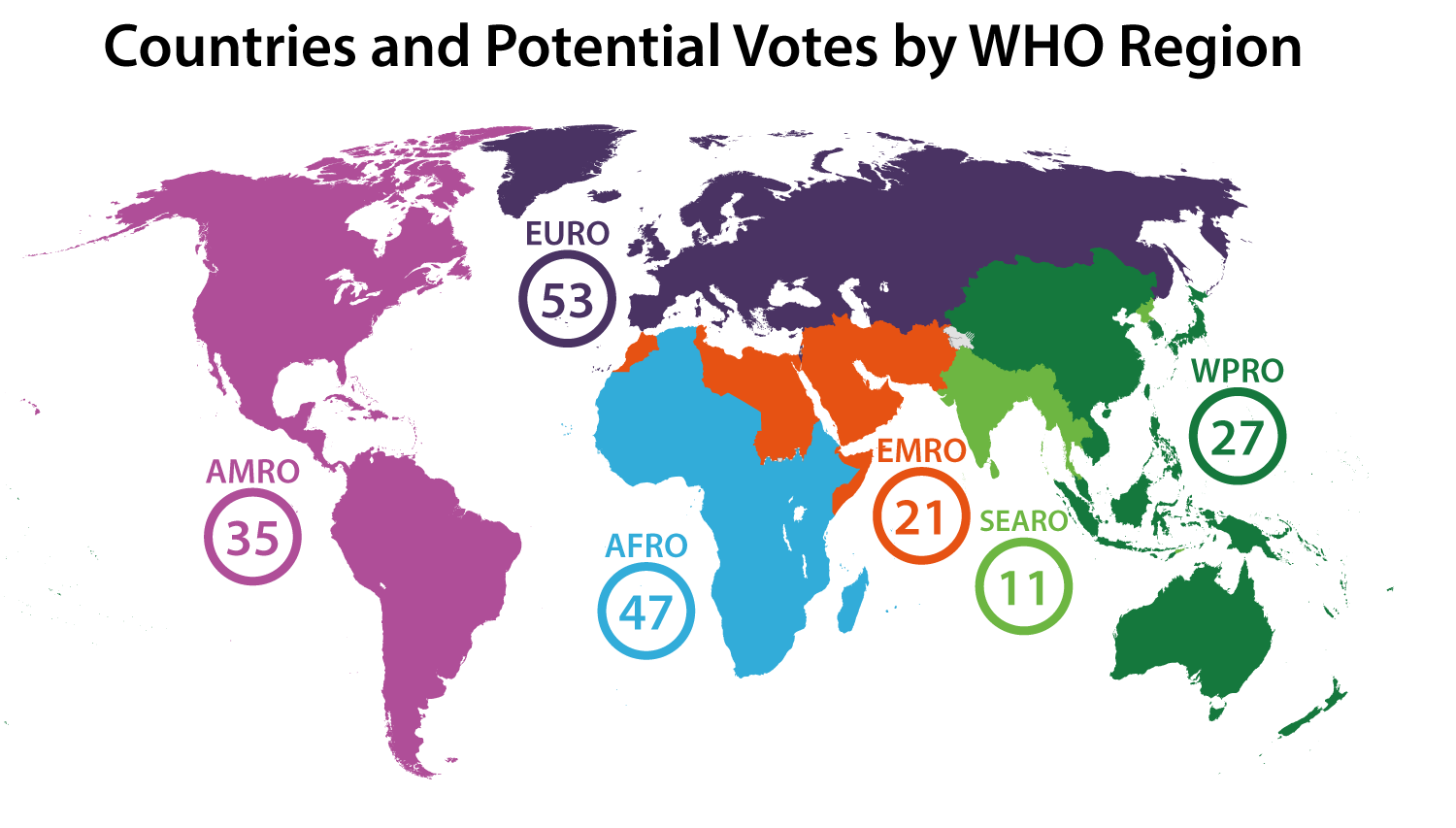
Politically, China secured a seat on the 34-member WHO Executive Board starting in May 2026, positioning Beijing as an insider during the critical screening process in January 2027. Under WHO election procedures, candidates must first clear a 10% threshold of members present and voting to reach a shortlist of up to five. To then be nominated among the up to three candidates submitted to the World Health Assembly, a contender must secure a simple majority of members present and voting on the Executive Board.
This financial and political weight mirrors China’s evolution over the past two decades from an international health aid recipient into a major multilateral donor. Song’s personal career trajectory – from directing World Bank-supported rural health initiatives to Belt and Road health cooperation – embodies Beijing’s strategic transition from domestic capacity-building to projecting global health influence, drawing scrutiny from traditional Western donors.
Geopolitical scrutiny and institutional obstacles

Despite her technical credentials, Song’s candidacy encounters formidable diplomatic headwinds rooted in broader Western concerns over China’s expanding political footprint. Global health analysts observe that a Chinese candidate heightens geopolitical friction, drawing strong bipartisan opposition in Washington and rendering potential US re-engagement with WHO far more politically complex.
This scrutiny is compounded by residual diplomatic friction over early COVID-19 transparency and persistent US allegations of institutional bias. Beyond political criticism, WHO’s independent Scientific Advisory Group for the Origins of Novel Pathogens (SAGO) assessed that origin investigations remain inconclusive. SAGO cited missing baseline data, including raw epidemiological files, Wuhan laboratory audit records and staff health logs, and testing data for upstream animal supply farms. While available peer-reviewed evidence favours a natural zoonotic spillover, SAGO stressed that neither the exact transmission pathway nor a research-related incident can be confirmed or eliminated without these withheld records.
In its written response to Health Policy Watch, China’s Permanent Mission in Geneva did not address specific inquiries regarding Song’s strategy for maintaining scientific independence, supporting compliance with the updated International Health Regulations (IHR), or resolving WHO’s budget constraints. Instead, the Mission confined its response to an overview of her administrative track record, noting that further materials would be shared “in due course.”
Furthermore, member states face institutional hesitation regarding executive concentration, noting that China already held the WHO leadership for two consecutive terms under dual Chinese and Canadian citizen Dr Margaret Chan (2007-2017). While Chinese national Qu Dongyu’s second term leading the Food and Agriculture Organization (FAO) concludes in July 2027, his concurrent tenure throughout the 2026-2027 campaign window might reinforce resistance in several capitals against placing a second major UN specialised agency under Chinese executive leadership.
Those reservations have been compounded by controversy surrounding Qu’s leadership style. At a recent FAO assembly in Rome, Qu drew international criticism after warning senior officials that “we’re not allowing you to play the game here of human rights” and insisting that human rights governance belongs strictly in Geneva. The episode has sharpened broader diplomatic anxieties over how Chinese executive leadership manages cross-cutting UN mandates, particularly given Beijing’s tendency to prioritise state-led development over universal human rights frameworks.
A test of technical authority in disruptive times

Song’s candidacy brings a distinctive profile to the race: a physician-scientist and technical administrator whose career centres on primary care equity and South-South health cooperation. For Member States seeking a technical reformer aligned with Global South health sovereignty, her domestic record at the National Health Commission offers a concrete template of country-led implementation.
However, her path to Geneva faces steep diplomatic and structural hurdles. To build a winning coalition beyond Beijing’s core voting bloc, Song must convince sceptical capitals of her institutional independence. She must also navigate lingering geopolitical friction over early pandemic transparency, bipartisan opposition in Washington, and Member State hesitation regarding Chinese leadership concentration across UN agencies.
Ultimately, her bid forces Member States to weigh two competing visions for WHO’s post-US era. One path opts for a senior technical administrator focused on frontline primary care and South-South self-reliance. The other prioritises alternative candidate profiles designed to restore traditional Western donor confidence, enforce fiscal consolidation, and safeguard normative neutrality amid intensifying superpower rivalries.
Image Credits: Shandong University, WHO, WHO/HPW, CGTN, African Union.