Advocate for ‘Trust, Impact, Value’ – And a Guardian of WHO’s Normative Core?
Saudi Arabia’s nomination of Dr Hanan H. Balkhy, an infectious disease epidemiologist and WHO regional director for the Eastern Mediterranean region, brings a senior regional executive into the candidate pool to succeed Dr Tedros Adhanom Ghebreyesus as Director-General. Drawing on a background combining frontline clinical care, scientific research, and multilateral governance, Balkhy positions her candidacy as a direct response to institutional distrust and member state demands for operational transparency and accountability.
A US-trained paediatrician and infectious disease specialist, she centres her campaign around the core pledge: “A WHO the world can count on.” Balkhy frames her background as a “hybrid” career: combining 20 years of domestic health system leadership in Saudi Arabia – including 15 years serving on WHO external expert committees – with over seven years inside WHO as Assistant Director-General and Regional Director – spanning headquarters in Geneva and regional leadership over the agency’s most complex emergency settings.
As a senior WHO executive, however, her central challenge will be overcoming the perception of being an institutional insider at a moment when many member states are calling for fundamental restructuring. To build a winning coalition, she must convincingly prove that an executive who rose through the agency’s own hierarchy can deliver genuine operational decentralisation and fiscal discipline while remaining a steadfast guardian of WHO’s normative core and independent technical authority.
Balkhy’s three-layered vision for WHO’s future

Balkhy structures her election platform around a three-part framework focused on restoring trust through scientific independence, accelerating impact through rapid emergency preparedness, and demonstrating fiscal value through quantifiable results:
- Scientific integrity and transparent governance: Balkhy frames institutional credibility as WHO’s foundational requirement, pledging to restore scientific authority, protect technical guidance from political interference, and strengthen internal reporting across all three organisational tiers. As evidence of her commitment to administrative accountability, she points to her operational track record in the Eastern Mediterranean, where she reduced the regional audit backlog by 50%.
- Emergency preparedness and regional sovereignty: Focusing on rapid crisis response, she advocates for an integrated One Health framework bridging human, animal, and environmental vectors, while positioning Small Island Developing States (SIDS) as the benchmark for equitable global health security. To build regional health sovereignty, she prioritises binding Pathogen Access and Benefit-Sharing (PABS) equity and promotes collaboration with regional bodies like Africa CDC and the African Medicines Agency to expand local biomanufacturing and regulatory infrastructure.
- Frontline delivery and climate resilience: Balkhy links organisational performance directly to quantifiable country-level health gains, establishing primary healthcare (PHC) as the leading operational vehicle for universal health coverage (UHC). Her agenda embeds climate resilience into primary care, prioritises the elimination of wild poliovirus and vaccine-preventable diseases, and advocates for mechanisms to ensure lower-income countries access new health technologies on equitable timelines.
Addressing global health architecture reform, Balkhy’s platform highlights the imperative of rebalancing operational power toward country and regional offices. Pointing to her track record as EMRO Regional Director – where over 70% of regional programme resources were allocated directly to country offices – she pledges to transition WHO from top-down directives toward a consultative, country-led model that moves resources directly to where health care is delivered.
Formative clinical training and two decades of prevention

While born in Saudi Arabia, Balkhy spent her early childhood in the United States until the age of six when her family returned to the Kingdom. She later completed her undergraduate medical degree at King Abdulaziz University in Jeddah in 1991. She returned to the US for postgraduate clinical training, completing a paediatric residency at Massachusetts General Hospital in Boston (1993-1996), followed by a fellowship in paediatric infectious diseases at the Cleveland Clinic Foundation and Rainbow Babies & Children’s Hospital in Cleveland, Ohio (1996-1999).
Upon returning to Saudi Arabia, Balkhy spent two decades developing national infection prevention and research infrastructure. She served 10 years as hospital epidemiologist and 10 years as executive director of infection prevention and control at the Ministry of National Guard. In that capacity, she established and directed the infectious diseases research department at the King Abdullah International Medical Research Centre (KAIMRC) within King Saud bin Abdulaziz University for Health Sciences in Riyadh.
Under her direction, KAIMRC served as a regional reference centre for MERS-CoV, where she led Saudi Arabia’s first Phase I clinical vaccine trial for the virus and established cross-sectoral One Health research linkages. Meanwhile, she directed the Gulf Cooperation Council (GCC) Center for Infection Control and the WHO Collaborating Centre for IPC and Antimicrobial Resistance (AMR).
Executive trajectory in Geneva and regional leadership

Building on her national track record, Balkhy transitioned to international governance as WHO’s first Assistant Director-General for Antimicrobial Resistance (AMR) in Geneva (2019–2024). In this role, she steered global policy against drug resistance, launching the Quadripartite collaboration with the FAO, WOAH, and UNEP, raising $20 million for WHO’s AMR division, and establishing the AMR Multi-Partner Trust Fund. During the COVID-19 pandemic, her portfolio expanded as acting ADG for Access to Medicines and Health Products, while co-leading WHO’s role in the ACT-Accelerator Diagnostics Pillar.
Following her Geneva tenure, the WHO Executive Board appointed Balkhy as Regional Director for the Eastern Mediterranean in 2024. In this role – from which she is currently on formal leave to pursue her Director-General campaign – she oversees WHO health operations across 22 Member States and territories, serving a population of 750 million. Under her leadership, the region carried roughly one-third of WHO’s global graded-emergency burden, managing acute crisis responses across Yemen, Gaza, Sudan, and Lebanon, while raising over $1.6 billion in additional programme resources.
Demonstrating operational crisis management, she negotiated directly with senior representatives of the Taliban-led de facto administration in Afghanistan, utilizing community-level engagement in Kandahar to overcome vaccine hesitancy, protect essential health infrastructure, and secure access for polio vaccination teams. In the Occupied Palestinian Territory, following the re-emergence of polio in Gaza after 25 years, she coordinated a cross-agency emergency response and three vaccination cycles that reached more than 600,000 children to contain the outbreak.
“Across these roles, I have remained a physician, a scientist and a public health leader – committed to turning knowledge into action and keeping people at the centre of global health,” she noted in launching her campaign in August.
Expanding Saudi footprint and geopolitical fault lines

Besides her clinical credentials and executive experience, Balkhy enters the race anchored by Saudi Arabia’s diplomatic and financial influence. The Kingdom’s total WHO contribution reached $100.12 million for 2024-2025 and stands at $81.72 million for 2026-2027. This places the country in the top 15 overall contributors worldwide (including both sovereign states and philanthropic organisations).
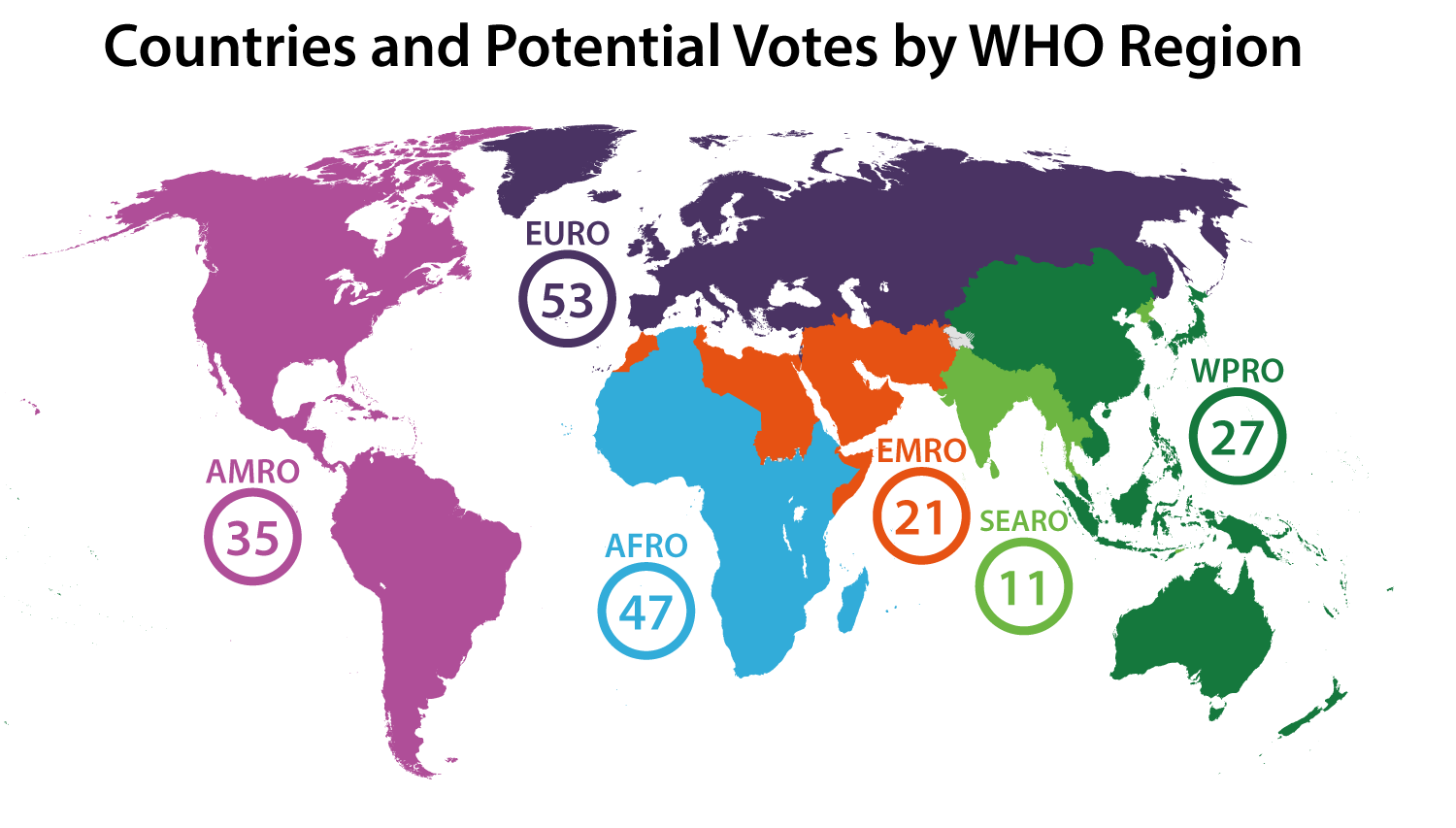
Her campaign could also benefit from a compelling institutional precedent: a Director-General has never been elected from the Eastern Mediterranean region. If member states prioritise geographic equity and regional rotation across WHO’s six regions, her standing as a prominent EMRO candidate and experienced regional executive gives her a distinct strategic advantage. Furthermore, as the first woman ever elected to lead WHO’s Eastern Mediterranean office, Balkhy’s candidacy aligns with global gender equity coalitions likely to push for the election of only the third female Director-General in the organisation’s history.
However, regional support across the Middle East and Islamic caucuses remains fragmented. The entry of Qatar’s former health minister, Dr Hanan Al Kuwari, introduces a direct rival within the Gulf Cooperation Council (GCC). Deep geopolitical fault lines across the region – most notably active hostilities involving Iran and Yemen – alongside the secret-ballot nature of WHO elections, make any unified regional bloc improbable, forcing Balkhy’s campaign to build a cross-regional coalition beyond the Middle East.
To secure votes across other regions, Balkhy must demonstrate that her candidacy represents independent global health stewardship rather than regional interest. This includes reassuring sceptics that her drive to shift operational resources from Geneva directly to country offices reflects administrative subsidiarity rather than a move that risks fragmenting WHO’s universal standard-setting authority.
Having been nominated by a conservative member state and given current pressure on sexual and reproductive health and rights (SRHR), Balkhy will also have to convince liberal voting blocs that she will uphold WHO’s universal health mandates and preserve normative civil society partnerships without compromising technical integrity. Recent Executive Board proceedings highlighted these fault lines when delegates from conservative member states raised formal reservations regarding WHO’s official ties with reproductive health NGOs.
Geographic equity and the test of technical leadership

Seeking to become the first WHO Director-General from the Eastern Mediterranean Region, Balkhy faces the challenge of uniting deeply divided member states behind her platform. To build a broad coalition, she launched an early diplomatic tour across the African Region (AFRO), South-East Asia (SEARO), and the Americas (PAHO) – although an earthquake in Panama briefly disrupted her travel, preventing her attendance at the candidate exchange at the World Health Summit in Berlin.
Ultimately, her candidacy represents a test of whether an institutional insider and physician-scientist can deliver structural decentralisation while remaining the steadfast guardian of WHO’s normative core. In an era marked by superpower exits, geopolitical rifts, severe fiscal austerity, and North-South divides, her pitch of “A WHO the world can count on” asks Member States to weigh her promise of operational subsidiarity against the imperative to preserve independent technical authority.
Note: Health Policy Watch reached out to Balkhy for comments, but has not received a response by the time of publication.
Image Credits: WHO, Wikipedia/InvictaHOG, WHO/EMRO.