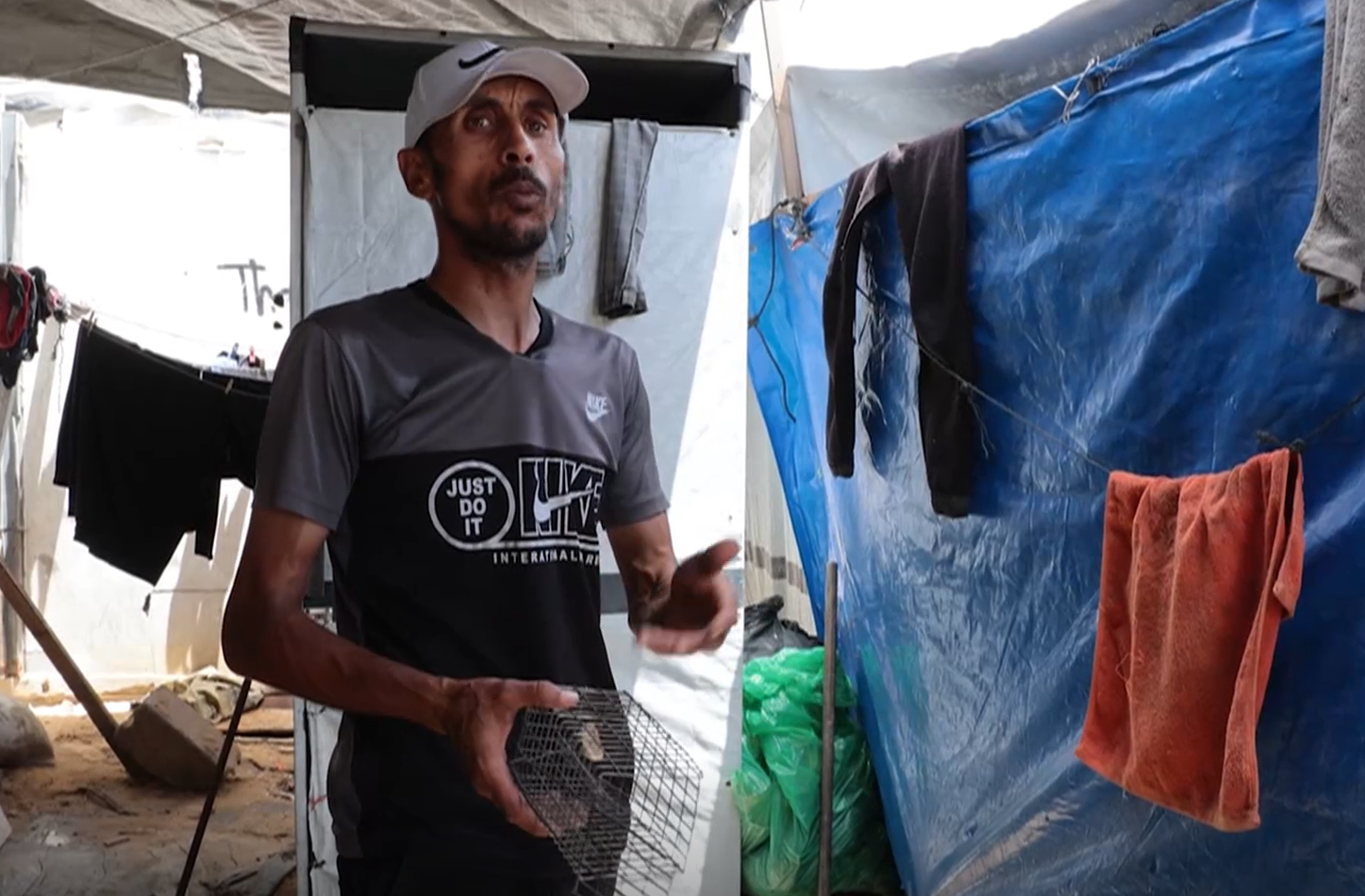
Nearly a year after Israel and Hamas agreed to a US-brokered cease-fire, some 94% of Gaza’s 2.1 million Palestinian residents lack adequate shelters with 84% facing severe constraints in heating, cooling, cooking, lighting and hygiene and nearly 60% facing “critical” or “catastrophic” shelter needs. This according to a new analysis by the Global Shelter Cluster, a coalition led by the Norwegian Refugee Council and the UN’s Geneva-based International Organization for Migration (IOM).
The prolonged housing crisis means that most Gazans are being exposed to growing environmental health risks as a result of the delays in reconstruction following the two-year war. These range from poor access to hygiene and sanitation to rodent infestations; extreme heat in the summer and wintertime flooding, unsafe conditions for food and water storage; as well as toxic exposures from burning plastics and debris for cooking, the report concludes. Nearly half of all households (48%) surveyed said they burn trash to cook, with about a quarter (24%) burning plastic or tires and another 24% burning cardboard or other waste. Some 64% of households said they cannot safely store sufficient food and water.
Some 89% percent of survey respondents said they face widespread rodent infestations inside their makeshift homes. And 98% reported environmental hazards within ten meters of their residences, including solid waste, rubble or sewage.
The report is based on recent surveys of some 2000 household across Gaza. According to the report, some 54% of the surveyed households continue living in tents, an additional 11% in makeshift shelters, and the rest in buildings, often semi-destroyed during the war, while Gaza reconstruction plans advance at a snail’s pace.
Reconstruction is stymied by the continuing political impasse between Israel and Hamas as well as Israeli military restrictions, the report said. The latter forbid the entrance into Gaza of many items critical for reconstruction, including debris clearing machinery and construction equipment, pipes, rat poison, and other equipment regarded as “dual use” with the potential for military applications.
Inadequate diets and local food production stymied
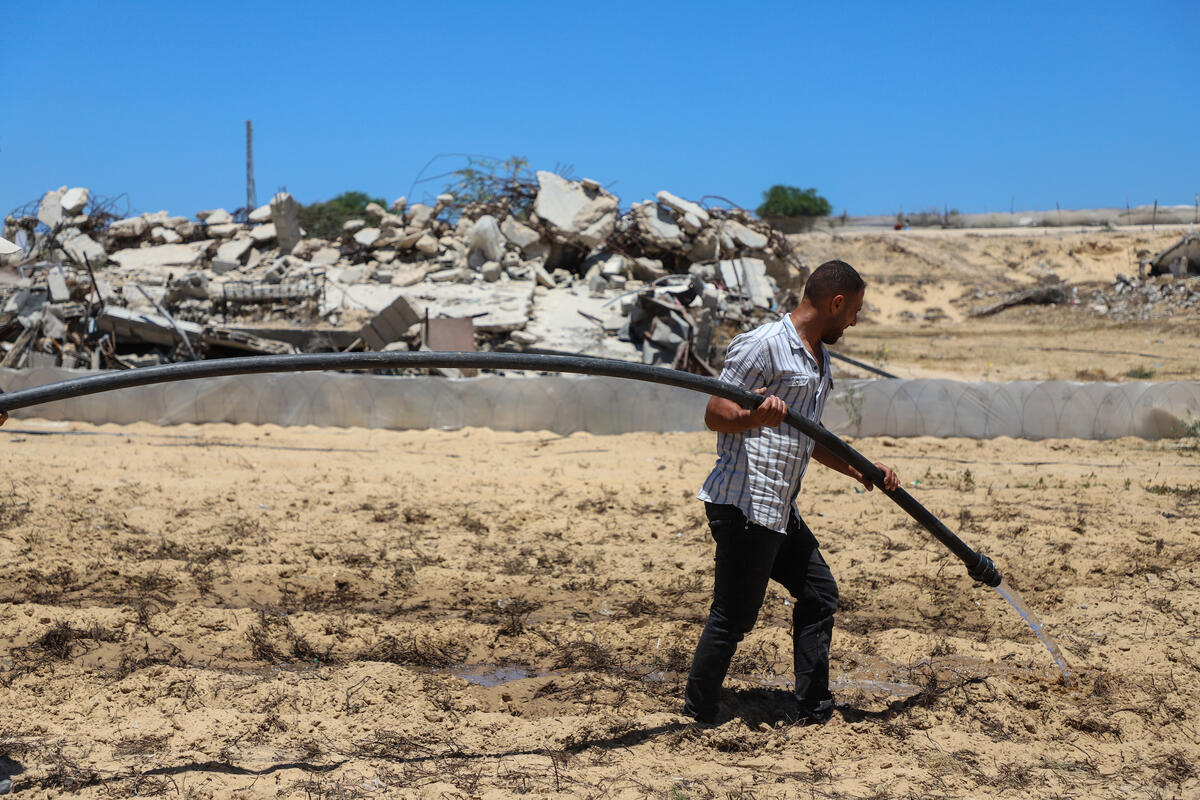
While the quantity of food available in Gaza has improved due to the big influx of aid since the 10 October 2025 ceasefire, only about 3% of Gaza’s agricultural land is still usable for food production following the destruction wreaked in two years of war, a report last week by the UN Food and Agricultural Organization (FAO) noted.
Peri-urban areas around Gaza’s densely populated cities once yielded a rich array of produce – including field vegetables, fruit orchards and vineyards as well as apiaries and dairy enterprises. But most of these areas also lie near the pre-1967 border with Israel and thus were devastated along with Israel’s advances into the enclave. Many of the same areas also remain under Israeli military control – or are otherwise unusable due to ecosystem damage, unexploded ordnance, rubble and toxic residues.a
As of 24 June 2026, 4 091 hectares – 27% of the Gaza Strip’s cropland – remained accessible to farmers, the FAO report notes. However, only about one-tenth of that, or 448 hectares, were both accessible and undamaged, according to the new geospatial assessment by FAO and the United Nations Satellite Centre (UNOSAT). Since October 2025, accessible and undamaged cropland has fallen even further — from 601 hectares to 448 hectares—a loss of 153 hectares, or 25.5 %. That is largely to Israel’s retrenchment along the “Yellow Line” dividing Israeli Defense Forces (IDF) from Hamas-controlled areas.
Results of hunger persist in developing bodies of young children
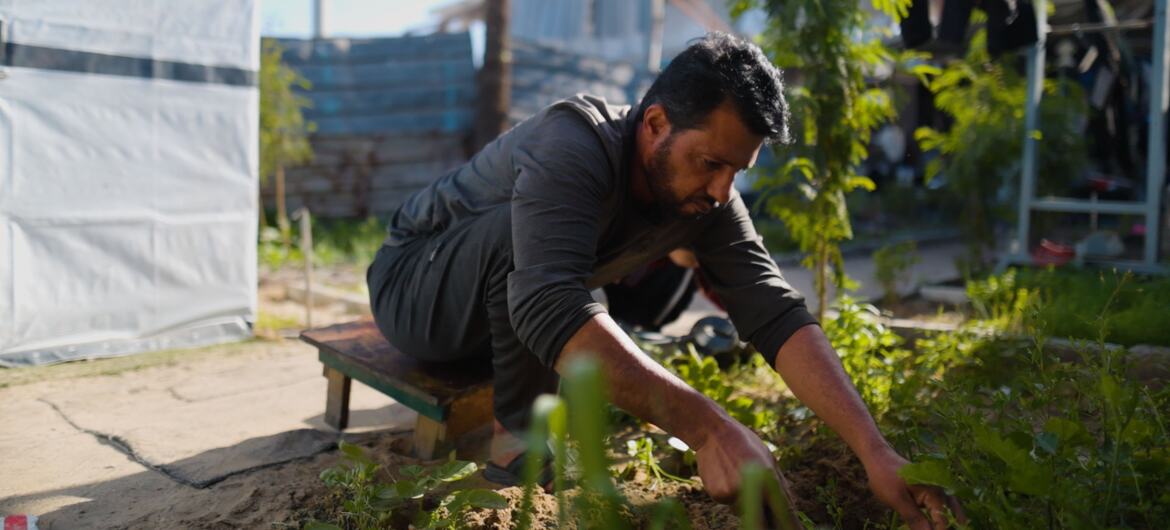
Fresh food entering the 365 square meter enclave, meanwhile, is too expensive for most Gazans to afford – leading to malnourishment among children, as well as pregnant and lactating women.
In August 2025, the Integrated Food Security Classification (IPC), a UN-backed measure of food insecurity, declared that famine was occurring in Gaza.
At the time, humanitarian access had been severely restricted since the war began in 2023. In August, 2025 alone some 17,000 children were admitted for acute malnutrition treatment at hospitals in Gaza.
Following the October 2025 ceasefire, Israel eased restrictions on the entry of humanitarian aid, which greatly increased food availability. The number of children receiving malnutrition treatment dropped to 3,000 by March 2026, and between 31 May and 15 June 2026, only around one per cent of children were still showing signs of acute malnutrition, or severe wasting.
But the long-term effects of acute hunger remain. According to a new UNICEF survey, 12.2 per cent – one in eight children – were chronically malnourished, or stunted at the height of the hunger crisis. Stunting can affect a child’s brain development, learning ability and future health for the rest of their lives.
Even today, “many children do not consume a diverse and balanced diet,” and “about 100,000 children and pregnant or lactating women need aid and nutritional support,” said the Humanitarian Forum, a group of Israeli NGOs in a statement last week. The statement pointed to the enclave’s near complete reliance on food aid trucked into the area as unsustainable.
And even those trucks face continuing risks as they deliver vital supplies. On Tuesday, a group of right-wing Israelis blocked aid trucks headed for Israel’s Kerem Shalom crossing into Gaza. They were protesting the planned deployment of an international force in the enclave and reconstruction efforts before Hamas is fully disarmed.
Image Credits: UNIFEED, FAO , IOM.
Combat the infodemic in health information and support health policy reporting from the global South. Our growing network of journalists in Africa, Asia, Geneva and New York connect the dots between regional realities and the big global debates, with evidence-based, open access news and analysis. To make a personal or organisational contribution click the donate button below.