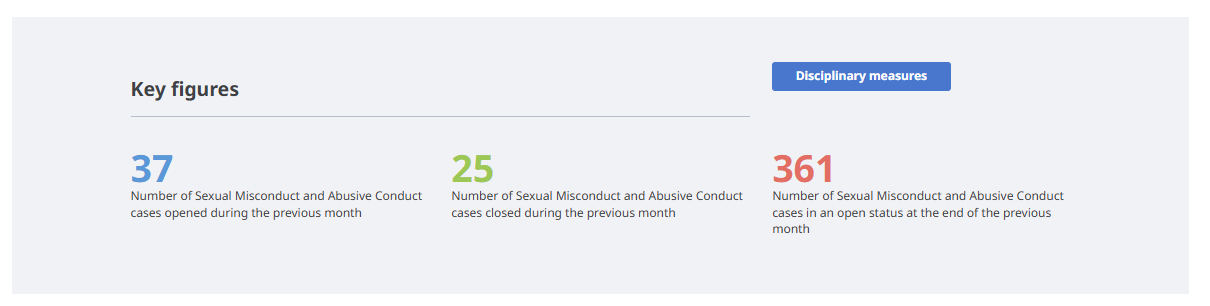
More sexual misconduct and abusive claims were filed against WHO staff, than closed, over the previous month – with 361 open cases in 2026, as of the beginning of September, according to the agency’s own investigations dashboard.
In August, the last month reported, investigators opened 37 new sexual and abusive conduct cases and closed 25 – representing a 25% increase in the queue in just the past month. The overall pace of case openings is running at an average of 28 a month, according to the WHO misconduct dashboard, run by the Office of Internal Oversight Services (IOS).
The data coincides with anecdotal staff reports of lagging investigations and an internal WHO auditor’s review reporting months of delay in case resolution and closures in 2025 – well beyond the three month/120 day target for investigations set by WHO following reforms made after the 2020 sexual harassment and abuse scandal involving WHO and UN staff and contractors, which surfaced in the Democratic Republic of Congo.
Incorrect data on trends: WHO has acknowledged but failed to correct
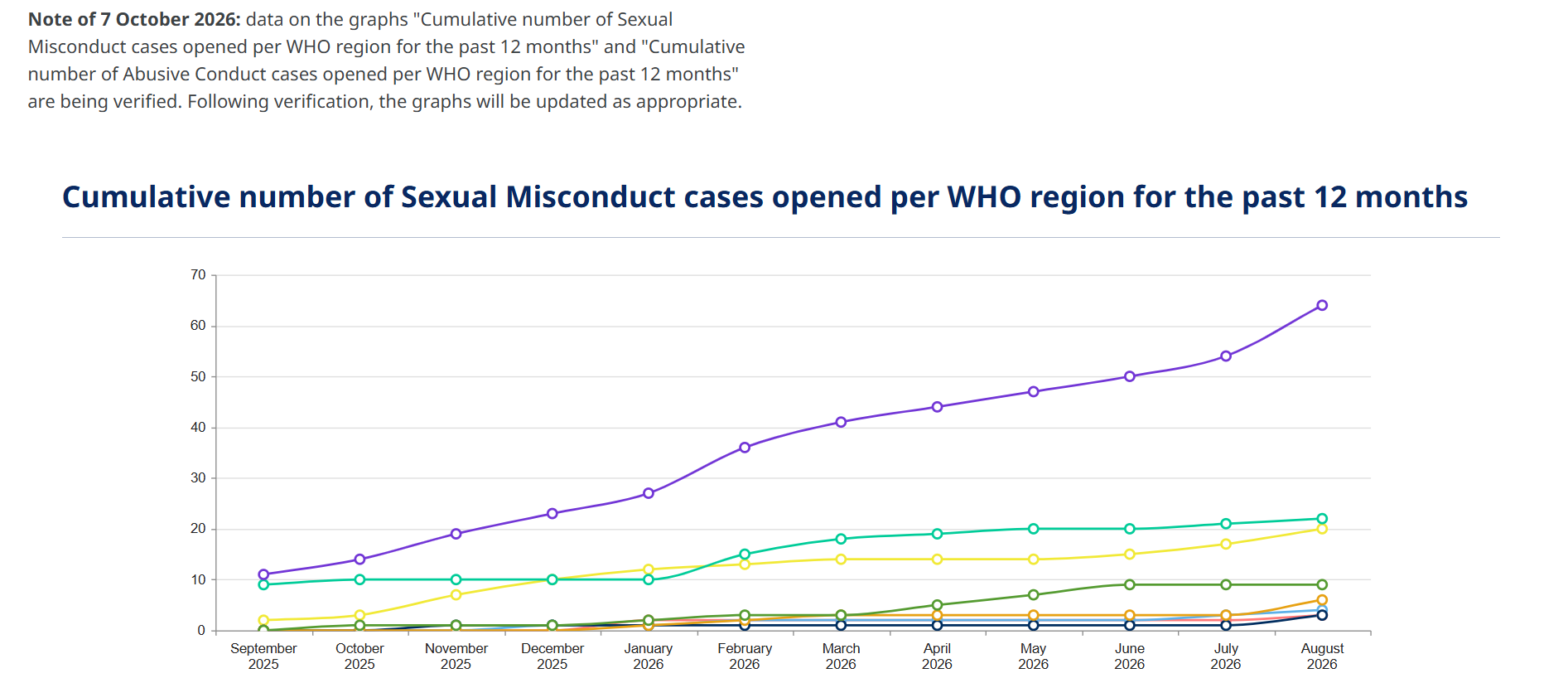
Incorrect data on overall trends – which WHO has acknowledged but so far failed to correct – confounds any complete reading on how and where new cases are rising overall.
“IOS’s abuse dashboards are actively reporting demonstrably false data. As of October 7, WHO finally flagged the charts for verification and added a brief note to the dashboard. It took external intervention to get action,” said Kieran Bligh, a global health researcher at George Washington University in a LinkedIn post.
“So far in 2026, only six sexual and abusive conduct cases have resulted in substantiated disciplinary decisions,” he added, citing WHO’s own reports. “Four involved senior personnel. Not one was dismissed.”
Queried repeatedly by Health Policy Watch over the past week, WHO posted a note on the dashboard pointing to the errors, but failed to provide any further clarification about the data and trends.
Recruitment of new IOS Director pending
The imbroglio coincides with the WHO’s recruitment of a new IOS director, following the recent retirement of Lisa McClennon who held the post since 2023.
Currently, Malika Parent-AiT-Mohamed is serving as acting director – and may be a candidate for the fixed term post. However, in light of the reportedly high rate of complaints, backlog of cases, and the sensitivity of the post, critics like Bligh, have called for more active supervision of the candidate selection process by the Executive Board.
Among the seven contenders that have so far emerged since nominations closed on 24 September, only one has publicly addressed the issue.
George Tamamyan, an Armenian oncologist nominated by Botswana, had his campaign team analyse publicly available data in the May 2026 Internal Auditor’s report. In a lengthy LinkedIn post, he called upon victims and critics to approach him personally on the issue, saying:
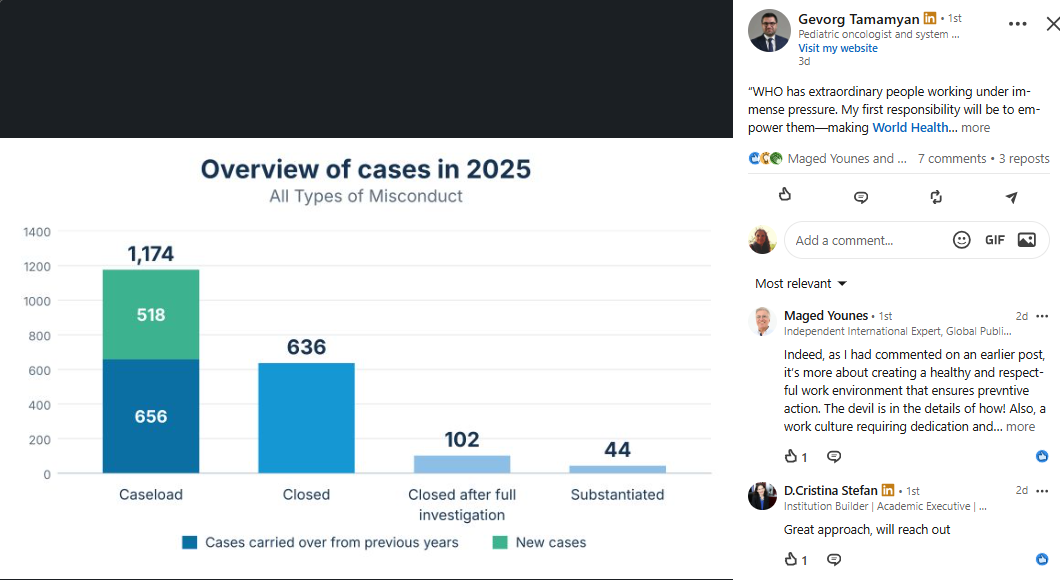
“What we found deserves a serious conversation. WHO reported that its investigations function handled 1,174 cases in 2025 and closed 636, leaving 538 at year-end….WHO says that timeliness, responsiveness and fairness in misconduct investigations are essential to maintaining trust. I agree!
Declining case closures?
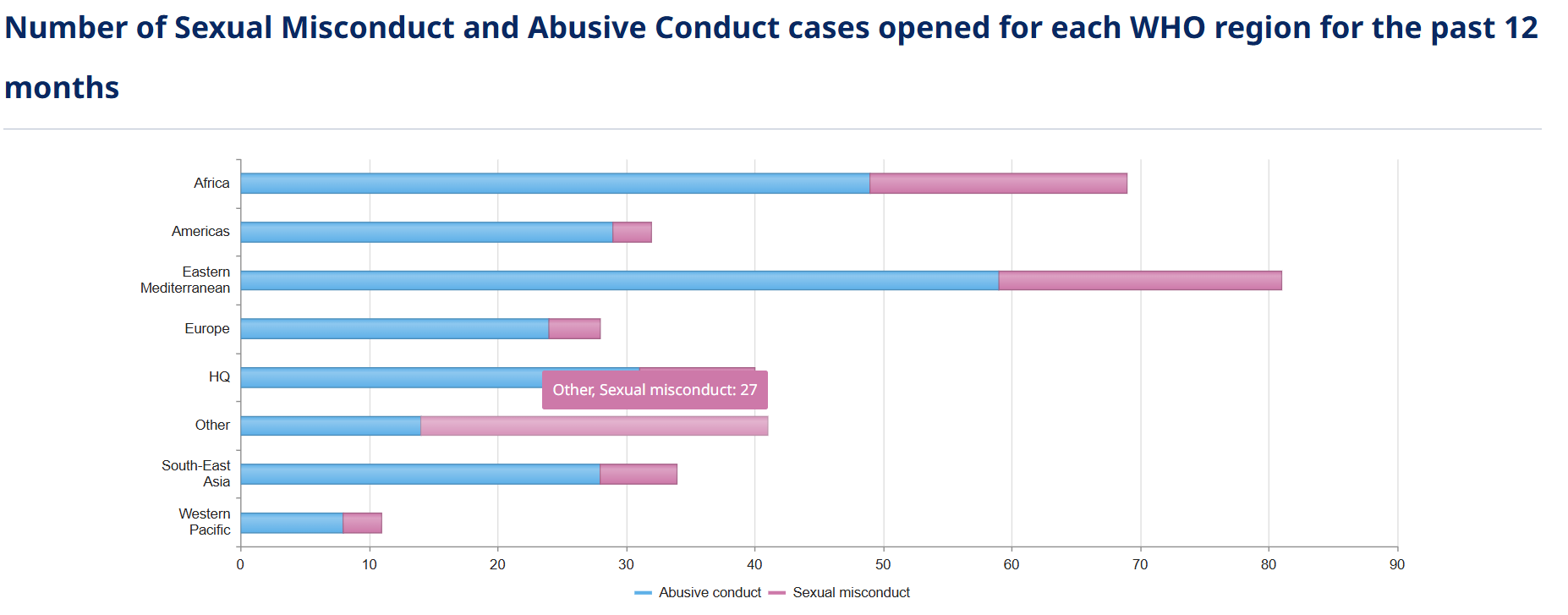
What seems clear is that over the past 12 months, a total of 336 cases of sexual misconduct or abusive conduct cases were filed across all WHO regions – with the lion’s share in Africa (69) and the Eastern Mediterranean Region (81).
The same three topped the table in 2023, in the same order. Roughly a quarter of all open cases concern sexual misconduct. In Africa it is close to half.
“Other” WHO offices (typically referring to WHO’s global service center in Kuala Lumpur) and Headquarters ranked third and fourth in the number of sexual and general misconduct cases filed, with 27 sexual misconduct cases in the “other” category – the most of any.
Fewer sexual misconduct and abusive conduct cases were closed in 2026 and 2025, as compared to 2024 – although far more than in 2021 and 2022, when the initial DRC revelations came to light.
Sexual harassment in 2026 complaints outpace last year’s
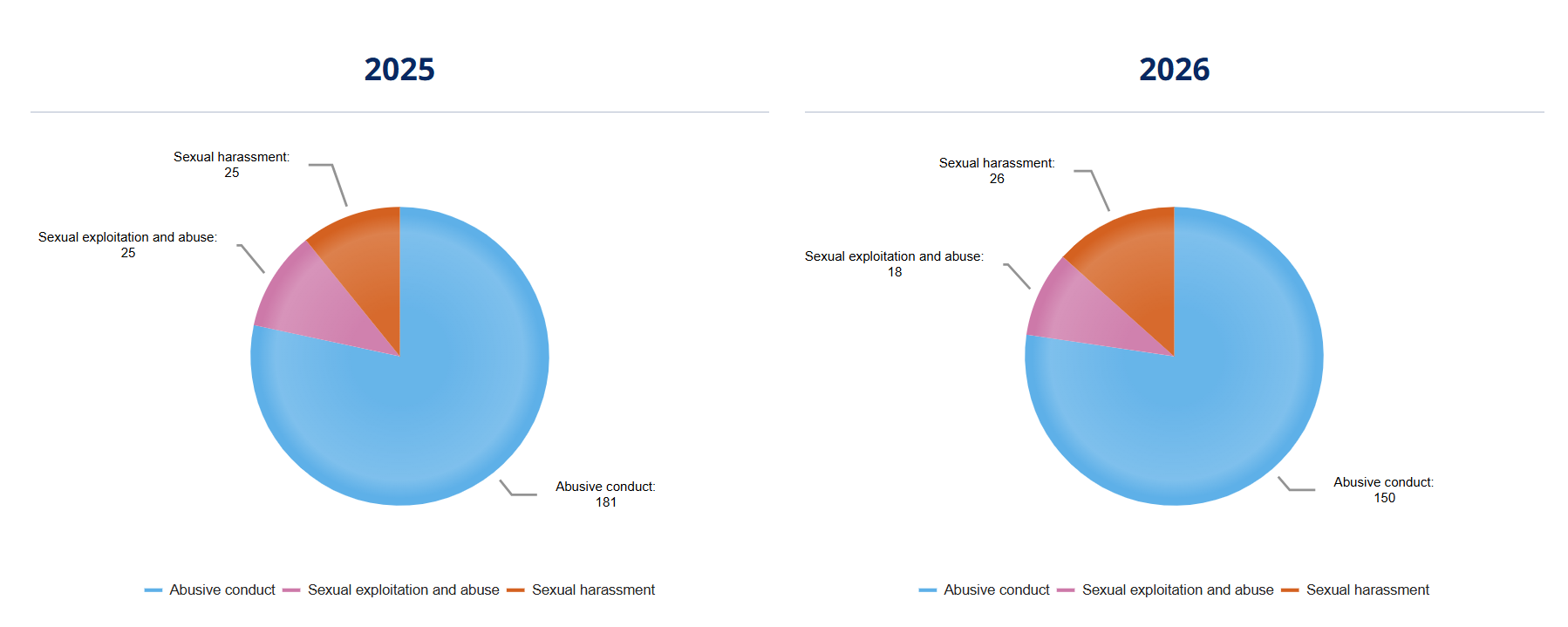
And with one-third of the year yet to be recorded, sexual harassment complaints had already passed last year’s total of 25, with a third of the year still to run.
Twenty months for a four-month job

In 2025, a sexual misconduct investigation took 20 months on average. WHO’s target is four, according to the Internal Auditor’s report to the World Health Assembly in May. The wait was five months longer than a year earlier.
Abusive conduct, which covers harassment, discrimination and abuse of authority, was slower still. Together with financial cases it averaged 34 months against a target of six, according to the auditor’s report to the May 2026 World Health Assembly.
The office doing the work is shrinking. During the massive budget cuts seen over the past year, it discontinued nine vacant posts and ended 12 consultancy contracts, leaving 10.5 budgeted staff posts and about 10 full-time consultants. Along with the current screening for a permanent head of IOS, candidates for the permanent position of Head of Investigations.
“Overreliance on external investigators directly exposes cases at intake or investigation to delays owing to mandatory breaks in consultant contracts, natural attrition and turnover,” the auditors wrote. They called the caseload “not sustainable” under the current model.
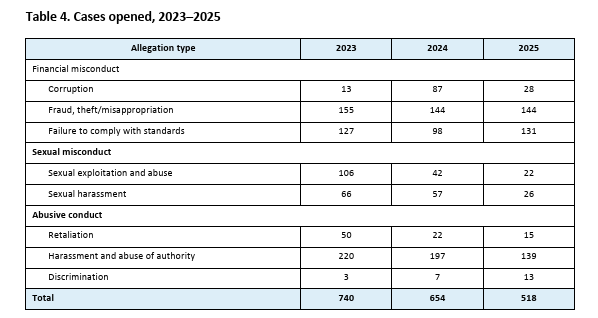
The report also logged a steep fall in new sexual misconduct cases, to 48 in 2025 from 99 in 2024 and 172 two years before. Among the possible explanations it offered was “shifting attention and pressures” caused by WHO’s own restructuring.
But this year’s dashboard numbers, however incomplete, suggest the lull could be over.
“Justice delayed is justice denied”
Staff representatives have long complained about delays in WHO’s internal justice process.
“Delays in justice processes not only undermine confidence in the system but also contribute to stress, disengagement and a sense of vulnerability among staff,” the WHO Staff Associations told the Executive Board at their meeting in February 2026. “As the saying goes, justice delayed is justice denied.”
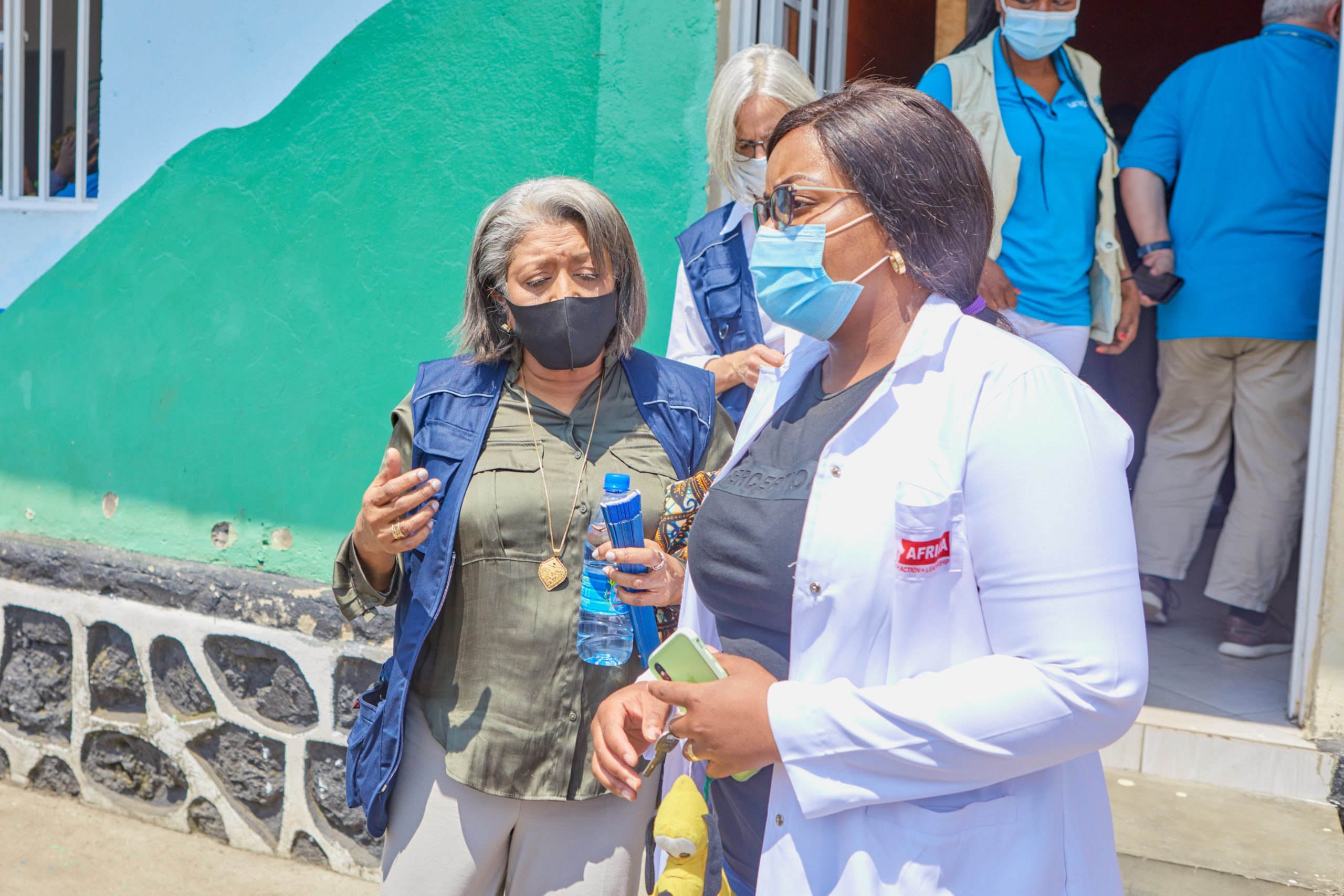
The promise they are measuring against dates from the sex-for-jobs scandal in the Democratic Republic of Congo during the 2018–2020 Ebola response, when WHO admitted its failures and WHO Director General Dr Tedros Adhanom Gheybreysus pledged zero tolerance for abuse cases.
By May 2023, WHO was presenting the problem as under control. Its dashboard that month said a dedicated team had “cleared the SEA/SH backlog” and that sexual misconduct cases were being “worked in real time”, with “an end-to-end investigative process of 120 days”. It showed 426 open cases.

But three years on, the open count has fallen by just 65 cases, and the 120-day process has become a 20-month average.
One feature has not changed. A Health Policy Watch investigation in 2023 found that in the most serious cases the final decision following an IOS investigation and report rests with one person: the Director-General. In other cases, decision rests with the WHO Regional Director – who
In May, WHO issued a new strategy, Zero Tolerance in Practice, for 2026–2029. It promises zero tolerance for misconduct, for retaliation and for inaction. A companion dashboard tracks disciplinary measures since 2022. Zero tolerance for inaction sits awkwardly beside a 20-month wait.
For six candidates, few answers
“Zero tolerance cannot be a slogan,” said Tamamyan in his post, which also provided a graphic analysis of data from the Internal Auditor’s report on “financial, sexual and harassment cases filed and addressed last year. “It has to be measurable: Do people trust the system enough to report? Are those who report protected? Do victims and survivors receive timely, effective support? And when something goes wrong, do we learn from it, or simply close the file?”
The six DG contenders who so far have remained mum on the issue include: Hans Kluge of Belgium, WHO Regional Director for Europe; Hanan Balkhy of Saudi Arabia, Regional Director for the Eastern Mediterranean; Indonesian health minister Budi Gunadi Sadikin; Qatar’s former health minister Hanan Al Kuwari; Spain’s María Neira, a WHO director for two decades; and China’s Song Li, former Director of China’s Commission on Maternal and Child Health. WHO publishes the official list in November.
Three are WHO insiders. Two run regions that appear on the dashboard: Balkhy’s has the largest open caseload of all, Kluge’s one of the smaller. Investigations are run centrally by IOS, not by regional offices, and cases are counted by where they arise, not by who is responsible. But both know the system from the inside.
On the campaign trail the talk has been of money and structure. Kluge has called WHO “overstretched, under-focused, and overly bureaucratic”. Balkhy has asked: “How do we use our money better?”
And other than Tamamyan, none of the candidates’ published statements reviewed for this article mentions investigations, internal justice or protection for staff who report abuse.
They will get their chance. The first Candidates’ Forum is on 18 November in Geneva. The Executive Board shortlists up to three names in January, and the World Health Assembly votes in May 2027.
The winner takes office on 16 August 2027. With the job comes the final say on every serious misconduct case in the organization, and a queue that is still getting longer.
Image Credits: WHO , WHO Misconduct against Persons Dashboard, WHO, Misconduct Dashboard , WHO, Internal Auditor Report, WHO, Internal Auditor's Report to WHA, WHO, LinkedIn/Gevorg Tamamyan.
Combat the infodemic in health information and support health policy reporting from the global South. Our growing network of journalists in Africa, Asia, Geneva and New York connect the dots between regional realities and the big global debates, with evidence-based, open access news and analysis. To make a personal or organisational contribution click the donate button below.