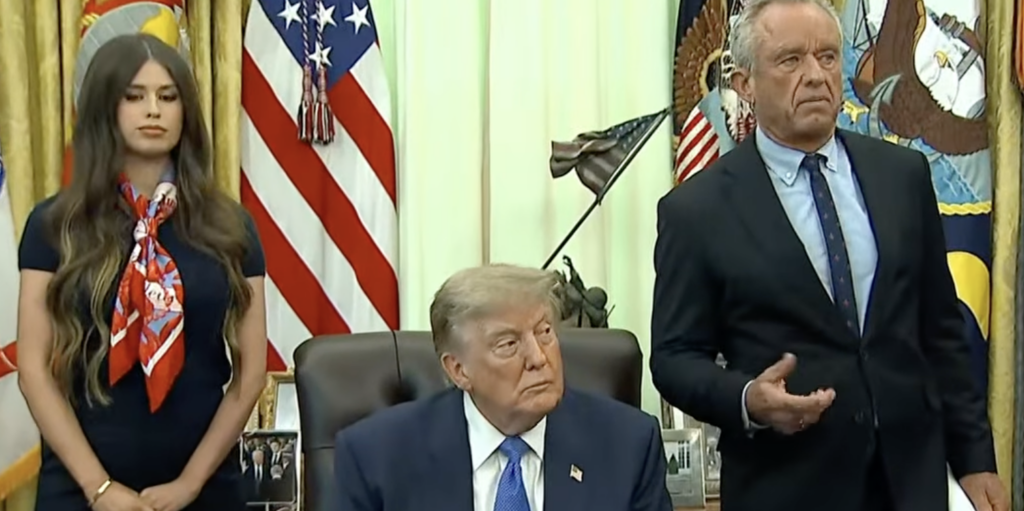
Cuts to Medicaid, the health services for low-income Americans, and fewer childhood immunisations – alongside persistent insinuations that vaccines are unsafe – are the most significant health policy changes made by the Trump administration since January 2025.
They have been accompanied by reduced food support for low-income families, purges of scientists, and slashed research budgets.
The cumulative impact of these policies will take decades to measure, but the early damage can already be measured in rising infectious diseases and worsening maternal health.
The Trump administration projects it will spend $900 billion less on Medicaid between 2025 and 2034 – largely by making it harder for people to qualify. By its own accounting, 10.5 million people will lose or face reduced health benefits, largely to offset Trump tax cuts that benefit wealthier Americans most.
Maternal care, rural health care and healthcare for Black and Hispanic communities are expected to be worst affected.
The Health and Human Services (HHS) budget has been cut by 12.5% this financial year (which started on 1 October), with more cuts for research grants and health services expected.
Undermining vaccines
HHS Secretary Robert F Kennedy Jr has been laser-focused on reshaping federal vaccine policy since assuming office in late February 2025. The nation’s most senior health official has led a decades-long crusade against vaccinations – the single health intervention that has saved by far the most lives in the history of humankind.
Twenty-six years ago, the United States had eliminated measles. Today, it faces its biggest outbreak in decades, with over 4,800 cases this year alone. Whooping cough cases have also surged in the past two years.
Vaccines exist for both, and experts say waning levels of immunisation have driven the outbreaks – with 96% of measles cases in those who are unvaccinated.
Instead of urging immunisation in the face of rising vaccine-preventable diseases, Kennedy has doubled down on his anti-vaccine stance.
His most recent move was to open a new vaccine injury research center at the US National Institutes of Health (NIH) despite the country already having a sophisticated vaccine surveillance system. HHS also plans to provide financial incentives to doctors for reporting vaccine injuries.
In a September address to Children’s Health Defense (CHD), the anti-vaccine non-profit he founded, Kennedy focused on the harms of vaccines and repeated the disproven theory that they are linked to autism.
COVID-19 vaccines were Kennedy’s priority upon assuming office. Opposition to these vaccines was what cemented a bond between the Kennedy anti-vaxxers, who believed mRNA vaccines were harmful, and the Trump libertarians who did not want to be forced to be vaccinated or masked during the pandemic.
By May 2025, the Food and Drug Administration (FDA) had limited COVID-19 vaccine recommendations to people over 65 and those aged 12 and over with underlying conditions.
Firing vaccine experts
The following month, Kennedy axed all the country’s vaccine advisers, the Centers for Disease Control and Prevention (CDC) Advisory Committee on Immunization Practices (ACIP).
After stacking ACIP with vaccine-sceptics, he let them lose on the childhood vaccination schedule. They declared vaccines for hepatitis A, hepatitis B, meningitis, rotavirus, influenza, and COVID-19 are no longer “routine”. Patients and their doctors should have “shared clinical decision-making” about whether to have them.
Professional health groups and 14 states have challenged both the dismissal of ACIP and the changes to the childhood immunisation schedule in separate court challenges.
After a judge ruled HHS overreach on the ACIP firings (the state is appealing), Kennedy enlisted Trump’s help.
In August this year, the US president issued an executive order on vaccines that reduced childhood vaccines from 18 to 11, and divided the three-in-one measles, mumps, rubella (MMR) vaccine into separate shots. It is extraordinary for a US president to issue a decree on immunisation outside of a pandemic.
Kennedy also cancelled $500 million in research funding into mRNA vaccines by the US Biomedical Advanced Research and Development Authority (BARDA) – claiming “mRNA technology poses more risks than benefits for these respiratory viruses”.
“Eugenics is not a word I use lightly. Yet elements of that thinking are echoed in policies that promote natural infection over prevention provided by vaccines; confound health equity with diversity-focused hiring practices, and pit personal choice against community,” wrote Dr Demetre Daskalakis, former director of the US CDC’s National Center for Immunizations and Respiratory Diseases.
Purging scientists

Daskalakis is one of at least 25 senior health leaders who have been fired, resigned or reassigned across the country’s health and scientific bodies under this Trump administration. Around 10,000 HHS staff have also lost their jobs in “cost-cutting”.
The CDC, charged with preventing and controlling disease, injury, and disability, has been worst affected. The Senate-confirmed CDC director, Dr Susan Monarez,, was fired in August 2025 for refusing to rubber-stamp decisions taken by Kennedy’s political appointees.
After being fired, Monarez told the Senate that Kennedy had directed her to “commit in advance to approving every ACIP recommendation regardless of the scientific evidence” and to “dismiss career officials responsible for vaccine policy, without cause”.
Daskalakis and three other top CDC officials resigned in protest after Monarez was fired. Five other CDC directors were reassigned last year, and earlier this year, the CDC’s acting director and deputy director left the agency.
Nine top NIH officials have also been forced out, including the directors of five NIH institutes.
In May, FDA Commissioner Marty Makary was fired, and Tracy Beth Høeg, who took over as acting head, was removed within weeks.
In April, the White House also fired all 24 members of the National Science Board (NSB), the group that advises the National Science Foundation (NSF), without explanation.
“This is the latest stupid move made by a president who continues to harm science and American innovation,” said Representative Zoe Lofgren, the Democratic ranking member of the House Science, Space, and Technology committee. “Will the president fill the NSB with MAGA loyalists who won’t stand up to him as he hands over our leadership in science to our adversaries?”
Worsening maternal health
The US has the highest maternal mortality rate among high-income countries. Since the federal law allowing access to abortion, Roe v Wade, was overturned, Trump loyalists have tightened abortion access in several states to such an extent that it is hard for doctors to intervene when women are miscarrying.
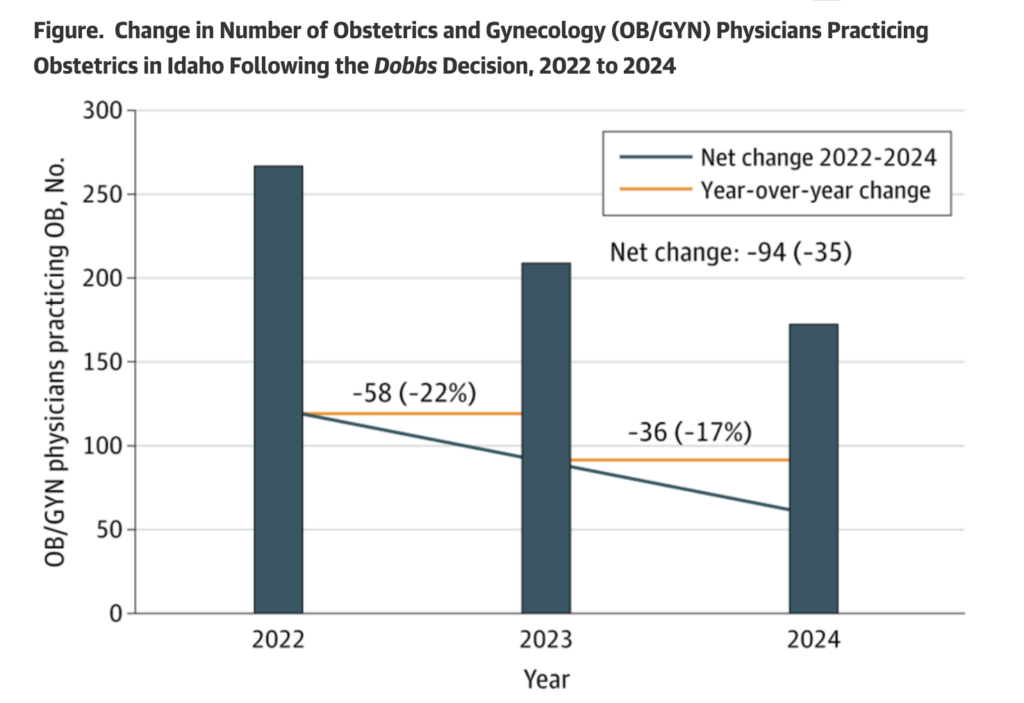
This has had a chilling effect on maternal health. While 12 of the most restrictive states have seen a small drop in their number of obstetrician-gynaecologists, some state effects have been severe.
In Idaho, for example, 35% of ob-gyns have left or stopped practising since that state banned abortion. Half of Idaho’s counties no longer have an obstetrician, and in the southeastern corner of the state, there is one obstetrician for 120,000 people, according to a New York Times report.
Infant mortality is generally higher in states with restrictive access to abortion, with Alabama and Mississippi recording the highest deaths and California the lowest, according to a study published in JAMA.
The 2025 report of March of Dimes, a US non-profit advocating for mothers and newborns, describes the country’s maternal and infant health system as “dangerously stalled”.
The report notes an increase in preterm births among Black mothers and a decline in pregnant women seeking care in their first trimester.
Measles rise as vaccinations fall
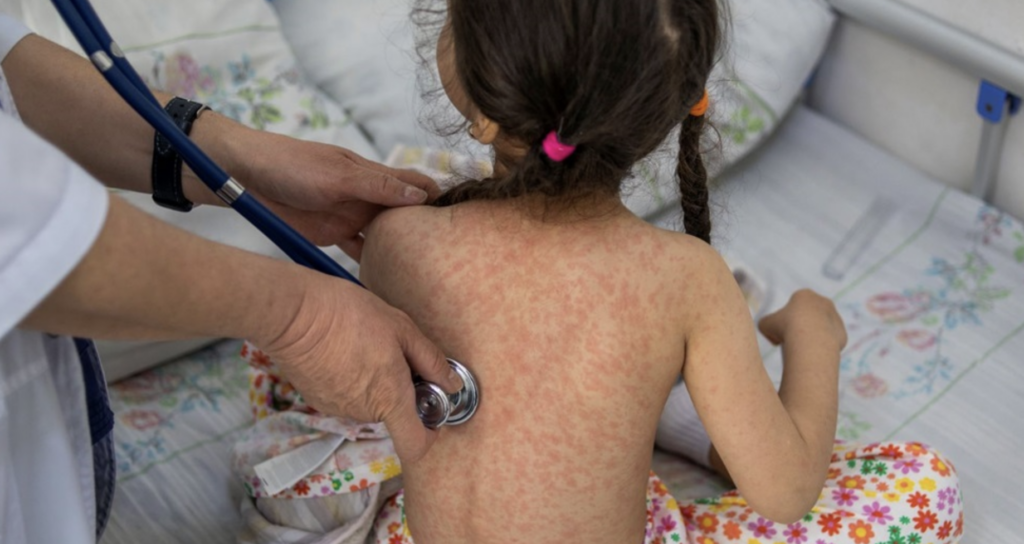
There have been 43 new measles outbreaks in 2026, with 4,852 recorded cases by 30 October, according to the US CDC. This is more than double the 2025 caseload.
This is “by far the highest total in 35 years”, according to the Center for Infectious Disease Research and Policy (CIDRAP) based at the University of Minnesota.
“The new data mark the 12th straight week of triple-digit increases nationwide,” CIDRAP noted. “The United States will very likely lose its measles elimination status – which it gained in 2000 – in the coming months.”
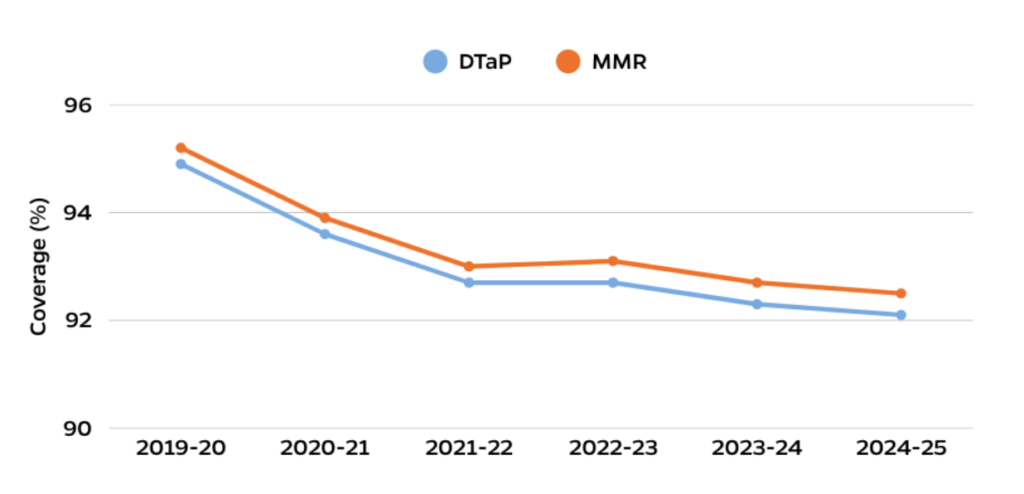
The outbreaks are being driven by a drop in vaccinations to below the 95% needed to maintain community immunity.
Johns Hopkins reports declining vaccination rates in kindergarten children. During the 2024-25 school year, coverage for measles, mumps, and rubella (MMR) was just 92.5%.
The diphtheria, tetanus, and pertussis (DTaP) vaccination rate also decreased from 92.3% in 2023-24 to 92.1% in 2024-25. Even polio vaccination coverage dropped from 92.7% to 92.5%
Worsening health in the US
Life expectancy in the US is already considerably lower than in most high-income countries, and its “avoidable deaths” are increasing, according to a 2025 report in The Lancet.
Reduced access to Medicaid and the elimination of certain childhood vaccinations, along with vaccine misinformation, are slow-burn activities likely to worsen the health of US citizens.
Their full impact will only become evident years down the line, as well as the axing of thousands of health professionals and the elevation of political appointees over career scientists.
The US is an outlier in the developed world as it does not offer universal health coverage. Over two-thirds of US citizens rely on private health insurance and around 10% have no health coverage.
The popularity of Kennedy’s “Make America Healthy Again” movement indicates that millions of Americans are concerned about worsening health.
But Kennedy’s approach so far has undermined public health measures rather than living up to his campaign promise to address the drivers of poor health, particularly the junk food industry that is a major cause of obesity and cardiovascular disease.
Image Credits: JAMA, Johns Hopkins.
Combat the infodemic in health information and support health policy reporting from the global South. Our growing network of journalists in Africa, Asia, Geneva and New York connect the dots between regional realities and the big global debates, with evidence-based, open access news and analysis. To make a personal or organisational contribution click the donate button below.