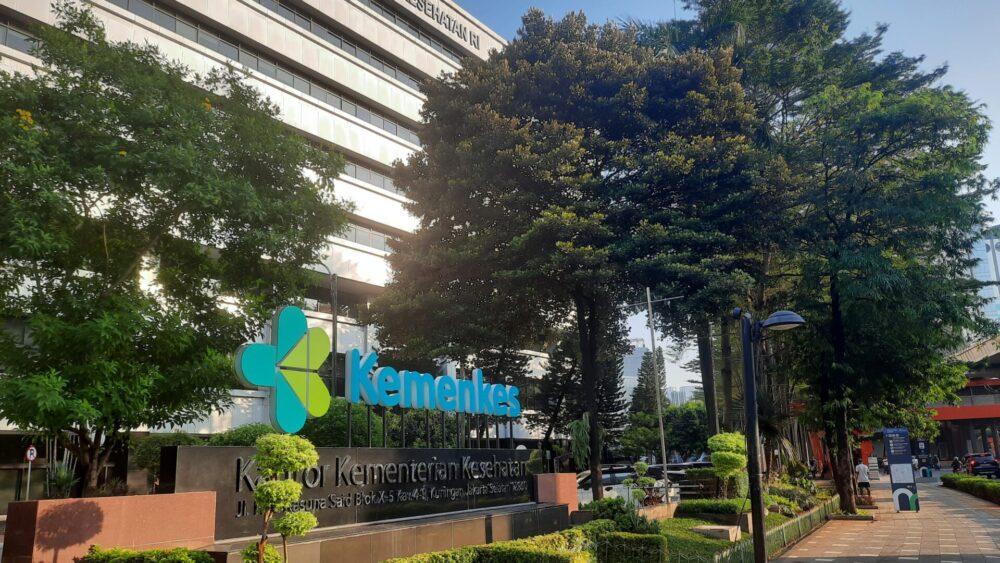
Jakarta has mounted a formal defence of Health Minister Budi Gunadi Sadikin’s WHO bid to become Director General and the internal reforms he undertook as Health Minister curbing the powers of Indonesia’s powerful health and medical associations. The rebuttal came after a coalition of Indonesian civil society groups protested his expansion of state control over medical training and standards in a petition to all of WHO’s member states, the focus of an exclusive report by Health Policy Watch. Meanwhile, some legal scholars see merit in his reforms.
GENEVA – Indonesia has circulated a sweeping diplomatic rebuttal to World Health Organization member states, defending Health Minister Budi Gunadi Sadikin against domestic allegations of authoritarian governance.
In the 14-page filing, Jakarta portrays Sadikin as an executive reformer who took on an entrenched medical establishment to expand public healthcare access. Addressed to the WHO Executive Board and all Geneva delegations, and forwarded to Health Policy Watch, the document responds to a 4 November objection from the Coalition for Health Justice.
Ahead of the first candidate interviews in November, the coalition of medical and civil society groups alleged retaliation against outspoken critics, hospital revenue targets, and mounting judicial rebuffs.
Officials brand several of the coalition’s allegations “disinformation”, insisting the selection of the next WHO leader must “not be an extension of domestic political contestation.” Local policy battles, Jakarta argues, must not derail an objective assessment of Sadikin’s executive qualifications.
Breaking a medical guild to fix a 65,000-doctor deficit

To justify dismantling the powers of Indonesia’s medical establishment, Jakarta points to a stark domestic arithmetic: a projected deficit of nearly 65,000 specialists by 2032.
Sadikin’s signature 2023 Omnibus Health Law stripped professional associations of exclusive licensing powers. To bypass university bottlenecks, it established a hospital-based training pathway designed to “complement, not replace” existing programmes, the filing states.
The ministry contends that medical collegiums long lacked genuine independence. Prior to the 2023 overhaul, collegiums were “subordinate to or part of medical organizations or associations” and “not accountable to the public,” the filing argues. Leadership was appointed “without a transparent process,” while specialist trainees “had to pay a huge amount of tuition to the universities,” officials add.
In practice, that historical structure concentrated authority within the Indonesian Medical Association (IDI) and university medical faculties.
Medical deans and faculty fiercely resisted the overhaul, warning that bypassing university oversight compromised clinical standards and patient safety. In June 2025, 372 professors publicly declared a lack of confidence in Sadikin’s leadership.
While the health ministry points to the historical control of collegiums by medical associations to justify its restructuring, IDI did not sign the coalition’s letter. It was one of five professional bodies whose challenge to the 2023 law was rejected by the Constitutional Court. IDI did not respond to requests for comment by the time of publication.
Courtroom defeats and regulatory fallout
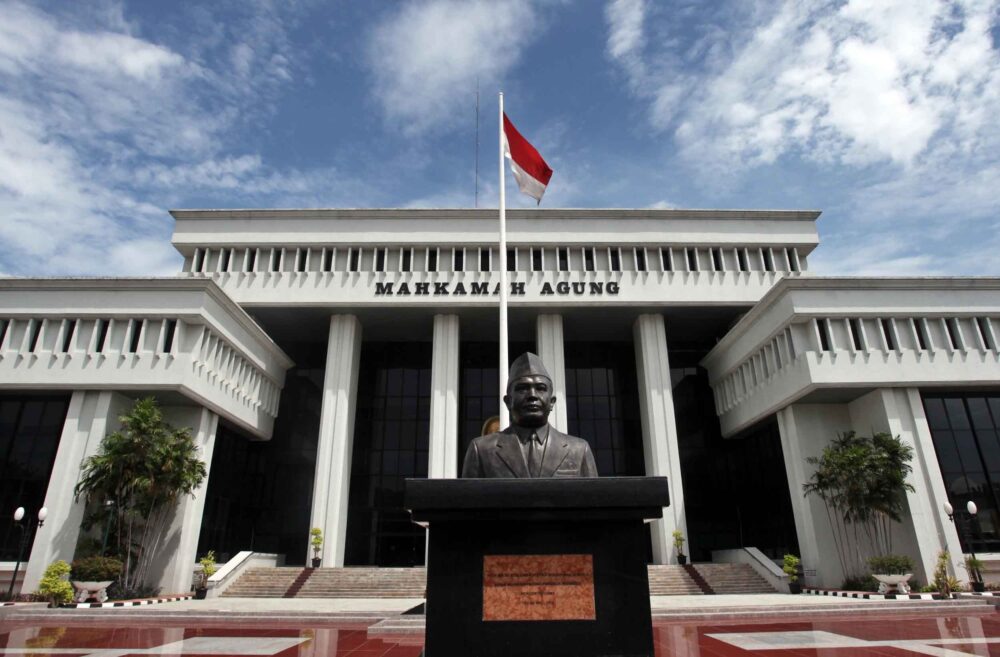
In its Geneva filing, the ministry downplays the Constitutional Court’s ruling on collegium independence against its reforms, characterising the verdict as a narrow procedural adjustment. That decision “merely stripped” the ministry of powers to select board candidates and establish new collegiums, leaving the existing system intact, Jakarta contends.
The Court itself held that collegiums must operate independently as part of the Health Council, answering to the President as head of state.
While the government maintains regulatory adjustments are underway, its submission omits the Supreme Court’s sweeping October ruling. That decision struck down 70 provisions, ending the minister’s sole authority over appointments to the Health Council, the collegiums and the Professional Disciplinary Council.
Under Supreme Court orders, the government has 90 days from receiving the ruling to revoke those provisions, after which they lose legal force automatically – a window likely to close around the time of the WHO Executive Board’s January session.
The ministry did not respond to questions from Health Policy Watch regarding compliance with that timeline.
Contested transfers and courtroom pushback

Jakarta rejects allegations of a systematic crackdown on dissent as “disinformation” citing routine rotations of roughly 150 civil servant physicians across ministry hospitals since 2024. Officials label the coalition’s accounts of dismissals involving outspoken critics Prof Zainal Muttaqin and Dr Rizky Adriansyah equally unfounded. Both were part-time physicians on temporary contracts, the filing notes, though it offers no explanation for why their contracts ended.
The ministry also disputes claims regarding Prof Budi Santoso, who was removed as medical dean at Universitas Airlangga after criticising reforms. University rectors, not the health minister, control faculty posts, officials note, pointing out that his 3 July 2024 dismissal was revoked six days later.
Yet that narrative of administrative routine faces judicial pushback. The government is currently fighting to overturn a major legal victory won by prominent dissenting paediatrician Dr Piprim Basarah Yanuarso.
On 7 September, the Supreme Court annulled a decree transferring Yanuarso from Jakarta’s flagship Dr Cipto Mangunkusumo National General Hospital (RSCM) to Fatmawati General Hospital. The reassignment followed his vocal opposition to government moves placing the independent medical collegium under ministerial control.
The ministry acknowledges the court defeat, but describes the reassignment as a routine transfer an hour’s drive away. It is now challenging the verdict through an extraordinary judicial review.
Officials maintain that Yanuarso’s subsequent civil service dismissal remains legally valid, citing unexcused absence rules. The ministry argues he accepted the dismissal by applying to withdraw his pension funds in July without lodging a formal challenge. The Supreme Court ruling concerned the transfer, not the dismissal itself.
The coalition did not respond to requests for comment regarding the ministry’s rebuttal.
Executive control or guild protectionism?

While the civil society coalition views ministry control of the collegiums as authoritarian overreach, there is some merit to Sadikin’s reforms, according to Georgetown global health law professor Lawrence Gostin. High-functioning systems like Britain and the United States routinely separate professional advocacy from public governance, placing licensing, hospital budgets, and statutory oversight under government authority rather than private guilds, he explained.
“Thus, it is admirable that Health Minister Budi [Sadikin] centralised these functions,” Gostin told Health Policy Watch responding to a query. “So long as he governs well, this is a benefit, not a detriment.”
That endorsement, however, hinges on scientific integrity.
“By governing well, I mean developing standards through science in ways that are transparent and accountable,” Gostin noted, cautioning that professional societies must step in whenever political leaders abandon scientific evidence.
He also cautioned against viewing judicial rebuffs as definitive proof of wrongdoing, arguing that legal challenges must be weighed against the broader public interest.
“If Budi is genuinely seeking to follow the rule of law, the critique lacks merit,” Gostin added.
The corporate turnaround pitch

For domestic critics, however, Sadikin’s governance vision has been shaped less by public health principles than by his corporate approach. The coalition sees a commercial banker imposing corporate logic on a sector that demands social protection.
Responding to this criticism, Jakarta leans directly into that financial pedigree, pitching executive management as a vital asset for global health governance. The filing firmly rejects claims that a private-sector background violates WHO criteria requiring proven leadership.
The government notes that WHO Director-General Dr Tedros Adhanom Ghebreyesus holds no medical licence, pointing to non-physician ministers in Britain and Singapore. Yet that comparison glosses over Tedros’s background as a trained public health immunologist, contrasting with Sadikin’s career in commercial banking.
To underscore Sadikin’s executive record, Jakarta points to broad reforms across digital health, infrastructure, and disease prevention. During his tenure, Sadikin oversaw the rollout of 453 million COVID-19 vaccine doses, while childhood stunting dropped from 24.4% to 19.8%. Indonesia’s 2022 G20 presidency also helped launch the World Bank-hosted Pandemic Fund.
The filing also defends his emergency crisis management during recent wildfire haze across Sumatra and Borneo. While confirming 433,162 acute respiratory infections across seven provinces, officials point to an aggressive response that deployed 815 clean-air “oxygen houses” and 1.7 million masks.
Corporate metrics in public hospitals
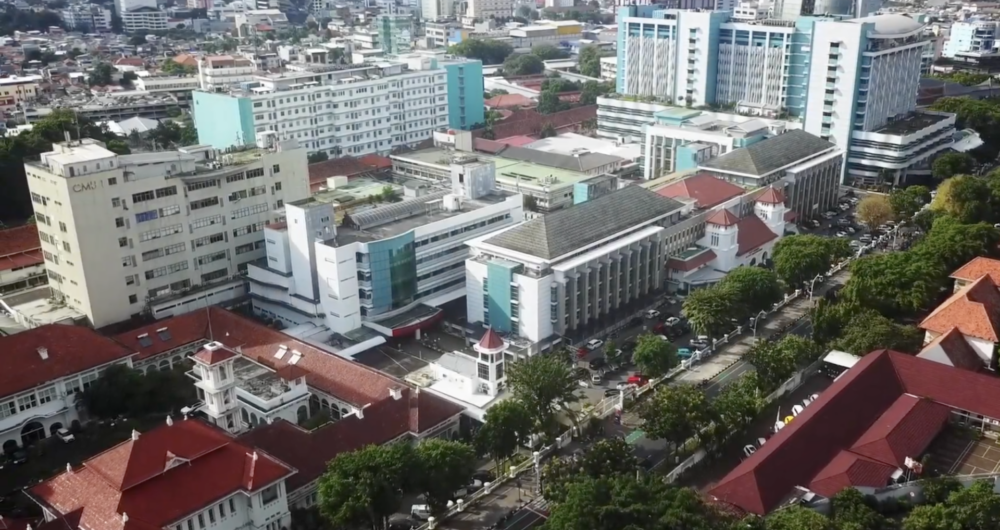
Jakarta firmly rejects allegations that this balance-sheet mindset has commercialised state medicine and that state facilities have prioritised revenue targets over vulnerable patients.
Responding to criticism of a 2024 directive that set hospital revenue targets, the ministry argues that several flagship facilities historically faced chronic deficits. Before 2021, some hospitals were “on the verge of collapse due to mounting debts,” prompting reforms to “root out corruption and nepotism”, the filing states.
That overhaul, officials add, “annoyed many senior physicians, some even participate in the Coalition of Health Justice.”
Jakarta’s flagship hospital spent $85 million last year – representing almost 90% of its profit – subsidising underprivileged, uninsured, and under-covered patients, the ministry reports. Revenue generated from executive and premium suites directly funds those cross-subsidies, officials argue.
The filing also addresses the death of Yurizal Tri Chaerawan, a BPJS-insured patient who reportedly died following an eight-hour emergency room wait. While critics cite the tragedy as evidence of capacity rationing, the government focuses strictly on his clinical condition.
Citing RSCM logs, officials told Geneva delegates that Yurizal required a specialised High Care Unit rather than a standard bed. That unit was operating at capacity, and the patient had severe underlying comorbidities, including malignancy, requiring palliative care.
Genomic data guardrails
The debate over commercial interests also shadows Sadikin’s technological flagship: the Biomedical and Genome Science Initiative.
Critics warn that sequencing population DNA alongside foreign biotech firms compromises national bio-sovereignty. The coalition specifically flags partnerships with global sequencing giants, alleging insufficient safeguards over valuable genetic IP.
Jakarta firmly rejects those concerns, stressing that genomic data remains sovereign state property under ministerial decree. External partners, the filing argues, receive strictly limited access.
In its technical defence, the ministry outlines a “data visitation” model built on a Trusted Research Environment, which lets authorised researchers analyse genomic data inside a secure platform without downloading or transferring raw data outside it.
The Executive Board Test
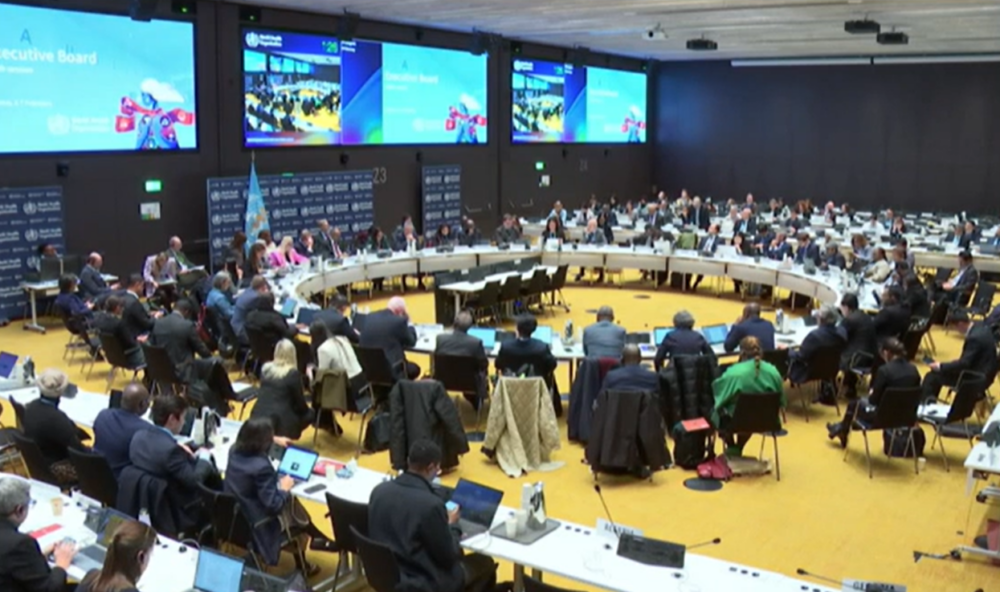
As the coalition directly challenges Sadikin’s eligibility as candidate for WHO Director-General, alleging his domestic record fails core public health leadership criteria, Indonesia’s health ministry firmly pushes back on that assessment. In its submission, Jakarta warns delegations that multilateral appointments must not become extensions of domestic political disputes.
In Geneva, domestic judicial friction and workforce alienation rarely derail a Director-General bid, according to Lawrence Gostin, a leading global health law scholar at Georgetown University.
“It should not mean anything,” Gostin said. Multilateral delegations, he explained, weigh a candidate’s strategic capacity and diplomatic stature over local political friction.
Formal dossiers from both sides are now circulating among Geneva delegations. Sadikin is one of seven candidates WHO announced on 29 October. The 34-member Executive Board will shortlist and interview candidates at its 25 January to 2 February session and nominate up to three, before the World Health Assembly appoints the new Director-General in May.
See related story:
Image Credits: Kementerian Kesehatan Republik Indonesia, Gedung Mahkamah Agung RI, RSCM, Felix Sassmannshausen/HPW, Georgetown Law, European Space Agency (ESA).
Combat the infodemic in health information and support health policy reporting from the global South. Our growing network of journalists in Africa, Asia, Geneva and New York connect the dots between regional realities and the big global debates, with evidence-based, open access news and analysis. To make a personal or organisational contribution click the donate button below.