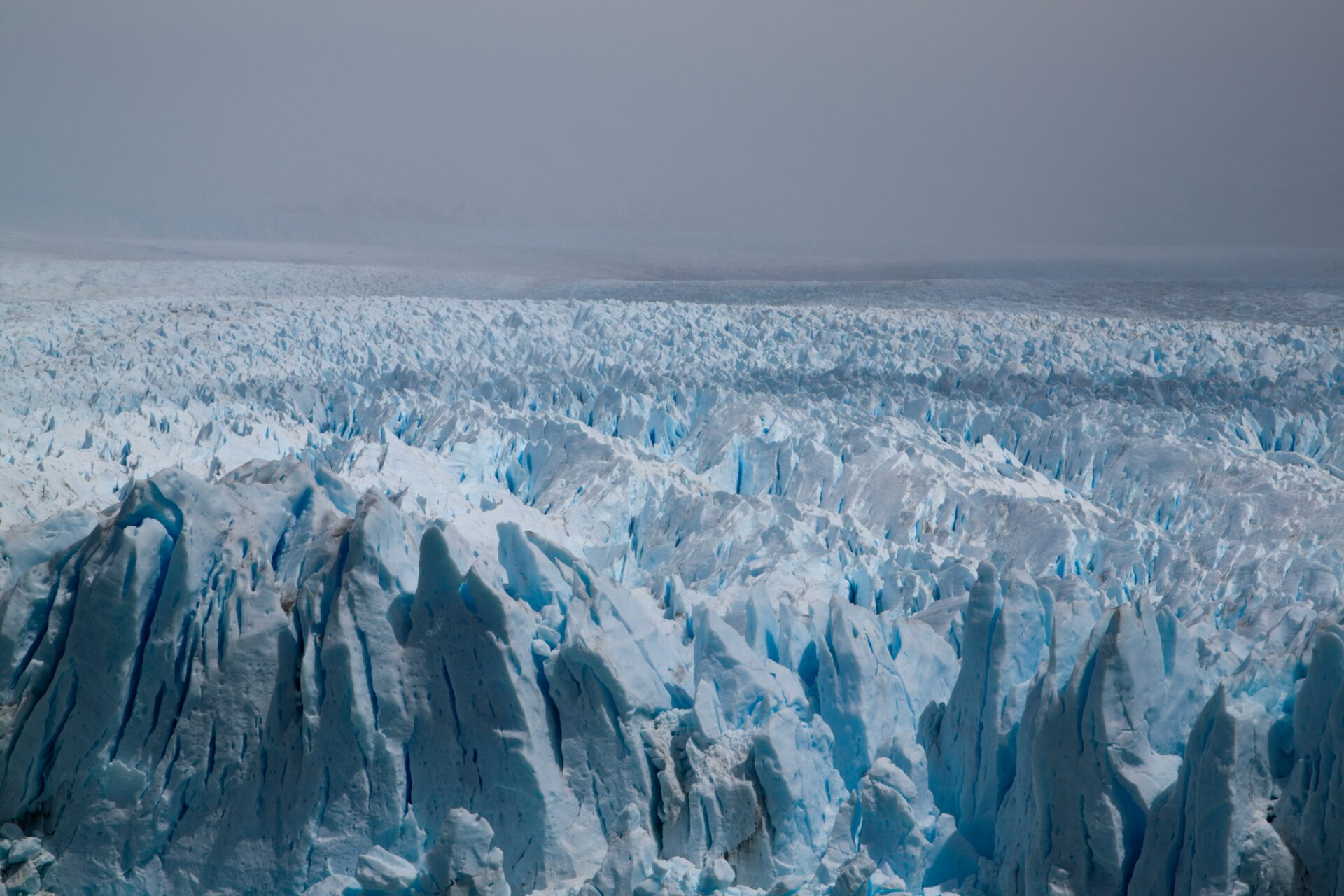
ANTALYA – Rising global temperatures are driving a likely collapse of the Atlantic Ocean’s circulating currents, threatening to reduce European temperatures by around 5℃, disrupt monsoon patterns, global food production and destabilise economies worldwide, a group of leading scientists warned on the sidelines of COP31.
The Atlantic Meridional Overturning Circulation (AMOC), a vast system of ocean currents often confused with the Gulf Stream, is an essential part of the climate system. It carries warm water north from the tropics, releasing heat into the atmosphere as it travels toward Europe. The cooled water then sinks and returns south through the deep ocean to be warmed once more.
This continuous loop helps keep Europe much milder than its northern latitude would suggest, while shaping monsoons as far away as West Africa and South Asia and marine ecosystems across the planet.
Scientists cannot say for sure when the climate crisis will push it past the tipping point into collapse, but some put the odds of crossing it this century at about 50-50 this century.
“AMOC can no longer be considered a low-likelihood event; this is a high-risk global threat,” declared Johan Rockström, Director of the Potsdam Institute for Climate Impact Research. ”You cannot kick the can down the road.”
Despite the doom and gloom, scientists said a win-win lever to reduce the risk of AMOC collapse is rapid cuts in soot (black carbon) emissions, which would slow Arctic ice melt while reducing the health impacts of deadly air pollution.
Describing the threat as a national security risk, Rockström challenged ministers and diplomats from Iceland, Norway, the Netherlands and Finland who gathered for the event to tackle AMOC “as a national security issue.”
“We have failed so far in terms of delivering against the Paris Agreement,” Rockström added. “That’s the problem. We have to halt global warming.”
New European ice age, Africa and Asia food production interrupted
While a precise date for an AMOC collapse is impossible to determine, scientists see warning signs suggesting the vital circulation system could be approaching a dangerous tipping point.
Sea-level warning and Arctic ice melt, potentially weakening or collapsing the Atlantic Ocean’s circulatory system, would set in motion changes that would be extremely difficult, if not impossible, to reverse.
While a dramatic reduction in average European temperatures of 5℃ or more might be the most immediate impact, effects would not stop at Europe’s borders.
Australian climate scientist Bill Hare warned that AMOC disruption could affect major weather systems associated with West African and South Asian monsoons. Rainfall disruption, in turn, would have profound consequences for agricultural production and the survival of communities already vulnerable to climate change.
The consequences of a full-scale collapse could be so extensive that conventional climate adaptation strategies might prove inadequate, Hare warned, adding that an AMOC collapse is something that governments need to prevent rather than prepare to manage — the de facto response to many climate change impacts to date.
“It’s a sort of event that one needs to avoid,” Hare said.
No longer a ‘low-likelihood’ event
Today, the AMOC transports heat to northern latitudes equivalent to 15 times the annual energy use of all humanity, Professor Stephen Rahmstorf of the University of Potsdam said, underscoring the power of the circulating system.
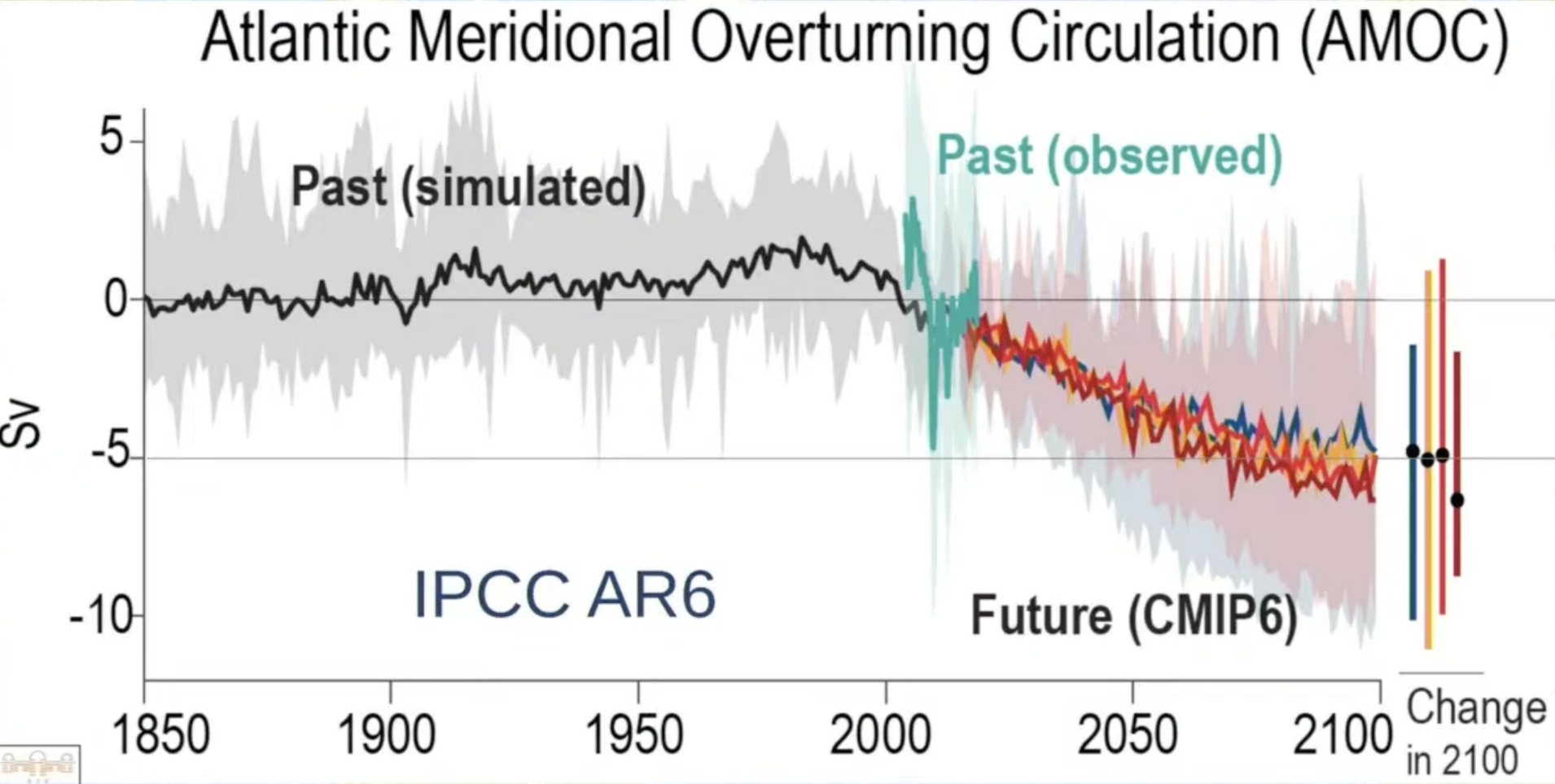
Direct measurements of the AMOC only began in 2004, making it difficult to establish a long-term record. Nevertheless, Rahmstorf said several independent indicators are converging to suggest a decline in the circulation pattern in the AMOC systems across the Atlantic Ocean.
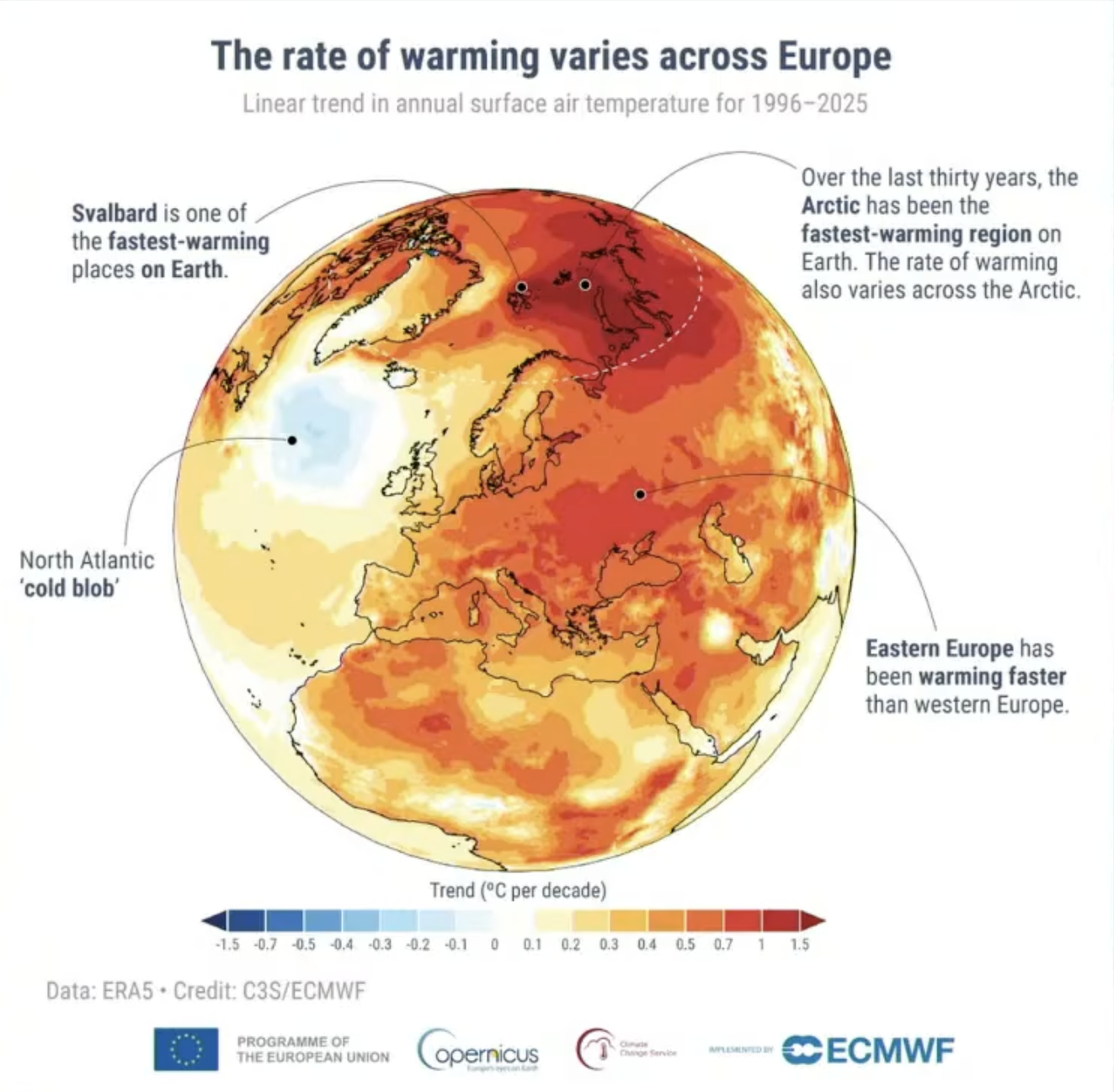
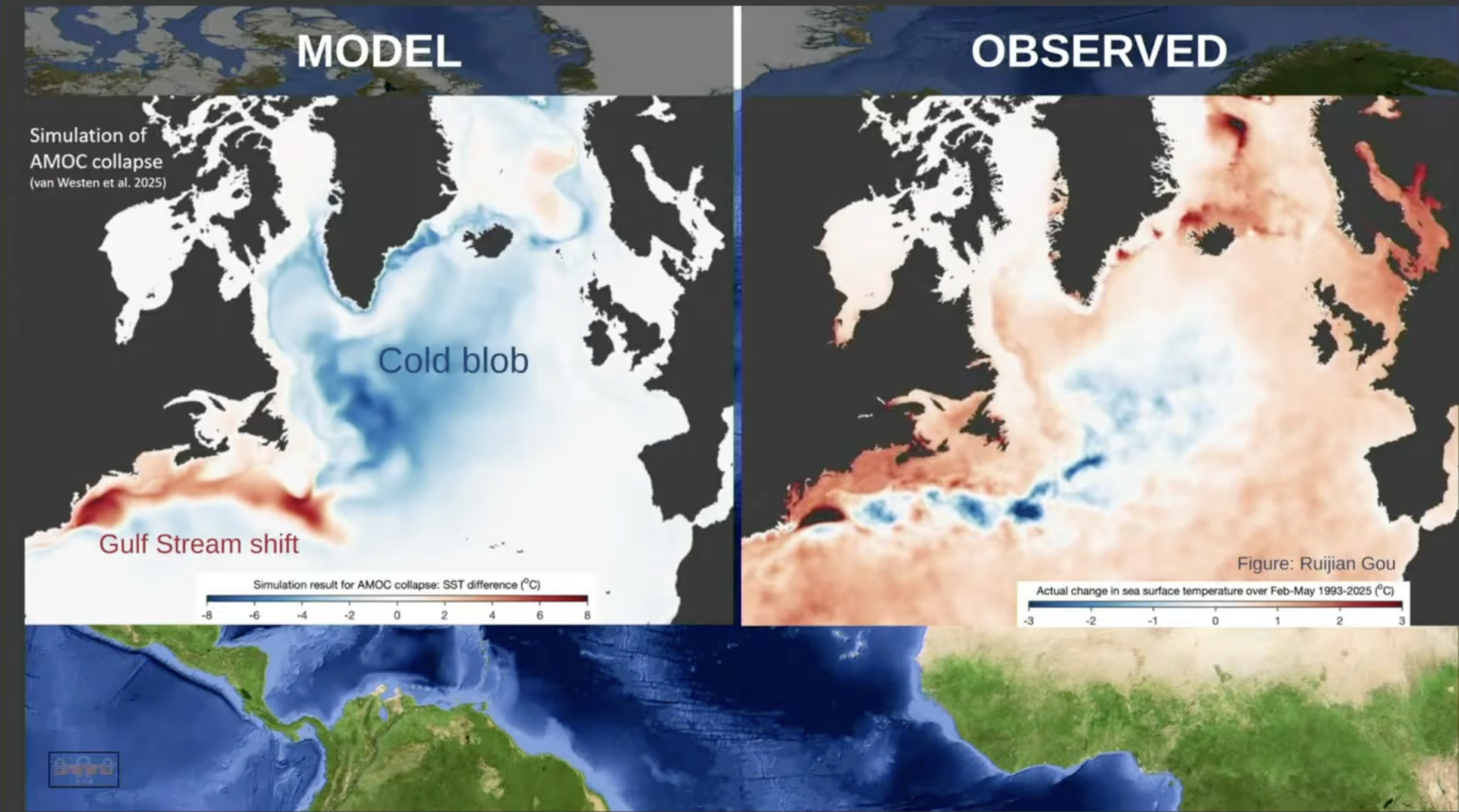
One critical warning sign is a cold patch in the northern Atlantic surrounded by waters and land areas experiencing rising temperatures. Climate models have long predicted this pattern as a possible fingerprint of a slowing AMOC.
Unusual warming along the Eastern coast of the United States, associated with a northward shift of the Gulf Stream, is another sign of changes in the circulation system, the scientists said.
Crossing the tipping point would not necessarily involve immediate, dramatic changes, he warned. However, once the AMOC system’s slowdown passes a critical threshold, the process will likely be irreversible because of self-reinforcing feedbacks within the ocean system.
“AMOC shutdown is not a low likelihood event anymore,” Rahmstorf declared. “It starts to look likely. I tend to say 50-50 [probability], maybe even more. And the point of no return may be passed very soon, in a few decades.”
And the point of no return could be reached within the coming decades, Rahmstorf said, adding that even if a full shutdown is only reached around 2100, “the impact on that will show up much earlier.”
Changes around Antarctica also signal more ocean tipping points
Across the planet, the oceans absorb enormous quantities of heat and human-produced carbon, slowing the pace of climate change experienced by people on land. They are the planet’s largest natural carbon sink, even ahead of rainforests, absorbing 29% of the carbon dioxide released by human activity over the past decade.
The knock-on effects mean that changes in ocean circulation in one part of the planet are not a regional phenomenon, but one with consequences across the entire planet.
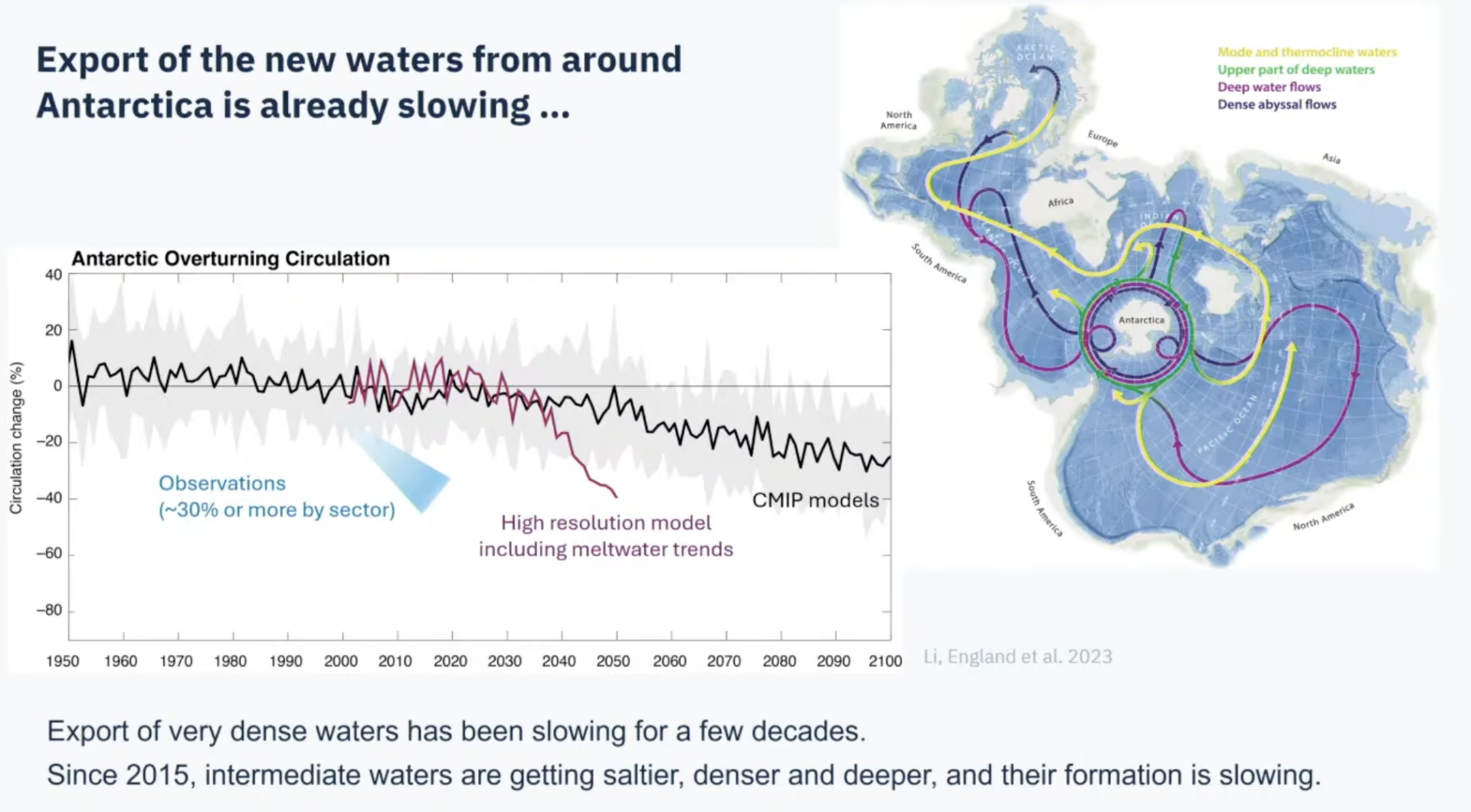
Alongside AMOC, the Southern Ocean’s overturning circulation system around Antarctica is also weakening, with the latest research on Antarctic ice melt suggesting a potentially faster decline than conventional climate models, noted Professor Michael Meredith, a leading UK ocean and climate scientist.
The implications include declining oxygen levels in the deep ocean, reduced biological productivity, a weaker carbon sink and potentially faster Antarctic ice loss, contributing to rising sea levels worldwide.
The danger is that multiple systems coming under pressure simultaneously could produce cascading consequences much greater than those associated with any individual event, said Iceland’s Minister for the Environment, Energy and Climate, Jóhann Jóhannsson.
“We do not know the exact probability of AMOC collapse, but all the evidence points in the same direction: greater greenhouse gas emissions increase the risk. Rapid emissions reductions reduce the risk,” he said.
AMOC as a national security risk
For Iceland, an AMOC collapse could not only bring colder winters and longer periods of sea ice, but a cascade of other impacts on marine ecosystems and fisheries, farming and energy supplies, Jóhannsson predicted.
“A major weakening of the AMOC could simultaneously affect food security, energy systems, infrastructure, maritime transport, public finances, and overall societal resilience,” he said.
As a result, Iceland’s government has already begun examining potential AMOC collapse as a national security threat, he told the meeting.
“The systems upon which our prosperity depends could be transformed, and this is not only Iceland’s problem. We don’t have any time to lose; we must act before it is too late.”
Against an otherwise gloomy picture of trends around the Atlantic current, rapid reductions of short-lived climate pollutants, also called superpollutants, could put the brakes on warming — even more immediately than reductions in CO2 emissions.
Superpollutants such as black carbon, methane and hydrofluorocarbons (HFCs) warm the planet dozens, hundreds or even thousands of times more than CO2, tonne for tonne, but leave the atmosphere far sooner. Black carbon lingers for just four to 12 days, while CO2 can persist for centuries. If the emissions pump is switched off, the benefits are almost immediate.
Rapid Black Carbon reductions could slow AMOC’s decline
For Arctic ice melt, reducing black carbon emissions can be an even more powerful lever, Pam Pearson of the International Cryosphere Climate Initiative (ICCI), one of five other co-sponsors of the event led by Iceland, told Health Policy Watch.
Because black carbon absorbs sunlight directly, interacts with clouds, and darkens snow and ice, its ‘global warming potential’ per unit of emissions can be up to 6,200 times more powerful than CO2 in Arctic regions.
Key black carbon sources around the world include emissions from building and residential heating (in developing as well as developed countries); diesel vehicles and generators, waste incineration and wildfires.
“The risk of AMOC collapse, according to the scientists here at COP311 may already be higher than 50%,” Pearson warned. “Models show that risk as lower only with limited overshoot of the 1.5℃ global warming benchmark, with a return to 1.5℃, or below, by the end of this century.
To make that happen, CO2 emissions need to reduce rapidly, by about 5% a year, beginning now.
“The only other feasible levers available to us to decrease temperatures rapidly are reforestation and short-lived climate pollution reductions,” Pearson added.
“In addition to methane, this needs to include black carbon reductions, particularly near the Arctic, because a decrease in deposited black carbon will slow sea ice loss and Greenland ice sheet melt; both associated with AMOC slowdown.
Since black carbon comprises a significant part of air pollution, which kills over 7 million people a year, reducing BC pollution emissions would also carry a strong health benefit as well, she said.
“These reductions also, of course, carry strong health benefits in the Arctic and other communities where burning occurs, especially from heating stoves, marine and diesel transport, waste incineration and agricultural fires – plus the wildfires that spread from uncontrolled burning.”
Combat the infodemic in health information and support health policy reporting from the global South. Our growing network of journalists in Africa, Asia, Geneva and New York connect the dots between regional realities and the big global debates, with evidence-based, open access news and analysis. To make a personal or organisational contribution click the donate button below.