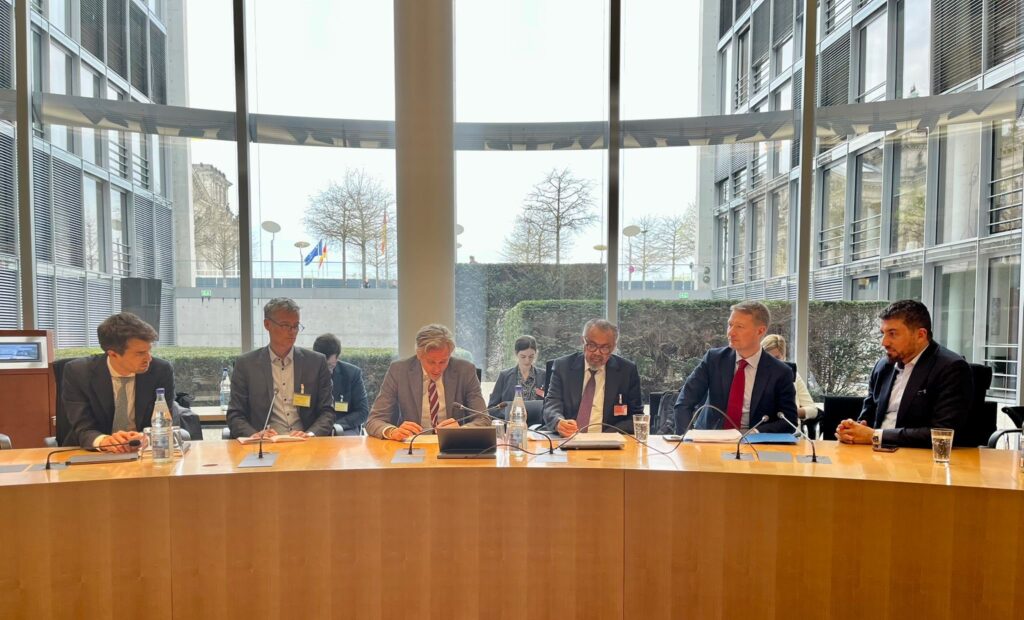
As WHO Director General Dr Tedros Adhanom Ghebreyesus visits Germany, a high stakes week for Germany’s future role in the World Health Organization agency may be unfolding in Berlin.
On Monday, Tedros began a two-day high-level visit to Germany at the invitation of the World Health Summit where he has served as a patron.
The visit also reportedly includes meetings requested by Tedros with Minister of Foreign Affairs Johann Wadephul, Minister of Health Nina Warken, and Berlin Mayor Kai Wegner as well as members of Germany’s Bundestag, or Parliament. Germany’s Chancellor Friedrich Merz, meanwhile, declined a request from the Director-General to convene a meeting, Health Policy Watch learned.
The question is this: what exactly is Tedros doing in Berlin, and why is he prioritizing bilaterals with German ministers a month before the World Health Assembly?
According to a WHO spokesperson, the answer is simple: he is in Berlin “at the invitation” of the World Health Summit.
“On Monday, 13 April, he attended the WHS-organized high-level dinner, ‘From Crisis to Resilience: Innovating for Health,’ which focused on the future of international organizations and the role of Germany and Europe in a changing global order.
In addition, “the Director General is meeting with key German stakeholders, including the Federal Minister of Health and the Mayor of Berlin, to reaffirm Germany`s role as a strategic partner and champion of multilateral global health.
“The visit aims to strengthen cooperation on pandemic preparedness, global health reform and sustainable financing, while highlighting the WHO Hub in Berlin as a global asset made possible through Germany`s support,” the WHO spokesperson added.
However, diplomatic sources told Health Policy Watch that the meetings have less to do with the World Health Summit and more to do with the pending loss of German voluntary donations to WHO – as well as Germany’s positioning in the upcoming race for WHO Director General.
German cuts to WHO funding
Following the US withdrawal from the WHO, Germany has emerged as the Organization’s largest member state donor. But it is reportedly cutting back its voluntary contributions in both 2026 and 2027 and it is unclear whether it will come through with all of the $262.2 million in funding pledged at the World Health Summit in October 2024 for the years 2025-2028.
Since that 2024 pledge, only about $84 million has so far been committed by the Health Ministry in the 2026 German national budget approved by the Bundestag. The remaining $180 million pledged remains in question.
Germany’s plans to halve its annual funding for the Berlin-based WHO Hub for Pandemic and Epidemic Intelligence from €30 million to €15 million, were reported by Health Policy Watch in January.
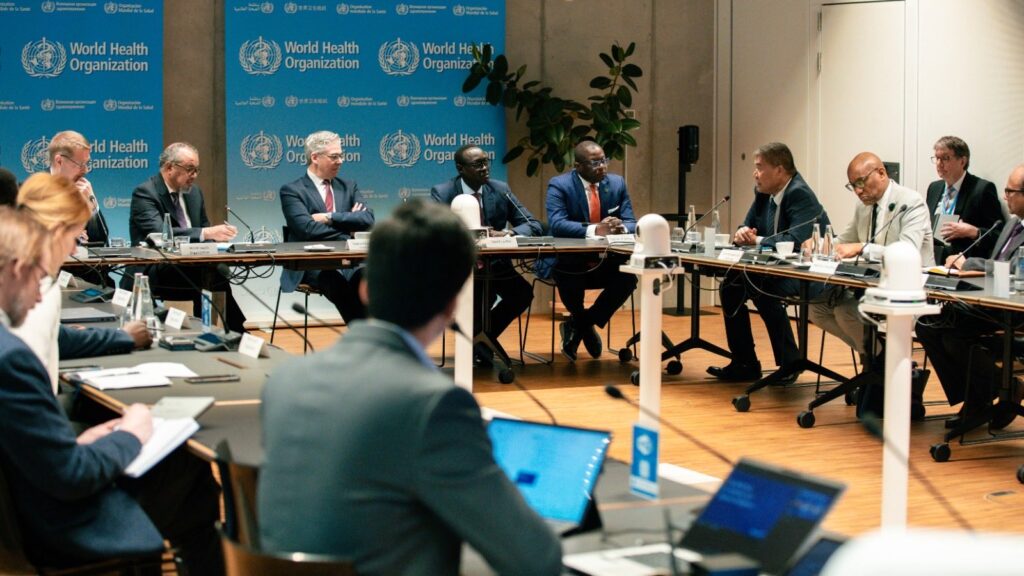
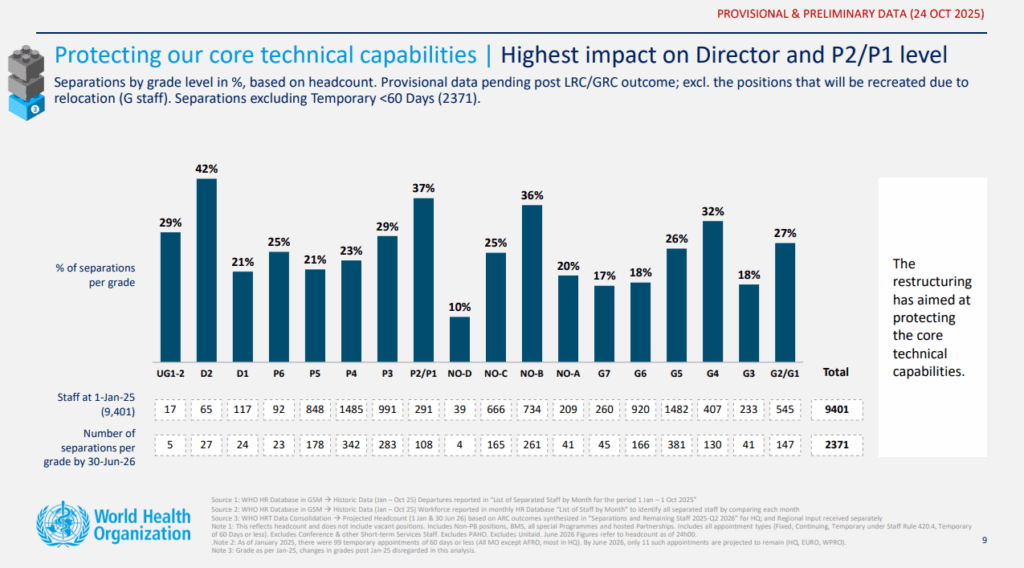
Meanwhile, despite dramatic budget cuts and layoffs of at least 25% of the workforce over the past 16 months, WHO still faces an estimated $640 million budget gap for the current 2026-2027 biennium, according to a Director General’s report at the February 2026 Executive Board meeting.
Will Germany put forward a candidate for DG ?
Another likely issue in bilateral discussions is the election campaign for the next WHO Director General. That is expected to kick off formally later this month or in early May when Tedros issues a call to WHO member states to nominate candidates.
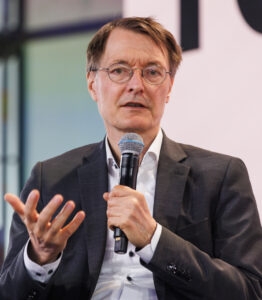
Two influential German health policy actors have been eyeing the race, as reported in February by Health Policy Watch and German media outlets. Those include former German Health Minister Karl Lauterbach and Paul Zubeil, deputy director general of European and International Health Politics in the German Ministry.
Both bring distinct strengths along with potential trade-offs. While Lauterbach is widely known, his prominent role in the COVID-19 response made him a more polarizing figure domestically, which could affect how he is received on the global stage.
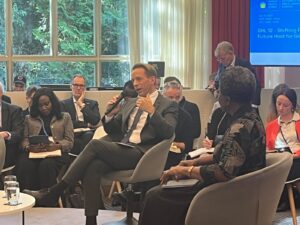
Zubeil, who currently oversees all funding to WHO and UNAIDS on behalf of the German Federal Ministry of Health, is highly regarded in expert circles for his decades of experience in fragile and complex settings and his deep understanding of global health systems. The key question is whether he has the political backing to mobilize a German nomination.
Deferring or not?
Within German political circles, there is a debate underway, however, about how the country should position itself in the DG race.
“German opinion on whether there should be a candidate [for WHO DG] is highly disputed inside and outside of ministries. German foreign policy might just have other problems right now than running a [WHO] campaign,” said one expert on the European arena.
And recently, German Chancellor Merz’s fractious coalition of conservatives and the centre-left, has been further strained by the geopolitical challenges of the war in Iran and the consequent sharp hike in fuel prices.
In what are likely to be Tedros’ final strategic engagements with Germany before the race begins, he is understood to be encouraging his counterparts in Berlin not to enter the contest and instead back allied candidates, according to WHO sources. Tedros’ own personal preferences in the race, while the subject of informal speculation, have yet to emerge.
For Berlin, the implications of deferring any nomination of a German candidate is politically significant. Germany, despite being a major multilateral donor, does not have anyone serving in the top posts of the UN system. Its one remaining shot to secure a major global leadership role over the next five years is the WHO Director-General race, so it is not surprising that Germany had been considering nominating a candidate.
But not putting forward a candidate may be the least favorable option of all, others argue.
“To defer to the current WHO DG’s preference rather than put forward its own candidate would not just be a missed opportunity. It would raise serious questions about judgment and independence at a moment when leadership in global health is under intense scrutiny,” said one German diplomatic source.
Germany in WHO’s Executive Board calculus
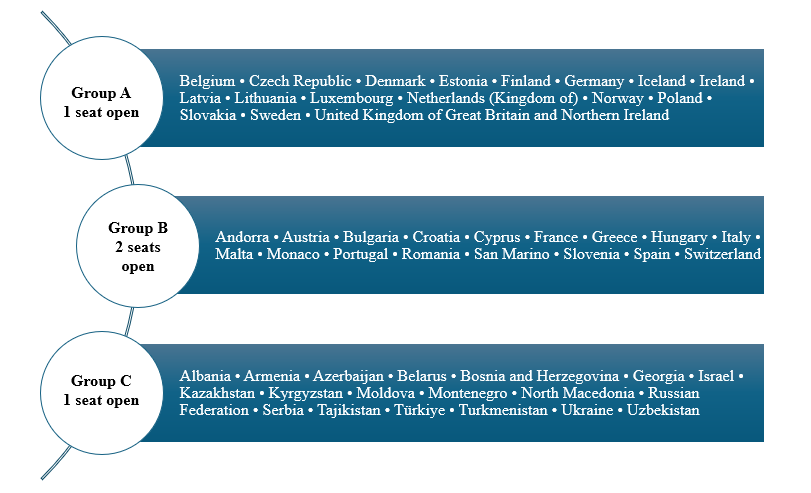
While Berlin debates its position in the DG race, its near-term role in the Executive Board, WHO’s governing body, is also unclear. In late January or early February 2027, the EB will screen and select three candidates among the slate of DG nominees to be voted on by member states at the May 2027 World Health Assembly.
That gives the 34-member WHO governing body with immense power to sway the final outcome of the race.
See related story here: https://healthpolicy-watch.news/exclusive-china-on-next-who-executive-board/
Currently, Germany does not have a seat on the Board so its say on the final three candidate slate will be shaped by broader European Union currents and Policies.
It will have a chance to return to the EB at the May 2027 WHA, as member states elect a new DG.
At that time, four European member states will rotate out of the eight EB seats allocated to European Region members.
But the complex subregional grouping system that the European Region uses to select EB representatives will continue to represent a critical constraint for the success of a German EB candidate. That’s because Germany is a member of the European region’s Group A countries, where only one seat is available.
It will be competing with Iceland and Luxembourg, which both expressed interest in the seat at an informal Regional consultation in late 2025, according to documents from the meeting seen by Health Policy Watch.
France’s EB position is more secure
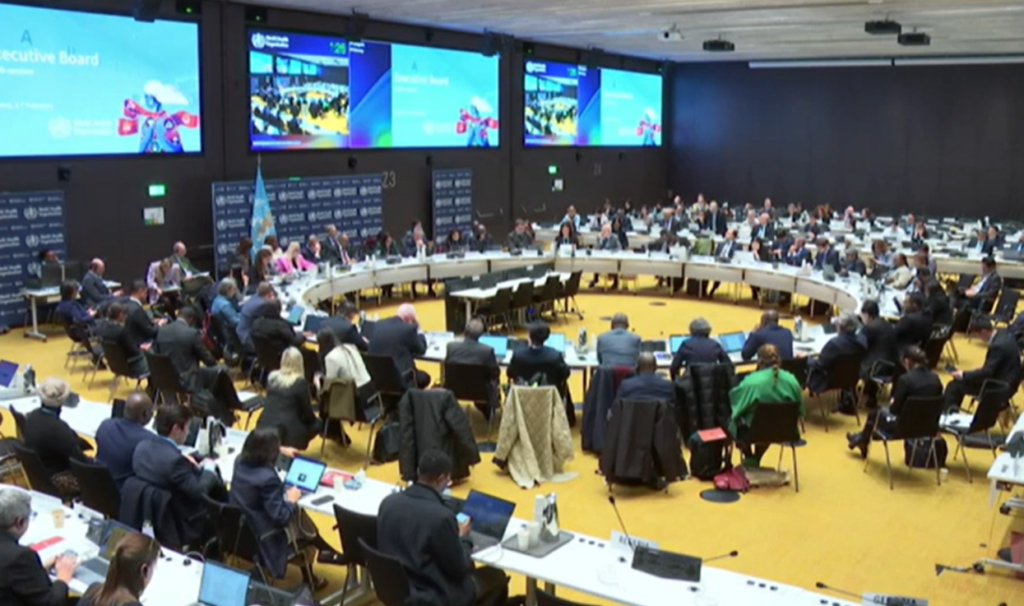
That means three countries would likely be competing directly for a single position, with two guaranteed to be eliminated.
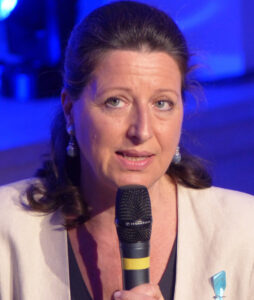
At the same time, France, which is also eyeing at least three nominees for the DG race – including Agnès Buzyn, Anne-Claire Amprou and Marisol Touraine – sits within the Region’s Group B where two Executive Board seats are available. As a Permanent Member of the United Nations Security Council, France benefits from extra privileges rotating into one of the available positions more frequently than other member states.
This means France will almost definitely secure a Board seat in 2027, even if its DG candidate is unsuccessful, while Germany does not have the same privilege.
Meanwhile, Group C, which includes the Russian Federation, Israel, and Turkey – as well as Balkan and Central Asian member states – will have one vacant seat in 2027 with Romania and Moldova already expressing interest.
So, whether by design or by drift, Germany risks being edged out of both the WHO Executive Board and the broader WHO leadership conversation, critics say.
Largest OECD donor with the lowest UN boardroom profile
This comes at a time when Germany has also become the largest provider of official development assistance (ODA) for the first time, with total aid reaching $29.1 billion, according to the 2025 Organisation for Economic Co-operation and Development report released last week.
Despite that historic financial weight, Germany has not managed to parry funding into multilateral power.
Until 2025, Germany held one senior role through Achim Steiner, who served as Administrator of the United Nations Development Programme until his term concluded. However, he remained a relatively low-profile figure across the system, with limited recognition beyond core development circles.
Berlin’s subsequent attempt to secure the top role at the UN High Commissioner for Refugees fell short, with its candidate Niels Annen, a former parliamentary State Secretary at the Federal Ministry of Economic Cooperation and Development, losing out to Barham Salih, the former President of Iraq.
Even with the cutbacks in support to WHO, Germany is likely to continue ranking as one of the largest member state donors to the global health agency for the foreseeable future
But here, too, critics argue that financial power as a donor to the UN system shouldn’t come with such explicit strings attached. “What’s the message? I pay and you vote for me or…? Sounds like the USA!” one observer told Health Policy Watch.
Decisive moment in Berlin vis a vis Washington DC?
Financial considerations aside, relations between Germany and Washington are at one of their lowest points in decades, with US President Donald Trump repeatedly attacking his European allies over defense, trade, and alignment with US priorities.
At the same time, Merz has warned of a deep rift between Europe and the US, while still insisting that transatlantic cooperation must be preserved.
That is exactly where the WHO race becomes more than a health decision. It becomes a diplomatic lever.
At a time when Washington is increasingly transactional and relationship-driven, Berlin putting forward a credible nominee could signal alignment, rather than distance, some sources who spoke with Health Policy Watch, asserted.
Said one, “It could demonstrate that Germany is willing to lead where it matters, to reset the course of WHO and do so in a way that keeps the US anchored in global institutions rather than drifting further away.”
–Felix Sassmannshausen also contributed reporting to this story.
Image Credits: X/DrTedros, X/Dr Tedros, WHO , Steffen Prößdorf, Health Policy Watch , Amélie Tsaag Valren.
Combat the infodemic in health information and support health policy reporting from the global South. Our growing network of journalists in Africa, Asia, Geneva and New York connect the dots between regional realities and the big global debates, with evidence-based, open access news and analysis. To make a personal or organisational contribution click the donate button below.