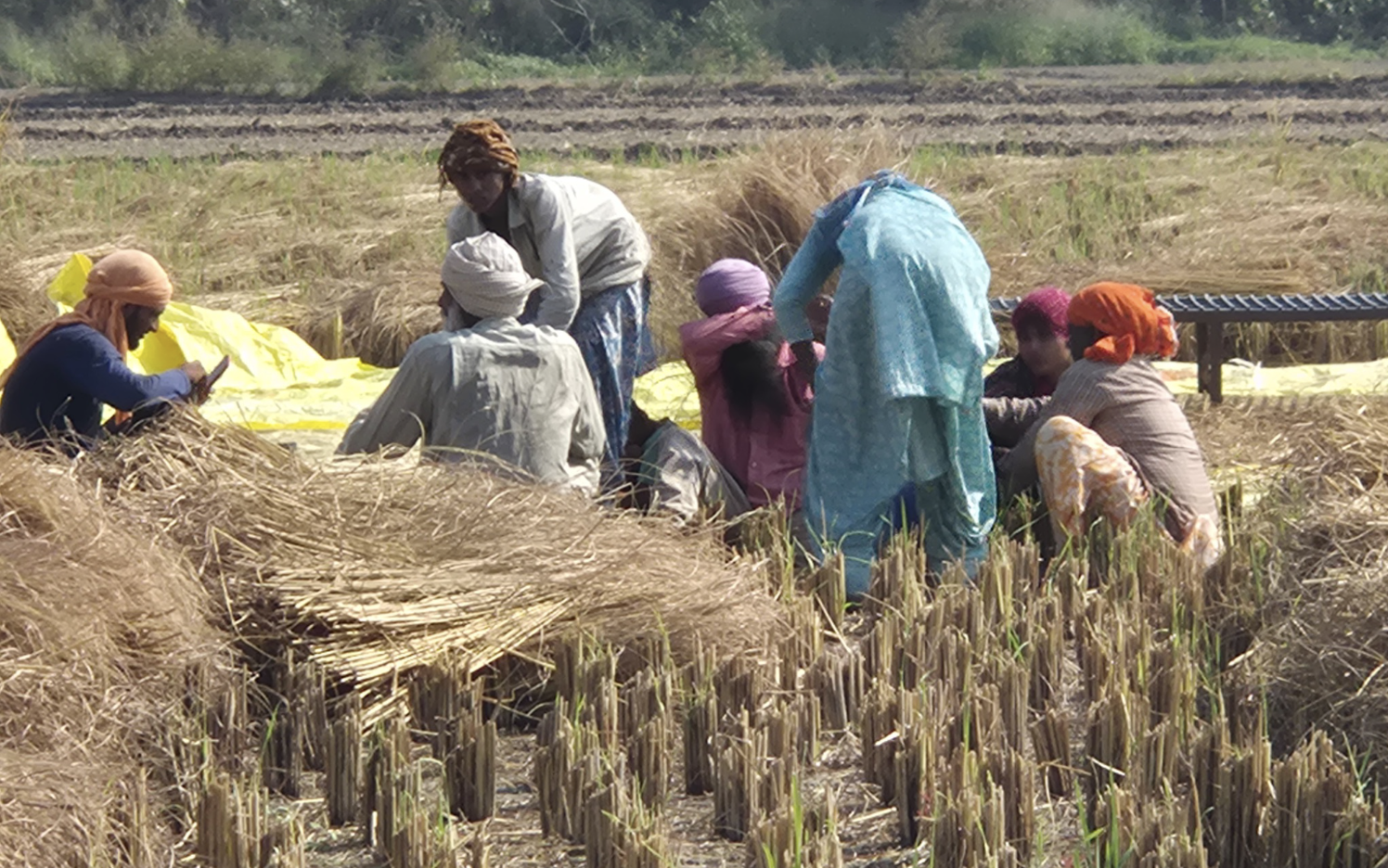
PUNJAB, India – Farmer Ravinder Singh looks worried. He has just harvested his rice paddy crop and hired labourers to clear the remaining crop residue from his field. But the window for preparing the land and sowing the next crop is narrow, leaving him little time.
Standing at the boundary of his field, Singh calls out to the labourers, urging them to finish their tea quickly and return to work.
He hires labourers from nearby villages, paying each around ₹7,000 (approximately $70) to clear his fields. The arrangement serves two purposes: it gets his fields ready for the next crop and provides fodder for his animals during the winter.
“It is very expensive, but better than burning,” he says.
Every year, between October and November, farmers across Punjab harvest their rice crops and begin preparing their fields for the next sowing season.
Nearly one million farmers in the state follow a rice-wheat cropping system, cultivating two crops a year. This leaves them with a narrow window of around 25 days to clear the leftover paddy stubble and prepare the land for wheat cultivation.
The system has played a crucial role in India’s food security. Punjab contributes around 46.24% of the nation’s wheat and 31.22% of its rice.
But the same agricultural cycle also presents a serious environmental challenge. With so little time between harvesting paddy and sowing wheat, many farmers who cannot afford labourers resort to burning the leftover crop residue as a quick and inexpensive way to clear their fields.
The smoke from these fires contributes to the seasonal deterioration of air quality across northern India, including in the national capital, New Delhi.
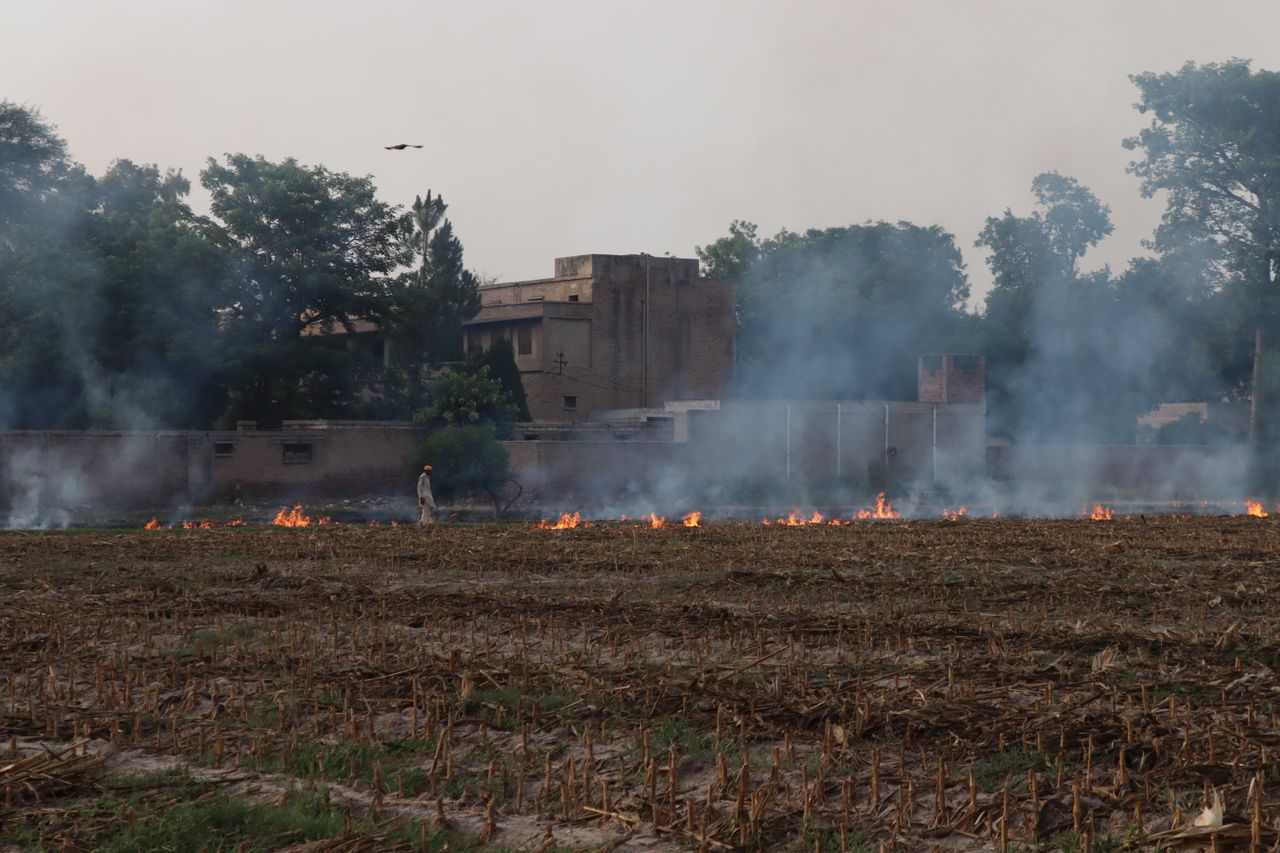
From October onwards, smoke from stubble burning in neighbouring agricultural states adds to Delhi’s already high pollution levels. Combined with Diwali fireworks, vehicular emissions, industrial pollution and dust, it contributes to a sharp deterioration in the city’s air quality.
This year, the problem was particularly acute around Diwali. On the night of the festival, Punjab recorded around 1,152 farm fires, while Delhi experienced one of its worst Diwali-related pollution episodes in five years.
The severity of the pollution prompted concern among medical experts. Dr Vijay Hadda, a professor in the Department of Pulmonary Medicine and Sleep Disorders at the All India Institute of Medical Sciences (AIIMS) in New Delhi, told Asian News International that is was nothing short of a miracle that so many people survived.
Long-term consequences
The consequences of agricultural residue burning extend far beyond seasonal pollution episodes. A 2022 study examining the impact of stubble burning on air pollution in India estimated that exposure to particulate matter from agricultural residue burning was associated with between 44,000 and 98,000 premature deaths annually between 2003 and 2019.
Punjab, Haryana and Uttar Pradesh accounted for an estimated 67–90% of these deaths, highlighting the significant public-health burden of crop-residue burning in northern India.
Both the central and Punjab governments have pointed to a significant decline in stubble-burning incidents over the past few years. According to official government data, the number of farm fires in Punjab fell from 83,002 in 2020 to 5,835 in 2026.
But these figures have repeatedly been questioned by scientists who use satellite-based observations to monitor agricultural fires.
In an interview last year with Health Policy Watch, Dr Hiren Jethva, a scientist specialising in remote sensing of aerosols at Morgan State University and NASA’s Goddard Space Flight Center, challenged the official estimates.
According to Jethva, the actual number of stubble-burning incidents in Punjab last year was 10 to 11 times higher than the approximately 5,000 incidents reported in official government figures.
This year, Jethva’s satellite-based calculations once again estimated around 34,000 farm fires across Punjab and Haryana between October 1 and November 9, raising further questions about the accuracy of official government figures.
While governments have repeatedly highlighted the decline in reported farm fires and promoted agricultural machinery as an alternative to burning, the persistence of fires suggests that these measures have not fully addressed the difficulties farmers face in managing crop residue.
For farmers, the decision to burn stubble is not simply a lack of awareness about pollution. It is also shaped by the cost of clearing their fields, the limited time between two cropping seasons and whether they can access affordable alternatives.
Machinery subsidies are not enough for small farmers
“Farmers are aware of the pollution stubble burning causes, but we are helpless. The majority of farmers in Punjab are small-scale farmers, with landholdings ranging from one to nine acres. We cannot afford to hire labourers to manually clear the crop residue,” Ruldu Singh, a prominent farmer leader from Mansa, Punjab, told Health Policy Watch.
One alternative to burning is mulching, an agricultural practice in which crop residue is spread across the soil rather than removed or burned. The straw gradually decomposes, helping the soil retain moisture, reducing water loss through evaporation and suppressing weed growth. It can also improve soil health and help protect.
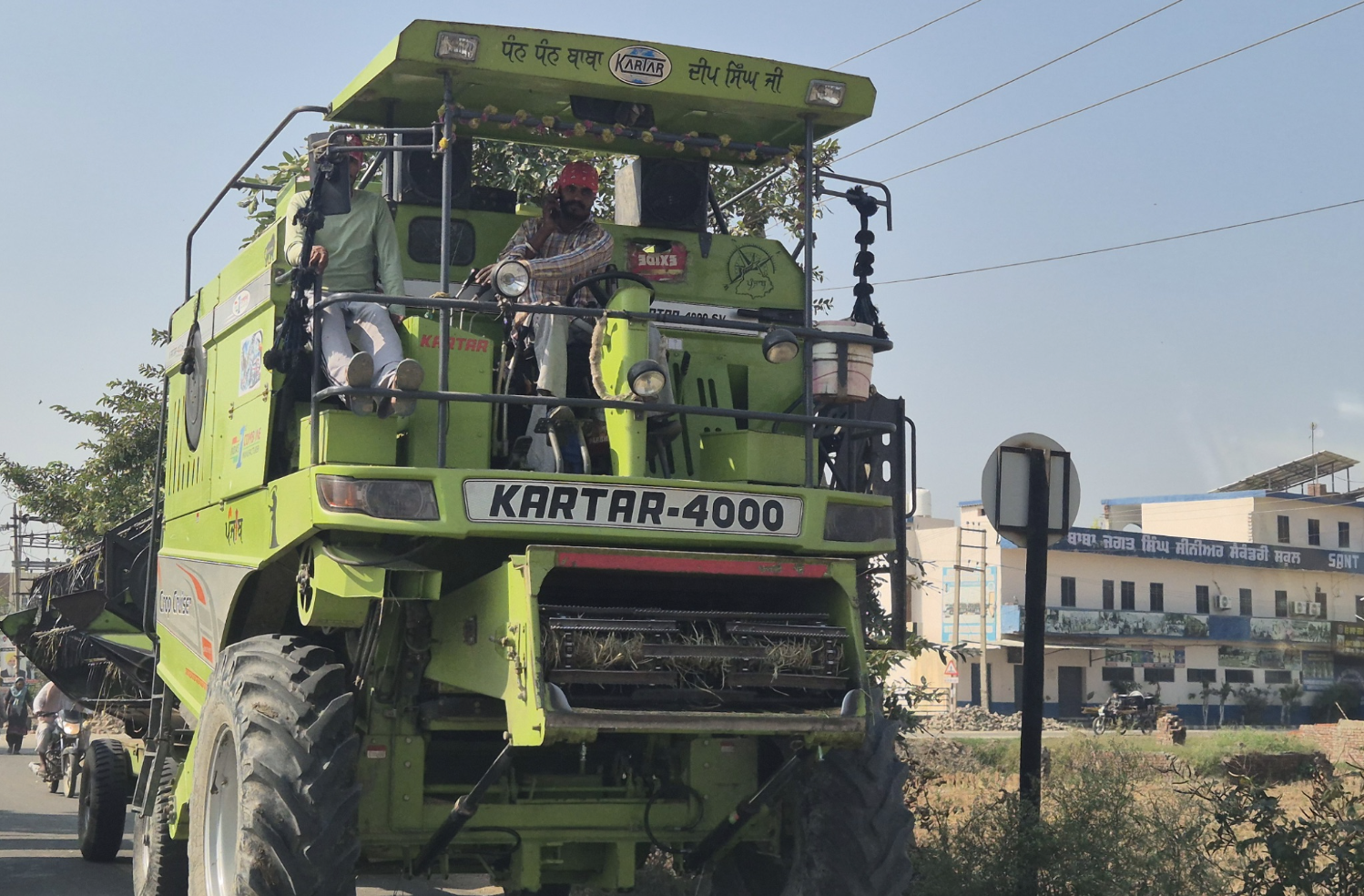
Farmers can use several machines to manage crop residue through this method, including the Straw Management System (SMS), straw choppers, stubble shavers and the Happy Seeder. These machines serve different purposes: some chop and spread straw across fields, while others, such as the Happy Seeder, allow farmers to sow wheat directly into fields where paddy residue remains.
The Punjab government provides subsidies of up to 50% for some of these machines. But farmers say that subsidies alone do not make the equipment accessible, particularly for those with small landholdings and limited resources.
One major problem is that many of these machines require high-powered tractors to operate. Jarail Singh tells Health Policy Watch that most small farmers own tractors that are not powerful enough to pull the equipment.
For farmers who cannot afford to buy more powerful tractors or the machinery itself, renting is often the only option. But even this comes with its own difficulties.
Singh says only two or three such machines are available across several villages. Their owners generally rent them out only after finishing work on their own fields. But by then, the narrow window for sowing wheat is often almost over.
Even when farmers manage to secure a machine in time, rental charges pose another obstacle. Singh says owners often charge high rates per acre, and prices rise further during the sowing season when demand for the machines is greatest.
‘Farmers are already heavily indebted. Unemployment is so high that our children have moved abroad to support us. We barely manage to meet our household expenses through farming. If we keep paying such high costs, we will have to compromise on those expenses as well,’ he says.
These methods are known as in-situ crop-residue management, where the stubble is managed within the field rather than removed. Another approach, known as ex-situ management, involves collecting the residue and transporting it elsewhere for use.
Turning farm waste into biofuel
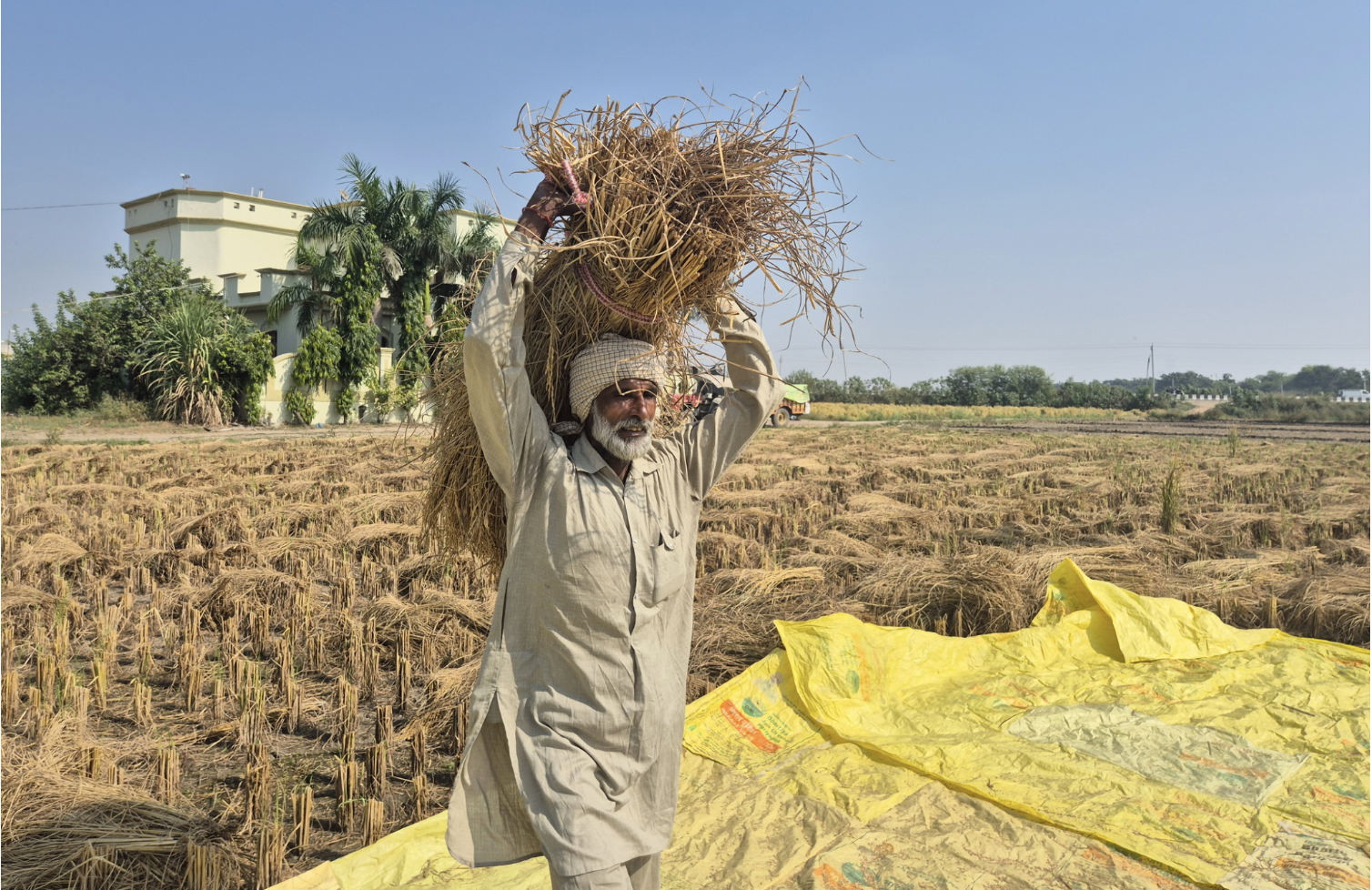
For some farmers, selling or giving away their crop residue for industrial use offers another option.
Jagdeep Singh says the stubble from his fields is collected by companies and converted into biofuel for factories and power-generation plants. Unlike farmers who have to arrange machinery or labour themselves, the companies come to collect the residue.
‘They come themselves and collect everything from our fields. I don’t have to worry about anything. It is their responsibility,’ he says.
One such facility in Punjab is Sukhbir Agro Energy Limited, which reportedly processes around 600 tonnes of stubble daily. Estimates suggest that biomass plants across the state consume around one million tonnes of stubble. But this option is not available to everyone.
But Amandeep says there are no such plants near his village. He believes this is a wider problem across Punjab, where biomass facilities are not evenly distributed.
Farmers living within reach of these plants can get their fields cleared, while those in areas without such facilities are left to find other ways of disposing of their residue.
For farmers without access to machinery, labour or biomass plants, burning remains the cheapest and quickest option.
“To burn the stubble, all it takes is a matchstick and a few rupees. Every alternative costs much more,” is how one farmer explained the choice.
Ruldu Singh says farmer organisations have repeatedly asked the government to provide financial assistance so that farmers can hire labourers to manually remove crop residue.
They have also suggested that, instead of relying primarily on subsidies for individual farmers, the government should purchase crop-residue management machinery and make it available to villages according to their population and agricultural land.
He argues that many of the machines reside on larger farmers and rarely reach those with fewer resources.
“Blaming only farmers is easy. But without machines and proper support, how are we supposed to tackle this problem? We also have children. We would never want this practice to continue,” he says.
Farmers want financial support, not just penalties
The government has also proposed shifting away from the rice-wheat cropping cycle towards crops such as maize. But farmers say that changing crops without ensuring a reliable income could create another financial burden.
Ruldu Singh says farmers would be reluctant to replace wheat with maize unless the government guarantees a worthwhile price.
He argues that maize fetches around $100 per quintal and can be cultivated only twice a year under the conditions he describes. Without a guaranteed minimum support price (MSP), he says, farmers have little incentive to make the switch.
Sumit Sharma, a policy expert based in New Delhi, says the government’s response to stubble burning has remained largely reactive rather than addressing the economic conditions that drive the practice.
‘They see farm fires, impose fines on farmers and register cases against them,’ he tells Health Policy Watch.
Government data show that Punjab registered First Information Reports (FIRs) in connection with 1,834 farm-fire incidents this year.
Sharma argues that the focus should instead be on guaranteeing prices for alternative crops and providing financial assistance to farmers so they can hire labourers or access the tractors and machinery needed to clear their fields.
He says such measures would do more to address the problem than relying primarily on satellite monitoring and penalties.
For farmers such as Ravinder, the issue is ultimately about whether they can afford to clear their fields without sacrificing their livelihoods. He has chosen to pay labourers rather than burn his stubble, but acknowledges that the expense is beyond what many small farmers can manage.
As long as affordable alternatives remain inaccessible, the pressure to clear fields quickly before the next sowing season will continue to push farmers towards burning – despite the pollution it causes.
Image Credits: Arsalan Bukhari, Pexels.
Combat the infodemic in health information and support health policy reporting from the global South. Our growing network of journalists in Africa, Asia, Geneva and New York connect the dots between regional realities and the big global debates, with evidence-based, open access news and analysis. To make a personal or organisational contribution click the donate button below.