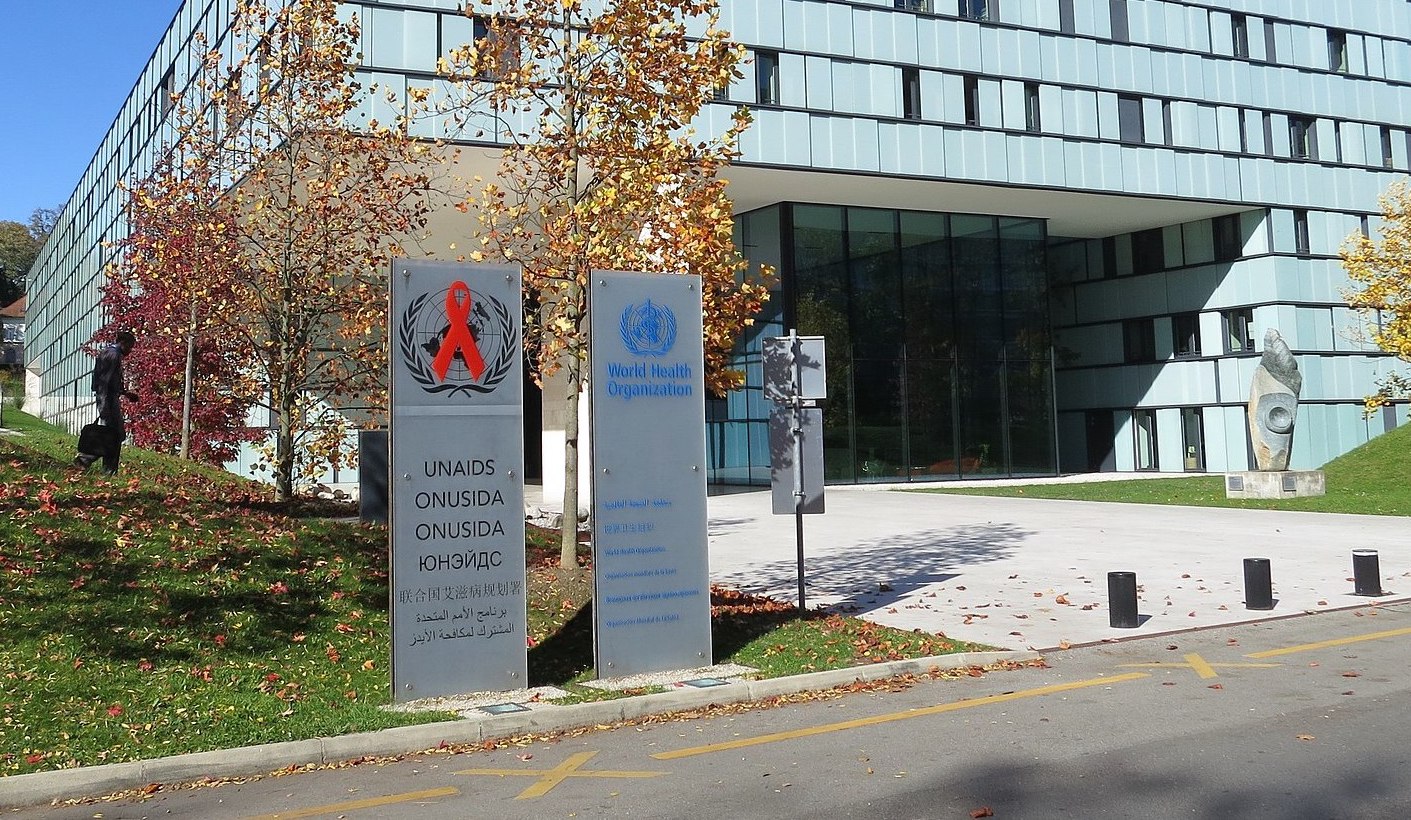
The global HIV response is facing its “biggest storm” since the world united against the epidemic, UNAIDS warned Friday, as it published new data showing donor funding for HIV/AID prevention and community services critical to containing infections dropped by almost one quarter last year.
The Global AIDS Brief is being published just 10 days ahead of the United Nations High-Level Meeting (HLM) in New York City, where member states are due to adopt a new Political Declaration on ending HIV/AIDS as a public health threat by 2030.
It is the first comprehensive damage assessment of the funding shock that hit HIV response and the entire array of global health crises in 2025.
External development assistance to HIV/AIDS programmes fell by 23% last year, the sharpest drop on record, the report reveals.
This followed on the Trump administration dismantled USAID and slashed contributions to the HIV response the United States had anchored for two decades. The result is an HIV response that is collapsing.
Most serious disruption in decades
Winnie Byanyima, UNAIDS executive director, said the disruption is unquestionably the most serious the HIV response has faced since the late 1990s, when the world came together to fight the disease with the creation of UNAIDS, followed by the Global Fund to Fight AIDS, Tuberculosis and Malaria, and the President’s Emergency Plan for AIDS Relief (PEPFAR) and the WHO 3×5 initiative.
Today’s shrinking civic space and the spreading criminalization of marginalized communities is converging into “the biggest storm the HIV response has ever seen,” Byanyima warned.
Alongside malaria, HIV has been among the best-funded causes in the history of international health development, with the US pouring more than $100 billion into PEPFAR since 2003, the largest commitment ever made by one nation against a single disease.
Together with the Global Fund, US Funding channeled via PEPFAR and USAID accounted for roughly 86% of all donor financing for HIV in 2024. What was built on that money is now unravelling with it.
Some 1.2 million people acquired HIV in 2025, a dramatic 43% decline since 2010 – and reflective of the results the combined efforts have yielded on the ground.
AIDS-related deaths fell 57% over the same period to 570,000. And of the 40.9 million people living with HIV worldwide, 32.1 million were on treatment last year.
But the world missed every one of its 2025 targets, and the new numbers may be a final snapshot before the cuts register in the epidemiological record.
The report describes 2025 as “a profound shock to global health financing” that destabilized HIV responses across many countries, disrupting service delivery, supply chains and community systems. The full effects, it warns, will only become evident over the next few years.
Byanyima said the response now stands at the most perilous moment in its history, with decades of hard-won gains at risk of unravelling just as the tools to end the epidemic have finally come within reach.
Prevention programmes 80% donor dependent in disarray
The deepest cuts are in prevention which only received 11% of HIV funding overall in 2024. In sub-Saharan Africa, prevention programmes depended on donors for 83% of their funding when the cuts hit, the UNAIDS report found. Globally, two-thirds of prevention programmes were funded by external donors.
The number of people receiving pre-exposure prophylaxis (PrEP) at least once in the year fell 38% between 2024 and 2025 across 62 countries reporting to UNAIDS, including in countries with the highest HIV burdens.
Data from PEPFAR, the US bilateral programme, show HIV testing declined 22% in high-burden countries over the same period. Funding for condom programming fell 93%, and support for programmes ensuring people can actually reach services, such as supportive laws and policies, dropped 80%.
Every week, 3,000 adolescent girls and young women in sub-Saharan Africa acquire HIV. Incidence in this group runs three to four times higher than among their male peers, and women account for six in ten new infections in the region, according to the report data.
The HIV response collapse comes at a moment when science has delivered the most powerful prevention tools in the epidemic’s history. Lenacapavir, a twice-yearly injection that almost completely blocks HIV transmission, is a life-changing drug that isn’t reaching the people who need it most.
Lenacapavir reached just over 6,000 people across five sub-Saharan African countries by the end of March, against the 20 million people UNAIDS estimates need antiretroviral-based prevention. The gulf between the potential of the medicine and access for those who need it is one of the starkest examples in global health of how innovation and science are not solutions on their own to solving medicines access issues.
Rights in retreat
For decades, the slow drift of HIV-related law around the world moved in only one direction: toward decriminalization. That tide has now turned. For the first time since UNAIDS began tracking the data, criminalization of the marginalized populations most at risk of HIV is increasing.
Two countries introduced new criminal laws targeting same-sex sexual activity or gender expression in 2025, and one increased penalties for same-sex relations in 2026. The report does not name the countries, but Burkina Faso criminalized same-sex relations for the first time in its history last September, with sentences of two to five years in prison plus fines, while Trinidad and Tobago’s Court of Appeal reinstated its colonial-era buggery laws in March 2025. Neighbouring Mali had criminalized homosexuality months earlier, in its December 2024 penal code.
Just seven of 193 countries do not criminalize at least one of same-sex sexual activity, sex work, possession of small amounts of drugs, transgender people, or HIV non-disclosure, exposure or transmission. Outside Chile, Colombia, the Netherlands, Paraguay, Slovenia, Uruguay and Venezuela, at least one of the populations most at risk of HIV lives on the wrong side of the law everywhere on Earth.
Sex work is criminalized in 168 countries and drug possession in 152. Same-sex sexual activity is illegal in 66 countries, more than half of them in Africa, where penalties range from heavy fines to 14-year sentences in Nigeria, Kenya and Malawi, life imprisonment in Tanzania, Zambia, Sierra Leone and The Gambia, and the death penalty for “aggravated homosexuality” under Uganda’s 2023 law.
Epidemics accelerate wherever human rights protections collapse, Byanyima warned, describing the global rollback of rights and civic space as organized, political, and devastating for public health.
When people fear arrest or discrimination, they do not test and do not seek care. CIVICUS, the civil society monitor, found civic space narrowed, obstructed, repressed or closed in 159 of 198 countries and territories in 2025, leaving just 7% of the world’s population living in countries where civic space is open or relatively open.
“No country seems immune from this deeply worrying trend,” said Mandeep Tiwana, CIVICUS secretary general, presenting the findings in December.
The last declaration before the SDG 2030 deadline
Next week’s UN High-Level Meeting will produce the final Political Declaration before the 2030 deadline that world leaders set under the Sustainable Development Goals to end AIDS as a public health threat.
The goal is not actual eradication of the virus, but reducing new infections and deaths by 90% compared to 2010, shrinking the epidemic to a scale health systems can manage.
This year’s declaration will set new targets drawn from the Global AIDS Strategy 2026-2031:
- 40 million people on ARV treatment
- 20 million accessing antiretroviral prevention,
- and HIV services free of stigma and discrimination for all.
Meeting those targets would avert 3.2 million new infections and 1.2 million deaths by 2030, according to UNAIDS modelling. See related story.
Fighting for its own survival
The declaration will be negotiated around an agency fighting for its own survival. UN Secretary-General António Guterres proposed sunsetting UNAIDS by the end of 2026 in his UN80 reform plan last September, triggering an outcry from member states and more than 1,000 civil society organizations, as Health Policy Watch reported in October. See related story.
UNAIDS is already cutting its secretariat staff by 54% and consolidating country offices from 85 to 54 under its own board-approved restructuring.
“I’m seeing death, real people dying,” Byanyima told the World Health Summit in Berlin last October, as UNAIDS modelling projected the funding collapse could cause an additional 6.6 million new HIV infections and 4.2 million AIDS-related deaths by 2029 if services are not restored.
The world has the science, the medicines and the experience to end AIDS by 2030, Byanyima said. What remains, she argued, is a political choice for the leaders gathering in New York: invest in finishing the job, or retreat and watch it come undone.
Image Credits: Wikimedia Foundation.
Combat the infodemic in health information and support health policy reporting from the global South. Our growing network of journalists in Africa, Asia, Geneva and New York connect the dots between regional realities and the big global debates, with evidence-based, open access news and analysis. To make a personal or organisational contribution click the donate button below.