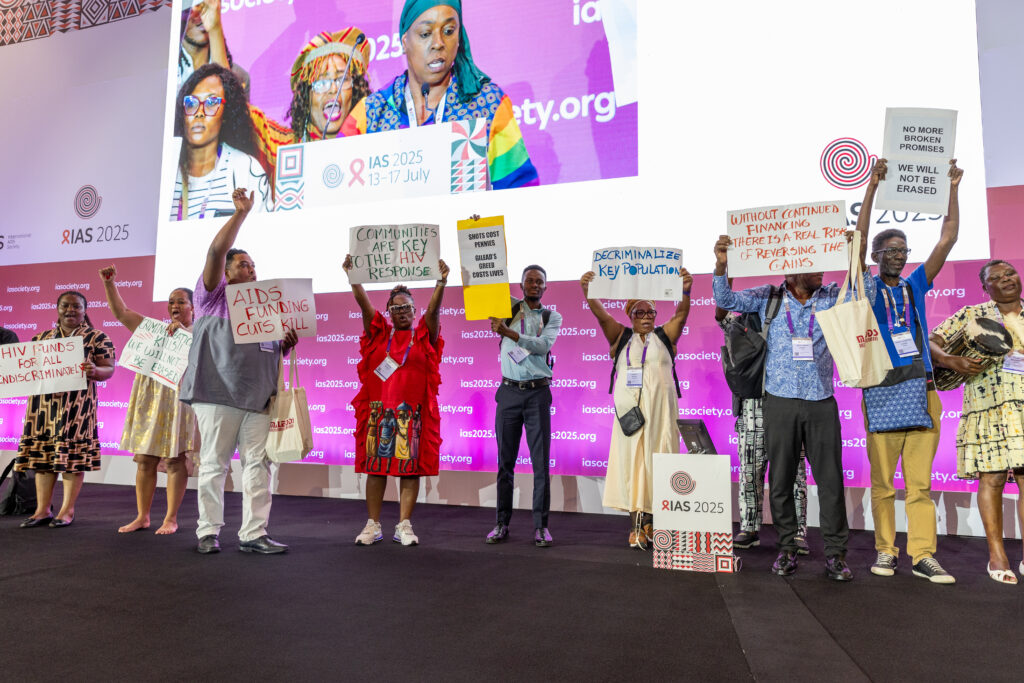
The African Union held a special health summit this week, primarily aimed at mobilising high-level political support for more domestic health spending – particularly on HIV, tuberculosis and maternal health.
The summit coincided with the release of two new studies reporting on the huge disruptions to HIV treatment throughout the world following the Trump administration’s changes to the US President’s Emergency Plan for AIDS Relief (PEPFAR).
Some 1,714 HIV service sites had closed, including over 1,000 public health facilities, according to the PEPFAR Pulse Study conducted by the Foundation for AIDS Research (amfAR).
AmfAR’s study, based on a survey of 166 PEPFAR implementing partners in 46 countries, found more than half had at least one grant terminated while over three-quarters had to restrict their work.
Partners reported that they were unable to obtain condoms (23%), pre-exposure prophylaxis (PrEP) to prevent HIV (22%) or antiretroviral drugs (20%).
The second study, based on an analysis of PEPFAR data for fiscal year 2025, found that 77,163 fewer children living with HIV received PEPFAR-supported treatment in comparison to 2024 – a decline of 14.2%.
The worst impact was in South Africa, which recorded a 45% drop as 30,880 fewer children received treatment support from PEPFAR. Declines were also noted in Uganda, Haiti, Zambia and Kenya.
The US has decided to cut all PEPFAR aid to South Africa by early next year due to political disagreements.
Both studies were released by the International AIDS Society (IAS) ahead of its global HIV conference, which opens in Rio on Monday.
‘Sunsetting’ UNAIDS?
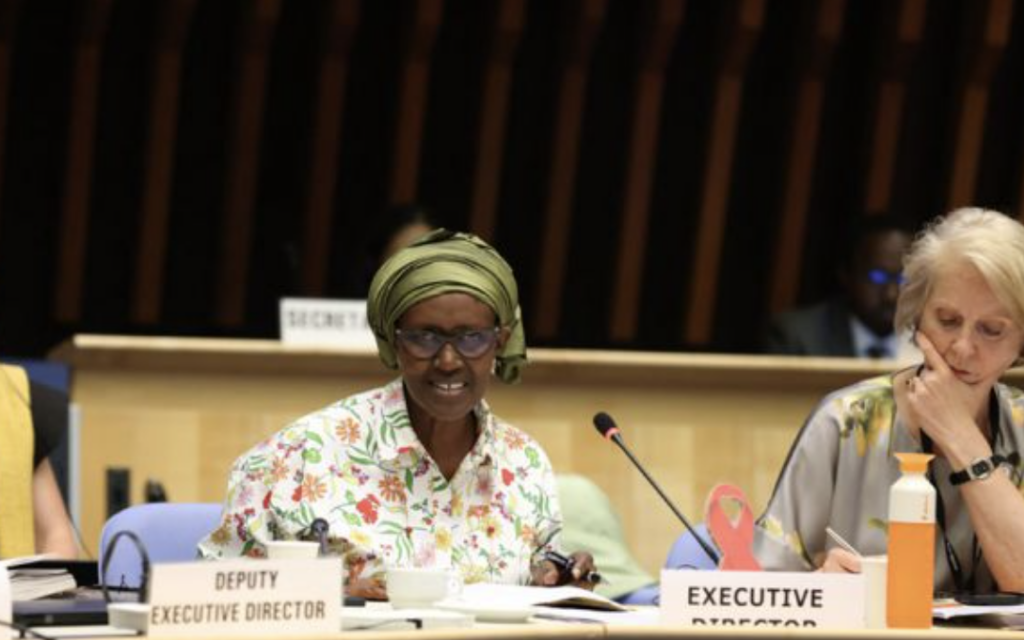
The conference, held under the theme “rethink, rebuild, rise”, comes at an extremely difficult time for the sector and for the Joint United Nations Programme on HIV/AIDS (UNAIDS).
Amid a massive funding crisis, the UN Secretary-General produced a UN80 strategy that proposed “sunsetting” UNAIDS by the end of this year and “mainstreaming capacity and expertise into relevant entities of the United Nations development system in 2027”.
UNAIDS has already slashed staff by around 55%, and its Geneva head office has been massively reduced.
The UNAIDS Programme Coordinating Board (PCB) has set up a working group tasked with developing “a plan on the further transition and integration of UNAIDS into the UN system and beyond, in coherence with the UN80 Initiative and based on a realistic financial scenario” by October.
The working group is mandated to identify “functions and units to be transferred, transformed, downsized, merged, decentralized, and/or absorbed by the UN system and other stakeholders”.
However, the PCB has stressed that UNAIDS core functions “must be preserved and safeguarded either together in a single unit or with individual UN entities”. It also directs the working group to ensure the “preservation of the role of communities and civil society”, a hallmark of UNAIDS operations.
The PCB has also tasked UNAIDS executive director Winnie Byanyima with preparing a 2027 workplan and budget “aligned with the ongoing downsizing and informed by the plan of the working group”.
Addressing the PCB earlier this month, Byanyima said: “Even in a complex global political context, UNAIDS still has that unique power to unite the world behind a shared vision to end AIDS as a public health threat by 2030.
“We will not deliver on that promise through institutions alone. We will deliver it through people, through the communities who refuse to be invisible, through the staff who carry this mission every day, through leaders in governments and partner organisations acting with courage in the face of uncertainty.”
Delivering on 25-year-old promise
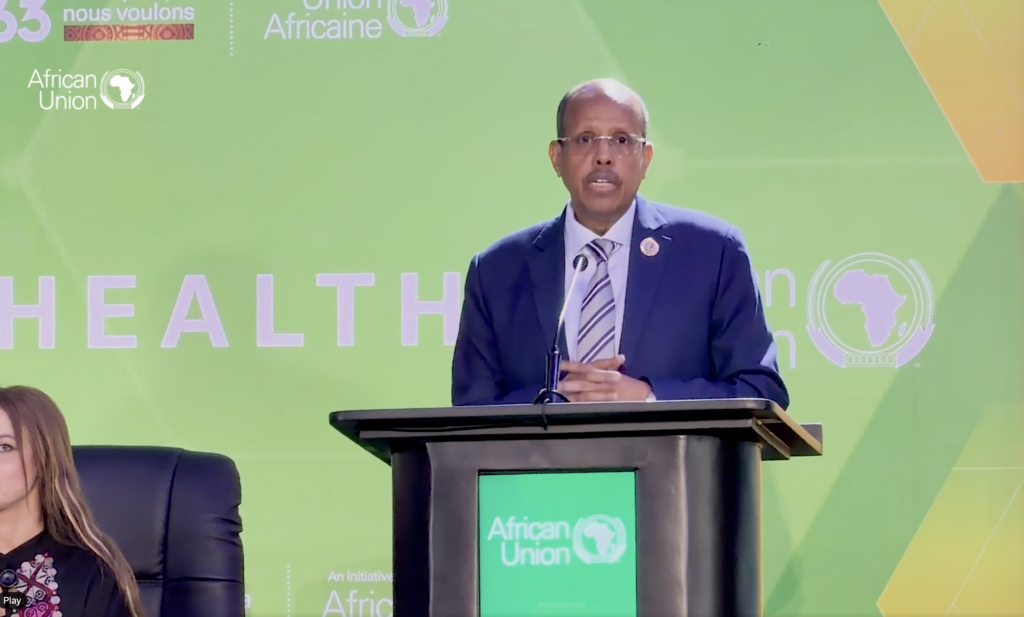
Meanwhile, leaders who addressed the AU summit urged African states to implement the Abuja Declaration decision, adopted 25 years ago, to allocate at least 15% of national budgets to health.
Deliberations focused on HIV, tuberculosis, malaria, maternal and newborn health, viral hepatitis, neglected tropical diseases (NTDs), and non-communicable diseases (NCDs).
The summit also discussed how to advance the AU Roadmap to 2030 and Beyond, which envisions ending HIV as a public health threat and sets out how to control TB, malaria, NTDs and NCDs.
AU Commission Chairperson Mahmoud Ali Youssouf called on countries to make a “decisive shift from commitments to implementation”.
“Future generations will remember this Summit not for our speeches, but for whether we changed the trajectory of health in Africa,” said Youssouf.
Speaking at the close of the two-day summit, AU Health Commissioner Amma A. Twum-Amoah urged countries to “translate the AU Roadmap and the Accra Declaration into concrete national action.
“This means strengthening primary health care, integrating services, increasing domestic investment, advancing the local production of medicines, vaccines and diagnostics, investing in the health workforce and reinforcing surveillance, laboratory and digital health systems,” she said.
Image Credits: Jean Bizimana/ IAS.
Combat the infodemic in health information and support health policy reporting from the global South. Our growing network of journalists in Africa, Asia, Geneva and New York connect the dots between regional realities and the big global debates, with evidence-based, open access news and analysis. To make a personal or organisational contribution click the donate button below.