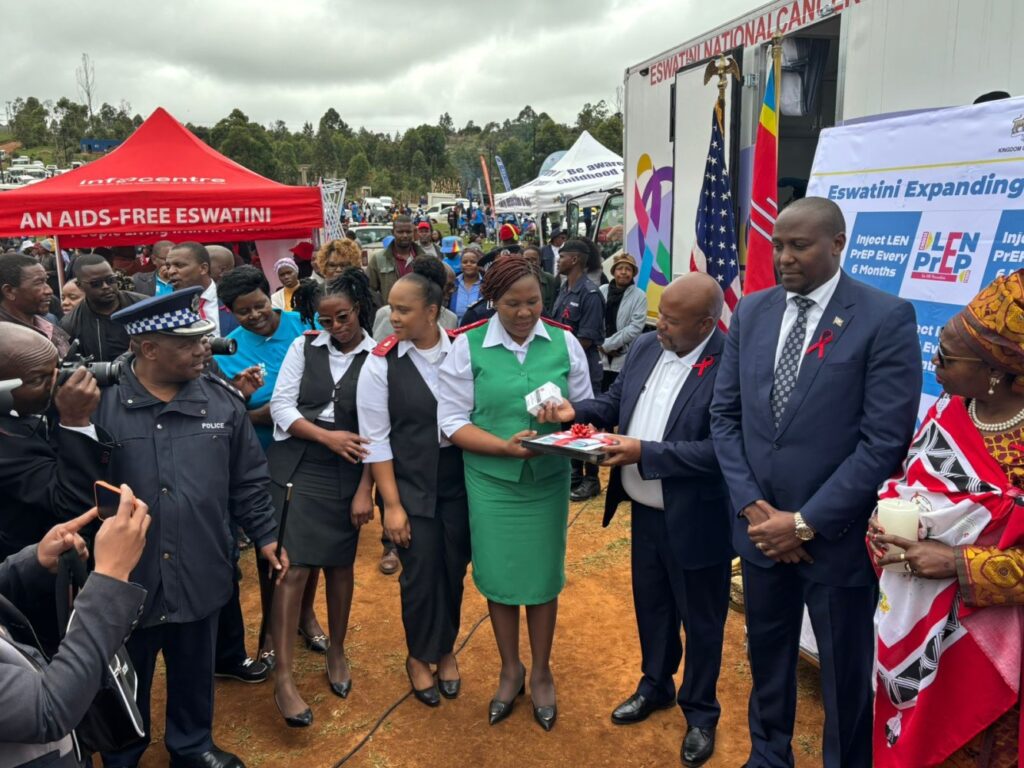
The United States and the Global Fund will support three million people to get lenacapavir, the twice-a-year HIV injection that is almost 100% successful in preventing transmission of the virus – a million more than their previous commitment.
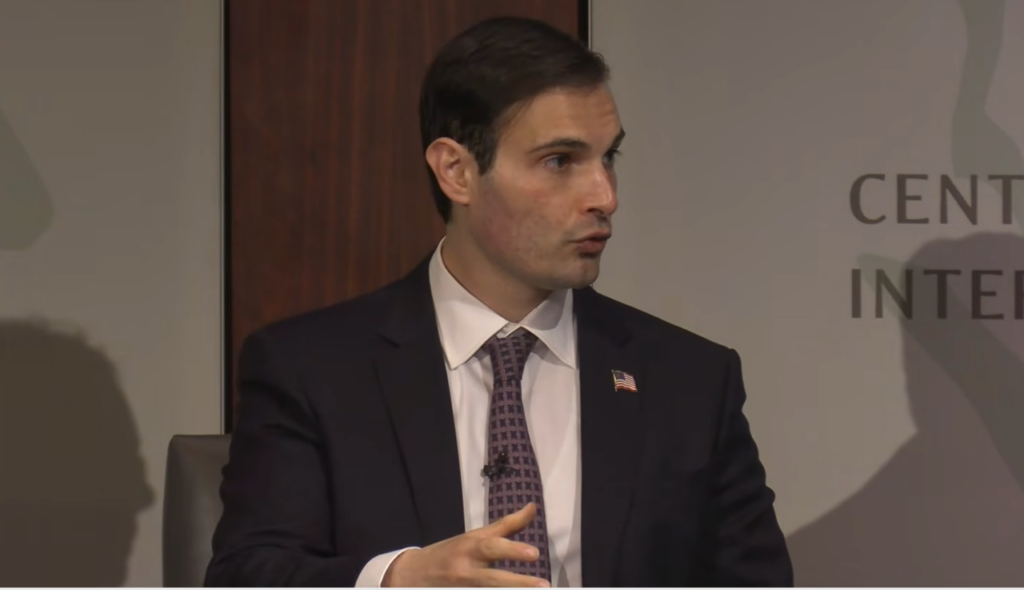
Jeremy Lewin, US Under Secretary of State for Foreign Assistance, Humanitarian Affairs and Religious Freedom at the State Department, made this announcement at an event in Washington DC on Tuesday.
In 2024, the US and the Global Fund announced that they would distribute up to two million doses of lenacapvir to HIV high-burden countries over the next three years.
But the two groups are “upping our financial commitment” to reach three million people, Lewin told an event convened by the Center for Strategic and International Studies (CSIS) on the sidelines of the World Bank spring meeting.
Global Fund executive director Peter Sands added that “the experience we’ve got so far suggests that, if we really want to make the most of this, we have to go bigger and we have to go faster”.
Meanwhile, Lewin said that the US would “be willing to fund additional doses as we get that manufacturing capacity ramped up,” adding that “we’d like to see countries fund doses.”
He praised Gilead Sciences, the US company that developed lenacapvir, as “an example of American excellence in biomedical innovation”.
Nine countries get deliveries
Since last November, some 135,000 doses of lenacapavir have been delivered to nine African countries: Eswatini, Kenya, Lesotho, Mozambique, Nigeria, South Africa, Uganda, Zambia and Zimbabwe.
Last November, Eswatini became the first country to get the medicine, only five months after the US Food and Drug Administration (FDA) had approved lenacapavir for pre-exposure prophylaxis (PrEP).
Twelve additional countries – Benin, Botswana, Dominican Republic, Fiji, Georgia, Haiti, Honduras, Indonesia, Morocco, Papua New Guinea, Rwanda and Thailand – will also receive the medicine soon, according to a Global Fund statement on Tuesday.
“We’ve taken a deliberate decision to focus on the places where it can have the most impact,” said Sands, adding that the aim is to reach 24 countries by the end of 2027
Countries also needed to have programmes to test people for HIV, enrol HIV negative people for lenacapavir and ensure that they will return after six months for their second injection, and put those who test HIV positive on treatment, Sands added.
He hopes that the promise of lenacapavir will provide an incentive for people to test for HIV, which would also enable health systems to reach the estimated nine million people with HIV not on treatment.
Fast-tracking generics
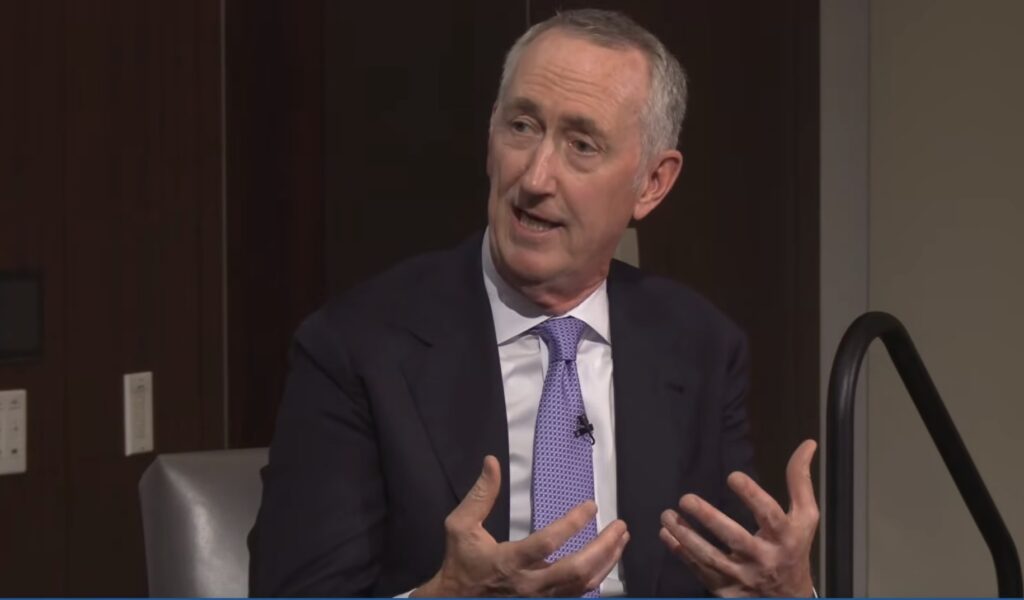
Gilead CEO Daniel O’Day told the meeting that, within two weeks of getting the clinical trial results for lenacapavir, his company had “signed voluntary licences with six generic manufacturers, royalty-free with no obligation to us” and completed all the technology transfer in two weeks.
“We have 1.3 million new cases of HIV every year, the vast majority in sub-Saharan Africa, and 41 million people are living with HIV,” said O’Day. “We have to bend the arc of those 1.3 million [new cases] to get to a stage where this disease is now under control.”
The first generics are due to become available from mid-2027. The Global Fund, Gilead and the US have been working to “reduce the risk” for generic manufacturers by “making sure [they] already have a market as they roll their product out the door,” said O’Day.
Last week, the Global Fund launched a global call for Expressions of Interest (EOI) from manufacturers to submit their generic products for review by its Expert Review Panel to “accelerate the availability of quality-assured generic products and expand global supply capacity over the coming months”.
O’Day added that it had taken Gilead 17 years to develop lenacapavir: “My scientists call this a unicorn of a molecule. The fact that you could get a molecule that is nearly 100% effective at preventing HIV, given every six months, is quite extraordinary.”
Delivery via US bilateral agreements?
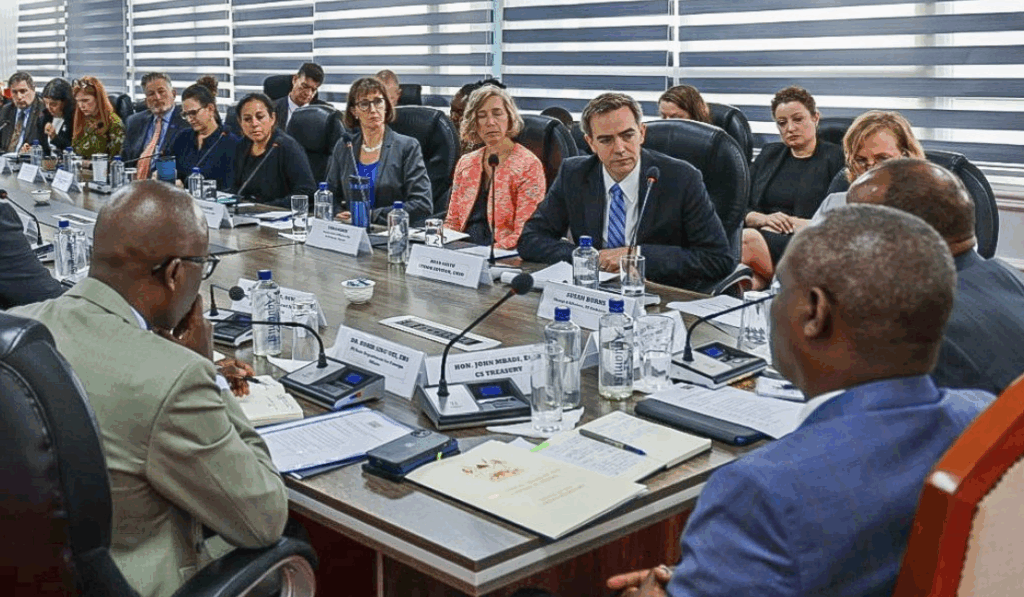
Lewin said that the bilateral Memorandums of Understanding (MOU) the US had signed with various countries enabled the US to work directly with health ministries in those countries to prepare for lenacapavir.
However, Sands said that getting lenacapavir to those most at risk of HIV involved both community organisations and governments: “We are very much engaged with community-led organisations, and this is an important part of how we maximise the impact of lenacapavir.
“We have to follow the epidemiology. We have to ensure that the communities most at risk get access to the most powerful tools. Some governments are quite good at that. Some governments are less good at that, and where they’re less good at that, the answer is to work through community-based organisations.”
The HIV sector has identified “key populations” where the virus is flourishing – including sex workers, men who have sex with men, people who inject drugs and adolescent women – as groups that need particular attention to end HIV.
However, the Trump administration has stopped funding most of these groups and is focusing narrowly on pregnant women and children in its HIV response. Trump wants to end mother-to-child transmission of HIV by the end of his second term in office, according to Lewin.
A Global Fund statement released on Tuesday names “priority populations” for lenacapavir as “including pregnant and breastfeeding women, adolescent girls and young women, and people accessing PrEP for the first time.”
However, at a briefing last September Lewin said that there is “no formal restriction” on who the recipient countries choose to give the medicine to, although the “strong recommendation” of the US is to focus on eliminating mother-child HIV transmission.
“We’re working with the countries to meet their needs in their high-risk populations. And the Global Fund, of course, is targeting their doses in their own manner as well,” Lewin told the briefing.
Key African countries excluded from MOUs
The US has signed 30 bilateral MOUs so far and, while it might sign a further 10 or so, 85% of the budget has already been allocated, said Lewin.
“I think the $21 billion in co-investment commitments from the countries is the largest mobilisation of African domestic resources for health ever,” he added.
The US President’s Emergency Plan for AIDS Relief (PEPFAR) focused on 20 high-burden countries, and Lewin said that the US had signed MOUs with all of these, bar “one or two exceptions, that have unique circumstances.”
However, the US has not offered a bilateral agreement with South Africa, the country with the biggest HIV positive population in the world, as the two countries have several political disagreements.
Despite this, a statement from the US Embassy in South Africa described the arrival of lenacapavir last week as exemplifying “commercial diplomacy between the United States and South Africa.”
Historic moment for HIV prevention! 🎉
South Africa receives first Lenacapavir shipment through @GlobalFund & @GileadSciences collaboration. The U.S. is proud to support this life-saving innovation. 🇺🇸🇿🇦 https://t.co/g8axF0whV2#EndHIV #GlobalHealth pic.twitter.com/lqxMyjLabw
— US Embassy SA (@USEmbassySA) April 10, 2026
The Global Fund is providing South Africa with the medicine, but the US can take some credit as it is the fund’s largest donor, pledging $4.6 billion to the Fund for its next budget cycle.
Zambia has been unable to secure an agreement as there has reportedly been a dispute over US access to its resources. Tanzania also hasn’t reached an agreement, while Zimbabwe rejected the terms the US proposed.
Massive potential to end HIV
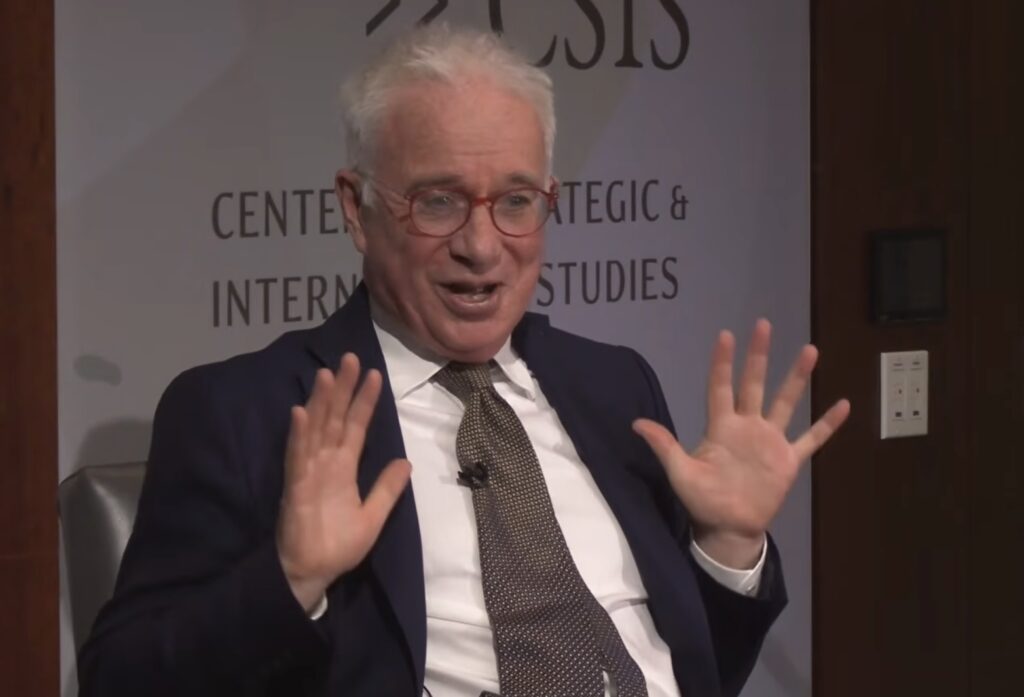
Sands said that the rollout of lenacapavir is “one of the most exciting things I’ve ever been involved with.”
“What’s really exciting is when you meet frontline health workers, and they are buzzing, and saying: ‘When did you say we’re getting it? How quickly?’.”
He described meeting mentors of mothers-to-be in Kabira, a large informal settlement in Nairobi in Kenya, who told him that lenacapavir would be a game-changer.
The mentor mothers encourage pregnant women to test for HIV and, while the programme has not had a baby born with HIV in four years, “they have nothing to offer the mothers who test negative to protect them from HIV”.
Many women are not in a position to control what happens to them sexually, he added, but the six-monthly injection is a discreet intervention that can protect them from infection.
Protecting an adolescent woman from HIV also means saving 50 to 60 years of antiretroviral treatment and supporting services, said Sands.
“The sheer economics of preventing infection are enormously compelling,” added Sands, who was a commercial banker.
Implementing MOUs
Meanwhile, Lewin said that by the end of the US fiscal year on 30 September, the US wants implementation agreements with all countries with bilateral compacts.
By then, these countries “will all be onboarded onto new mechanisms that align with the commitments and focus on the America First Global Health Strategy,” said Lewin.
“We’re trying to prioritise the work right now and get the plans right. It’s a lot of work to work with these countries on these plans, and it’s hard to do in the public eye. You’ve got to do that with a level of trust in the governments.”
Lewin added that US President Donald Trump’s proposed 2027 budget aims to dispense with disease-specific funding to enable more flexibility.
“In some places, we have more HIV money than we know what to do with, and we’d like to use it on global health security or on malaria,” said Lewin.
“Giving more flexibility to policymakers to make those decisions doesn’t mean that we’re eliminating HIV funding or seeking to do that. It means that we want more flexibility, something we’re working with Congress on,” he said, adding that the new MOUs “include all the disease areas in the same agreement.”
Image Credits: Karin Hatzold /PSI..
Combat the infodemic in health information and support health policy reporting from the global South. Our growing network of journalists in Africa, Asia, Geneva and New York connect the dots between regional realities and the big global debates, with evidence-based, open access news and analysis. To make a personal or organisational contribution click the donate button below.