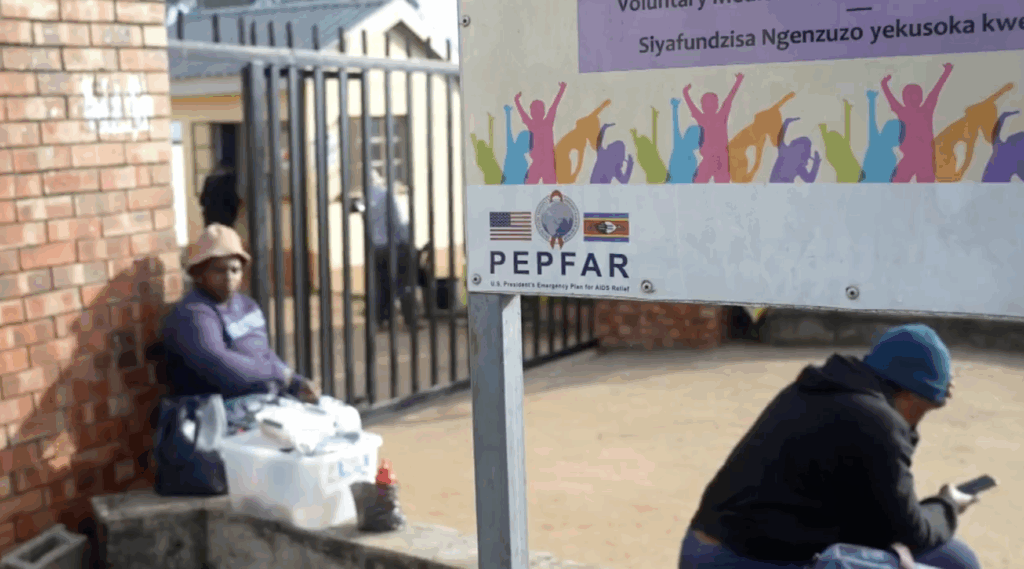
Researchers have challenged several upbeat claims made by the United States government about the continued impact of the US President’s Emergency Plan for AIDS Relief (PEPFAR). The US State Department claims that PEPFAR has sustained its impact on HIV despite the service disruptions and funding cuts introduced by the Trump administration.
In a data release covering 1 July through 31 September (the fourth quarter of the US budget cycle), the US government reports that PEPFAR supported 20,6 million people in over 50 countries on anti-retroviral (ARV) treatment. They note that this is “stable from the same FY 2024 reporting period”.
“Three million people now receive treatment from national governments rather than external PEPFAR implementers,” with two million “successfully transitioned” during the fourth quarter alone, according to a statement from the US State Department’s Bureau of Global Health Security and Diplomacy (GHSD).
PEPFAR initiated 103,000 pregnant and breastfeeding women on pre-exposure prophylaxis (PrEP), “more than double the 43,000 from a year ago”, according to the GHSD. PrEP involves HIV negative people taking ARVs to prevent infection.
While the GHSD acknowledges a decline in the number of children on HIV treatment – from 643,627 in 2022 to 508,703 in 2025 – it attributes this to “tremendous progress” in prevention of mother-to-child transmission (PMTCT).
Historically, however, HIV positive children are hard to reach, and only slightly over half of children under the age of 15 who are living with HIV are actually on ARVs, according to UNICEF.
“The message is clear: we cut overall spending by 30% while preserving critical frontline HIV care and eliminating wasteful programs. This proves the America First Global Health Strategy works,” according to the GHSD.
‘Substantial disruptions’
But researchers – from AmFAR, the Foundation for AIDS Research, and the International AIDS Society (IAS) – argue in a preprint article that there have been “substantial disruptions across PEPFAR service areas”.
Their analysis is based on both the newly released fourth quarter figures plus data from “an earlier inadvertent release [that] included all four quarters.”
It covers 31,746 facilities and community service sites, which the researchers classify according to their reporting records as “continuous” (71.3%, who submitted reports every month), “intermittent” (16.9%, submitting some reports) and “community services” (2.5%).
They report a “modest” 0,3% decline in people accessing HIV treatment, which is similar to the State Department assertion.
But researchers Brian Honermann, Elise Lankiewicz, Jennifer Sherwood and Greg Millett (all AmFAR) and Anna Grimsrud (from IAS) assert that this stable figure “obscures substantial changes”.
The “continuous facilities” rebounded to slightly above their 2024 level as they maintained “at least some level of support from PEPFAR and are primarily owned and operated by ministries of health”. (Around three-quarters of PEPFAR-supported facilities in 2024 were government facilities.)
They describe access to treatment as a “lagging indicator” of the overall health system performance because stable patients on treatment “already have strong routines in place for continually collecting medication.”
Decline in testing, PrEP and health workers

The drop in HIV testing portends future weaknesses. There was an overall 17% decline in HIV testing – the gateway to ensuring people with HIV are on treatment – resulting in a 16% decrease in the number of people initiated on ARV treatment.
Infant HIV testing declined by 6%, and infant diagnoses declined by 12% in the “continuous facilities”. There was a precipitous decline of 60% in testing and 31% in diagnosis in the “intermittent facilities”.
“The significant declines in HIV testing, diagnoses, treatment initiations, and treatment retention programming, however, raise serious concerns for countries’ capacity to maintain progress toward the 95-95-95 targets”, they noted. This is a reference to the United Nations target of 95% of people with HIV knowing their status; 95% on ARVs and 95% virally suppressed, adopted by the General Assembly in 2021.
PrEP initiations declined by 33% – largely as the Trump administration has designated PrEP for pregnant and breastfeeding women, rather than the “key populations” most at risk of HIV.
The PEPFAR-supported workforce was reduced by 22% between 2024 and 2025, a loss of some 76,051 jobs.
Instability, grant cancellation
The researchers recount the damage to PEPFAR starting from Trump’s executive order on 20 January, freezing all foreign aid disbursements.
This was followed by a stop work order on 24 January 24 for all foreign aid awards, including PEPFAR.
“Following this period, a series of waivers allowed for the partial resumption of PEPFAR programming, including a PEPFAR-specific waiver that permitted a defined subset of HIV care, treatment, and prevention of mother-to-child transmission services to continue,” they note.
But “the subsequent months were characterized by considerable instability, including cycles of award cancellations and reinstatements, legal challenges to the freeze, and the permanent dissolution of USAID, which was one of two major PEPFAR implementing agencies.”
They point to other research that has modelled the calamitous impact of these disruptions on the fight against HIV.
The last PEPFAR data?
They also acknowledge that the full implications of the foreign aid review have been “difficult to assess” as the US government has released “no official list of terminated and active awards post-review”.
However, they also note that “this is potentially the last data set PEPFAR will ever release”.
“Under the terms of the memoranda of understanding (MOUs) that the US State Department is currently signing with partner governments, public disclosure of data from those data sets is prohibited, including with external researchers, academics, or advocacy organizations,” they note.
“Without public data sets that enable national, sub-national, facility-level, and implementing mechanism level scrutiny, it is virtually impossible for external oversight and accountability to take place, whether within the US government or outside it.”
Image Credits: UNAIDS, UNICEF Zimbabwe.
Combat the infodemic in health information and support health policy reporting from the global South. Our growing network of journalists in Africa, Asia, Geneva and New York connect the dots between regional realities and the big global debates, with evidence-based, open access news and analysis. To make a personal or organisational contribution click the donate button below.