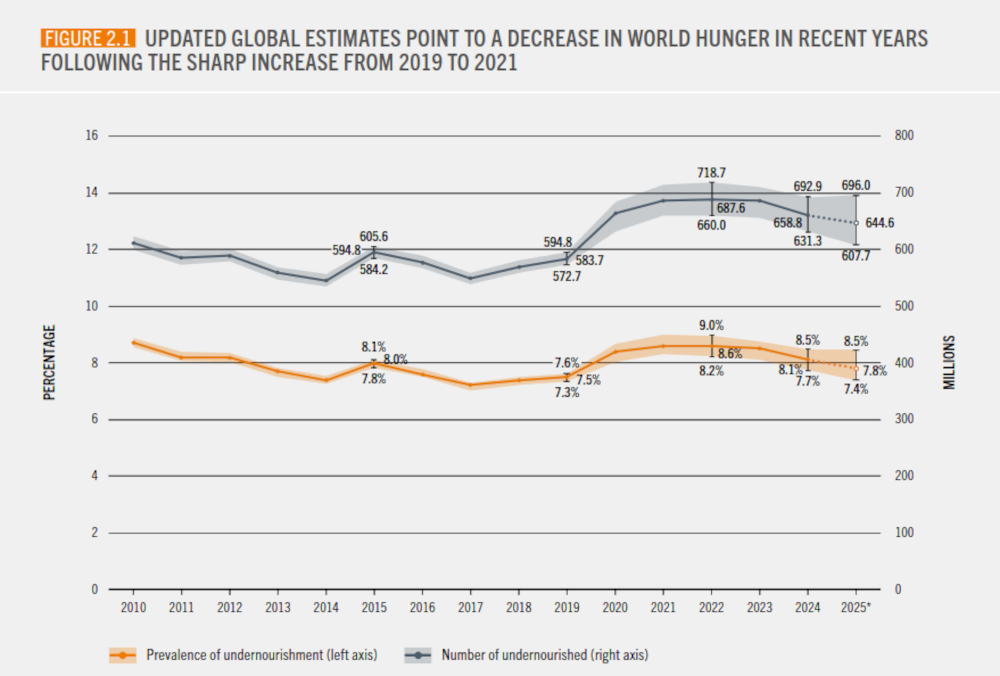
About 43 million fewer people are undernourished today compared to a peak in 2022, during the COVID pandemic. Yet undernutrition and a lack of diet affordability still haunt more than half a billion people globally. Crises and conflicts increase risks.
Global food security improved slightly in 2025 as hunger fell to 7.8% from 8.1% in 2024, dropping the number of undernourished people to roughly 645 million. However, the fruits, vegetables, and animal-sourced foods necessary to prevent malnutrition remain inaccessible for one-third of the global population, according to a joint UN flagship report on the State of Food Security and Nutrition in the World (SOFI), released on Tuesday.
The report warns that the average global cost of a healthy diet has surged to an average of $4.28 in purchasing power, per day, up from $3.44 in 2021. Current projections indicate that up to 520 million people will still remain hungry at the end of the decade, leaving the world to fall far short of the United Nations’ 2030 Sustainable Development Goal 2, Zero Hunger.
“Healthy diets should not be a luxury. They are the foundation of health, and they should be within everyone’s reach,” said WHO Director-General Dr Tedros Adhanom Ghebreyesus at the report launch. The World Health Organization co-authored the report with the Food and Agriculture Organization (FAO) and three other UN agencies.
Progress remains regionally fractured
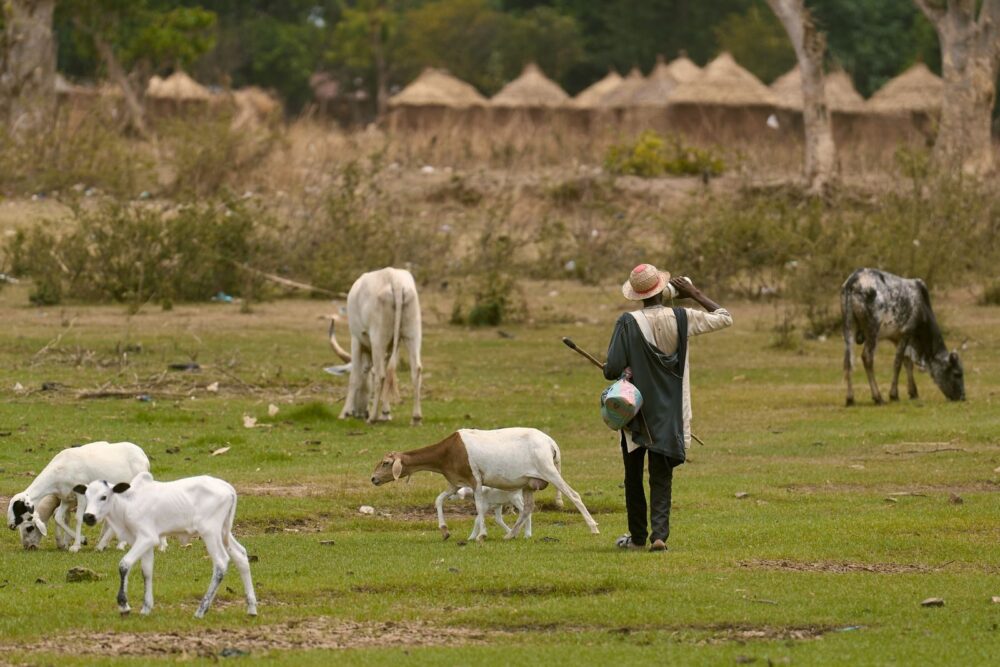
While Asia and Latin America reported steady gains, progress remains deeply fractured. In Africa, the percentage of hungry people remained stable, but rapid population growth means that the continent now hosts the highest absolute number of undernourished individuals worldwide, at 309 million.
Furthermore, 66.6% of Africans are entirely priced out of a healthy diet. This crisis disproportionately impacts women and children in rural areas, who face the highest levels of severe food insecurity and the lowest rates of dietary diversity globally.
Animal-sourced foods, which are an important source of protein as well as vital micronutrients in many low-income countries, constitute the most expensive dietary component across the continent. The high costs are driven by low baseline livestock productivity, animal feed expenses and insufficient veterinary services.
Because animal products as well as other highly perishable foods often travel long distances across fragmented regional supply chains, Africa’s deficit in cold chain and rural transport infrastructure leads to massive post-harvest and post-production losses. According to the UN experts, these losses can exceed 30-40% for dairy, fish, and fresh produce, inflating retail prices.
Conflicts and crises disrupt food security
These infrastructural gaps are compounded by extreme weather events and escalating armed conflicts. Ongoing fighting across the Sudan, South Sudan, Nigeria, and the Democratic Republic of the Congo continue to destroy agricultural livelihoods and displace millions of rural small holders who previously lived from farming or herding. The Sudan alone faces a credible risk of famine across 14 areas, as fighting blocks vital transport routes and prevents humanitarian access, the report stresses.
Beyond localised violence, broader geopolitical shocks are fracturing the global supply chains required to keep healthy diets affordable. Many African nations, which shifted from indigenous food production to cash crops decades ago incentivized by multi-national loans, investments and globalization trends, are now net importers of both fuel and basic food commodities, like cereals or grain. They therefore remain highly exposed to the macroeconomic fallout from the ongoing conflict between the United States and Iran.
The report highlights how the resulting blockade of the Strait of Hormuz has disrupted global trade routes, driving up energy and fertiliser prices worldwide. Because agricultural cold chains and transport logistics rely heavily on fuel, these macroeconomic shocks disproportionately increase the cost of highly perishable, nutrient-dense foods – like fresh produce and dairy.
Closing the agriculture finance gap
Governments historically have subsidised calorie-dense starchy staples, systematically neglecting the research and logistical support necessary for the nutrient-dense crops required to combat diet-related diseases, the report underlines. To correct this market failure, policymakers must repurpose agricultural subsidies and urgently invest in rural road networks, modern water management, and post-harvest storage.
If governments were to pivot public funding toward supply chain resilience, they could insulate local food markets from the escalating climate extremes and fragmented trade routes that inevitably trigger price spikes.
Current global investment priorities, however, do not reflect this urgent necessity. “Ending hunger and making healthy diets affordable requires political commitment, sustained investment and enabling policies,” said FAO Director-General Qu Dongyu on Tuesday in Rome.
Bridging the Nutrition Financing Gap With Private Sector Partnerships
Image Credits: DETTY IMAGES via Pexels, FAO, James Frid via Pexels.
Combat the infodemic in health information and support health policy reporting from the global South. Our growing network of journalists in Africa, Asia, Geneva and New York connect the dots between regional realities and the big global debates, with evidence-based, open access news and analysis. To make a personal or organisational contribution click the donate button below.