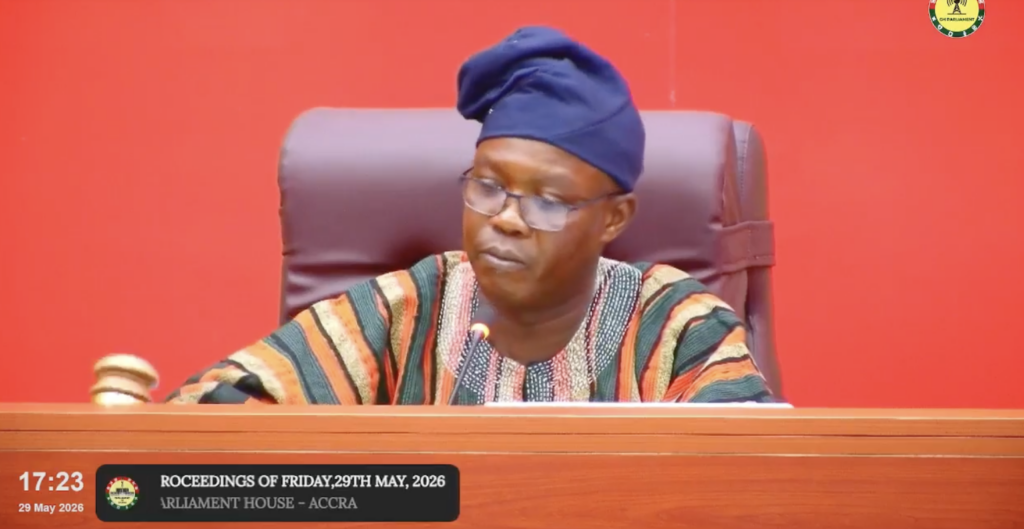
Ghana’s Parliament passed one of the most extensive, repressive anti-LGBT laws in the world late Friday, introducing prison terms for people who simply identify as lesbian and gay – but human rights groups say there was no quorum when it did so.
Only 32 of the 276 Members of Parliament were present when the Human Sexual Rights and Family Values Bill was passed – apparently in haste to coincide with a conference of conservative African MPs being hosted by Ghana’s parliament from Wednesday.
Ghana’s Bill covers all those who “hold out” as “a lesbian, a gay, a bisexual, a transgender, a transsexual, a queer, an ally, a pansexual, or a person of any other sexual orientation or in a sexual relationship that is contrary to the sociocultural relationship between a male and a female”.
It refers to “LGBTTQAP+” throughout, and prescribes a range of prison sentences. Sexual intercourse with a person of the same gender gets up to three years in prison, for example.
“Gross indecency”, which includes “a public show of romantic relations between or among persons of the same sex” and “intentional cross-dressing”, gets a punishment of six to 12 months in prison.
Aside from sexual “grooming” of minors (up to 10 years), the most severe punishment is reserved for activities aimed at supporting same-sex relations. For example, landlords – and their tenants – can get three to six years for renting or having a premises for “same-sex activities”.
Meanwhile, those involved in “LGBTTQAP+ propaganda, advocacy, support and other promotional activities” face five to 10 years in prison.
‘Send it back’
An alliance of over 100 African civil society organisations calling themselves Ukumbini appealed to Ghanaian President John Mahama to send the bill back to Parliament “with instructions for a full sitting and a genuine public process before any further vote is taken”.
“If this legislation truly carries the will of Ghanaians, it has nothing to fear from transparency. And if transparency is what is being avoided, Ghanaians are owed an explanation,” said the group in a statement sent to Health Policy Watch on Monday.
Mahama, who is in London this week for a UK-Ghana Investment Conference, told a meeting hosted by Chatham House on Monday that there was still a way to go before the Bill becomes law.
“There have been a few issues raised. One, that there wasn’t a quorum when it was passed. That’s an issue that has come up, and then two, there were some procedural lapses in terms of its passage,” Mahama said.
He added that the Bill needs to be scrutinised by his legal advisers “to make sure that everything is in order” and he could send it back to Parliament if his legal team found it wanting.
His Communications Minister, Sam George, and Reverend John Ntim Fordjour, MP, were the key sponsors of the Bill, which was introduced as a non-partisan Private Members’ Bill.
Ghana’s parliament passed a previous version of the Bill in 2024, but former president Nana Akufo-Addo did not sign it into law before being voted out of power.
The current version has been slightly amended to remove punishment for lawyers and health workers who provide services for “LGBTTQAP+” people, and journalists who report on LGBTQ issues.
Contradicting the Accra Reset
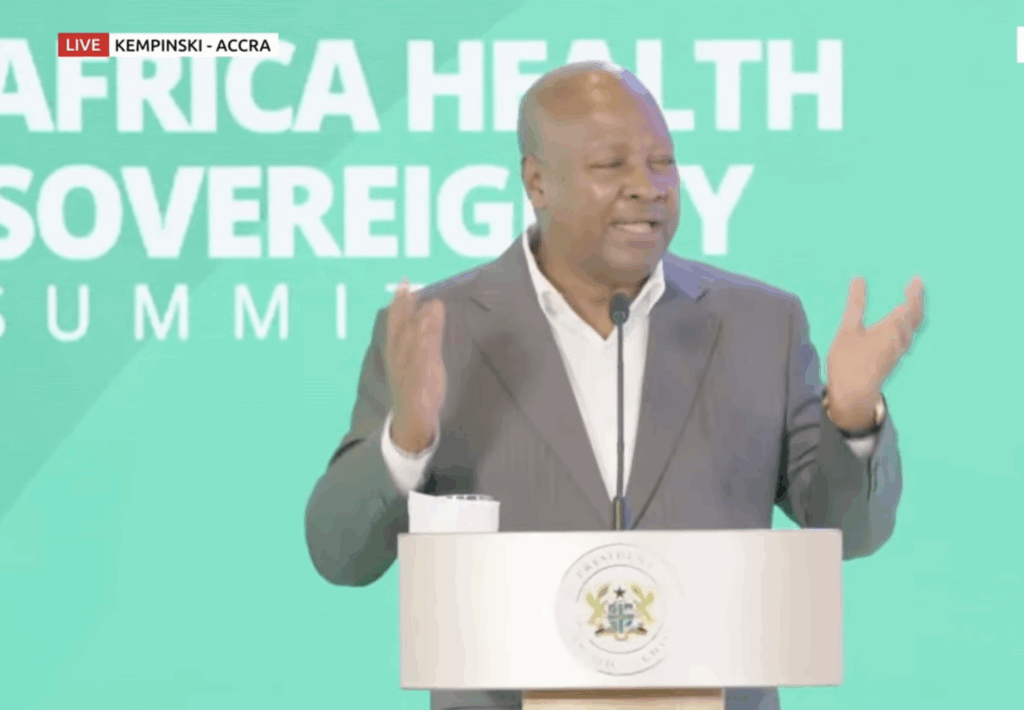
Mahama is at the forefront of the Accra Reset, an initiative in response to the withdrawal of aid that both encourages African governments to invest more in their citizens’ health and advocates for Africa to have more of a say in the global health “architecture”.
However, the civil society group warned that the Bill will have a direct negative impact on Ghanaians’ health.
“Senegal enacted comparable legislation earlier this year. The effect on public health was not gradual. Within a single month, HIV treatment consultations fell by over 25% across treatment sites,” they noted.
“Patients returned their antiretroviral medication boxes rather than risk collection. A country that had reduced HIV prevalence to 0.3% is watching that progress come undone, not because doctors began reporting patients, but because patients stopped coming.”
Anti-rights conference
Kenyan human rights lawyer Tabitha Saoyo told Health Policy Watch that the Bill had been passed to coincide with the fourth annual conference of the Inter-parliamentary Network on African Sovereignty and Values, which is an informal association of conservative African MPs.
The network’s previous three conferences have been hosted in Uganda (in 2023, 2024, 2025) and were used to “advance anti-LGBTQ legislation, restrict sexual and reproductive health and rights (SRHR), and mobilise parliamentary resistance to international human rights norms”, said Saoyo.
“The first draft of the Ugandan anti-LGBTQ bill, the Kenyan Family Protection bill, Liberia and Ghana’s anti-LGBTQ bills, all have very similar language,” said Saoyo.
“Words such as ‘aggravated homosexuality’, ‘child grooming’ and a law punishing owners of premises can be found in all the Bills. This is not a strange coincidence. It is a confirmation that one template was shared from one source by one manipulator,” said Saoyo.
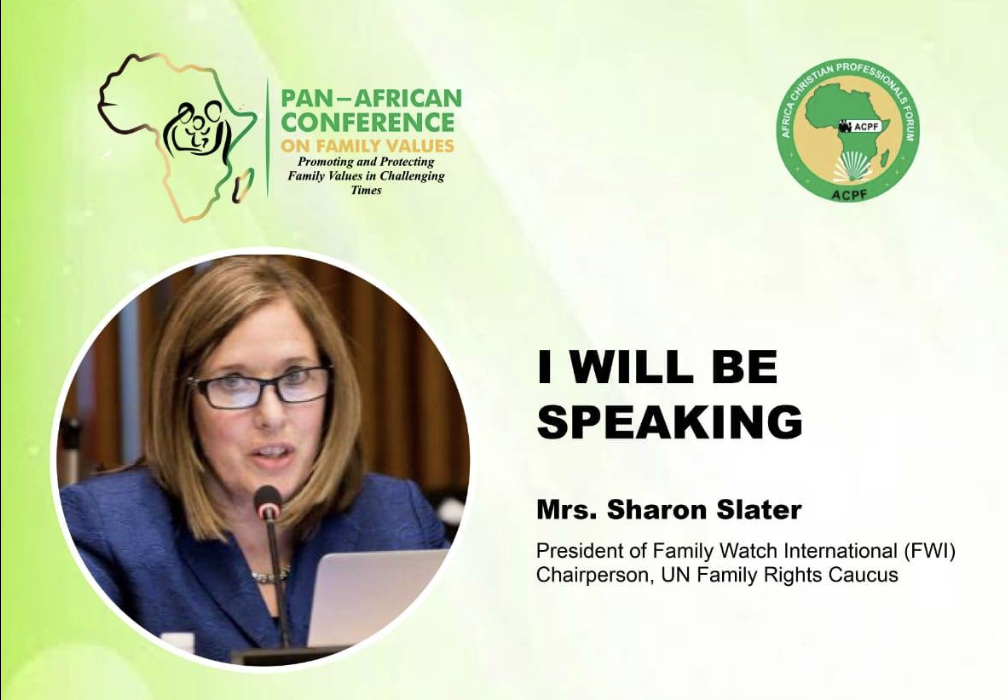
Human rights activists have repeatedly singled out US anti-rights group Family Watch International for instigating anti-LGBTQ and anti-abortion legislation in Africa under the guise of “family values”.
Saoyo also described the raft of anti-LGBTQ laws as “new versions of the Penal Codes that were imposed on African societies by European colonisers”.
Mobilising for anti-rights African Charter
This week’s inter-parliamentary network conference focuses on promoting an “African Charter on Family, Sovereignty and Values”, which narrowly defines “the family” as a patriarchal structure based on marriage between a man and a woman.
Ultimately, the group wants the African Union to adopt their charter, although legal analyses by the Initiative for Strategic Litigation in Africa (ISLA) and think tank Afya na Haki note that it conflicts with several continental treaties – including the African Charter on Human and Peoples’ Rights (ACHPR), Maputo Protocol, and the African Charter on the Rights and Welfare of the Child (ACRWC).
“The restrictive definition of the family as grounded exclusively in heterosexual marriage excludes de facto families, single-parent households, extended families, and non-marital family formations that are already recognised in African and international jurisprudence, dismantling the legal functions of family protection across domains, including social protection, inheritance, custody, housing, and migration status,” argues ISLA.
Afya na Haki describes “the claim that a single European-Christian model of the nuclear heterosexual family represents the authentic African tradition” as “a historical falsification”.
“Pre-colonial African societies contained enormous diversity in family structure, gender expression, and sexual practice,” it notes.
An academic analysis of the draft charter notes that it is part of the global move to the right, which rejects SRHR, especially abortion under any circumstances; opposes comprehensive sexuality education (CSE) in schools and pushes for African “sovereignty” over health, food, education and economic development.
Past conferences of the inter-parliamentary network have rallied a strange mix of people. The 2024 conference featured two of Africa’s most vociferous anti-vaxxers, Shabnam Mohamed and Wahome Ngare, who delivered blistering attacks on several life-saving vaccines, as previously reported by Health Policy Watch.
Mohamed heads the Africa chapter of Children’s Health Defense, the anti-vaccine group founded by Robert F Kennedy Jr, currently US Secretary of Health and Human Services.
The draft charter accommodates this constituency by advocating for “African sovereignty” over vaccines and food, according to a report by the conservative Christian International Council.
“At a very basic level, disregarding sexual and reproductive health undermines obstetric and gynaecological care, childbirth and fertility treatments. It also affects the prevention and treatment of HIV and sexually transmitted infections,” argue academics Professor Catriona Macleod, Godfrey Kangaude and Nicola Jearey-Graham.
“It harms access to contraceptive services and family planning, as well as reproductive cancer care. No African country would sensibly contemplate this,” they add.
However, anti-rights sentiment is gathering momentum. Ghana’s parliament will close from Wednesday for the rest of the week to enable MPs to attend the conference, which is due to be addressed by Mahama.
LGBTQ communities often provide convenient scapegoats for African governments seeking to distract citizens from economic crises, social problems and corruption.
Combat the infodemic in health information and support health policy reporting from the global South. Our growing network of journalists in Africa, Asia, Geneva and New York connect the dots between regional realities and the big global debates, with evidence-based, open access news and analysis. To make a personal or organisational contribution click the donate button below.