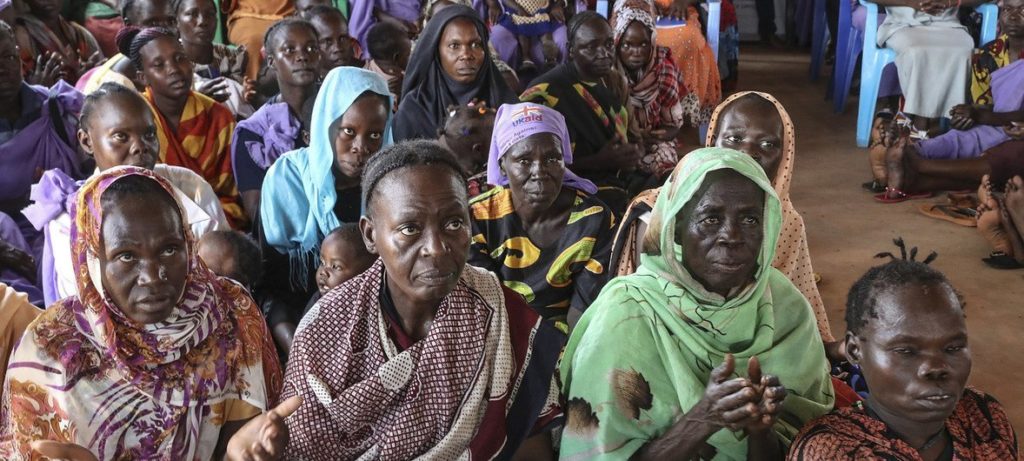
A draft charter on “family, sovereignty and values”, which would significantly undermine the rights of African women and girls, is not likely to be presented to the African Union (AU) General Assembly next February – despite a push from its conservative sponsors.
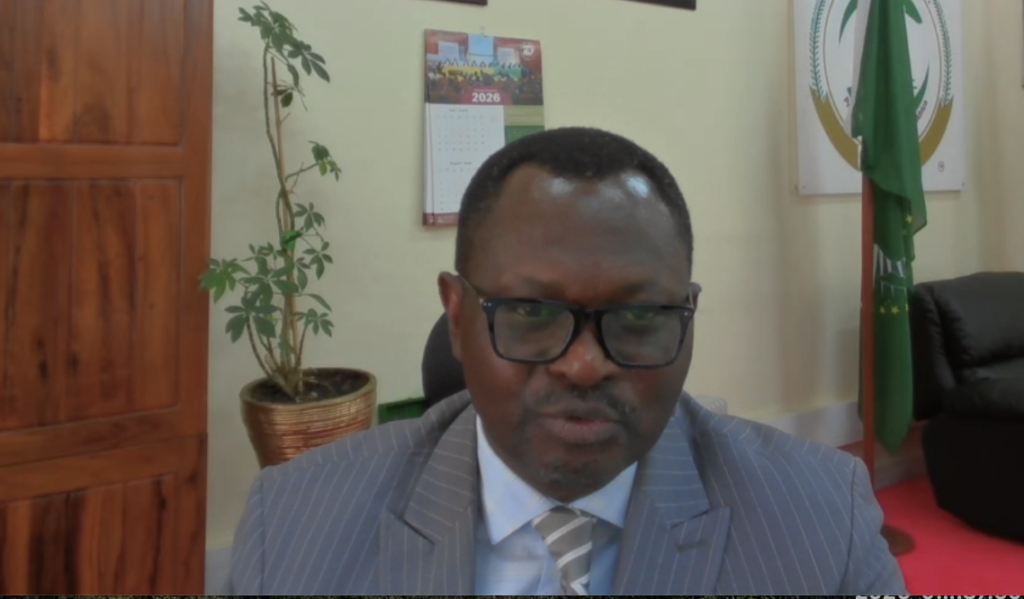
“That draft instrument has not got to the AU yet, and it is important to state categorically that it was not proposed by the African Union,” said Dr Robert Eno, Registrar of the AU’s African Court on Human and Peoples’ Rights.
“I’ve checked with my colleagues [at the AU headquarters] in Addis Ababa, and they have not received it. It is not scheduled,” Eno told a recent webinar organised by Sexual Health with Equity & Rights (SHE & Rights) on countering anti-rights efforts.
“I can assure you that, if it goes to the AU, it will not go straight to the Assembly. There is a process, and it’s a very long process,” said Eno.
The draft charter will undermine one of the few continental treaties that protects women’s rights and promotes gender equality, known as the Maputo Protocol.
The Maputo Protocol, which has been ratified by 46 of the continent’s 54 countries, commits to eliminating “all forms of discrimination against women”, including “harmful cultural and traditional practices”such as female genital mutilation and child marriage.
It also allows for abortion “in cases of sexual assault, rape, incest, and where the continued pregnancy endangers the mental and physical health of the mother or the life of the mother or the foetus”.
Gender equality ‘strengthens families’
The draft was developed over four annual gatherings of conservatives, three hosted by the Ugandan government and the fourth hosted by Ghana’s parliament in June.
These events have been supported by international right-wing governments and organisations, including the far-right United States group, Family Watch International (FWI) and the Russian government.
Members of Parliament from approximately 20 countries attended the conference in Ghana where the draft was presented, but that meeting has no legal status.
Eno urged human rights organisations to “resist the temptation to answer anti-rights narratives simply with more legal language, more technical terminology, or stronger denunciations”.
Instead, said Eno, “our response must offer an alternative, and importantly, a better alternative, and to persuade people that advancing the rights to health and gender equality does not threaten the family, society, culture, or religion.
“On the contrary, it strengthens families, protects communities, and promotes the well-being and dignity of all members of society.”
‘Weaponising religion, culture, and tradition’
Samah Hadid, the global executive director of Musawah, told the webinar that the anti-rights movement is “weaponising and misusing religion, culture, and tradition to justify gender discrimination and injustice” and “evade compliance with human rights treaties and frameworks”.
Her organisation promotes equality and justice in the Muslim family and advances human rights for women living in Muslim contexts.
But, said Hadid, attacks on women’s rights and their health rights are intensifying because “the anti-rights movement and these forces behind them are more coordinated; they’re more resourced”.
Rehema Namukose, Musawah’s senior regional programme officer for sub-Saharan Africa, said that, across Africa, “family values are used to justify harmful practices”.
In Somalia, for example, girls who have been raped are often forced to marry their rapists to save their family’s “honour”. Several countries also justify the economic and social subordination of women.
Namukose said many grassroots groups are “so discouraged” by how anti-rights groups have used legislation to curb rights.
Laws that push for “homophobic family protection legislation move at a high speed, while laws that advance gender equality are being stalled,” Namukose said, with Uganda, Ghana and Senegal all passing anti-LGBTQ laws at record speed in the past year.

‘Family protection to justify exclusion’
Fatou Bintou Sallah from the Initiative for Strategic Litigation in Africa (ISLA) said that the draft charter uses family protection to justify exclusion; sovereignty to resist accountability; and culture and values to limit equality protections.
Sallah, a former magistrate in Gambia, said that “the legal question is what the charter makes ideas [of family, sovereignty and values] do to existing rights and obligations”.
For example, the charter’s narrow definition of “family” as a marriage between a man and a woman and their children, “matters because family recognition affects inheritance, housing, custody, migration status, social protection, and legal recognition before the state”.
Sallah added: “If national law defines family narrowly, then protections linked to family can also become narrow. That can affect women-headed households, extended family networks, unmarried women, children, LGBTQ persons, and others who do not fit the preferred model by the state.”
Fate of rural girls
Vimbai Kapurura, the executive director of Girls Not Brides in Eswatini, said that while her country has made progress in reducing teenage motherhood, the rate is still high in rural and poor households.
“The unmet contraceptive need in sexually active girls between the ages of 15 and 19 is 46%,” said Kapurura.
Eswatini faces its Universal Periodic Review (UPR) this November. This United Nations Human Rights Council (UNHRC) peer-review mechanism assesses the human rights performance of all 193 UN Member States every 4.5 years. Governments and civil society submit reports to the UNHRC, and the review takes place at a meeting between the member state and the UNHRC working group in Geneva.
Kapurura said the UPR offered the opportunity to “pause and ask what has changed, who is experiencing that change, who is still being left behind, and are the rural girls experiencing the same progress?”
Kapurura added that her organisation engages men “as allies and partners”.
“If we are really serious about gender equality, sustainability can’t come from women and girls alone. Men are part of families. They are part of communities. They are part of the institutions and systems,” she stressed.
“They have a critical role to play, not just in speaking over women and girls, and not in taking over feminist spaces, but in standing alongside women and girls and helping transform the attitudes, the behaviours, and systems that sustain inequality.”
Image Credits: Isaac Billy/ UN Photo, Peter Tatchwell Foundation.
Combat the infodemic in health information and support health policy reporting from the global South. Our growing network of journalists in Africa, Asia, Geneva and New York connect the dots between regional realities and the big global debates, with evidence-based, open access news and analysis. To make a personal or organisational contribution click the donate button below.