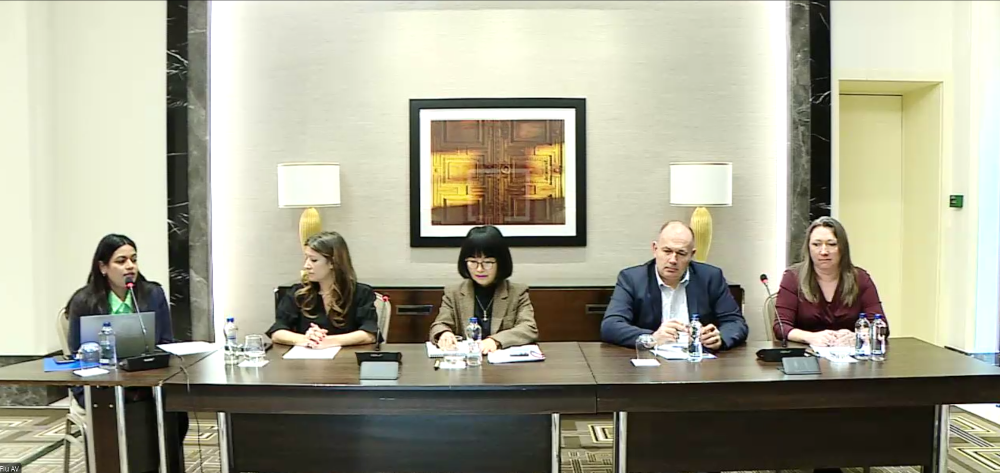
The World Health Organization (WHO) announced its updated recommendations for the 2026-2027 Northern Hemisphere seasonal flu vaccine on Friday, a critical adjustment driven by the rapid global dominance of a new A(H3N2) variant known as subclade K.
Following four days of intense consultation by the Global Influenza Surveillance and Response System (GISRS), experts finalized the flu vaccine composition to ensure it matches circulating threats.
While announcing these seasonal updates at a press conference on Friday, Dr Maria Van Kerkhove, WHO’s Director ad interim for Epidemic and Pandemic Management, pointed to the broader danger of respiratory viruses, warning that “the threat of an influenza pandemic is real and everpresent”.
She emphasized the critical need for flu vaccination to protect against severe disease and death.
There are around a billion cases of seasonal influenza annually, including three to five million cases of severe illness. It causes an estimated 290,000 to 650,000 respiratory deaths annually, according to the WHO.
Updated flu vaccine in response to rapid rise of new variant ‘subclade K’
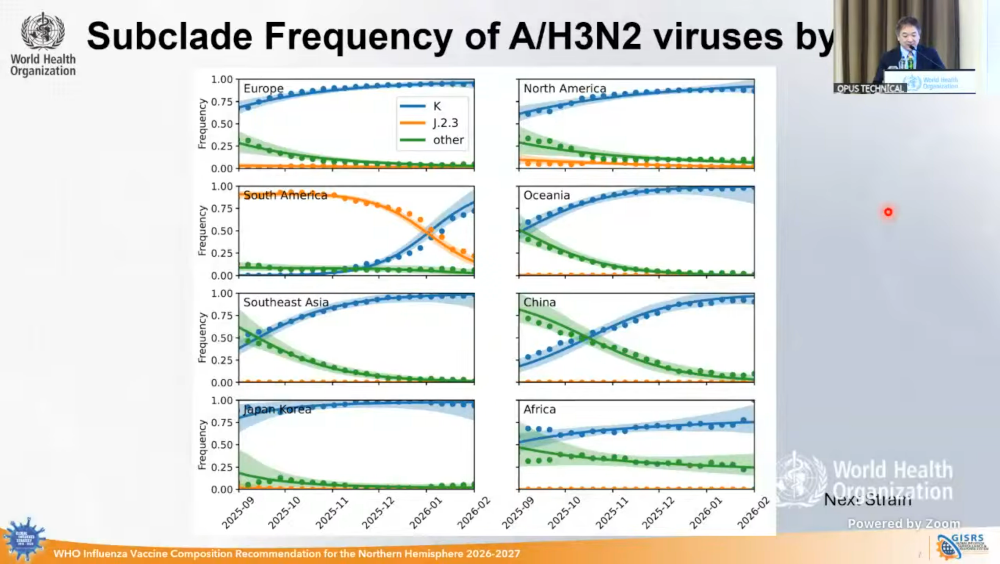
Since its sudden emergence in July and August of 2025, subclade K (scientifically classified as J.2.4.1) has rapidly spread globally, shifting the baseline of flu activity and replacing earlier dominant strains.
This variant now accounts for the majority of influenza viruses reported across multiple regions.
To react to this development, WHO issued two recommendations:
- Egg-based flu vaccines for the upcoming season include an A/Missouri/11/2025 (H1N1)pdm09-like virus, an A/Darwin/1454/2025 (H3N2)-like virus, and a B/Tokyo/EIS13-175/2025 (B/Victoria lineage)-like virus.
- Cell-based flu vaccines will similarly target the Missouri and Darwin strains, alongside a B/Pennsylvania/14/2025-like virus.
- Notably, the B/Yamagata lineage remains excluded from the formula, as no cases of this lineage have been documented since March 2020.
Shifting flu seasons across hemispheres
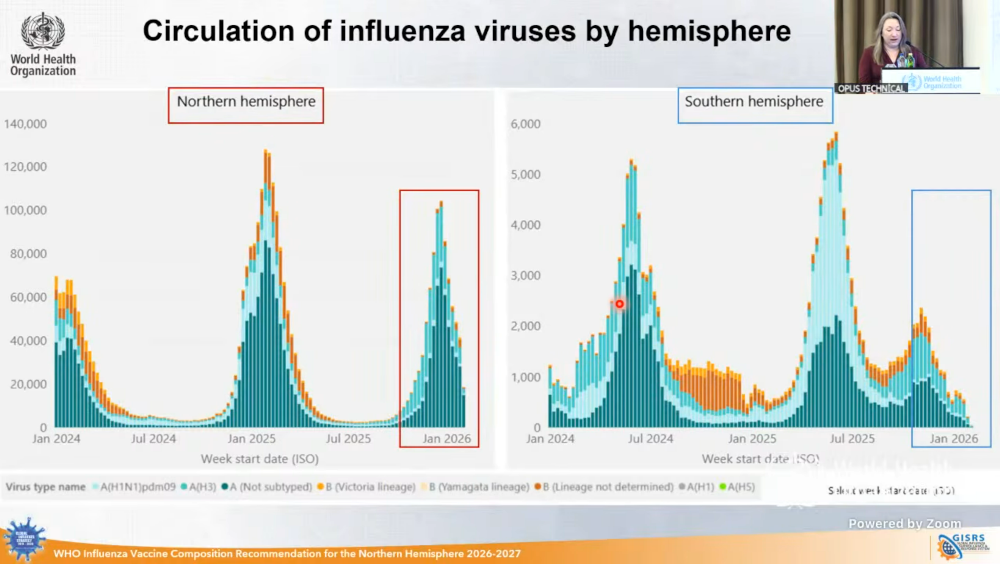
The unchecked spread of subclade K has significantly altered the traditional flu calendar. According to Professor Nicola Lewis, Director of the WHO Collaborating Centre at the Francis Crick Institute in London, the Southern Hemisphere experienced complex disease dynamics.
While the season began with H1 dominance, the sudden arrival of H3 subclade K extended the flu’s impact considerably in countries like Australia, she explained in a briefing on Friday.
New Flu Strain Sweeping Europe Says WHO; but Vaccines Remain Effective, ECDC Finds
Consequently, the virus’s spread caused the Northern Hemisphere to experience an unusually early start to its own influenza season, with countries such as the United Kingdom and Japan recording surges weeks ahead of historical averages.
Zoonotic threats and pandemic preparedness
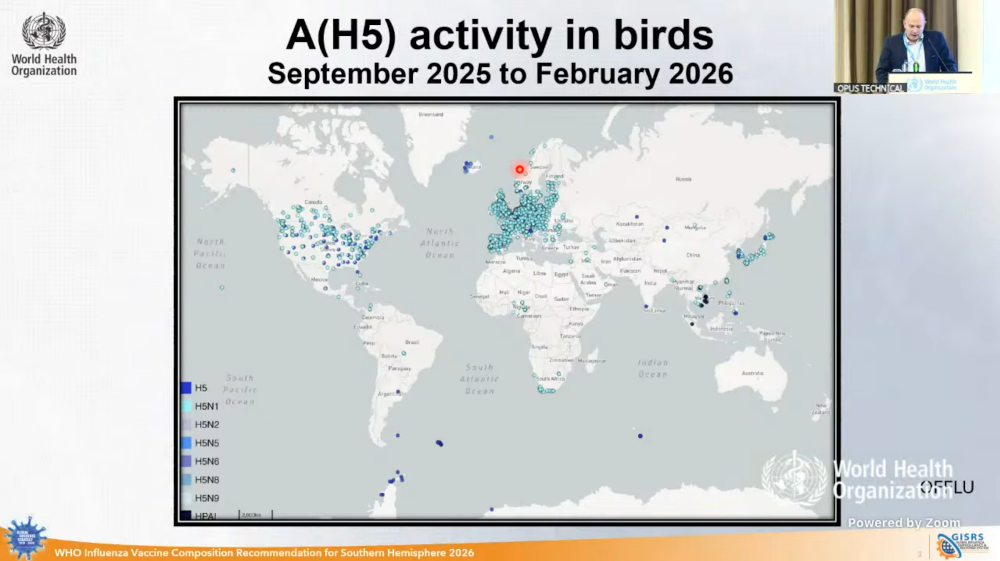
Beyond seasonal strains, health authorities remain on high alert regarding the dangers of avian and swine influenza. Globally, A(H5) viruses maintain a robust presence in bird populations across almost all regions except Oceania.
Notably, spillover events into humans have recently included atypical subtypes like A(H5N2) in Mexico and A(H5N5) in the United States, causing disease ranging from moderate to fatal. Since September 2025, 25 human infections involving zoonotic influenza have been reported across six countries, primarily linked to direct animal exposure without evidence of human-to-human transmission.
Fourteen of these cases involved H9N2 infections detected in China, noted Dr Richard Webby, Director of the WHO Collaborating Centre at St. Jude Children’s Research Hospital in Memphis, USA.
In response to slight evolutionary changes in these animal viruses, WHO is proactively recommending the development of an updated Candidate Vaccine Virus (CVV) for avian influenza A(H9N2) to ensure global pandemic preparedness is not caught off guard.
Prioritizing vaccination and combatting misinformation
With a highly transmissible strain circulating, experts reiterate that safe and effective flu vaccines remain the primary defense, particularly for vulnerable populations and healthcare workers.
However, WHO is not ignoring public hesitancy. Van Kerkhove emphasized that global health leaders must actively listen to communities and take their concerns seriously.
“We are listening to people. There are legitimate questions that need to be answered,” she affirmed, noting that WHO is collaborating with community and faith-based leaders to combat willful misinformation campaigns and empower individuals to make informed health decisions.
Image Credits: Felix Sassmannshausen.
Combat the infodemic in health information and support health policy reporting from the global South. Our growing network of journalists in Africa, Asia, Geneva and New York connect the dots between regional realities and the big global debates, with evidence-based, open access news and analysis. To make a personal or organisational contribution click the donate button below.