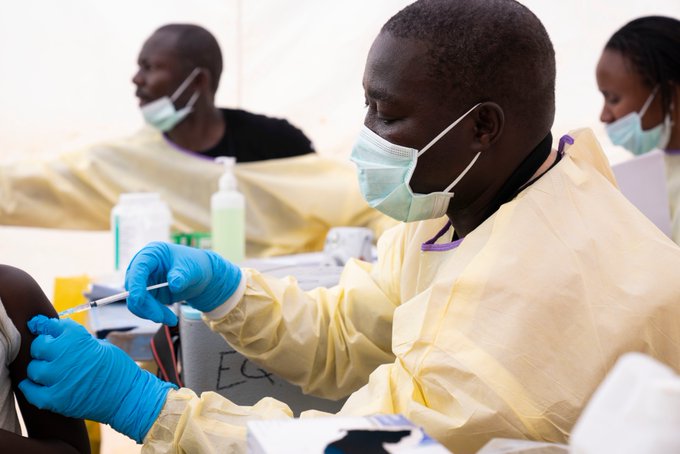
Three investigational vaccine candidates for the Ebola Bundibugyo virus are being “urgently accelerated towards clinical trials”, the Coalition for Epidemic Preparedness Innovations (CEPI) announced on Monday.
There are no licensed vaccines for the Bundibugyo virus, and none are in clinical development. This is the strain of Ebola currently driving the outbreak in the Democratic Republic of Congo (DRC) and Uganda, with over 1000 suspected cases and 246 deaths.
CEPI will invest up to $62 million “to back a portfolio of candidates under development from longstanding partners with proven capabilities”.
These include candidates developed by IAVI, Moderna, and the University of Oxford, which will be manufactured at the Serum Institute of India.
IAVI has been awarded $3.2m to accelerate the development of a recombinant vesicular stomatitis virus (rVSV)-based vaccine candidate.
The candidate was developed by University of Texas Medical Branch (UTMB) scientist Dr Thomas Geisbert and colleagues, building on earlier work by Andrea Marzi and Heinz Feldmann from the National Institute for Allergy and Infectious Diseases in the United States.
IAVI has reached an agreement with UTMB to develop the rVSV candidate, which has “demonstrated protective efficacy in nonhuman primate studies but has not yet been evaluated in humans”, IAVI noted in a statement on Monday, adding that the Dutch government is assisting in financing the vaccine development.
World Health Organization (WHO) experts determined last week that IAVI’s one-dose rVSV vaccine candidate is the most promising Bundibugyo vaccine candidate in the pipeline and called for it to be prioritised for evaluation in clinical trials.
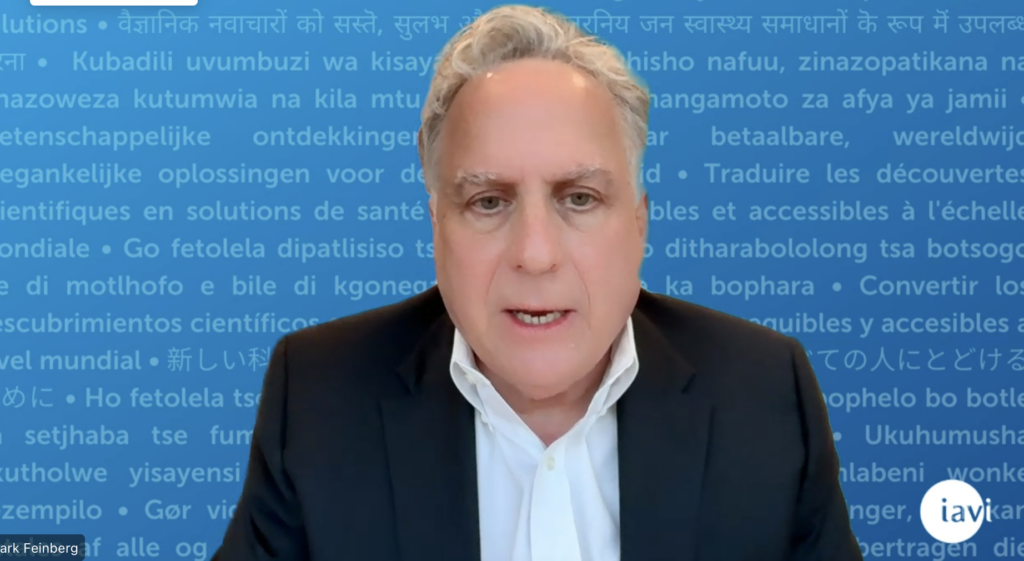
IAVI CEO Mark Feinberg told a media briefing on Monday that the Bundibugyo-specific vaccine has been shown in preclinical studies to be “100% efficacious against virulent virus challenge” and to also stimulate the rapid onset of immunity.
Noting that Merck’s Ebola Zaire vaccine had been developed during the large Ebola outbreak in 2014-2018, Weinberg said IAVI is “acting with urgency to advance this candidate quickly and responsibly”.
It would usually take seven to nine months for a vaccine candidate to go through a successful clinical trial in humans, then proceed to the large-scale production of the vaccine.
Gavi, the vaccine alliance, announced on Monday that it would make up to $50 million available through its First Response Fund (FRF) to support the response to the outbreak.
“While we are some way off having a safe and effective vaccine against Bundibugyo virus, we need to act now to ensure that, once one or more vaccine candidates are ready, manufacturers are in a position to start producing doses at scale,” said Gavi CEO Dr Sania Nishtar.
“Leveraging this allocation, Gavi will work closely with CEPI and partners to design the right incentives to achieve this goal, exploring all options, including potential Advance Purchase Commitments.”
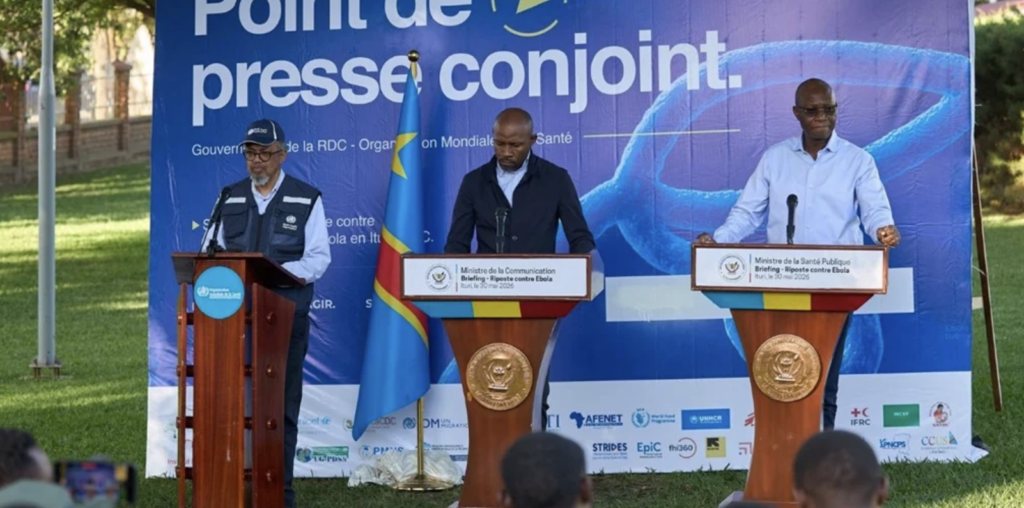
The DRC Ministry of Health noted on Sunday, during a visit by WHO Director General Dr Tedros Adhanom Ghebreyesus to the heart of the outbreak, that there is a “rapidly evolving situation, with cases and deaths notified in several health zones of Ituri, North Kivu and South Kivu”.
“Persistent challenges include early detection and isolation of cases, contact tracing, safe and dignified burials, robust infection prevention and control in health facilities, and strong community awareness”, said the Ministry and WHO in a joint statement.
Kenya court halts US quarantine facility
Meanwhile, Kenya’s High Court suspended a US plan to set up an Ebola quarantine facility for US citizens in the Laikipia region late last week, with the order being extended on Tuesday until 23 June.
This follows an urgent court challenge by the human rights organisation, Katiba Institute, and the Kenya Law Society – both citing risks to public health posed by the facility.
The US had previously announced that a 50-bed quarantine facility would open last Friday at a Kenyan air force base to isolate US citizens exposed to the virus in the outbreak in the DRC and Uganda.
Judge Patricia Nyaundi granted an interim interdict preventing government officials or groups from “establishing, operationalising, facilitating, approving or permitting” any Ebola-related quarantine centre for the US or any other foreign government until the matter could be heard.
On Tuesday, Nyaundi extended the interdict until 23 June when the court will hear the matter. In the interim, she has also barred the development of the facility until the court has heard the matter and ordered the government to disclose “all agreements and operational protocols” related to the facility within seven days.
The Kenya Medical Practitioners, Pharmacists and Dentists Union (KMPDU) threatened a one-day strike if the facility went ahead, while citizens in the region have also staged protests.
“If the United States believes the 12-hour medevac flight back to Washington is too dangerous for its citizens, by what logic is it safe to fly infected or exposed individuals into Kenyan airspace and drop them in Laikipia? … If it is too dangerous for America, it is too dangerous for Kenya,” said the KMPDU in a statement.
“We will not sit back and watch Kenya be treated as a containment colony for a lethal pathogen that we did not generate.”
Image Credits: WHO Twitter, World Health Organization Twitter, Daniel Elombat / WHO.
Combat the infodemic in health information and support health policy reporting from the global South. Our growing network of journalists in Africa, Asia, Geneva and New York connect the dots between regional realities and the big global debates, with evidence-based, open access news and analysis. To make a personal or organisational contribution click the donate button below.