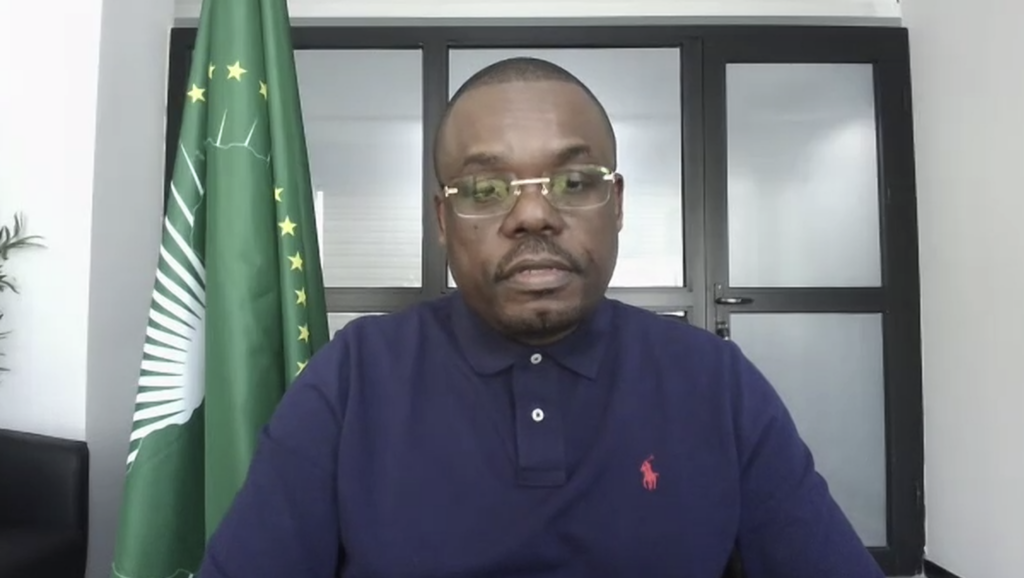
International Ebola-related travel restrictions imposed on people from the Democratic Republic of Congo (DRC), Uganda and South Sudan – which has yet to record a single case – are “unacceptable” will have a detrimental effect on the economies of affected countries, said Dr Jean Kaseya, head of the Africa Centres for Disease Control and Prevention on Thursday.
The US was the first to ban travellers from the three countries, with Canada, the Bahamas, Jordan and Bahrain following, but Kaseya said 15 countries have now imposed some form of travel restrictions.
“We cannot stop this outbreak with travel restrictions that Western countries have started to impose on African countries. It even a shame to see a country like South Sudan, with zero suspected cases and zero deaths, under travel restriction. The treatment that Western countries are applying to Africa… it’s not acceptable,” said Kaseya, speaking from the DRC’s capital, Kinshasa.
During the last large Ebola outbreak in 2018, West Africa lost $53 billion or 12% of their GDP, said Kaseya.
By Wednesday, there were 1077 suspected cases in the DRC and 246 deaths, including “three very young doctors” in Bunia in Ituri province, the epicentre of the outbreak, Kaseya reported.
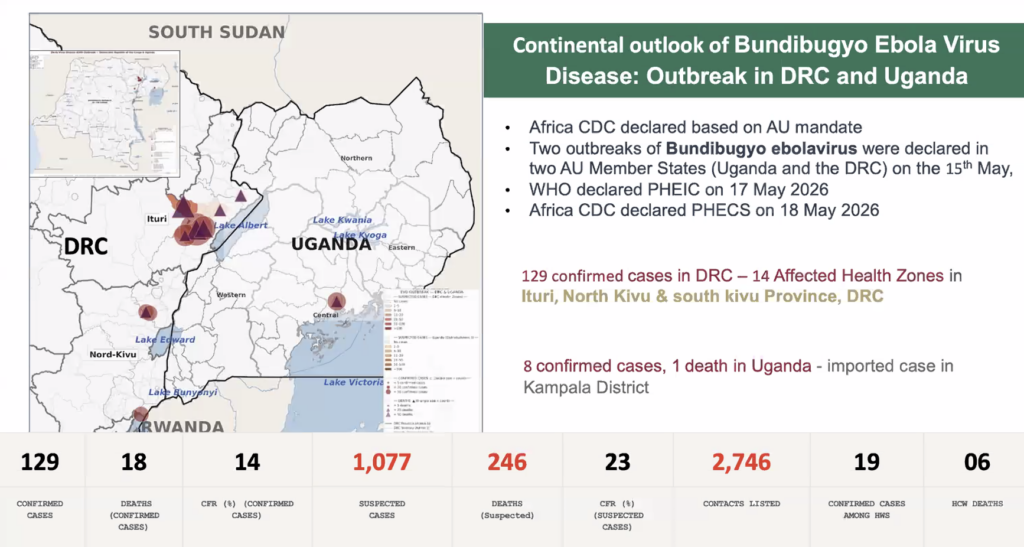
However, more cases are expected as given that the outbreak is centred in a remote and conflict-ridden,
Two countries are affected but 11 countries on their borders are at risk, and Africa CDC is also working with these countries to strengthen their surveillance capacity.
“Tomorrow, I will be in Burundi meeting the president and senior officials to see how the country is getting ready if the cases that we have in South Kivu [in neighbouring DRC] are detected also in Burundi. This is why we are really running –l et me correct myself, we are not running, we are flying – to make sure that we can stop this outbreak very quickly.”
‘Mistrust of Western countries’
Kaseya said that he had visited Bunia in the last few days where he encountered “mistrust of Western countries” by people in the area.
“The question they are asking me is: ‘DG, why after 19 years of this [disease], we still don’t have a vaccine, we still don’t have medicine? A local leader was telling me: ‘If this outbreak was in Europe or in the US, a vaccine and medicines will already be available’,” Kaseya told the media briefing.
Kaseya also condemned countries that had pledged financial support for the outbreak effort only to renege a few days later, saying that he would name them within a week if they did not make good on their promises.
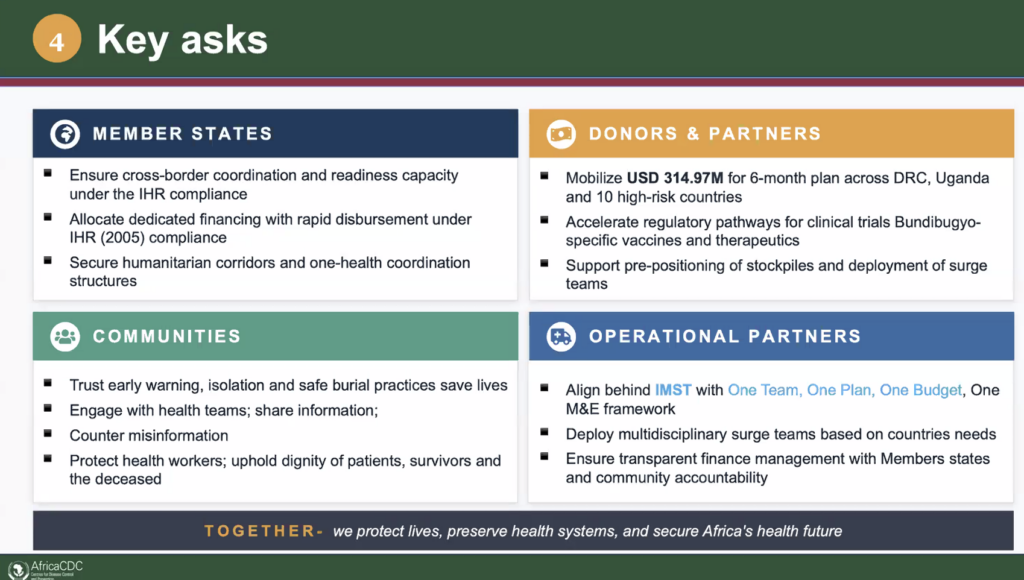
The DRC will contribute $50 million to the effort, but the need is in the region of $319 million.
“On Monday (25 May), we ended the day with a pledge of $498.8 million almost $500 million Since then the figure is going down. Now, as I’m talking to you, the figure is around $290 million We cannot afford to stop this outbreak without resources. We cannot afford to stop this outbreak just with political declaration from some countries,” he said.
Africa CDC has developed a list of priority tasks for all affected sectors, making a particular appeal to communities to trust and protect health workers.
Community members have attacked and torched tents housing Ebola patients at Mongbwalu General Referral Hospital three times in the past week, demanding the bodies of their relatives for burials – unaware that their bodies remain infectious after death. In the latest attack, a seriously ill patient died while trying to escape the burning tent and 18 others fled.
Kaseya said that churches and local radio stations were being mobilised to assist to reach affected communities and provide them with accurate information about the disease and their risks.
The US State Department announced on Thursday that it has “mobilized more than $112 million in bilateral foreign assistance for the Ebola response in less than two weeks”, with an additional $80 million in bilateral assistance to key partners finalised this week.
“These new resources will enable implementing partners to scale up the following critical response activities: PPE procurement and delivery, border screening and surveillance, contact tracing, and diagnostics supplies,” the US State Department said.
Combat the infodemic in health information and support health policy reporting from the global South. Our growing network of journalists in Africa, Asia, Geneva and New York connect the dots between regional realities and the big global debates, with evidence-based, open access news and analysis. To make a personal or organisational contribution click the donate button below.