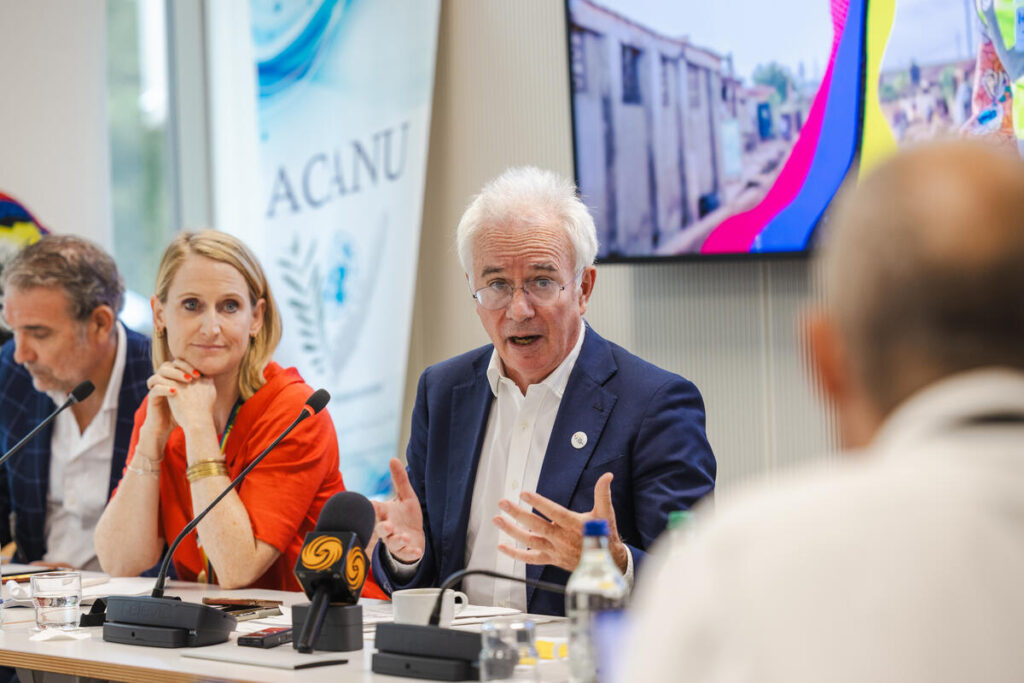
Over the past week, the race for the next World Health Organisation (WHO) Director-General has started to take shape. Governments have publicly put forward prospective candidates, WHO is already listing them on a website, and some candidates are beginning to make their case publicly. Dr Hans Kluge has even released a manifesto laying out how he would lead the organization.
And this is happening many months before the decision. WHO nominations do not even close until 24 September. The official candidate list will be published after the nomination period closes, followed by the first candidate web forum on 18 November, Executive Board consideration in January, another candidate forum in March, and finally the World Health Assembly vote in May of 2027. It is a long process, but it gives people time to hear the ideas, debate them and understand what each candidate actually wants to do with WHO.
Meanwhile, The Global Fund, also in search of a new leader, has taken a very different approach. Rather than having candidates make their interest known publicly, the process will produce a pre-vetted shortlist of “four or five candidates” that is expected to reach its board in late September, just a month before it votes on 28-30 October.
That one-month timetable leaves little room for the broader global health community to hear directly from the candidates or assess competing visions for the institution at a particularly consequential moment.
Concerns about transparency
Concerns about the transparency of the selection process were raised earlier this year by Sascha van Beek, a German parliamentarian, who questioned whether the process was sufficiently open and accountable. I too argued that The Global Fund is too important to treat this as just another executive search.
The stakes are difficult to overstate. Since its creation in 2002, the Global Fund partnership has helped save 70 million lives and reduce the combined death rate from AIDS, tuberculosis and malaria by 63%. In 2024 alone, 25.6 million people were receiving antiretroviral therapy in countries where it invests, 7.4 million people were treated for tuberculosis and 162 million insecticide-treated mosquito nets were distributed. With nearly $70 billion disbursed across more than 100 countries, the choice of its next leader will shape disease programs and health systems around the world.
Yet in July 2026, the Global Fund confirmed that the executive director selection process would continue as planned and on its existing timetable. As we wait for the Fund to announce the candidates, there is still an opportunity to open the process further. Doing so would not require reopening the search or delaying the board’s decision.
Public candidate forum
One way to do that is to hold a public candidate forum in October, with both in-person and virtual participation. It should be moderated by someone who understands the Fund and the different constituencies that make up its partnership. A forum would give more stakeholders with a vested interest in the Fund a substantive role before the board makes its decision.
A forum would also force candidates to address the questions the Fund will face over the next decade. How should it approach new forms of financing? What role should artificial intelligence play? How should it support greater country ownership in the era of the Accra Reset? And what reforms will be needed as the global health landscape changes?
The Global Fund can reasonably argue that its process already includes opportunities for engagement. Once the final shortlist is submitted in late September, candidates will attend a board retreat and then meet with board constituencies before the vote on 28-30 October.
The board itself is unusually representative, with 20 voting seats divided equally between donor and implementer constituencies. Governments, civil society, communities affected by the three diseases, the private sector and foundations all have a formal role. That structure remains one of the Fund’s greatest strengths.
But board engagement should not be the limit of the process. Board members are responsible for selecting the executive director, and that authority should remain with them. This is a public-interest decision, and greater openness can strengthen confidence in the Fund while building broader buy-in among donors, implementers, civil society and the communities it serves.
The Global Fund’s own description of the job reinforces that point. The executive director is not simply managing the Secretariat. The person will be responsible for leading the institution through a period of major political and financial change.
There is also an important precedent. Following concerns about the selection of its Director-General, WHO substantially revised its process ahead of the 2017 election. It introduced a code of conduct and candidate forums, with parts of the process made available to the public.
WHO made the deliberate choice to create more space for candidates to explain how they would lead the organization and for member states and the wider community to hear from them before the election.
The Fund describes itself not simply as an organization governed by a Board, but as a “worldwide partnership” of governments, communities, civil society, technical agencies and the private sector. A public candidate forum would be a simple way to put that principle into practice.
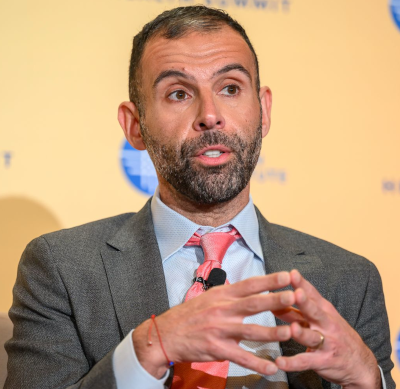
Dr Jirair Ratevosian is a Research Scholar at the Duke Global Health Institute. He previously served on the board of the Global Fund. Past positions include acting chief of staff for PEPFAR, corporate social responsibility director for Gilead Sciences, and legislative director to US Congresswoman Barbara Lee. He holds a doctoral degree from Johns Hopkins Bloomberg School of Public Health, an MPH from Boston University, and a BSc from the University of California, Los Angeles.
Image Credits: Global Fund , Milken Institue.
Combat the infodemic in health information and support health policy reporting from the global South. Our growing network of journalists in Africa, Asia, Geneva and New York connect the dots between regional realities and the big global debates, with evidence-based, open access news and analysis. To make a personal or organisational contribution click the donate button below.