
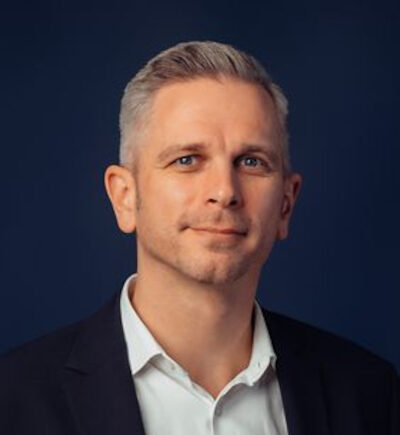
Editor’s note: As the Global Fund Executive Director nomination process progresses behind closed, reports by Health Policy Watch and The Lancet have revealed a few of the names said to be shortlisted, including high-profile candidates from the United States and Botswana. Meanwhile a German contender was reportedly sidelined. In this article, Sascha van Beek, a leading global health actor in Germany’s Bundestag (Parliament) and a nurse by training, explains why Germany, a major global health donor and host to world-class scientific research, also needs a seat at the table.
___
For decades, Germany has been a quiet giant in global health – offering support financially and with expertise in the background, while letting others take the steering wheel. With global realities changing, this role must evolve.
However, the recent Health Policy Watch report on the ongoing selection process for the next Executive Director of the Global Fund highlights how Germany consistently falls short of its potential when it comes to securing leadership positions in global health.
Germany’s overly cautious strategy
This is not due to a lack of expertise or credibility. Germany enjoys an excellent international reputation, is home to world-class scientific institutions, and has been a reliable partner in global health for decades. It is therefore all the more difficult to understand why we continue to leave this potential untapped when it comes to international leadership.
It is not an isolated case, but the result of an overly cautious personnel strategy pursued over many years. Germany has too rarely prepared candidates strategically for senior global positions, has done too little to raise their international profile, and has often failed to articulate its ambitions. If we want to help shape international policy, we must also be willing to assume leadership responsibilities within these organisations.
The German government now has the opportunity to change course. Germany needs a far more active, confident, and strategic approach to international appointments. Strong German candidates should be identified early, supported across government, and promoted internationally. Not out of national prestige, but because international organisations can benefit from German expertise, reliability, and experience.
Germany already has internationally recognised institutions such as the Robert Koch Institute, Charité, the University of Berlin medical school and hospital, and the Bernhard Nocht Institute for Tropical Medicine. Their expertise has been instrumental in initiatives ranging from polio eradication to epidemic preparedness and outbreak response over many years.
Demanding transparency in global health

At the same time, the current debate raises fundamental questions about the governance of the Global Fund itself. Reports of procedural irregularities and a lack of transparency in the selection process must be fully clarified. The appointment of the Executive Director of one of the world’s most important global health institutions cannot be conducted through a process that leaves major stakeholders with unanswered questions. The Global Fund is responsible for millions of lives worldwide; its leadership cannot be decided behind closed doors.
The Global Fund has faced criticism over its Executive Director selection process before. Similar concerns were raised in 2017, leading to a restart of the process. Those lessons should have resulted in lasting reforms. Such procedural missteps must not be repeated. If the reported concerns about the current process are confirmed, the selection procedure should be repeated under revised rules that ensure full transparency, fairness and confidence among all stakeholders.
Trust must be earned, not claimed
Leadership aspirations must always go hand in hand with responsibility. If the United States wishes to play a leading role in global health again, this should be welcomed in principle. However, this requires a renewed and lasting commitment to the global health architecture. Those who have stepped back from international responsibility and contributed to uncertainty should first rebuild trust before seeking leadership positions.
Germany should draw the right conclusions from this debate. Our ambition must be not only to support global health through our expertise and financial contributions, but also to help shape it politically and through leadership. A country that has long been among the largest contributors should also have the ambition to help shape global health governance through its people.
Accountability to taxpayer money
Germany remains firmly committed to the Global Fund. There should be no doubt about our continued support for this unique partnership.
But as a member of the German Bundestag who strongly advocates for these public expenditures, I am facing a difficult reality. It is becoming nearly impossible to justify sending billions of taxpayer Euros to an organisation that cannot transparently explain how its leadership is chosen.
At a time when many donor countries are debating whether to channel resources through bilateral programmes or multilateral institutions, the Global Fund should do everything possible to strengthen confidence in its governance. Opaque leadership selection processes do not strengthen multilateralism. They undermine the trust on which it depends.
See related story:
EXCLUSIVE: US Candidates Among Those Shortlisted in Contentious Global Fund Leadership Race
Image Credits: WHO, Sascha van Beek/Niclas Brosthaus, Global Fund/Vincent Becker.
Combat the infodemic in health information and support health policy reporting from the global South. Our growing network of journalists in Africa, Asia, Geneva and New York connect the dots between regional realities and the big global debates, with evidence-based, open access news and analysis. To make a personal or organisational contribution click the donate button below.