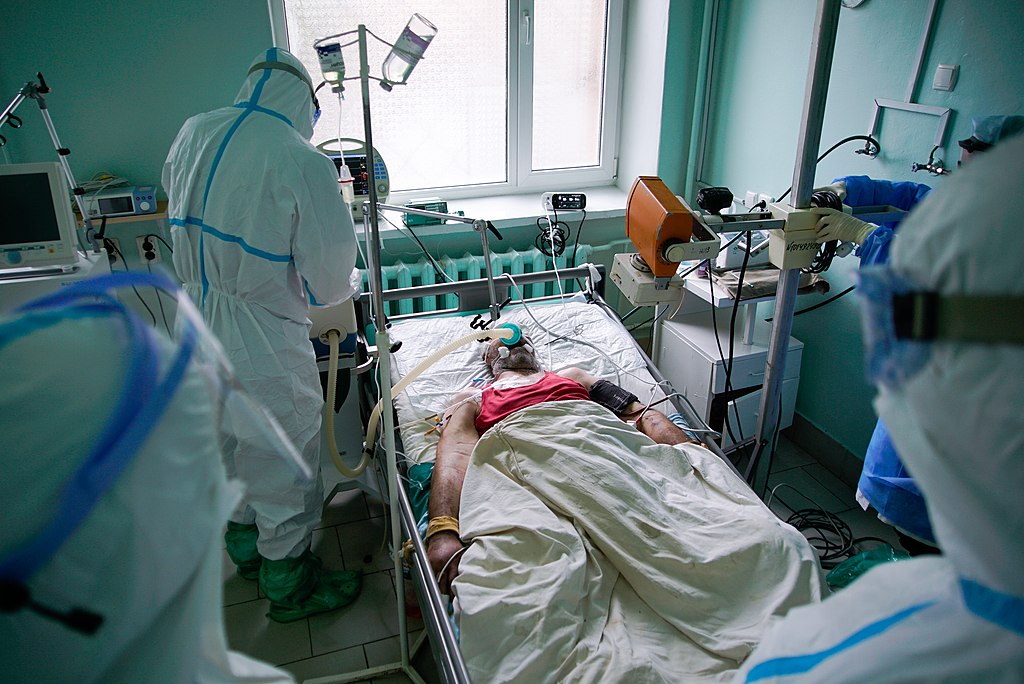
The United Nations General Assembly adopted the Political Declaration on Pandemic Prevention, Preparedness, and Response (PPPR) by a substantial majority at a plenary meeting in New York on Monday, with 153 countries voting in favor and only three against.
The declaration went to a vote after the UN High-Level Meeting on 25 September could not adopt it by consensus – but only the US, Israel, and Argentina voted against it, while New Zealand and Paraguay abstained.
Although European Union (EU) member states voted for the declaration, several distanced themselves from its references to technology transfers and flexibilities when applying World Trade Organisation intellectual property rights agreements during health crises.
Recognizing that the world is not prepared for the next pandemic, the declaration affirms that pandemic readiness rests on resilient health services anchored in “universal health coverage and a primary healthcare approach that ensures access to essential health services”.
It also recognizes that it is “critical” to strengthen local, national and regional capacity to develop and produce vaccines, therapeutics and diagnostics. This will “advance equitable, timely and affordable access to prevent and respond to pandemic emergencies and other health emergencies”.
The 64-clause declaration also calls for more coordinated financing, highlighting an estimated $15 billion annual gap in pandemic preparedness financing, warning that existing funding arrangements remain fragmented, underfunded and overly reliant on development financing.
A civil society alliance, Friends of the High-Level Meeting on PPPR, described the adoption as an “important marker of multilateral commitment to make the world safer from pandemic threats”.
However, it “contains few concrete, measurable or time-bound commitments,” according to the alliance, urging leaders to “turn words and commitments into action.”
“Pandemic risks are not waiting,” it noted. “A rapidly growing Ebola outbreak, two mpox emergencies since 2022 and an Andes hantavirus outbreak have all required multinational responses.
“H5N1 is still infecting farm animals and wildlife, and climate change and biodiversity loss are driving new threats. Which political leaders will now step forward to turn that urgency into policy change and investment in countries and regions?”
US and Iran find common cause
During Monday’s debate, the US objected to the declaration’s use of “sexual and reproductive health (SRH) language” – ironically, finding common cause with Iran on this.
“While we support strengthening health systems and protecting women’s health, we do not support references to sexual and reproductive health and reproductive rights, and ‘sexual and reproductive health care service’s without caveats and qualification,” the US delegate said.
“The United States strongly opposes the inclusion of harmful gender ideology, including comprehensive sexuality education, as it is detrimental to the well-being and development of children and undermines parental authority.”
Echoing the US’s opposition to this language, Iran said SRH references “do not enjoy universal agreement and cannot be construed as creating an international obligation or commitment.”
The declaration commits member states to “mainstream gender equality” and ensure “universal access to sexual and reproductive health care services, including for family planning,” by 2030. It does not refer to “reproductive rights”, gender ideology, or comprehensive sexuality education.
Canada and Australia argued that the document’s language “weakened commitments” to gender equality and sexual and reproductive health and rights.
International Health Regulations
The US also expressed “strong concerns” about the declaration’s references to the International Health Regulations (IHR), the Pandemic Agreement, and “the excessive and repetitive use of ‘equity’ and its variance”.
This language “seeks to commit member states to international agreements to which they are not party, or endorse processes that remain incomplete,” the US stated, adding that it could not “support a text that overlooks national policy boundaries.”
The IHR are the only binding legal requirements for countries during a public health emergency of international concern (PHEIC).
New Zealand objected to reference to the IHR, reminding the assembly that it had rejected the regulations as it is “very important” that the country’s “sovereign decision-making on health is protected.”
Pathogen access and benefit-sharing
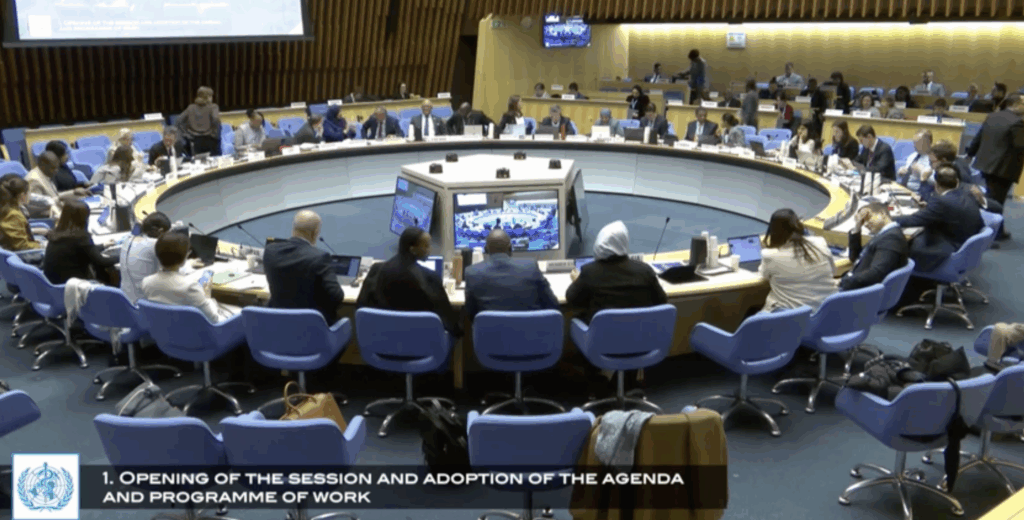
Several other nations referred to the unfinished Pathogen Access and Benefit-Sharing (PABS) system, an annex to the Pandemic Agreement currently being negotiated at the WHO.
WHO member states are wrestling with whether countries that share pathogens and genetic sequence data will be guaranteed a fair share of the vaccines, treatments and diagnostics developed from them – and how enforceable those guarantees should be.
Namibia, which spoke on behalf of the African group, expressed its support for rapid and timely sharing of materials and sequenced data alongside their “fair and equitable sharing in benefits arising from their use.”
“While progress has been made, significant gaps persist in the global health architecture, as shown by mpox, Andes hantavirus, and the current Ebola Bundibugyo emergency,” said Namibia’s delegate.
“The high-level meeting reaffirmed the fundamental lesson: no country can address pandemics alone,” he said.
However, the US – which is no longer part of the WHO – stated that linking the sharing of benefits to pathogen access could impede the cooperation necessary in an active outbreak.
Several other nations and blocs, including the EU, France, New Zealand, and Italy, registered their concerns with the declaration’s pathogen information sharing language, citing intellectual property rights and even sovereignty issues.
EU bloc in favor – with key caveats
While the EU praised the declaration’s overarching objective, it distanced the bloc’s nations from what it termed “uncaveated references to technology transfers.”
Speaking for the EU, Ireland said that these transfers can only be undertaken on “a voluntary basis and on mutually agreed terms”, and stressed the need to respect intellectual property rules, citing the World Trade Organization’s Doha Declaration.
These concerns mirror much of the past five years’ debate over the PABS annex: whether countries should rely on voluntary arrangements, or establish stronger, binding commitments to share the benefits of scientific research and manufacturing.
“Action requires consensus and respect of international rules. The text before us offers salient elements to advance PPPR,” Ireland’s representative said to the assembly. “It also contains setbacks towards our crucial shared goal: a safer, healthier world for all.”
The EU also questioned the continued use of the widely cited $15 billion funding gap in pandemic preparedness, arguing that the declaration’s estimate is “no longer current.” However, it did not provide a revised figure, instead calling for better financial tracking and more efficient use of existing funding mechanisms through a global financial tracker.
Report back by 2028
“WHO welcomes this strong commitment by UN member states to continue working together on pandemic prevention, preparedness and response,” said WHO Director-General Dr Tedros Adhanom Ghebreyesus.
“The world has come a long way since COVID-19. We urge countries to now fulfil the commitments they have made – especially to finalize negotiations on the [PABS] annex, so the WHO Pandemic Agreement can be opened for signature, begin the process of ratification and enter into force as international law.”
The declaration commits countries to report on their progress made in implementing the declaration at the 2028 UN General Assembly.
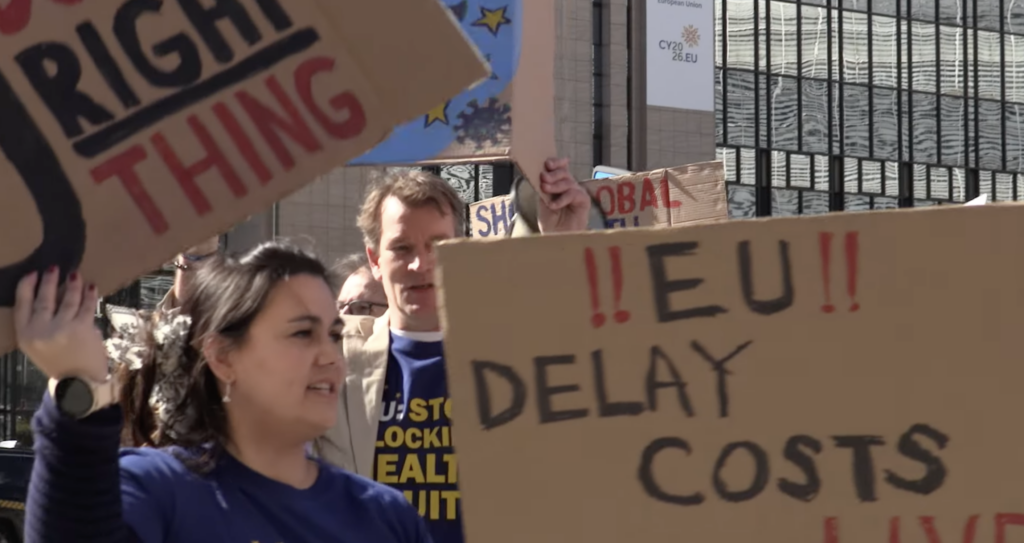
“Countries can and must do better, and work together with the urgency pandemic threats demand. This means finding a way through the impasse to agree to the PABS annex by May,” urged Helen Clark, co-chair of The Independent Panel for Pandemic Preparedness and Response.
“In the meantime, it is vital to implement provisions of the Pandemic Agreement. Delays will only increase our collective risks.”
Image Credits: Mstyslav Chernov/ Wikimedia Commons.
Combat the infodemic in health information and support health policy reporting from the global South. Our growing network of journalists in Africa, Asia, Geneva and New York connect the dots between regional realities and the big global debates, with evidence-based, open access news and analysis. To make a personal or organisational contribution click the donate button below.