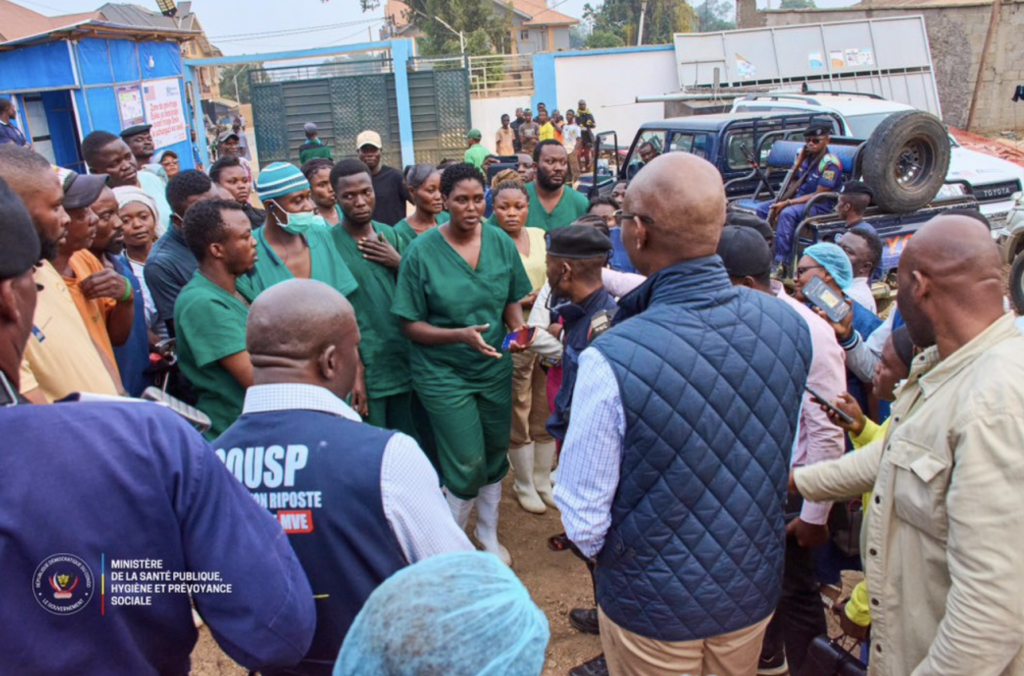
Two months after the Democratic Republic of Congo (DRC) declared an outbreak of Ebola Bundibugyo, the outbreak is “continuing to outpace the response” – and with 2,073 people infected and 796 dead, this is the fastest outbreak ever, World Health Organization (WHO) Director General Dr Tedros Adhanon Ghebreyesus told a media briefing on Thursday.
“Intense transmission in the province of Ituri remains our biggest concern,” added Tedros. “More than 80% of new cases are being detected outside known contact lists, showing that transmission chains are still being missed. About two-thirds of deaths are occurring in communities among people who never receive care in a health facility.”
It took 10 months for the 2018-2019 Ebola outbreak in DRC to reach 2,000 confirmed cases, said Tedros, adding that “active armed conflict is hampering access to the affected areas and hindering the response”.
Reporting that another treatment centre in Bunia had been attacked on Wednesday, Tedros once again appealed for international support to make up the $400 million-plus shortfall needed to mount a sufficient response.
“This is not charity. It’s an investment in national security,” Tedros stressed.
Care in health facilities, not communities
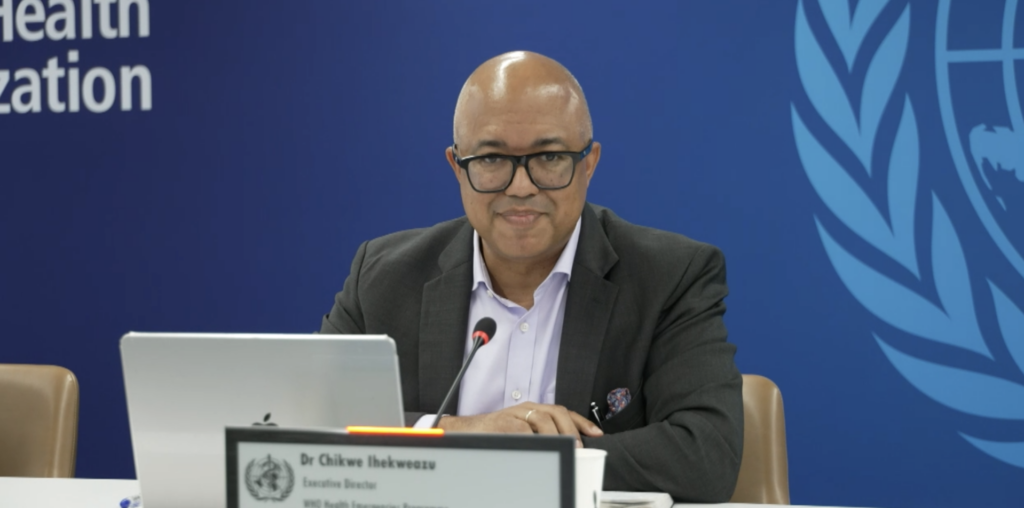
Dr Chikwe Ihekweazu, executive director of WHO’s Health Emergencies Programme, said that the primary focus across all the outbreak-affected areas “is getting cases into care”.
Over 60% of deaths are happening in communities, which means that people were likely to have been sick and infectious for weeks before their deaths – and were only diagnosed with Bundibugyo because health officials are taking swabs from dead people shortly before burials, Ihekweazu explained.
“Your chances of survival are three to four times higher when you come into care. We have, at the moment, a case fatality ratio of about 30 to 40%. If you look at those that come into care, it’s about 10 to 15%. If you look at those that die in the community, it’s about 60 to 70%,” he added.
To encourage people to seek care in health facilities, the DRC government is offering free healthcare for all diseases to everyone presenting to hospitals and clinics in the outbreak-affected areas, he added.
Ihekweazu, who recently returned from the epicentre of the outbreak, said the situation was being met by “an incredibly committed set of healthcare workers going out every single day to provide care”.
“We are facing a very difficult situation, no doubt about that. It is not out of control, but we need to work very hard and consistently into the next few weeks and months to get ahead of this. This will be a marathon.”
First vaccine safety trial starts
On Monday, the world’s first Phase I Bundibugyo ebolavirus vaccine trial was launched by the Oxford Vaccine Group (OVG) in Oxford in the United Kingdom.
Fifty healthy adults aged 18–55 years are being recruited for the trial, which will assess the safety and immune response of the ChAdOx1 BDBV vaccine.
“In the coming weeks, and following regulatory review for trial commencement, participants will then be vaccinated and attend follow-up visits in Oxford,” the OVG said in a statement.
The vaccine uses the same viral vector platform as the Oxford/AstraZeneca COVID-19 vaccine. Meanwhile, the Serum Institute of India (SII) has manufactured and stockpiled approximately 620,000 doses of the vaccine candidate to support the rapid launch of the study and progression of the vaccine candidate into clinical evaluation.
The trial is funded by the Coalition for Epidemic Preparedness Innovations (CEPI) as part of its $8.6 million programme to advance the development of Bundibugyo vaccines.
At the beginning of July, a trial of two antivirals started patient enrolment in the DRC. The PARTNERS trial will assess whether the antivirals, a monoclonal antibody called MBP134 and remdesivir, can improve the outcome and survival rate of people with Ebola in Bundibugyo. It will also evaluate whether combining the two antivirals provides additional benefits.
The WHO-sponsored trial is being coordinated by the DRC’s Institut National pour la Recherche Biomédicale (INRB), the Institute of Tropical Medicine in Belgium, and the University of Oxford.
It is a randomised, controlled trial that is enrolling patients of any age with confirmed Bundibugyo. Aside from the medicine, patients will receive “early supportive care, including oral or intravenous fluids, electrolyte replacement, oxygen support, blood pressure management, and pain control in line with WHO treatment guidelines”, according to the WHO.
Image Credits: DRC Department of Health.
Combat the infodemic in health information and support health policy reporting from the global South. Our growing network of journalists in Africa, Asia, Geneva and New York connect the dots between regional realities and the big global debates, with evidence-based, open access news and analysis. To make a personal or organisational contribution click the donate button below.