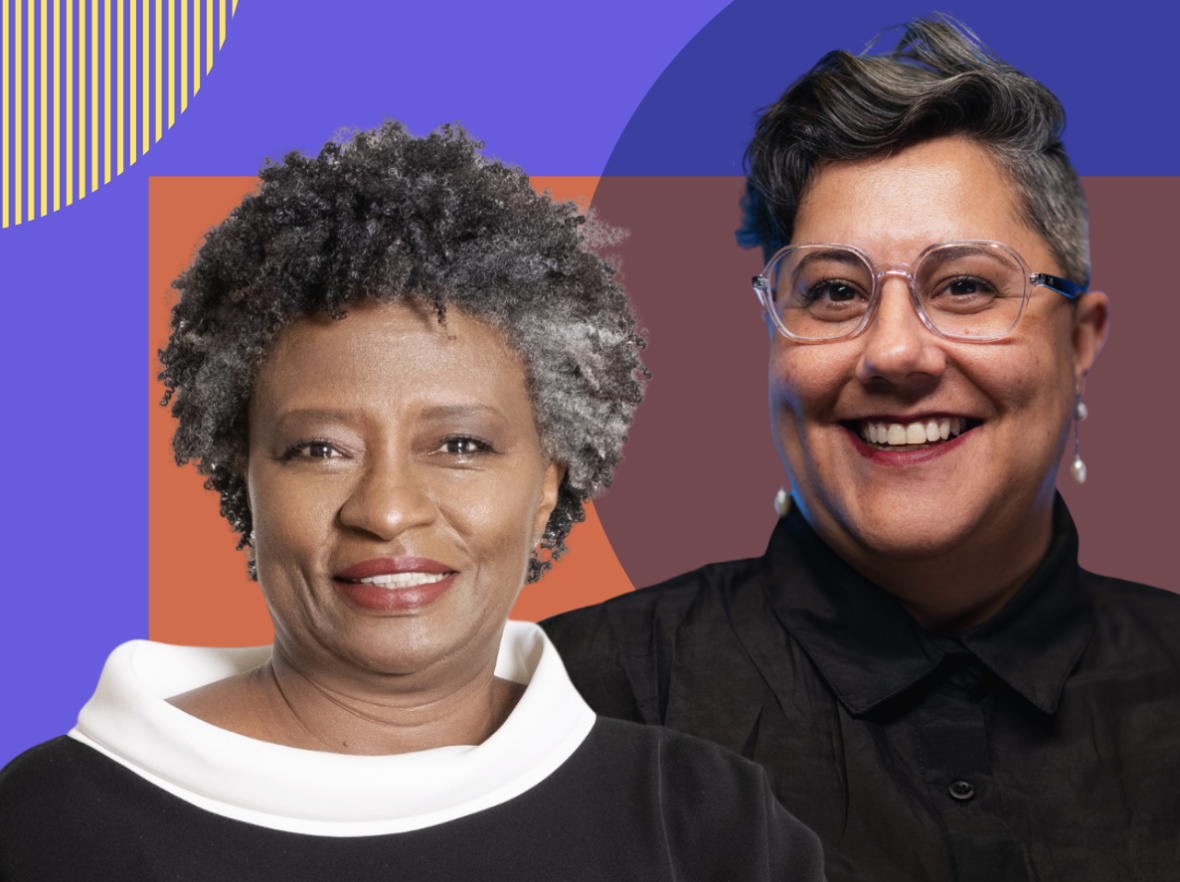
“We have better tools now. We can, if we work together and work better, we can conquer AIDS.”
For Dr. Magda Robalo, a public health physician and former Minister of Health of Guinea-Bissau, the science behind the HIV response has advanced dramatically, but the social and political environment surrounding the disease may be moving in the opposite direction.
Speaking on the latest episode of Global Health Matters, Robalo joined Brazilian activist, filmmaker and poet Marina Vergueiro to reflect on four decades of HIV and AIDS, and on the barriers that remain as the global health community considers what it will take to finally end the epidemic.
Vergueiro, who has lived with HIV since 2012, described how treatment has transformed her own life. When she was first diagnosed, she took five pills, including one that required refrigeration. Today, she takes just one.
But she warned that medical progress has not been matched by equivalent progress in reducing stigma.
“I feel like the more we advance on science and technology for HIV treatment and prevention, the more we go back in time regarding stigma,” Vergueiro said.
She also argued that mental health must become a much more central part of HIV care, particularly because depression, shame and isolation can affect whether people seek testing or remain on treatment.
“If we don’t look for the mental health crisis together in the same perspective as HIV and AIDS, if we don’t put them together, we are not going to go anywhere,” she said.
Robalo similarly called for a more people-centered approach, arguing that health systems must look beyond HIV itself as people living with the virus age and face other health conditions.
At the same time, she warned that funding cuts, punitive laws, gender inequality and shifting political priorities could undermine decades of progress.
“We had this dream of ending AIDS by 2030, but at the pace we are going, and of course, with other complex issues around the ecosystem, funding, etc., it is becoming more difficult, even though technology is on our side,” Robalo said.
For both speakers, finishing the job will require not only better medicines, but renewed political commitment, stronger health systems and a response that treats people living with HIV as whole human beings.
Watch the full episode:
Watch or listen to more episodes on Health Policy Watch >>
Image Credits: Global Health Matters Podcast.
Combat the infodemic in health information and support health policy reporting from the global South. Our growing network of journalists in Africa, Asia, Geneva and New York connect the dots between regional realities and the big global debates, with evidence-based, open access news and analysis. To make a personal or organisational contribution click the donate button below.