Every year, around 27 million women bleed excessively after giving birth, and almost 43,000 die – yet there are new ways for this to be detected and treated.
This is according to a series on maternal health published in The Lancet on Friday by the United Nations Special Programme of Research, Development and Research Training in Human Reproduction (HRP), the World Health Organisation (WHO) and Oxford University.
Post-partum haemorrhage (PPH) is the leading cause of maternal mortality, and it can also result in “severe anaemia, hysterectomy, organ failure, and long-term psychological trauma”. The global economic burden of PPH is estimated at $10·4 billion.
Babies whose mothers die in childbirth also have a significantly higher chance of dying than their peers, according to studies conducted in Ethiopia and rural Tanzania.
“Women who are most likely to die from PPH are those who have home births; those with anaemia or pre-existing medical problems; those who have a caesarean birth, particularly an emergency caesarean at full cervical dilation; and those delivering in health-care settings with staffing challenges,” according to the first paper in the series.
Substandard clinical care is “a root cause” of PPH deaths, presenting as “missed or delayed PPH diagnosis, slow and fragmented delivery of treatment interventions, and agonisingly late escalation of care”.
Identifying haemorrhaging
Health workers can save women’s lives by applying the latest guidelines on treating PPH without waiting for expert intervention, the series asserts.
If PPH is not recognised and treated early, a woman can deteriorate very quickly and die, according to the researchers.
A woman should be treated for PPH as soon as she has lost 300ml of blood – slightly more than a cup – and shows abnormal vital signs, or if she has lost 500ml of blood – whichever comes first, according to the series.
This definition is the result of several studies and consultations after the WHO found the definition of PPH varied widely across the world.
In the past, health workers visually estimated blood loss – but the researchers describe this as so “grossly inaccurate” that it missed half of PPH cases.
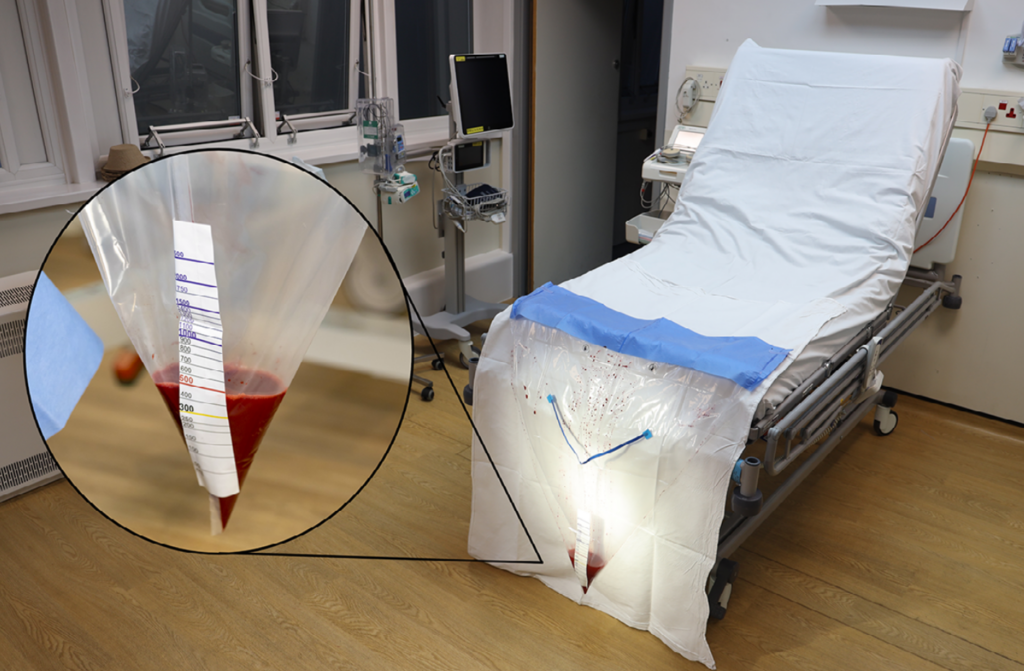
Now, blood loss can be measured by a “blood collection drape” – an inexpensive plastic sheet with a pouch at its base that hangs off the end of the delivery table and collects and measures blood.
The series promotes a simple first-response treatment bundle, known as E-MOTIVE, with each letter representing an intervention – Early detection of PPH, uterine Massage, Oxytocic drugs, Tranexamic acid, intraVenous fluids, and Examination of the genital tract.
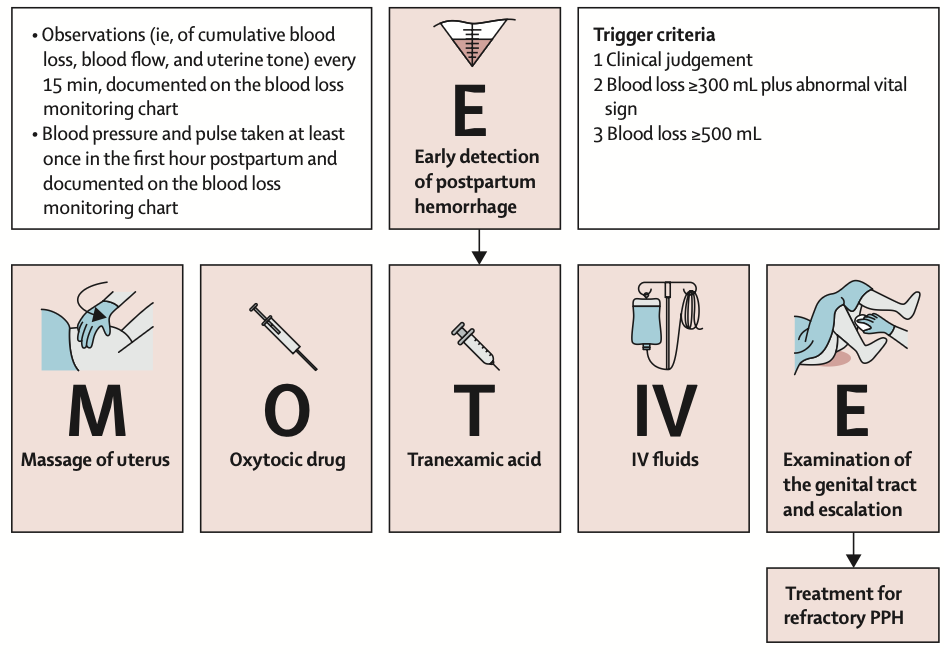
By using E-MOTIVE, health workers can reduce the progression to life-threatening haemorrhage by up to 60%.
But managing life-threatening PPH requires” the immediate attendance of the emergency team, which should include senior obstetricians and anaesthetists”, the series notes.
“The immediate priority is to assess and resuscitate the woman through management of her circulation, airway, and breathing. Bleeding should be controlled, and transfusion of blood and blood products should be done if required.”
Achievable goals
The series describes the steps to reduce PPH as “achievable goals that could transform PPH outcomes globally”.
“The essential knowledge and tools to substantially reduce PPH-related morbidity and mortality now exist; the primary challenge lies in translating this evidence into consistent clinical practice across diverse health-care settings,” the series concludes.
“Success will demand sustained commitment from policy makers and health-care leaders, adequate resource allocation, and continuous quality improvement efforts.”
Combat the infodemic in health information and support health policy reporting from the global South. Our growing network of journalists in Africa, Asia, Geneva and New York connect the dots between regional realities and the big global debates, with evidence-based, open access news and analysis. To make a personal or organisational contribution click the donate button below.