Two largely opposing proposals for a pathogen access and benefit-sharing (PABS) system – the last outstanding piece of the World Health Organization’s (WHO) Pandemic Agreement – were tabled during the seventh round of negotiations, which ended on Friday.
Africa consolidated behind a “federated” model, while the European Union and its developed-country allies backed a “hybrid” model.
The PABS annex aims to set out how dangerous pathogens are shared (access) during public health emergencies and how to share any medical products (benefits) produced as a result of manufacturers getting access to this information.
Speaking at the close of talks, WHO Director General Dr Tedros Adhanom Ghebreyesus said that at the start of the week, “access and benefit-sharing started feeling like two sides of an argument” but by the end of the week “more of us now start to see them again as two halves of one promise”.
“That shift matters, even where the text hasn’t fully caught up to it yet,” said Tedros. “I will not pretend the remaining issues are small. Real gaps remain, and they deserve the same seriousness in the next session that they have received in this one.”
Tedros also reported that “many members” had told him this week that finalising the annex this year is possible “so let’s continue to aim for that”.
Regional nodes in a ‘federated’ system
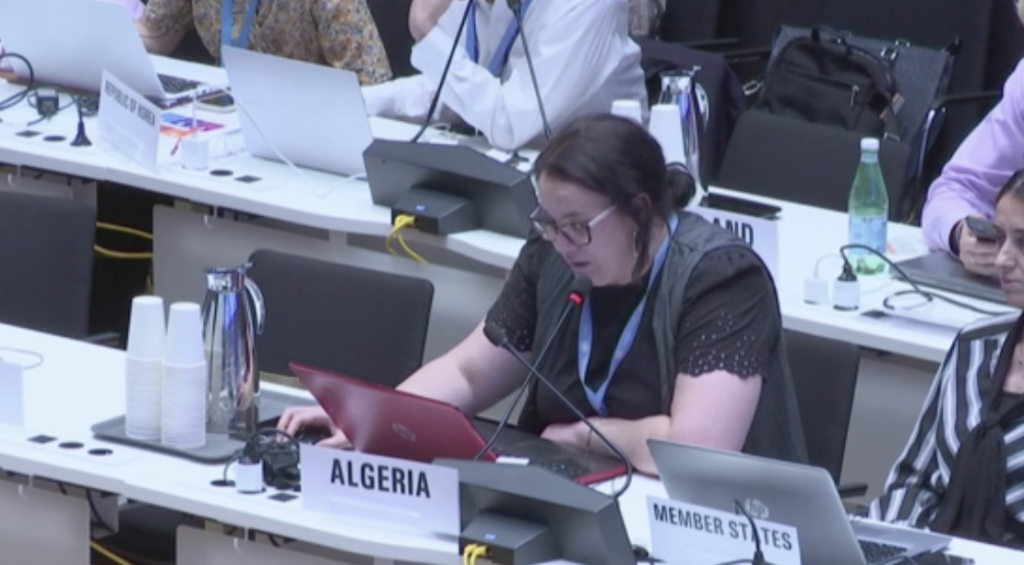
Algeria, speaking for the WHO Africa region plus Egypt, Somalia, and Sudan (the Africa Plus Group), described the “federated” model as “architecture built around sovereign national and regional nodes, interconnected through a WHO-hosted metadata index and catalogue with unique, persistent identifiers, ensuring end-to-end traceability of biological materials and pathogen sequence information”.
This means that every party getting access to pathogen information could be tracked throughout the system.
“It conditions access on binding benefit-sharing commitments at the point of use, and treats digital sequence information and physical materials with parity,” said Algeria at the closing session.
In other words, parties that want access to pathogen material will need to sign contracts that commit them to sharing any benefits.
Algeria’s representative added that African capitals were still consulting on the design features that will “give practical effect to the federated model”, and hoped to return to the negotiating table “with firm compositions and concrete textual proposals”.
‘Dilute access conditionalities’
In apparent criticism of the EU’s “hybrid” model, Algeria added that the federated model “offers a more balanced and sustainable approach than models that rely on centralised infrastructures, dilute access conditionalities, or leave open parallel channels that may perpetuate the status quo that failed during COVID”.
Algeria also called for further work on “the treatment of derivatives, including scientific products developed from pathogen sequence information shared through the PABS system, and on intellectual property to ensure that benefit sharing obligations cannot be circumvented through downstream innovation”. Countries that share biological materials and pathogen sequence information “must receive fair, equitable, predictable, and tangible benefits consistent with Article 12 [of the Pandemic Agreement].
“Implementation must be accompanied by adequate financial, technical, and capacity-building support for developing countries, particularly for national laboratories and for laboratories participating in the WHO-Coordinated Laboratory Network (WCLN).”
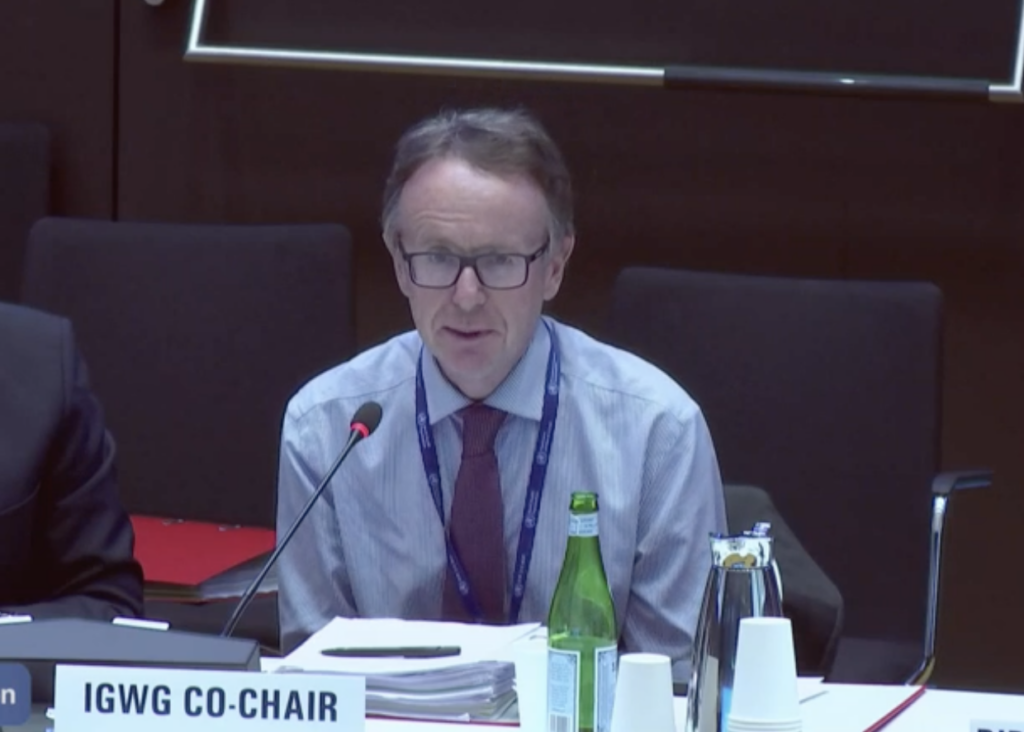
The European Union finally put a proposed “hybrid model” to the Intergovernmental Working Group (IGWG) that is conducting the talks, although the proposal has been discussed for several months.
The “hybrid” proposal consists of a mix of mandatory and voluntary measures for sharing pathogen information and benefits that flow from this information.
It envisages both a global WHO-controlled PABS system working through the WCLN with some benefit-sharing commitments, and national processes where countries can share pathogen material with groups and laboratories outside the formal PABS system according to mutually agreed terms.
Leadership changes
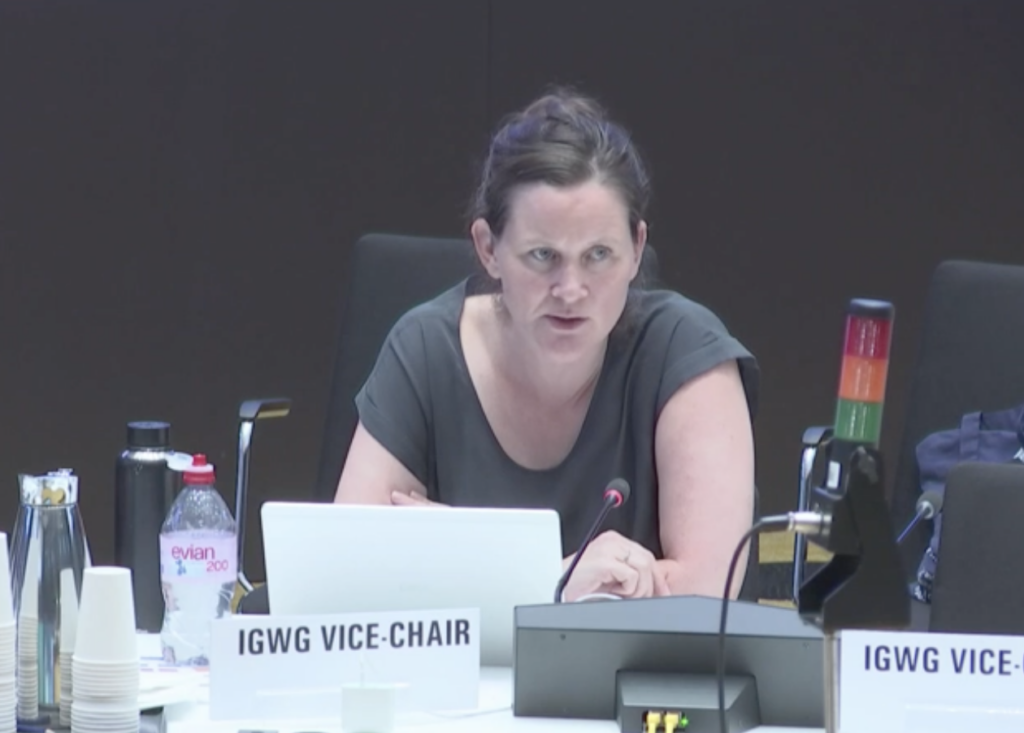
When the IGWG convenes again from 14–19 September, several key members will no longer be part of the process – including co-chair Matthew Harpur of the UK and vice-chairs Madeleine Heywood (Australia) and Dr Hanan Al Kuwari (Qatar).
Heywood told the meeting that her baby had been six months old when the pandemic agreements talks had started and was now five-and-a-half years old.
“There aren’t many left now here who were in this room, masked and distanced, when we started this process,” said Heywood.
“Every one of us knows why we’re here, and how important it is to complete the pandemic agreement and get it into force.
“When we have breakthroughs, it’s because we understand each other. So what I wanted to ask you is to please talk to each other, listen to each other, and please ask yourself, and ask yourself often, because this process is always evolving: ‘What more can I be doing towards a common understanding in this room to find common ground? Who can I reach out to? What conversations can I be initiating?”
Combat the infodemic in health information and support health policy reporting from the global South. Our growing network of journalists in Africa, Asia, Geneva and New York connect the dots between regional realities and the big global debates, with evidence-based, open access news and analysis. To make a personal or organisational contribution click the donate button below.