
Steatotic liver disease (SLD) was recognized as a “missing piece” of the global noncommunicable disease response in a milestone World Health Assembly resolution last week. With countries making extraordinary progress in combating viral hepatitis, SLD, formerly known as fatty liver disease, is now the fastest-growing chronic liver disease – but far less recognized. Experts and advocates believe the new World Health Asssembly (WHA) decision will trigger more awareness and action in countries and globally.
GENEVA– The WHA’s resolution recognizing steatotic liver disease (fatty liver) as an NCD is a long-awaited milestone for a chronic liver condition that carries a huge global health burden but is dramatically under-recognized, experts and patient advocates say.
“What we aimed to do is get SLD recognized as a non-communicable disease,” Debbie Shawcross, Secretary General of the European Society for the Study of the Liver (EASL) told Health Policy Watch. “Because we know in these populations, people don’t just suffer from liver disease. They also have cardiovascular disease, chronic kidney disease, diabetes, and more.”

Until very recently, the biggest focus for liver disease was viral hepatitis: “Rightly so, all our resources went into the pandemic of hepatitis C and B.” But now with vaccines for hep B and an antiviral cure for hep C, “we are realizing that what is left behind is a disease that is unaddressed and accelerating.”
Shawcross spoke at a high level side event sponsored by EASL last Thursday, the same day that the new resolution was approved by WHA.
The event included experts from EASL’s Saudi Arabia affiliate, the NCD Alliance and the Organization of Economic Co-Operation and Development (OECD), as well as Spain’s Director General of Public Health and the Minister of Health from Egypt, which co-sponsored the WHA resolution along with 15 other countries.
Egypt: a ‘missing piece’ in the global NCD response

The rapid rise in metabolic liver disorders represents the “next great public health challenge,” said Khaled Abdel Ghaffar, Egyptian Minister of Health, at the EASL event.
Egypt was one of the first WHO member states to sound the global health alarm around SLD after having grappled years earlier with some of the world’s highest rates of hepatitis C infection – and related viral liver disease burden. What followed was a landmark national campaign to eradicate hep C.
But Egypt also suffers from a growing prevalence of diabetes, obesity, and cardiovascular disease – all risk factors for SLD. So early on, it became a champion for recognition of the liver disease as an important NCD.
“Building on our experience and recognizing this urgent global need, Egypt has taken another decisive step in leadership,” said Ghaffar. “We proudly sponsored the landmark WHO resolution steatotic liver disease, a missing piece in the global non-communicable disease response.”
Growing SLD burden closely linked to diabetes and obesity
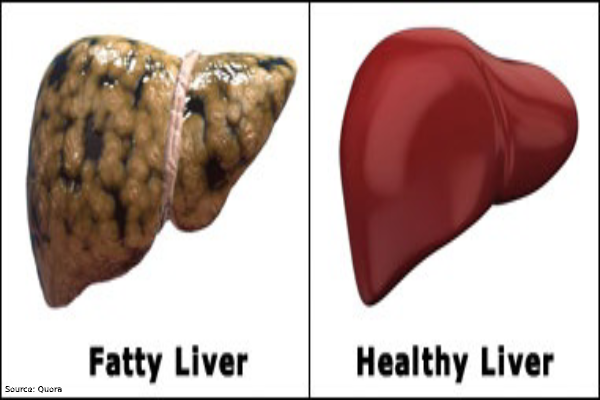
SLD affects an estimated 1.7 billion adults globally – who suffer from the metabolic-associated liver dysfunction. In WHO’s European region alone, some 800,000 people die of advanced liver disease each year – costing some $64 billion annually. Its former name, fatty liver disease, remains in fact, an apt description of the condition insofar as SLD is linked to an excess build up of fat in the liver.
This may be due to heavy alcohol use or to metabolic dysfunctions related to other NCDs, such as: obesity, insulin resistance, hyperglycemia or pre-diabetes, high cholesterol levels, and hypertension. With few early warning signs, the disease can quickly progress to severe inflammation, cirrhosis, and liver cancer.
Globally, the number of new cases of liver cancers have already increased by 50% in the past decade–and are expected to double by 2050. Experts point to SLD as now a major cause of the current surge of liver cancer–which is in turn fueled by rising obesity and diabetes rates.
The resolution highlights the shared NCD risk factors characteristic to the development of SLDs, including unhealthy diets, air pollution, smoking, physical inactivity and consequent obesity, as well as harmful alcohol use. It officially incorporates SLD into the broader umbrella of NCDs addressed by the global health agency.
Member states are urged to integrate SLD into their noncommunicable disease strategies through strengthened prevention, early detection, primary care services, and public awareness. And the resolution calls on WHO to support research, surveillance, and equitable access to diagnostics and treatment.
“For the first time, liver disease receives formal recognition within the global noncommunicable disease agenda,” EASL said in a statement, hailing the resolution as a “turning point” for liver health worldwide.
Now, said Shawcross, it’s up to member states to implement the WHA resolution, moving beyond “siloed approaches” to NCDs to include liver health.
Along with that, countries, supported by WHO, need to ensure more intentional tracking of liver health metrics: “What is not measured is ignored,” she said.
Shift in populations at risk for liver diseases and liver cancers

In the Gulf region, like in Egypt, there has also been a shift in demand for liver transplants from people with viral hepatitis infections to individuals with SLDs, said Faisal Abaalkhail, president of the Saudi Society for the Study of Liver Disease and Transplantation, at the EASL event. He attributes this to the “huge rise” in obesity and diabetes. His patients are now also younger, something he calls “alarming.”
Abaalkhail’s research and medical practice have pioneered liver transplants in the Gulf region. And in the past ten years, more than a third of the patients requiring liver transplants suffered from some form of SLD, he said.
Early screening and detection are critical, he said, along with standardization of care for all SLD patients.
“We often catch SLD too late,” said Abaalkhai. “We diagnose at the end with complications like cancer and liver failure.”
But a greater emphasis on prevention is also important, he added. That includes better access to GLP-1 treatments for people who are obese or living with type 2 diabetes. With new treatments available, the region now needs to work on prioritizing exactly who can access them–including SLD patients through public health systems and insurance plans. See related story:
Need to integrate SLD into national NCD strategies
The WHA resolution “highlights the growing recognition of the need to address metabolic conditions in a more integrated way,” said Dr Tedros Adhanom Ghebreyesus.
“Metabolic conditions are becoming an increasingly important challenge globally,” he said in a message to the EASL event. “The rising prevalence of obesity, diabetes, cardiovascular and steatotic liver diseases, are driven by shared risk factors and determinants.”
Added Henri Kluge, WHO European Regional Director: “Globally we are seeing the consequences of a rapidly changing metabolic disease landscape. Obesity, diabetes, cardiovascular diseases, chronic kidney disease and steatotic liver disease are on the rise – interconnected conditions shaped not only by biology but also by the unhealthy environments. “
Spain: tackling SLD as a ‘socially transmitted disease’
In Spain, steatotic liver disease historically has been under-recognized, although awareness is growing, noted Spain’s Director General of Public Health Pedro Gullón.
In 2024, the Spanish Association for Liver Studies adopted the Spanish National Liver Health Plan, recognizing SLD as a public health threat and calling for better alignment with non-communicable disease (NCD) frameworks.
Gullón is hopeful that the political momentum generated by the WHA resolution will prompt other member states to follow Spain’s example.
Meanwhile, Spain is also passing new laws that should help prevent SLD. That includes stricter limits on alcohol consumption and displays in public places, particularly those frequented by children, like sports complexes, stadiums, and schools. Alcohol misuse is a leading cause of cirrhosis and liver cancer.
“These are socially transmitted diseases,” Gullón observed. “When we do these kinds of policies, it’s not just for children, we are doing them for the whole population.”
Closing the gap between WHA promises and delivery
Despite this, civil society groups and watchdogs have been quick to point to the yawning gap between global health promises made by member states at the annual World Health Assembly and delivery on the ground in countries.
Many of the same member states that co-sponsored the liver health resolution have struggled to control the overall rise of other NCDs, said Allison Cox, policy director of the NCD Alliance, at the EASL event.
The NCD Alliance, which is tracking these disparities in its reporting, has argued for several measures to close this gap: protect policymakers from conflicts of interest, strengthen health care systems, and address the harmful commercial determinants of health.
The UN General Assembly’s adoption in December 2025 of the High Level Declaration on NCDs and Mental Health is “encouraging”, Cox said. Formal adoption of the declaration from a meeting in September was delayed for several months by opposition from the United States.
But, “targets don’t save lives. Implementation does,” Cox said.
‘Turning off the tap’- preventing a silent epidemic
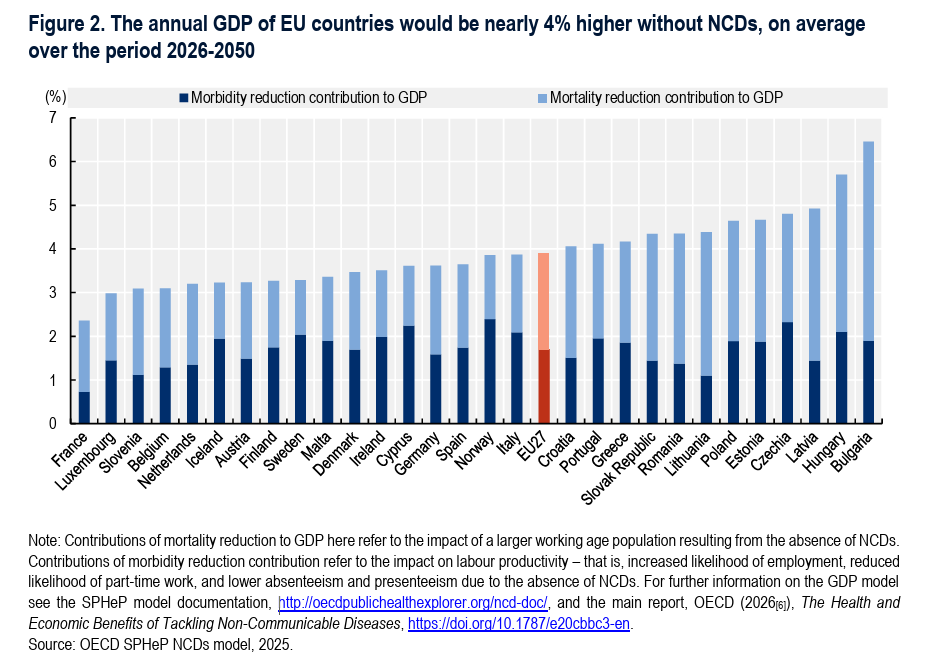
The economic co-benefits of addressing liver health are also apparent, argued Kerri Elgar, senior global health advisor at the OECD.
An OECD report published in April concluded that eliminating avoidable NCDs due to risks across six factors (air pollution, harmful alcohol use, unhealthy diet, obesity physical activity and smoking) would not only save millions of lives but also boost average GDP by 3.9%, on average across the 27 countries of the European Union, as well as reducing health expenditures by 40% between 2026-2050.
Elgar noted the “synergies” between chronic diseases and the co-benefits with cardiovascular disease, diabetes, and other non-communicable diseases.
Changing the environments that we live in is crucial to promoting prevention at these synergies, added Cox.
“There’s the old public health adage that we need governments to move away from mopping the floor and turn off the tap,” she said in reference to tackling the upstream risks driving NCDs, including liver disease.
“If they want to stop mopping that floor, that really means tackling commercial determinants of health,” Cox said. “Some of the most cost-effective ways of coping with noncommunicable diseases–like liver disease – is to tackle the modifiable risk factors: smoking, alcohol, unhealthy diets and air pollution, and the dominance of ultra-processed food.”
Image Credits: Kenny Eliason/ Unsplash, Commons , EASL, Quora, Sophia Samantaroy/HPW , OECD, April 2026.
Combat the infodemic in health information and support health policy reporting from the global South. Our growing network of journalists in Africa, Asia, Geneva and New York connect the dots between regional realities and the big global debates, with evidence-based, open access news and analysis. To make a personal or organisational contribution click the donate button below.