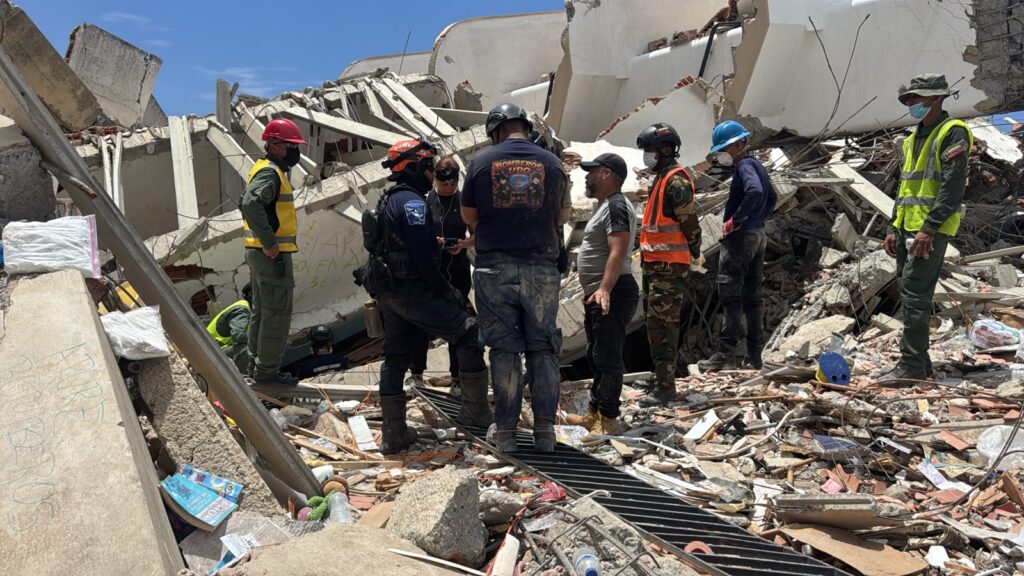
In the days that followed the earthquakes that struck Venezuela on 24 June, La Guaira, the worst-hit city, went silent. Any noise could be a sign of life, so people remained alert, listening carefully, even as entire communities took to the streets.
“People took matters into their own hands and started looking for their friends and families,” a La Guaira sociologist who asked not to be identified told Health Policy Watch. That moment, she said, sparked “an incredible wave of solidarity.”
But solidarity wasn’t the sole catalyst. “There was no hope that the government would mobilize resources,” said the sociologist.
According to her, Venezuelans’ perception is that resources are scarce and institutions don’t act with the necessary speed. Each community that responded autonomously did so because the population knew it was unassisted, she observed.
She believes the outcomes of the earthquake response proved them right: “People themselves had to search for relatives, renting equipment and engineering materials to help break through the concrete and recover the bodies.”
Government’s inadequate response
Following the tremors, almost 200 buildings collapsed, leaving over 17.000 displaced and 4,490 dead. While the official number of missing people hasn’t been released, the United Nations estimates that it approaches 50,000.
The government’s response has been criticized by residents and international observers for delays, missing centralized information, and a lack of heavy machinery that could have saved lives.
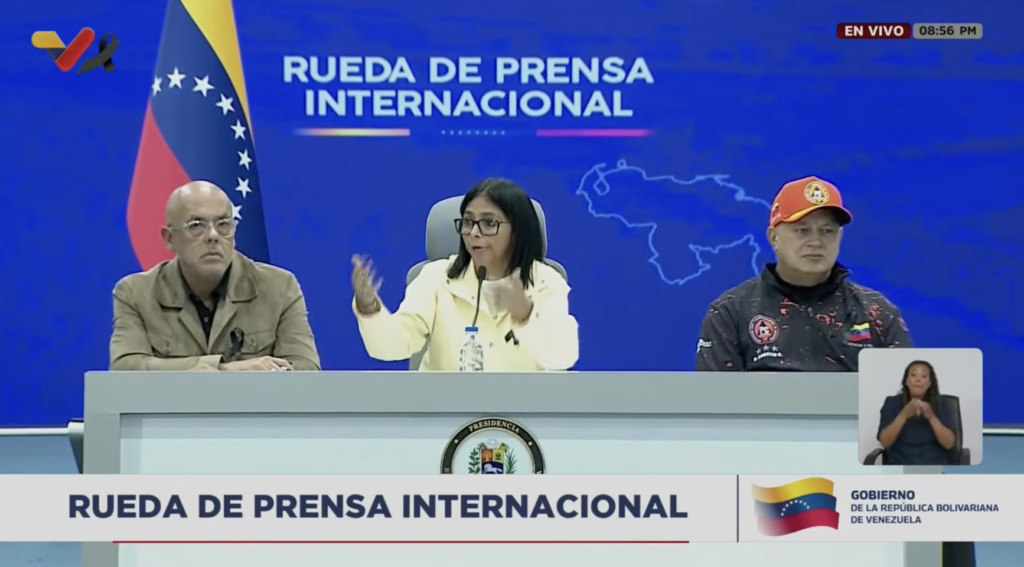
Venezuela’s interim president, Delcy Rodriguez, denied the claims during a press conference, where she also affirmed that the criticism was politically motivated.
Rodriguez told journalists that institutions acted immediately, mobilizing international cooperation and deploying thousands of agents.
But sources on the ground told Health Policy Watch a different story. What they witnessed was the presence of armed personnel who, for the most part, didn’t engage in rescue efforts.
“You could see scenes of desperate people rescuing their own relatives while police officers stood on the sidelines, doing little or nothing to help,” one source said.
Civil society took the lead
The first 72 hours after such an event are crucial for rescue. From day one, civil society led the efforts. They were the ones going through the rubble, sometimes with their bare hands.
The lack of information created an obstacle for volunteer first responders. Citizens answered by creating collaborative platforms to gather information, map affected buildings and list missing people.
“Civil society didn’t passively wait for all decisions to come from the government,” said Mariangelli Álvarez, founder of terremotovenezuela.com, one such platform.
Álvarez said that making sense of what was happening was the first step, but that as the response evolved, information alone wasn’t enough. Amidst a crisis that changed every day, she said the platform’s purpose now is “to identify necessities, give orientation to families, and connect resources.”
Most importantly, Álvarez said, it is to make sure the people of La Guaira won’t be abandoned once public attention fades.
A crisis on top of a crisis
Even before the earthquakes, Venezuela was already suffering from a grave humanitarian crisis. Over the past decade, inflation, shortage of food and medicine, and increasing violence across the country forced 7.6 million people to seek refuge abroad, in what is considered to be the largest exodus in the continent’s recent history.
According to a UN report, before June 2026, almost eight million Venezuelans already needed some sort of humanitarian assistance.
Venezuela’s healthcare system, now operating under extreme pressure, was also not doing well before the earthquakes.
According to the World Health Organization (WHO), hospitals lacked 37% of emergency supplies as of September 2024, while a 2024 report from the National Hospital Survey found an almost 60% gap in surgical capacity.
Since the earthquakes, structural damage to health facilities, the high number of injured people, backlogged surgeries, and the shortage of personnel and medical supplies threaten hospitals’ ability to continue operating.
International aid
For José Miguel Rodriguez, Association of Volunteers in International Service (AVSI) Country Representative in Venezuela, the government’s biggest achievement in its earthquake response has been the openness to international aid.
“There have obviously been some unfortunate instances of restrictions,” Rodriguez told Health Policy Watch. “But overall there has been openness to the entry of aid and personnel.”
Countries like Brazil, Chile and China have donated medicine, vaccines, water purifiers and generators, while Spain has set up a field hospital in Caracas dedicated to primary healthcare.
The international response is being coordinated by the WHO’s regional office, the Pan American Health Organization (PAHO), alongside Venezuelan national authorities.
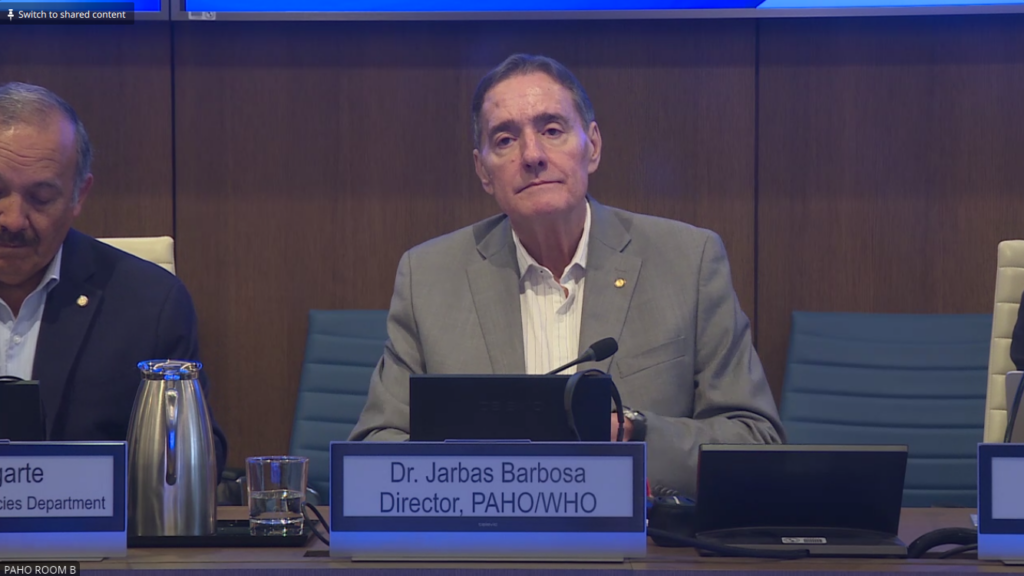
PAHO regional director Jarbas Barbosa told a recent press briefing that the organization’s response has focused on three immediate priorities: “Saving lives, maintaining the continuity of essential health services, and preventing additional health risks in the coming weeks.”
PAHO has deployed specialized teams, delivered six metric tons of emergency health supplies from a strategic reserve in Panama, and launched a $24 million emergency appeal to support the first six months of the health response and early recovery.
New phase of the response
According to Barbosa, as the initial increase in trauma cases has begun to stabilize, the response is entering a new phase.
“The priority now is not only to keep health facilities open, but to ensure safe and timely access to essential health services,” he said, stressing the importance of continued care for people with chronic and non-communicable diseases.
Barbosa said that, after an earthquake, the greatest risks tend to arise from interruptions to health services, access to drinking water, sanitation and vaccination.
This is particularly concerning for the over 17.000 displaced people housed in 87 transitional camps, where overcrowding and poor sanitary conditions increase the risks of disease outbreaks.
In the coming weeks, Barbosa said the response must prioritize re-establishing access to primary health care, safe water, sanitation, epidemiological surveillance and vaccine coverage, which was already below required levels in the country.
But according to the sociologist from La Guaira, people in the camps report that very few resources are being distributed and there is little information about the camps’ management.
Recovery and reconstruction
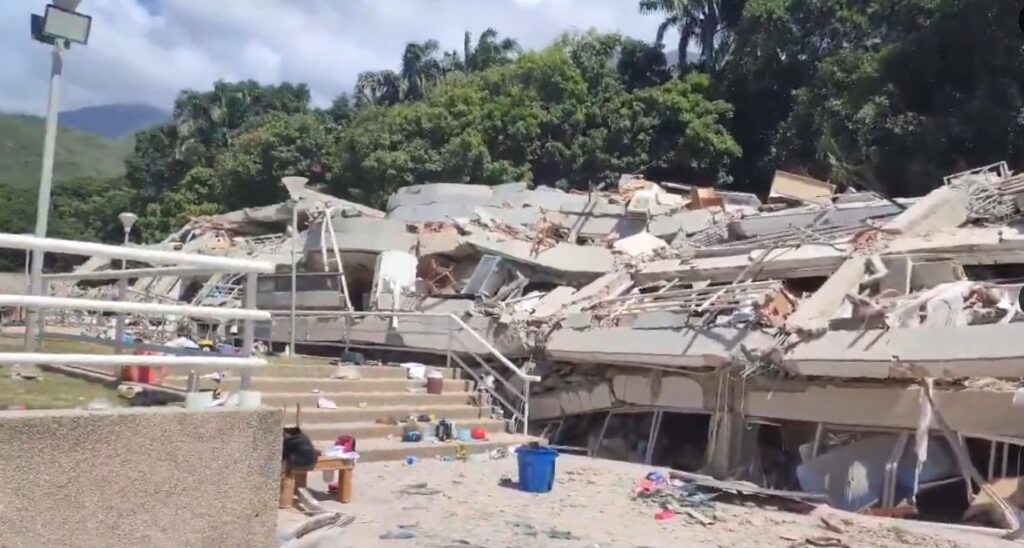
The focus has shifted from rescue to reconstruction, according to terremotovenezuela.com’s Alvarez, but the emotional and social recovery “will take far longer than the initial emergency.”
Besides structural damage and physical injuries, Venezuela will have to address a mental health crisis.
“Thousands of people have suffered losses, displacement, and uncertainty,” said Barbosa. “Mental health is also an urgent priority after a tragedy of this magnitude.”
PAHO’s director stressed that recovery must go beyond a simple return to what existed before. “It must be an opportunity to build back stronger, safer, more resilient, and better prepare health services for future emergencies,” he said.
That, however, will be particularly hard given the country’s uncertain political future. Six months ago, the United States captured Venezuela’s president, Nicolás Maduro, and has imprisoned him in the US.
The 180 days of Rodriguez’s interim presidency expired in the first week of July, and there is no timetable for new elections so far.
However, the US controls Venezuela’s finances, with US Secretary of State Marco Rubio setting conditions on what that money can be spent on, and by whom, according to a recent report by The New York Times.
With no clear plan for the future, the sociologist said, suffering is even greater: “There is a sense of grief over the loss of institutions, which deepens Venezuela’s humanitarian crisis in every respect.”
Image Credits: Toposdigitales .
Combat the infodemic in health information and support health policy reporting from the global South. Our growing network of journalists in Africa, Asia, Geneva and New York connect the dots between regional realities and the big global debates, with evidence-based, open access news and analysis. To make a personal or organisational contribution click the donate button below.