The WHO lists Germany as its largest donor in 2020-21 and second largest since. Those days are ending. The Bundestag is considering a 2027 budget that grows by almost 6%, mostly for defence, while cutting the health ministry’s operational fund to strengthen international health by 15.3%, from €55.9 million to €47.33 million.
Of the $262 million Germany pledged to the WHO at the 2024 World Health Summit, only a third has been budgeted.
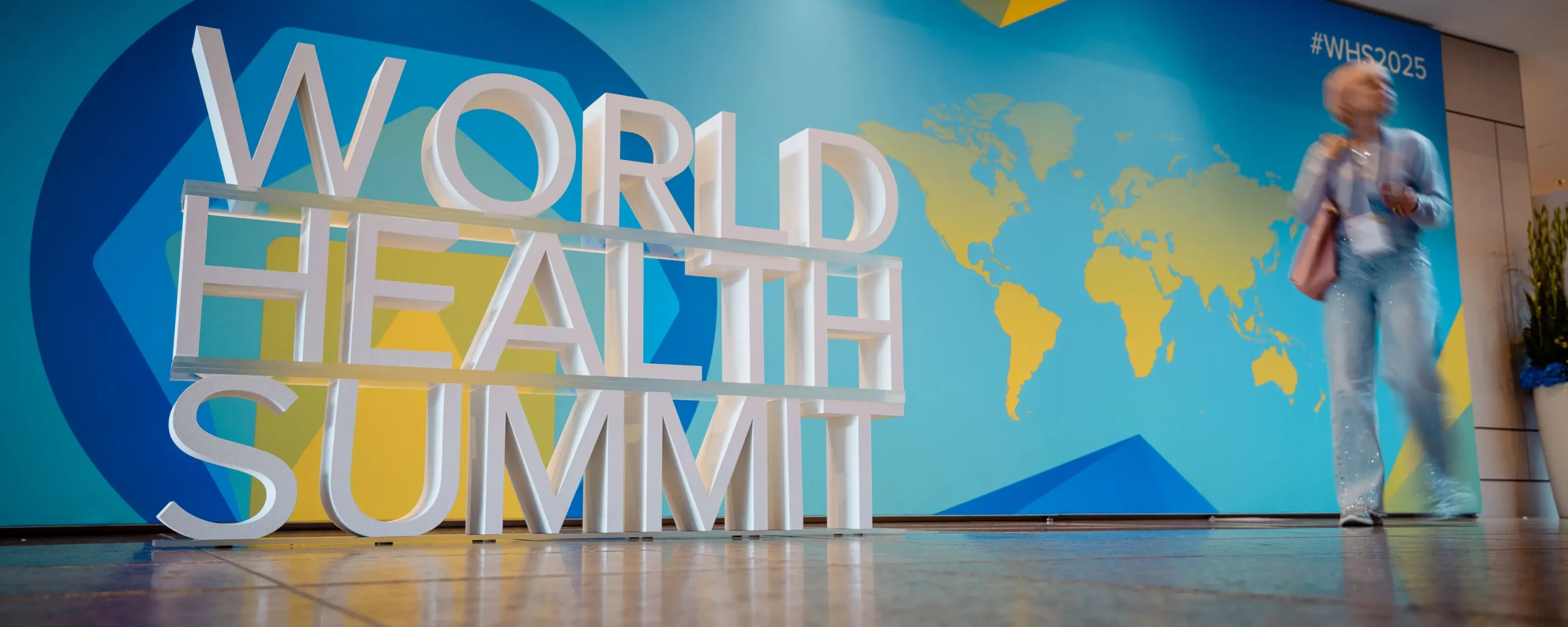
This week, Berlin hosts the World Health Summit again. The host arrives with no working strategy, no ministerial coordinator, no parliamentary committee and no candidate to lead the WHO. France has an ambassador for global health. Britain has a development minister who describes her job as “security through solidarity.” Germany has a summit.
How did the country that defended the WHO end up here? Olumide Abimbola of the Africa Policy Research Institute explains. Germany never had a grand plan for global health. It responded to Ebola, then COVID, spent the money and wrote its strategy afterwards. Under Scholz, the Chancellery stopped making the case for global health. Under Merz, global health has become a budget line to be cut.
That is not a choice the world’s third-largest economy should make quietly. Germany has the money, the institutions and, since the United States stepped back, the opportunity to be a force for good in global health. It also has a direct interest in doing so.
The global is already inside Germany
The stakes for Germany are not as abstract as they may seem. Mosquito-borne West Nile virus infections have been established in Germany since 2019. Two Frankfurt airport workers died of malaria this summer. German hospitals depend on doctors from Syria and Iraq and nurses from the Philippines and Kerala. Stuttgart’s Robert-Bosch-Krankenhaus employs staff from 86 nationalities and could not operate without them, its chief executive told me.
When COVID showed how closely Germany and the Western Balkans are bound by labour migration, part of the answer was to help build testing capacity there. A public health system, as an official at the Robert Koch Institute put it to me, cannot simply be switched on when it is needed. It has to exist before the crisis arrives.
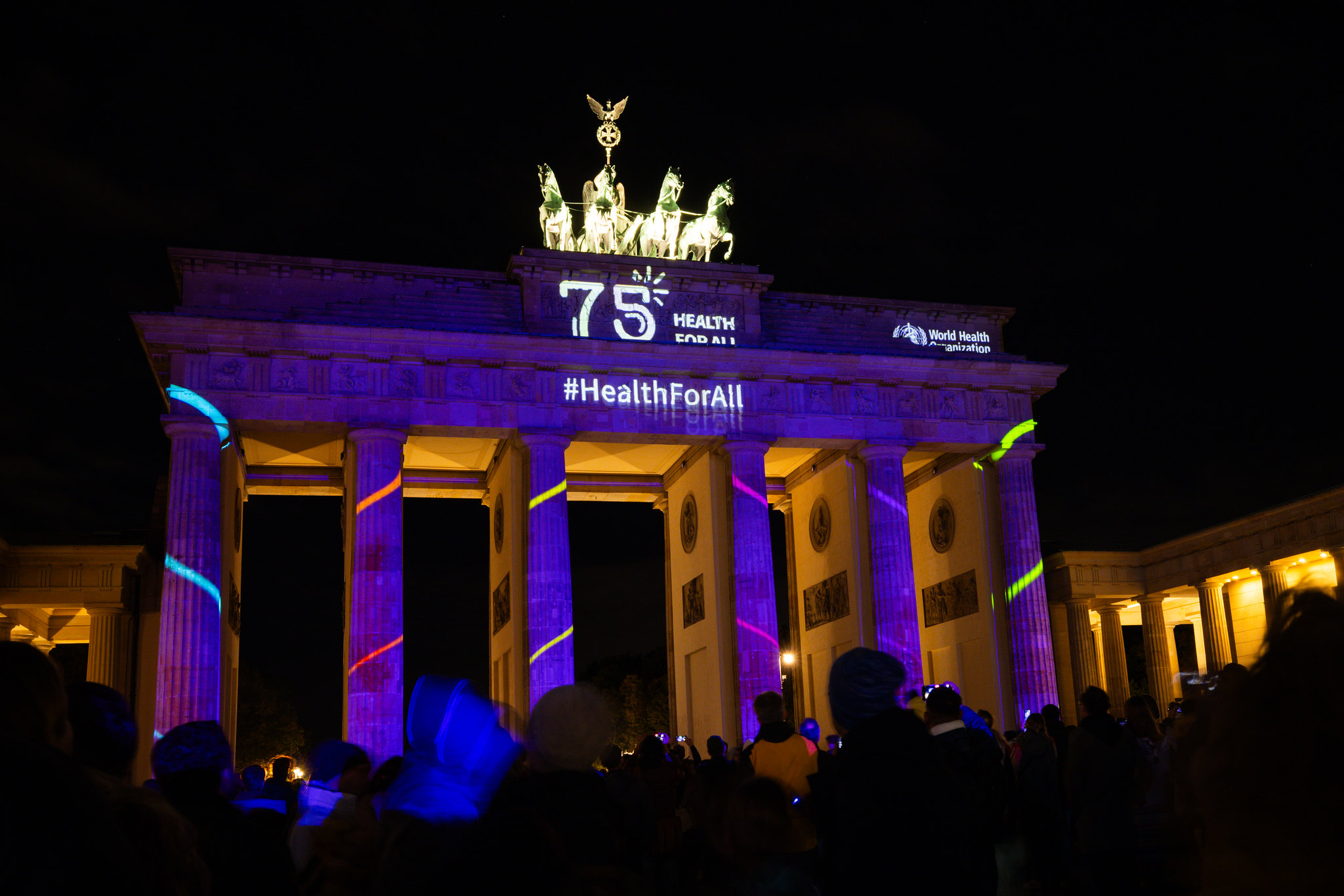
Angela Merkel understood this. Her government put health on the G7 agenda in 2015 and the G20 agenda in 2017. Berlin secured the WHO’s pandemic intelligence hub, funded at €30 million a year; established a Global Health Hub for government, industry, science and civil society; and transformed the annual World Health Summit.
After Ebola, parliament expanded the mandate of the Robert Koch Institute. Its international centre became a technical partner to the public health institutes of Nigeria and Namibia and to Africa CDC.
Institutional drift
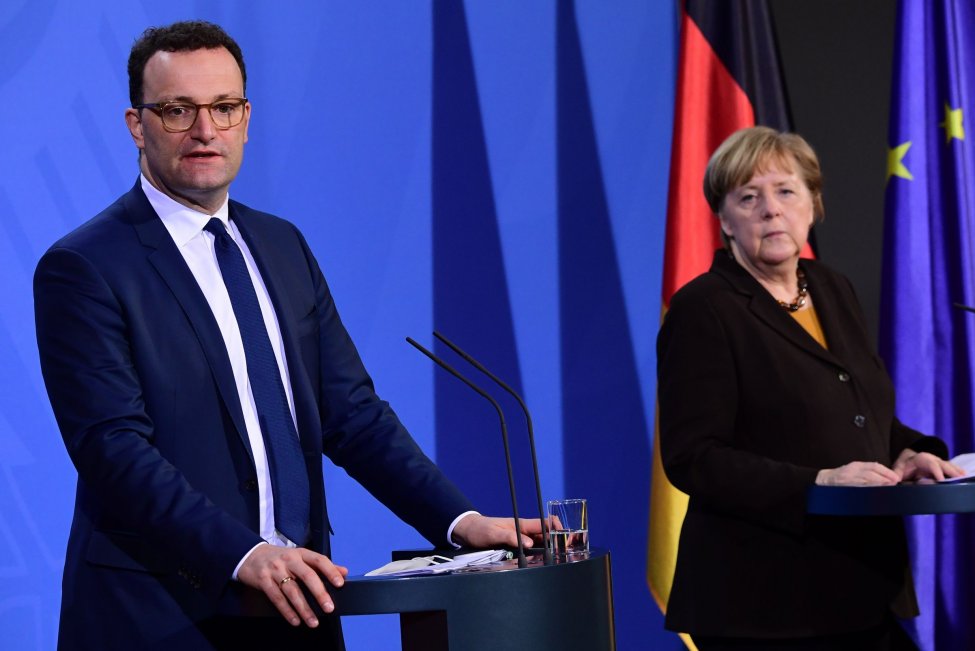
But Germany did not make these institutions durable. They rested on a scientist chancellor, a physician chief of staff and a few motivated officials in the health ministry. When the chancellor left, there was little to keep the policy moving.
Stella Merendino, an emergency nurse who sits for Die Linke on the Bundestag’s health committee, draws the lesson: “A global health policy shouldn’t depend on whether a handful of MPs or officials happen to care about it. It needs structures, funding and political accountability.”
Today, seven ministries divide global health between them. Health deals with the WHO, Development with international funds, Research with laboratories, Justice with patents and Trade with markets. The Federal Chancellery does not referee.
The Foreign Office’s coordinator for global health, created after Ebola, is gone. Health now sits in a division whose remit reads “economy, development, health and UN budget.” The Bundestag allowed its global health subcommittee to lapse after the 2025 election. Germany’s 2020 global health strategy runs to 2030. Its mid-term review, published last November, sets no clear milestones.
Andreas Wulf of Medico International was not surprised: “If you don’t have milestones and goalposts, what is the review doing?” The problem is not a lack of institutions. It is the lack of a clear direction for using them.
Working at cross-purposes
In January, the development ministry’s reform plan ended bilateral health cooperation with partner countries and described the ministry as “very consciously using its policy of cooperation as a geopolitical instrument.” The RKI’s technical work remains, at roughly €15 million a year across all sources.
The coalition had already dropped the 0.7% aid target, for the first time in three decades. German funding for the WHO’s pandemic intelligence hub was halved last year and stays halved.
Recently, the Accra Reset, an initiative by African and Asian governments on health sovereignty, listed Gavi, the Global Fund and the Pandemic Fund among institutions to be consolidated or closed within a decade, and named the WHO as an institution that should continue.
Germany is funding the first group to the tune of €1 billion to the Global Fund for 2026–28, and €600 million to Gavi over five years. At the same time, it is cutting its voluntary contributions to the WHO; only the mandatory dues are untouched.
Germany is not withdrawing from global health. It is wavering when it should be leaning in.
Nowhere is the lack of a coherent strategy clearer than on medicines. Anna Holzscheiter of TU Dresden calls Germany’s position “organised hypocrisy”: in Geneva, Germany argues for equity and public goods; in trade negotiations over patents and technology transfer, she argues, it blocks measures that would make those principles possible. When pressed, Germany points the finger at Brussels.
The German trap
The health ministry cannot resolve the issue because it does not control the relevant policy. A senior official there told me that the ministry is “not in charge of IP. There are two other ministries that are really giving us a hard time here.”
The contradiction is visible in Germany’s own record. In April 2020 Merkel said a COVID-19 vaccine should be “a global public good” and produced “in as many places in the world as possible.” In May 2021, the Bundestag rejected a patent waiver by 498 votes to 117.
BioNTech’s founder emailed Merkel his thanks the same day. By June, Merkel was telling parliament that a waiver was the wrong approach.
Christine Godt, professor of economic law at Oldenburg, sees a structural reason for this. Germany is a corporatist state: policy is negotiated with organised interests, and pharmaceutical companies are among them.
On lobbying, she says: “All means are used: advisory, drafting, conferences.” Godt notes that a patent alone does not make a vaccine available. The know-how to manufacture it matters too. Technology transfer has been part of international trade policy for decades but has never been effectively enforced.
Germany can attach conditions to public money when it chooses to. In September it gave Sanofi €400 million to keep producing insulin in Frankfurt, with obligations on output and stockpiles. It attaches no such conditions to the public money it gives for vaccines and medicines meant for the world.
Walter Bruchhausen, a medical historian, describes the problem simply: “If you just give money, you don’t influence policies. That is the German trap.”
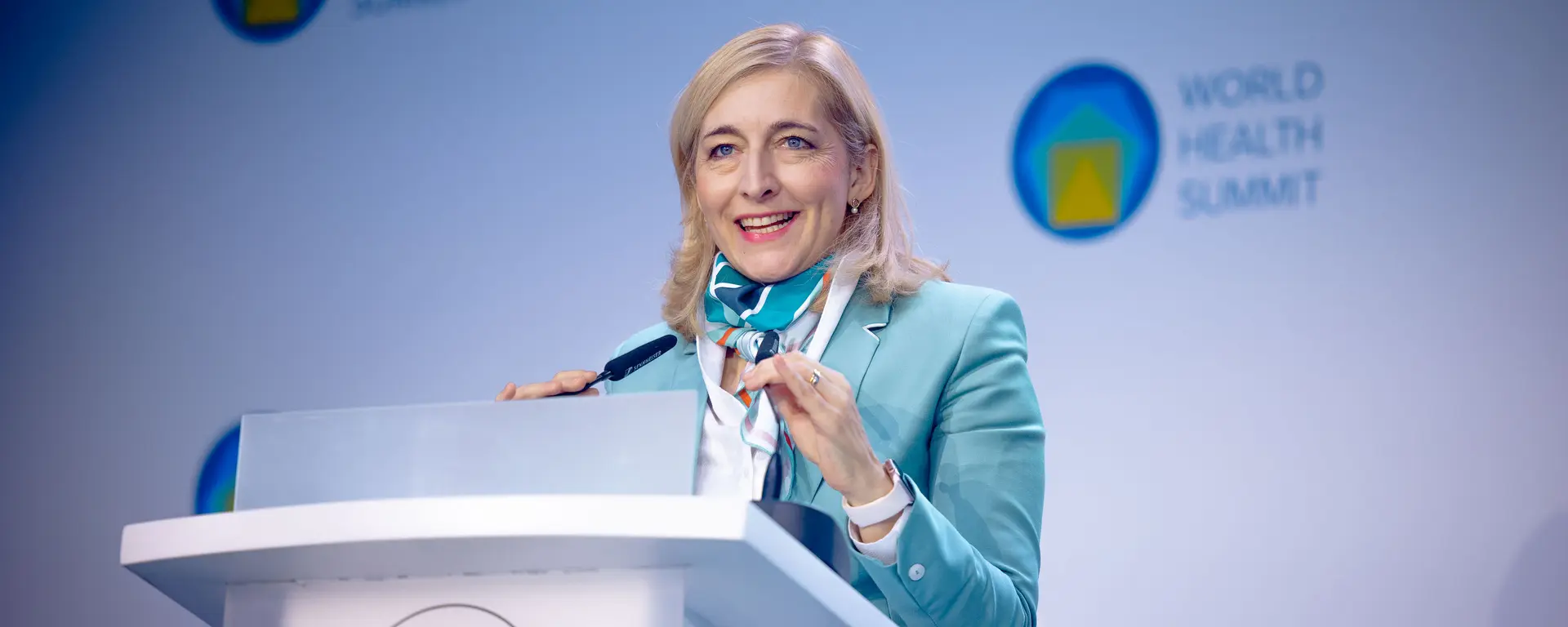
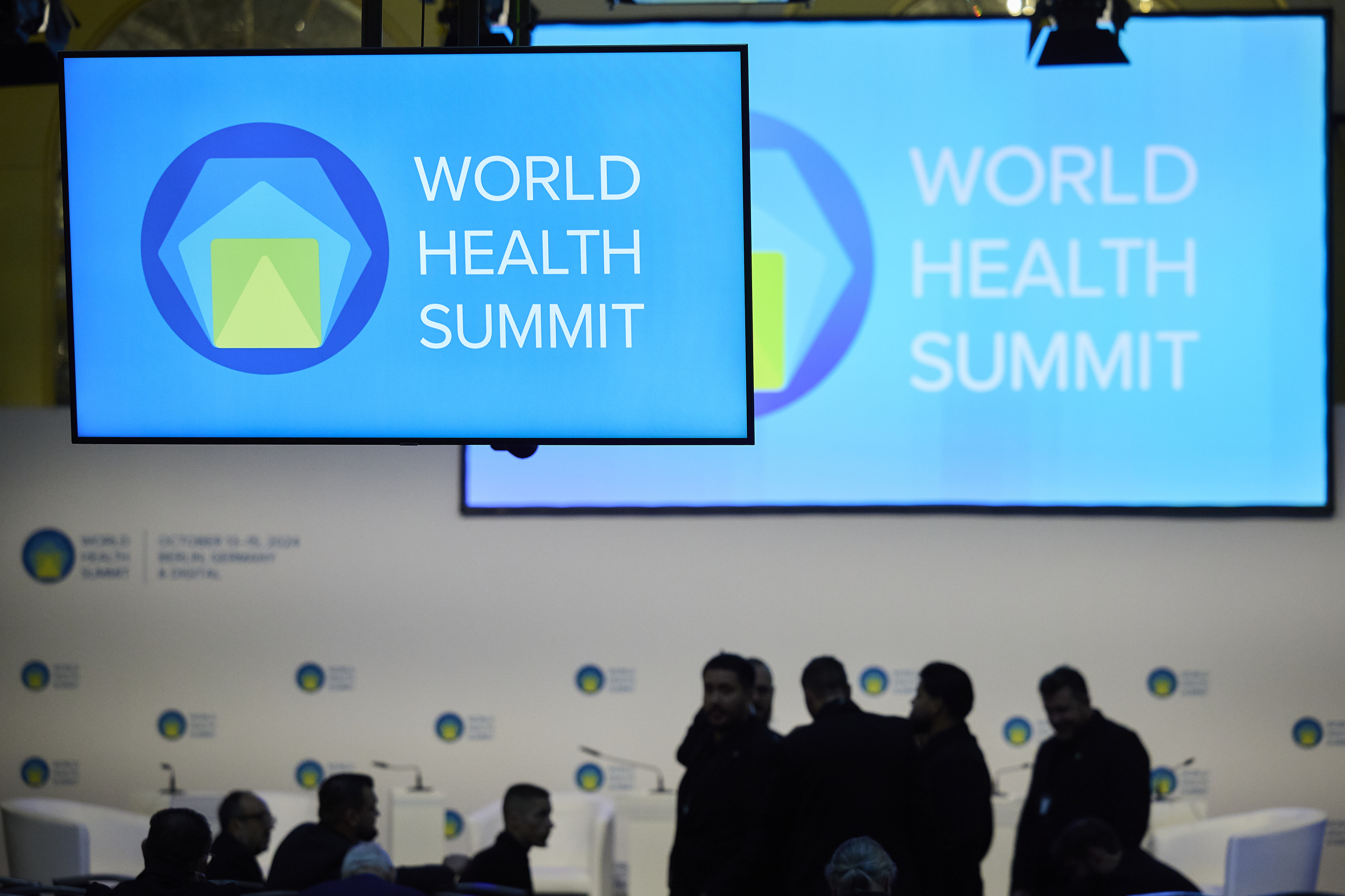
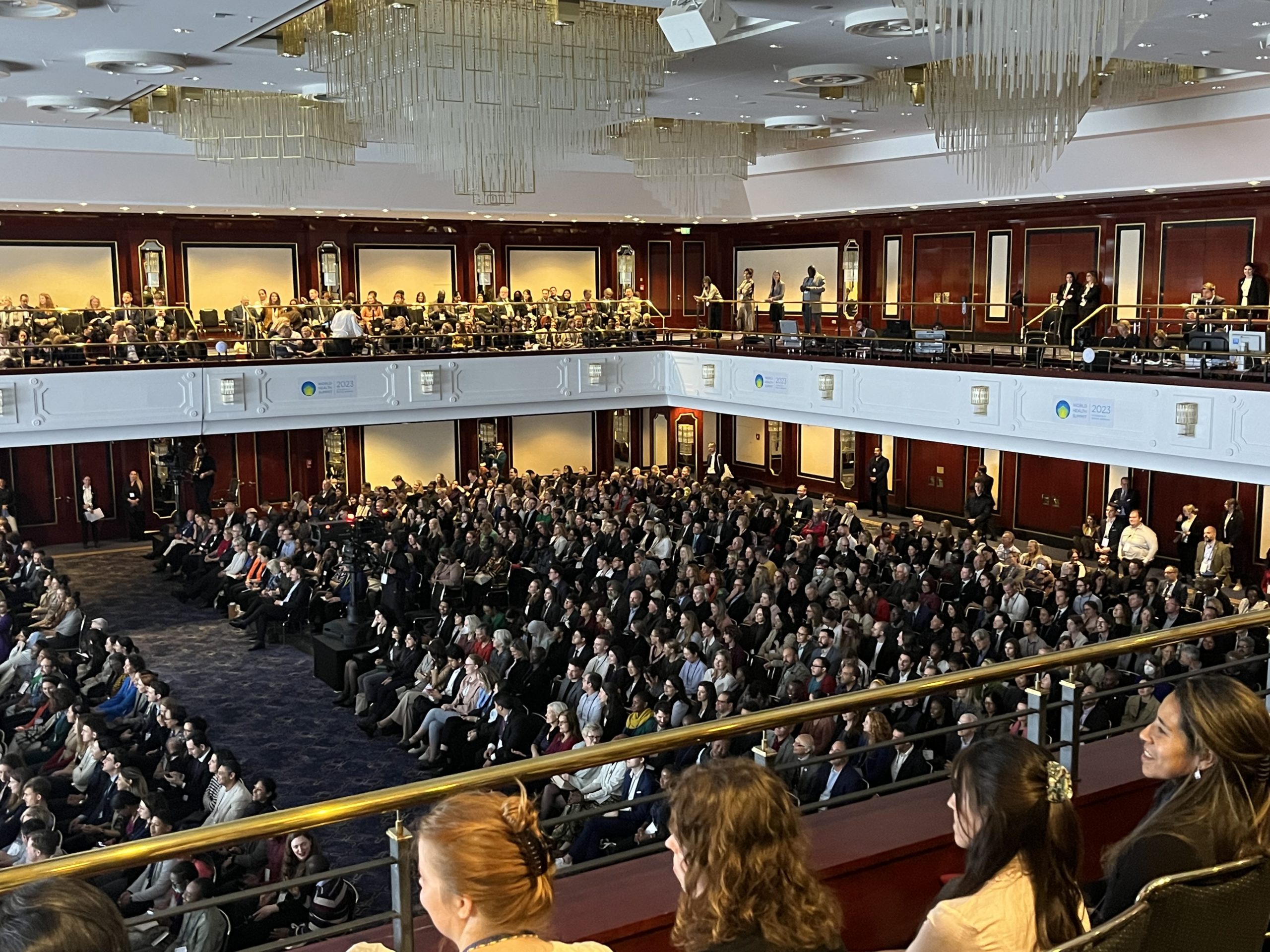
The World Health Summit shows the pattern. Almost everyone I spoke to said the same: an event of government patronage and corporate sponsorship, with side meetings priced from €10,000 to €45,000, is not where policy is made.
The Summit agrees: decisions, it told me, “are made by the governments and institutions within their respective mandates”; it provides “a public platform for the announcement of commitments.” It does not know how many invited participants failed to get visas, and says equitable participation is “not a finished task.” A platform is not a plan. Berlin funds it while cutting its voluntary support for the WHO.
Three ways forward
Give global health a mandate. Place an ambassador or coordinator in the Federal Chancellery, where the G7 and G20 sherpas already work, with the authority to coordinate the ministries, develop one strategy, and ensure it is implemented. In September, a study published by the Konrad-Adenauer-Stiftung, the foundation affiliated with the governing CDU, recommended exactly that, and the restoration of the parliamentary subcommittee.
Give the post measurable goals, an annual report to the Bundestag and independent evaluation. DEval already evaluates development policy and could do the same for global health. And involve people who work in the field: scientists, civil society and practitioners should help shape positions, not simply be invited to a round table twice a year or given a panel at the Summit.
Put conditions on publicly funded medical innovation. Public money should come with public-interest conditions, at home and abroad: a price ceiling, say, or a licence that allows others to use the technology. The pandemic agreement Germany negotiated obliges every party to adopt a policy on access conditions in publicly funded research, though it leaves the content to governments.
WTO rules, reaffirmed at Doha, let countries override patents to protect public health. Germany should use the room those rules provide rather than negotiate around it. The pharmaceutical strategy being rewritten in the Chancellery, due by year’s end, is the place to set these rules. Germany’s research ministry required similar conditions for neglected-disease grants in 2011. It never made them standard.
Build partnerships for health sovereignty. The Accra Reset is one expression of a wider demand: governments across the Global South want control over their health financing and production. Germany should back the institutions those countries want strengthened: Africa CDC, national public health institutes, regulators and manufacturers, with the WHO setting common standards.
Germany’s most useful export may not be a patent but its Ausbildung ethos: the vocational and institutional training that builds skills and institutions which remain in place and grow locally. The RKI already works this way; Germany should expand that approach and let its partners define success.
Leadership that matters
Germany has long declined the role of a ‘leader’. That is changing.
Under pressure, it seems to be assuming that role for its armed forces, in the ambition to build “the strongest conventional army in Europe.” It has not yet assumed it for health.
A country that believes in international rules needs more than institutions. It needs to decide which institutions to defend, which norms to support and where to build lasting partnerships. National security also depends on human security. Germany is now increasing spending on the first while reducing capacity in the second.
The Bundestag will settle the budget in late November and can still restore the international health fund. The October Summit gives Germany a public stage to say what it wants to achieve. If it does not, the conclusion will be hard to avoid. There never was a plan. There was a chancellor. And she left.
About the author
Dr Unni Karunakara is a Senior Fellow at the Global Health Justice Partnership at Yale Law School in the US, and the Richard von Weizsäcker Fellow at the Robert Bosch Academy in Berlin. He was the interim director of the United Nations University International Institute for Global Health (UNU-IIGH) in 2024-2025, and international president of Médecins Sans Frontières (MSF) from 2010-2013.
Image Credits: World Health Summit, Clemens Bilan, World Health Summit, E. Fletcher/Health Policy Watch.
Combat the infodemic in health information and support health policy reporting from the global South. Our growing network of journalists in Africa, Asia, Geneva and New York connect the dots between regional realities and the big global debates, with evidence-based, open access news and analysis. To make a personal or organisational contribution click the donate button below.