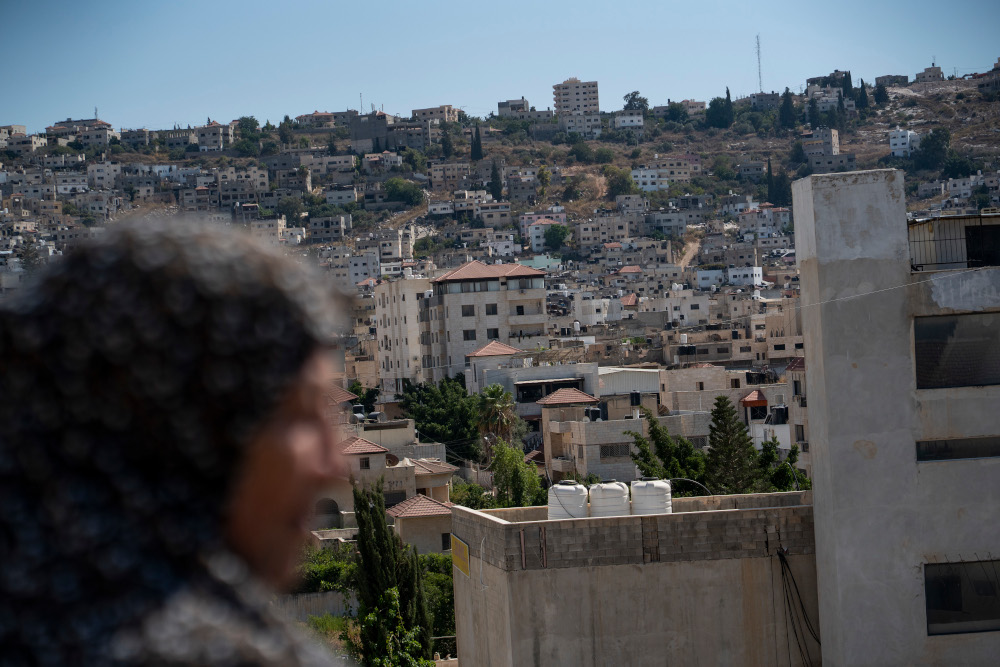
Around 200,000 people in the Israeli-occupied West Bank will lose access to vital food aid from the United Nations World Food Programme (WFP) due to funding cuts, exacerbating food insecurity. In the Gaza Strip, the nutrition and health crisis is set to worsen further due to a lack of medical supplies and sanitation, the World Health Organization (WHO) warns.
Over the past two years, the number of people affected by food insecurity in the West Bank has doubled to almost one million – over a quarter of the population, according to latest WFP data. Due to drastic funding shortfalls, the WFP is halving its aid to the 400,000 recipients starting in September, the organisation announced.
Already, 12% of the surveyed population suffer from inadequate food consumption, whilst a third of West Bank households can no longer afford a nutritious diet.
“Food may be available in the markets, but people simply cannot afford it,” said WFP Country Director Shaun Hughes, describing the crisis at a UN press briefing in Geneva on Tuesday.
In future, only the most needy families will receive cash support of around 50 shekels (under $20) per person per month. The cuts impact the provision of vouchers, food, livelihood support and nutritional aid for children and pregnant women.
Economic crisis and rising settler violence
The West Bank’s economy is in a deep economic crisis on two fronts simultaneously. Unemployment now stands at 30% after Israel closed its gates to most Palestinian workers following the 7 October 2023 Hamas-led massacre in Israel.
At the same time, the governing Palestinian Authority (PA) has been economically crippled by the refusal of Israel’s hardline government to transfer some $5 billion, to date, in import and customs taxes on goods entering the West Bank as it is legally obliged to do. Normally, such transfers make up about 70% of the PA’s budget, and the withheld funds are mostly earmarked for salaries, particularly for employees in healthcare and education. The PA, meanwhile, has also been plagued by widespread corruption, according to Freedom House, and immense public debt, estimated by the World Bank at $4.8 billion by the end of 2025.
According to WFP data, 76% of all West Bank households have thus experienced a significant decline in their income. Against that context, the WFP aid payments represent crucial safety nets for many recipients facing severe financial crisis in the conflict-ridden region.
However, Hughes also blames rising settler violence, Israeli military operations, roadblocks, and arbitrary house demolitions for exacerbating the situation.
“In my recent visits to the West Bank, I have witnessed families once thriving and earning a living off their land now forced from their homes, their livelihoods destroyed. They now find themselves in a chokehold,” he said.
Israeli Prime Minister Benjamin Netanyahu recently criticised violent acts in the West Bank as criminal and damaging to Israel’s standing in the world. But critics, including voices in the military, say that his government has failed entirely to show real muscle in reining in the increasingly violent and frequent settler rampages, leading to progressively greater limitations on Palestinian movement and access to their lands.
Health risks and acute food insecurity in the Gaza Strip
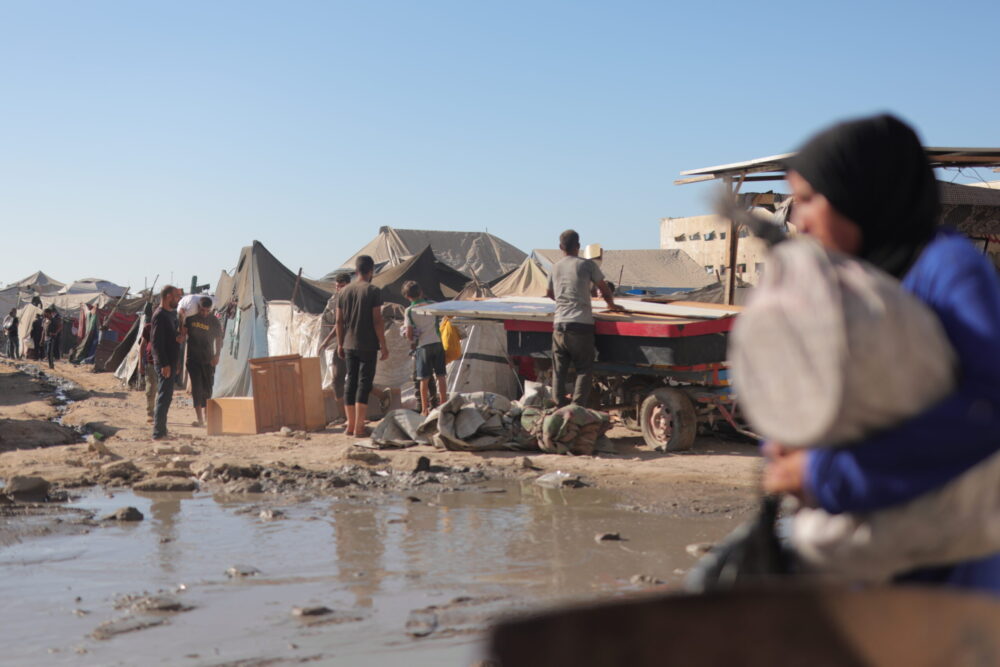
In the Gaza Strip, too, the WFP cut cash assistance for 375,000 people by 40% back in July. To continue providing vital supplies in both areas, the organisation urgently needs an additional $386 million for the next six months, it said.
This massive funding shortfall threatens an already fragile situation on the ground. Although food deliveries have improved supplies since the October 2025 ceasefire, two-thirds of the population in the Gaza Strip continue to suffer from crisis and emergency levels of acute food insecurity. The UN-linked Integrated Food Security Classification (IPC) forecasts that high levels of acute food insecurity will affect up to 90% of the population by the end of the year if humanitarian aid is not sustained.
Indeed, chronic undernutrition has emerged as the primary challenge, according to a June survey of Gaza by UNICEF. While emergency aid stabilized acute malnutrition (wasting) at 1.3%, chronic malnutrition (stunting) now affects 12.2% of children under five. Dietary quality is also dismal: only 30.3% of children aged 6–23 months achieve minimum dietary diversity, and just 22.4% receive a minimum acceptable diet, leaving them highly vulnerable to developmental and cognitive impairments.
The nutrition crisis is compounded by catastrophic living conditions; some 94% of Gaza’s 2.1 million residents lack adequate shelter, and approximately 100,000 children and pregnant or lactating women remain in need of continuous nutritional aid.
Disease outbreaks loom amidst the destroyed infrastructure
After the searing heat of summer, winter rains will mean flooding in overcrowded tent cities, and that, “will spread the sewage, the waste and contaminated water into the places where people sleep, cook and care for their loved ones,” warned WHO epidemiologist Reinhilde Van De Weerdt at the UN briefing. Damp tents and mould also dramatically increase the risk of respiratory diseases, particularly among young children, she pointed out.
According to WHO data, microbiological contamination of tested water samples nearly tripled this year, rising from under 6% in January to almost 20% in August. As a result, cases of acute watery diarrhoea almost doubled from around 30,000 in March to over 58,000 recorded cases in August.
However, the WHO warns that the severely limited local laboratory capacity can currently only detect basic microbiological contaminants, meaning that further contamination remains undetected. Furthermore, stagnant water encourages the uncontrolled breeding of disease-carrying mosquitoes and pests.
Additionally, restrictive import licences have been blocking vital deliveries of medical supplies such as prosthetics and other medical aids since May 2024, according to the WHO. As a result, only 12% of those who lost limbs since the war began have been fitted with a prosthetic device, while more than 6,600 amputees in total require long-term care, said Van De Weerdt.
The WHO is calling for the accelerated import of medical supplies, including diagnostic laboratory materials for the rapid identification of viruses and bacteria. Without this equipment, the early detection and containment of potential disease outbreaks on the ground would be virtually impossible.
Israeli government pushes back against allegations
Responding to a query by Health Policy Watch, the Coordinator of Government Activities in the Territories (COGAT) stated that Israel exercises “heightened caution” regarding dual-use items due to the risk of exploitation by Hamas for military purposes, but stressed that these items are “not subject to a blanket prohibition.” The agency added that it coordinates a continuous response with UN agencies to facilitate alternative items, such as spare parts and engine oil, while fuel is brought into the Gaza Strip daily by UN agencies.
COGAT also strongly disputed claims of restrictive barriers on medical supplies, stating that “all medicines submitted for entry into the Gaza Strip are approved and cleared without restriction.” The agency maintained that advanced medical equipment – including X-ray machines, diagnostic devices, laboratory tools, and backup generators – was recently transferred to support international health facilities, including field hospitals operated by the Red Cross, the United Arab Emirates (UAE), the International Medical Corps (IMC), and UK-Med.
Responding to concerns over water infrastructure, COGAT stated that Israel actively facilitates the entry of equipment and piping to repair and maintain water networks. According to the agency, a desalination facility in southern Gaza was recently repaired and connected to the “Kela” electricity line to increase water supply. It added that 10 major water, sanitation, and hygiene (WASH) projects were recently approved, allowing international organisations to import sewage pipes, fittings, engine oil, water storage equipment, and water quality testing kits.
The Israeli Ministry of Foreign Affairs (MFA) did not respond to a query by Health Policy Watch.
See related story:
Most Gaza Palestinians Living in Dangerous, Unsanitary and Unhealthy Shelters
Image Credits: WFP/Claire Nevill, Felix Sassmannshausen/HPW, WHO.
Combat the infodemic in health information and support health policy reporting from the global South. Our growing network of journalists in Africa, Asia, Geneva and New York connect the dots between regional realities and the big global debates, with evidence-based, open access news and analysis. To make a personal or organisational contribution click the donate button below.