Unsafe food causes 1.5 million deaths and 866 million illnesses each year – a burden similar to tuberculosis, according to World Health Organization (WHO) research published in The Lancet this week.
The research assessed 42 major foodborne hazards – including bacteria, viruses, parasites and chemicals – from 194 countries between 2000 and 2021.
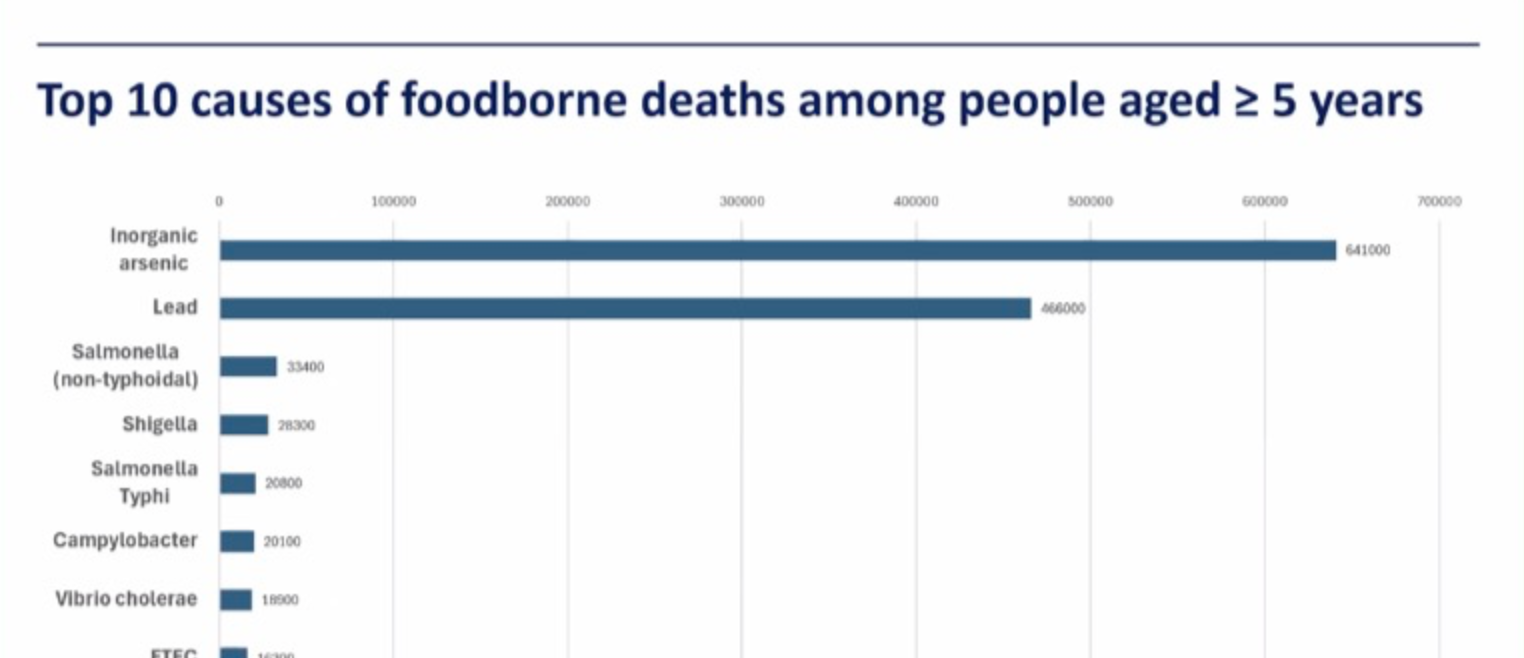
Foodborne diseases are caused by eating food contaminated with biological or chemical hazards. Diarrhoeal diseases cause the most illnesses, but chemical hazards are in fact the leading cause of foodborne deaths, the research found.
More than one million people died from cardiovascular disease and cancer caused by inorganic arsenic and lead in 2021 – the first time this impact has been quantified. While those deaths are mainly among adults, childhood exposure to arsenic, mercury and lead also leads to lifelong intellectual and developmental disabilities.
Food can be contaminated with chemicals such as inorganic arsenic, lead and methylmercury from natural sources and human activities. Once in the soil and water, they are absorbed by plants and eaten by people.
Lead from paint and gasoline has leached into the soil and water in several communities, while some fish have high levels of mercury.
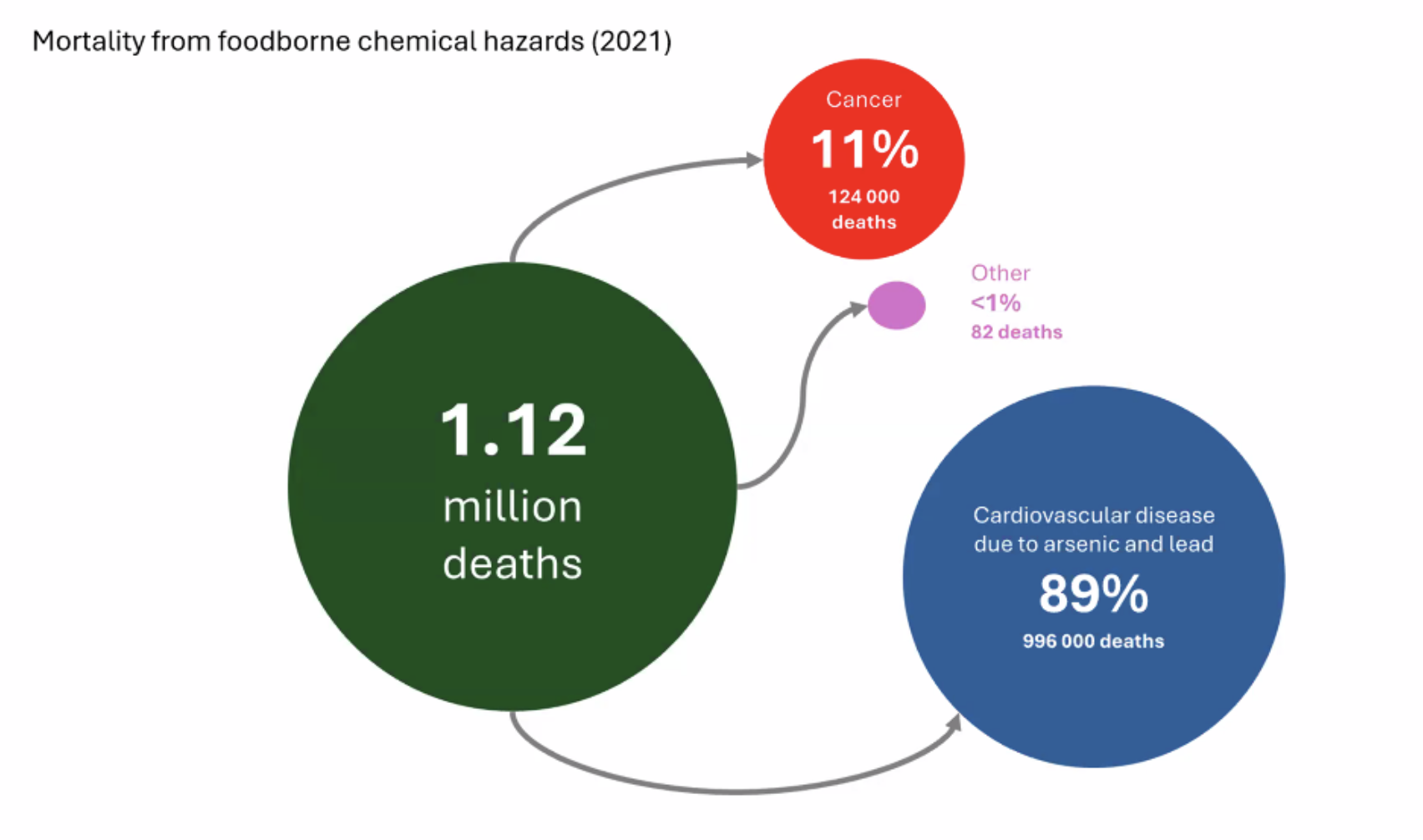
“Cardiovascular disease kills about 20 million people every year. But the magnitude of the food-borne proportion was not fully recognised. It is about 5% of all cardiovascular disease,” said the WHO’s Luc Ingenbleek.
People in Southeast Asia and the Western Pacific regions are the worst affected by chemical contamination.
Lead author Dr Robert Lake, former chair of the WHO’s Foodborne Disease Burden Epidemiology Group (FERG), described chemical hazards as a “profound challenge”.
Chemicals are very difficult to eliminate once in the food system, and the WHO called on governments to prevent contamination at the source through better agricultural practices, stricter industrial controls and stronger environmental regulations.
One Health
Many foodborne diseases can also be prevented through improved water, sanitation and hygiene; better food safety practices such as pasteurisation, and better health care for vulnerable populations.
Yuki Minato, WHO technical officer for food safety and senior author of The Lancet report, warned that foodborne diseases “are not only persistent but are being made worse by climate change, which increases contamination risks, and by antimicrobial resistance, which makes infections harder to treat”.
“A One Health approach – integrating human, animal, plant, and environmental health – is essential,” said Minato. “Countries must act urgently, using these estimates to target interventions, invest in surveillance, and break down the silos between health, agriculture and environment sectors.”
Children are the worst affected
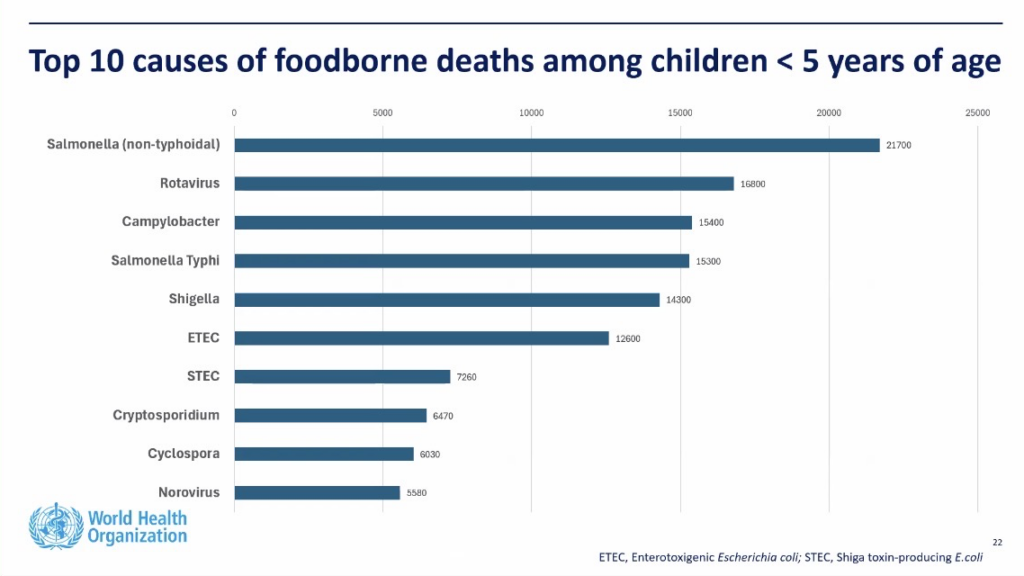
Children under the age of five are the most vulnerable, particularly to diarrhoeal diseases, according to the research. They account for a third of all foodborne disease cases, although they are only 9% of the world’s population.
Despite being just 9% of the global population, young children suffer from nearly one third of all cases of foodborne diseases, particularly diarrhoeal diseases which can be deadly for this vulnerable age group.
In addition, exposure to Methylmercury and lead in food can also harm children’s developing brains, causing lifelong neurological and developmental problems. Children and people living in poor communities in Africa and South-East Asia, the worst-affected regions, bore the highest burden.
Although the total foodborne disease burden has declined since 2000, major regional inequalities persist, with the greatest burden in Africa and South-East Asia.
However, cases and deaths in the African region have improved due to improvements or reductions in diarrhoeal diseases,
“Food safety is not an abstract issue – it touches every meal, every family, every day. Unsafe food has always been a major public health concern, but until now we lacked the bigger picture of its staggering human and economic toll. These new estimates change that.” said Dr Tedros Adhanom Ghebreyesus, WHO Director-General.
“For the first time, countries have their own data to see where the burden is highest. With that knowledge, governments can prioritise the actions needed to protect people’s health.”
Image Credits: Michael Casmir/Pierce Mill Media, Pierce Mill Media.
Combat the infodemic in health information and support health policy reporting from the global South. Our growing network of journalists in Africa, Asia, Geneva and New York connect the dots between regional realities and the big global debates, with evidence-based, open access news and analysis. To make a personal or organisational contribution click the donate button below.