RIO DE JANEIRO – News that an antiretroviral drug injected twice a year had prevented almost all HIV infection in trials electrified the HIV sector two years ago – but access to Gilead’s lenacapavir has been slow, particularly for countries in Latin America.
Brazil, which faces significant HIV transmission in certain groups, has been routinely excluded from HIV voluntary licensing deals offered by pharmaceutical companies – particularly for long-acting pre-exposure prophylaxis (PrEP) – as it is deemed an upper-middle-income country.
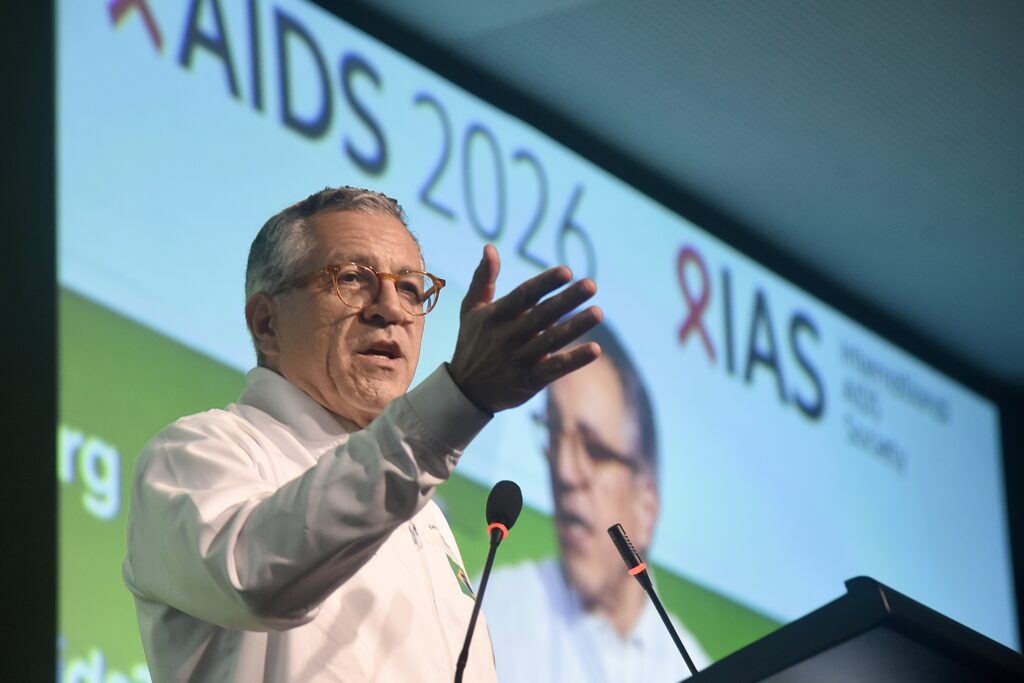
Brazilian Health Minister Dr Alexandre Padilha told the International AIDS Conference (AIDS 2026) being hosted in his country that negotiations with Gilead had run aground as the company wanted a price 10 times higher than that being paid by Indonesia and Thailand.
Brazil offers PrEP as part of its free universal health coverage, and Padilha said he was not prepared to bankrupt the health system by paying a high price for lenacapavir.
“Innovation without access is injustice,” said Padilha at the conference opening on Monday night.
Instead of pursuing lenacapavir, his country has opted to use ViiV’s cabotegravir, injected every second month, to bolster its PrEP programme as the company has offered Brazil “an acceptable price”, Padilha added.
ViiV and the Medicines Patent Pool (MPP) signed a voluntary licensing agreement to enable generic manufacturers to make generic versions of long-acting cabotegravir for PrEP for 90 countries – but this excludes most Latin American countries.
ViiV’s chief medical officer, Jean van Wyk told a media briefing that his country expects the generics to be available in 2028. In the meantime, it will make two million doses of cabotegravir for LMICs at a “non-profit price”.
Eighteen countries are using it so far, with over 520,000 doses having been dispensed, Van Wyk said.
Long-acting antiretroviral medicine to prevent HIV offers the biggest global opportunity to control the virus that has long evaded a vaccine. It is particularly important to protect people who are at high risk of HIV infection.
Almost 830,000 Brazilians are living with HIV, and the virus is spreading particularly among men who have sex with men and transgender women.
Gilead under pressure over lenacapavir
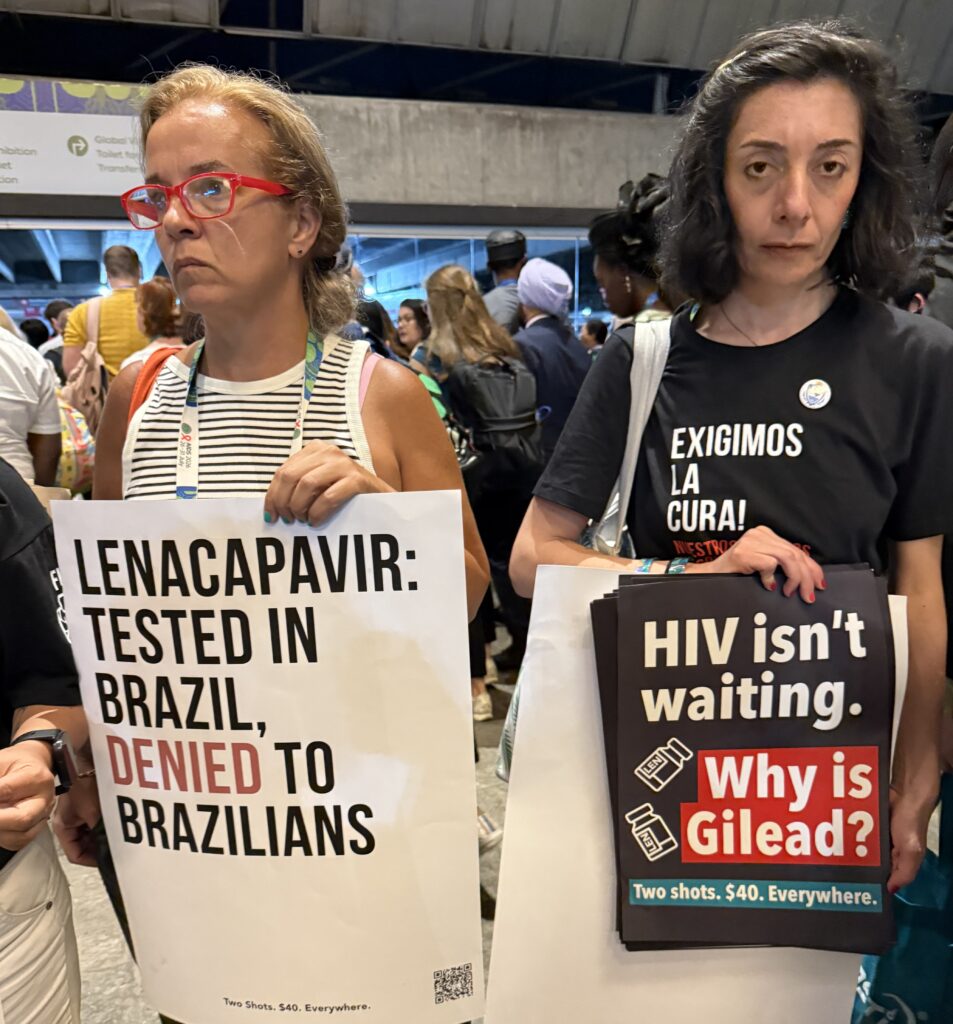
Last month, Médecins sans Frontières (MSF) launched a campaign to demand that the US-based Gilead “immediately make the highly effective HIV prevention medicine lenacapavir more widely available across the globe”.
The six-monthly injection is particularly important for groups most at risk of HIV, including “men who have sex with men, transgender people, sex workers, people who inject drugs, and incarcerated people, as well as those in conflict and other fragile humanitarian contexts”, said MSF.
Gilead’s senior vice president of clinical development, Dr Jared Baeten, told a media briefing on Tuesday that lenacapavir had received regulatory approval in Europe and the US a year ago – a year after the clinical trial results had been announced at the AIDS 2024 conference in Munich.
In October 2024, Gilead signed voluntary licensing deals with six generic pharmaceutical manufacturers to make and sell generic lenacapavir. The generics are expected to be ready by mid-2027.
Gilead sells lenacapavir for $28,000 a year in the US, but MSF argues that Gilead will still make a profit if it sells lenacapavir for $40 – particularly as this will enable countries to expand access far more widely.
Baeten said that the medicine was being rolled out in 10 African countries and that 600,000 people would be using lenacapavir by the end of this year. Gilead also has support from the US government to expand access to up to three million people.
PrEP is particularly important for preventing HIV in “key populations” where the virus is flourishing – including sex workers, men who have sex with men, transgender women and people who inject drugs. But the Trump administration has stopped funding most of these groups, focusing its HIV response on pregnant women and children in its HIV response.
Dr Tedros Adhanom Ghebreyesus, the World Health Organization’s (WHO) Director-General, said that the “criminalisation of key populations” was one of the three key challenges undermining the HIV response.
“We have to fight that, and we need to repeal the laws that criminalise people for who they are or what they need to survive,” Tedros told the 7000 delegates at the opening of AIDS 2026. The other two key challenges are the withdrawal of funds and the undermining of community-led organisations who have been key to the HIV response.
Eight million South Africans excluded
The US has also decided not to support South Africa’s HIV response, including its lenacapavir rollout, despite the country having the largest HIV positive population in the world. Approximately eight million South Africans are living with HIV, almost 13% of the population.
Last month, South Africa launched its lenacapavir rollout to high-risk groups with a modest goal of reaching 30,000 people, largely supported by the Global Fund. Young women are most at risk of HIV infection in South Africa.
The Desmond Tutu Foundation’s Elzette Rousseau said there was widespread support for injectable PrEP in the communities they worked with.
A trial of 3,700 people to test the acceptance of long-acting PrEP found that three-quarters of the participants opted for injectables rather than pills. When offered the choice between monthly injectable cabotegravir and the six-monthly lenacapavir, 80% had opted for lenacapavir, said Rousseau.
Activists from Latin America have staged several protests against Gilead at the AIDS 2026 conference, pointing out that their countries were part of the clinical trial of lenacapavir and should have access to the product.
However, Baeten said that all trial participants had access to lenacapavir, and this would only stop once they could access it in their countries. He added that 120 countries would have access to the medicine once the generics came on track.
Merck takes a different approach
Merck/ MSD, which is currently testing a monthly pill, alimatravir, as PrEP, has taken an innovative approach to ensure access to its yet-to-be-proven medicine.
Last week, it announced that it had granted voluntary licenses to seven generic companies – three in sub-Saharan Africa and four in India – to produce the medicine for 129 low- and middle-income countries.
“The royalty-free agreements with these companies cover both the public and private sectors and will enable supply of generic alimatravir in 129 LMICs that account for a substantial majority of new HIV diagnoses globally,” the company announced.
Once again, Latin America was excluded – until Tuesday morning, when Merck/ MSD announced that it had signed a memorandum of understanding (MOU) with the Brazilian government’s Oswaldo Cruz Foundation (Fiocruz) to ensure access to alimatravir should the trial be successful.
Fiocruz is the Brazilian government’s biomedical research and medicine production agency.
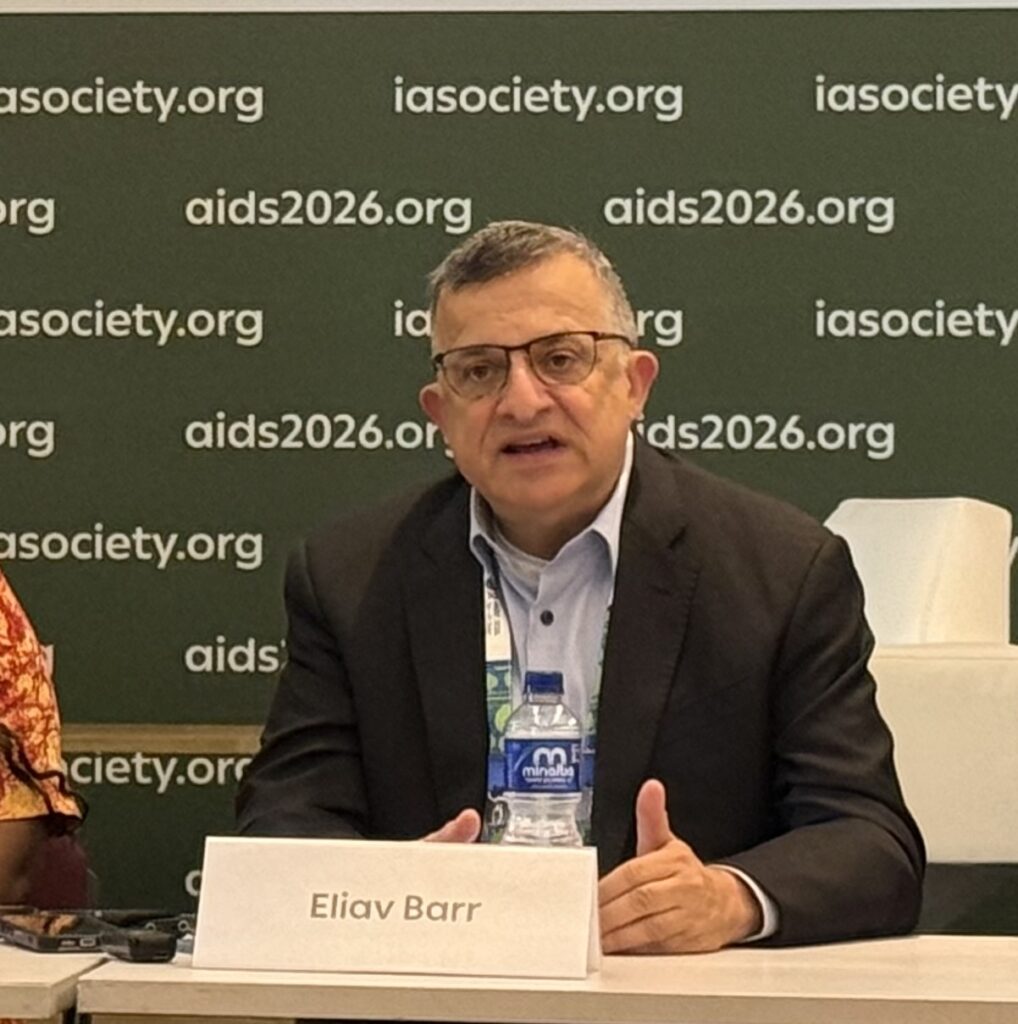
Merck/ MSD’s Dr Eliav Barr told a media briefing on Tuesday that the two parties would start to negotiate the terms of access, adding that Fiocruz could produce alimatravir for the Latin American region.
“We are trying to reach agreements now to avoid limited supply at launch,” said Barr, head of global clinical development.
The company is also preparing regulatory submissions if alimatravir proves effective at the conclusion of its phase 3 trial in the second half of 2027.
Image Credits: Márcia Moreira / IAS..
Combat the infodemic in health information and support health policy reporting from the global South. Our growing network of journalists in Africa, Asia, Geneva and New York connect the dots between regional realities and the big global debates, with evidence-based, open access news and analysis. To make a personal or organisational contribution click the donate button below.