EU negotiator Americo Zampetti warns that ideological polarisation over pathogen access threatens to derail the WHO Pandemic Agreement.
On the eve of the eighth round of talks on an annex to the Pandemic Agreement, the European Union’s (EU) chief negotiator has warned that “ideology” is blocking consensus.
Negotiators meet at the Intergovernmental Working Group (IGWG) at the World Health Organization (WHO) headquarters in Geneva from 14-18 September to thrash out the pathogen access and benefit sharing (PABS) system.
But little progress has been made over the past year on PABS – or during the four years of talks on the Pandemic Agreement that preceded these talks.
The deadlock is between two camps represented by the EU on the one hand, and an alliance of the African region and Group of Equity countries on the other.
“We are in a world which is very polarised across this particular issue,” Americo Zampetti, Minister Counsellor for Global Health at the EU Delegation to the United Nations, told a recent European Parliament subcommittee briefing this week (7 September).
“The whole agreement, let’s say the mother agreement, is kept hostage by this annex which is very, for lack of a better word, ideologically driven,” Zampetti added.

Other negotiation observers, including Knowledge Ecology International (KEI) and global health academics, have also urged parties to find a more pragmatic solution to the standoff.
Member states must finalise the PABS annex before the Pandemic Agreement, adopted by the World Health Assembly in May 2025, can be opened for member state ratification.
Groundbreaking clauses included in the Pandemic Agreement – including that manufacturers donate a minimum of 10% of medical countermeasures during pandemics and public health emergencies of international concern (PHEIC), and reserve a further 10% for the WHO at cost – cannot be implemented unless the PABS talks succeed.
Meanwhile, the world’s fastest Ebola outbreak is unfolding in the Democratic Republic of Congo, mpox has re-emerged, and rapid climate change is heightening the risk of epidemics and pandemics.
Two camps
The PABS system will regulate how information about dangerous pathogens should be shared (access), and how the medical products developed from this information (the benefits) are shared.
The Africa Group champions a “federated model”, where regional nodes retain sovereign control over the biological data of pathogens, and pharmaceutical manufacturers are required to sign binding benefit contracts with the WHO before they get access to the data.
This model aims to prevent a repeat of COVID-19 era inequities, where Global South countries rapidly shared pathogen samples but were last in line to receive vaccines and therapeutics.
By maintaining sovereign data control and requiring binding PABS contracts upfront, developing countries want to ensure that commitments, such as real-time vaccine allocations and technology transfers, are legally secured.
In December 2025, over 80 developing nations – led by the Africa Group and the 33-country Group for Equity – also submitted standard draft contracts to bind pathogen access directly to enforceable benefit-sharing obligations at the IGWG negotiations.
‘Transactional approach’
These nations want manufacturers to pay a subscription to be part of a PABS system, alongside mandatory technology transfers and non-exclusive licences for pandemic-related vaccines, treatments and diagnostics.
“This transactional approach seems to us very unsuited to get to good results,” said Zampetti. “We need to have common sense prevail.”
Conversely, the European Union advocates a “hybrid model” featuring multi-tiered pathways and open databases. Under this framework, pharmaceutical manufacturers sign private contracts with the WHO, committing at least 10% of real-time production for vaccines, therapeutics and diagnostics during emergencies.
EU negotiators also want to exclude intellectual property rules from the annex, while developing countries insist that benefit-sharing must cover downstream scientific derivatives to prevent commercial developers from circumventing obligations.
While EU officials portray their proposal as the pragmatic option, developing countries argue that non-exclusive pathways risk undermining mandatory benefit-sharing.
Under open-access systems, provider states lose legal leverage as soon as raw genetic data is downloaded, allowing commercial developers to create products without guaranteeing fair access.
Despite the friction, both competing models share a common technical foundation, based on a WHO Coordinated Laboratory Network for physical samples, WHO-recognised sequence databases, and Unique Persistent Identifiers to ensure end-to-end traceability of pathogen resources.
NGO offers way forward
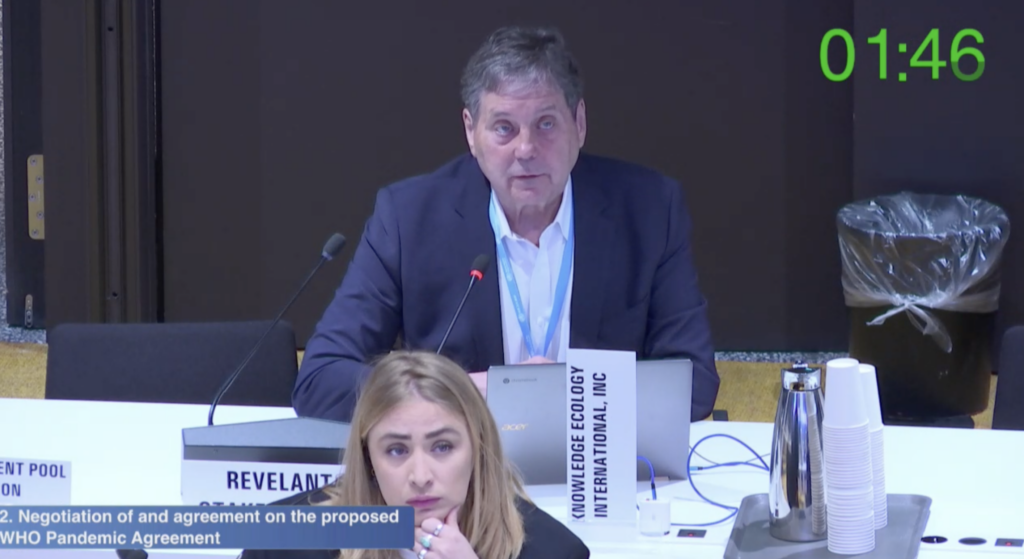
In a brief issued this week, KEI director Jamie Love writes that a “quid pro quo [approach], linking access to the pathogen samples and digital sequences to equity provisions, has known flaws”.
These flaws include that researchers won’t always need PABS to get access to pathogens or their genomic sequences. And when they don’t, “companies will have little or no incentive to be legally bound to the concessionary sharing of production”.
Love also points out that many countries have already signed agreements to share pathogens outside of PABS, a reference to the terms of bilateral agreements that the United States is pursuing with countries that exchange US support for health programmes for rapid access to pathogen information from outbreaks – with no strings attached.
Love also highlights that attaching too many conditions to access to pathogen information will slow down the response.
Finally, he argues: “With the rise of AI, proving that a specific, locally identified pathogen sequence contributed deterministically to an AI-generated candidate immunogen or small molecule remains technically intractable”.
Instead, KEI argues that countries should ensure that manufacturers obtain contracts with the WHO, “not as a condition of having access to PABS materials and digital sequences, but as a condition of registering and selling products” to address pandemics or public health emergencies of international concern (PHEIC).
Danger of bilateral agreements
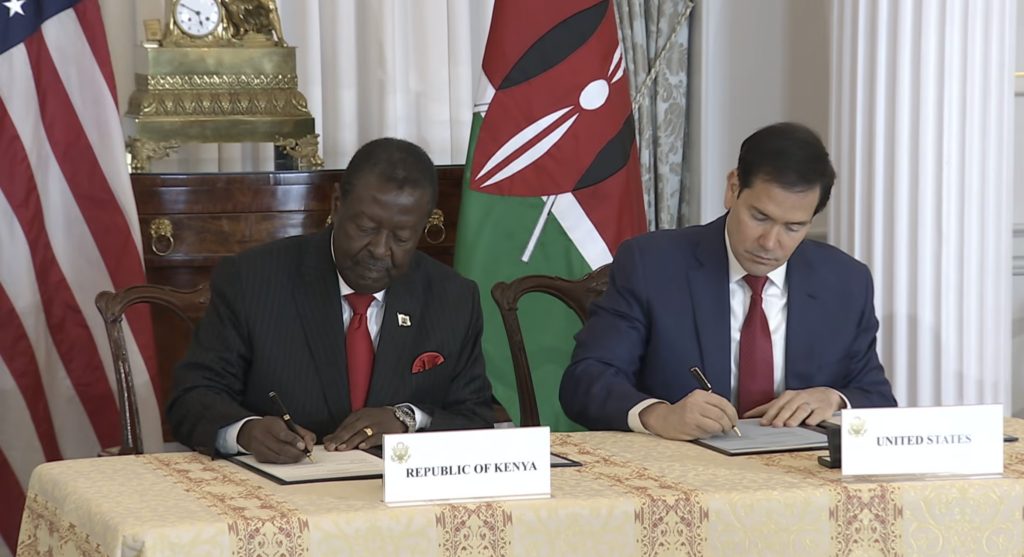
Meanwhile, academics writing in a recent commentary in The Lancet warn that the delay in reaching agreement is enabling the bilateral agreements to “bypass multilateral systems operationally but also reduce reliance on collectively negotiated multilateral frameworks, such as the Pandemic Agreement”.
This could weaken the collective bargaining power of low-income and middle-income countries, they warn.
“For PABS to remain politically viable, WHO member states might need to show greater flexibility, responsiveness, and willingness to negotiate workable compromises capable of addressing longstanding concerns surrounding equity, manufacturing capacity, technology transfer, and reciprocal benefit sharing,” they argue.
Zampetti also warned against applying principles from the 1992 UN Convention on Biological Diversity (CBD) to pathogen sharing.
The 1992 Convention established national sovereignty over genetic resources, requiring commercial operators to share benefits with provider states. Developing countries insist that CBD-style reciprocity is essential to prevent rich states from monopolising resulting treatments.
However, Zampetti contends that treating lethal pathogens as sovereign assets under these rules creates rigid barriers that hinder emergency response.
“This is a template which is very much unsuited for pathogens,” he said. “Pathogens are not something that you want to conserve.”
The World Health Assembly extended the negotiation timeline to next year’s WHA in May, but progress has been incredibly slow.
“We just need to try to bring it to a conclusion on something that is reasonable,” said Zampetti.
Image Credits: European Union/HPW.
Combat the infodemic in health information and support health policy reporting from the global South. Our growing network of journalists in Africa, Asia, Geneva and New York connect the dots between regional realities and the big global debates, with evidence-based, open access news and analysis. To make a personal or organisational contribution click the donate button below.