Lack of access to clean cooking fuel and technologies has extensive impacts on health, environment, economy, and women’s equality, say experts at the World Bank Group Spring Meeting.
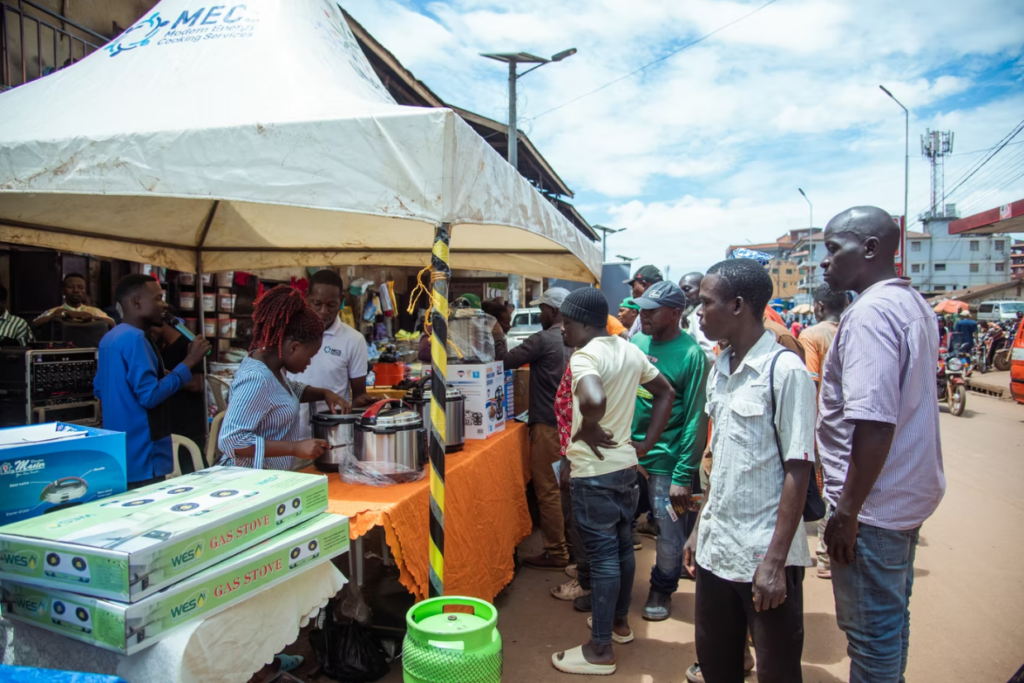
WASHINGTON– Nearly a billion people lack access to clean cooking on the African continent. A heavy reliance on charcoal, firewood, and kerosene pollutes homes with toxic particulate matter and carbon monoxide, disproportionately impacting women and children.
Roughly four in five households in Sub-Saharan Africa have no access to clean cooking technology. High fuel prices, driven by the current conflict in the Middle East, complicate efforts to expand the access crisis: more than half of African countries are net energy importers, making high energy dependence an additional hurdle.
“This is truly a reality for millions,” said Karabo Mokgonyana who campaigns for energy access at Power Shift Africa. “It’s something that I experience, my mother experiences, my grandmother experiences.”
Since a pivotal 2024 summit, $2.2 billion has been mobilised for clean cooking in Africa. Thirty countries have joined the initiative through national energy compacts in a push to alleviate the one billion Africans who still lack access.
With ministers of energy from around the world in attendance, a World Bank Group (WBG) civil society event at the yearly Spring Meetings highlighted the urgent matter of a transition to clean cooking – placing the economic, health, environmental, and gender implications of unhealthy fuels and stoves on full display.
Mission 300 lays out ambitious goal for continent’s electrification
Toxic cooking methods have for decades been documented as a life-threatening practice, with millions of lives at risk in sub-Saharan Africa.
The World Bank Group, African Development Bank and the Rockefeller Foundation are spearheading an initiative to provide 300 million people on the African continent with access to energy by 2030 – half the continent’s electrification needs.
Since July 2023, 43 million people have been connected to electricity by the WBG and five million by the Africa Development Bank.
“Mission 300 should be about transformation,” said Dean Bhekumuzi Bhebhe, director of the Africa Change Lab, a charity targeted at lifting African people out of poverty. “If Mission 300 is the grounding for our energy access, then clean cooking is not adjacent, it’s central.”
The World Bank’s spring meetings heavily discussed job creation and economic growth while mostly shying away from perceived controversial topics like climate investments, and featuring warnings of recessions triggered by the conflict in the Middle East.
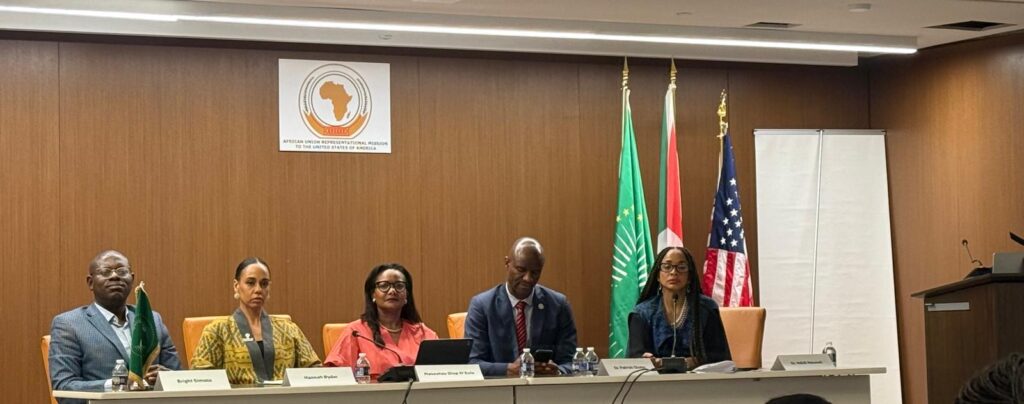
WBG representatives said its investments work to mainstream clean cooking into its energy access portfolio. “Clean cooking is happening side by side with electricity access,” said Johanna Christine Galan, the World Bank’s Mission 300 coordinator and a senior energy specialist.
Yet regulatory uncertainties and perceived risks on the African continent have impeded investments in clean energy and the cost of capital, which African Union leaders have lamented.
“Many African countries go to the International Monetary Fund (IMF). But on average, we achieve $200 million in comparison to other countries who achieve over $800 million each time,” said Hannah Ryder, CEO of Development Reimagined and a member of the G20 Africa Expert Panel.
“We do need to [use] the multilaterals,” Ryder said. “But we need to start thinking beyond that, creating new instruments, encouraging the growth of African multilateral financial institutions.” Indeed, aid cuts and fuel shortages have driven more African countries to the IMF.
The International Energy Agency points to a shortage of bankable projects, the high cost of capital, which can be double or triple the amount for renewable energy projects in Africa compared to advanced economies.
“Overlapping crises have also raised the bar for attracting new capital to Africa. Currently, 21 African countries are in or are at high risk of being in debt distress, weighing heavily on public balance sheets and those of state-owned enterprises,” said the IEA.
Health and environmental benefits of clean cooking
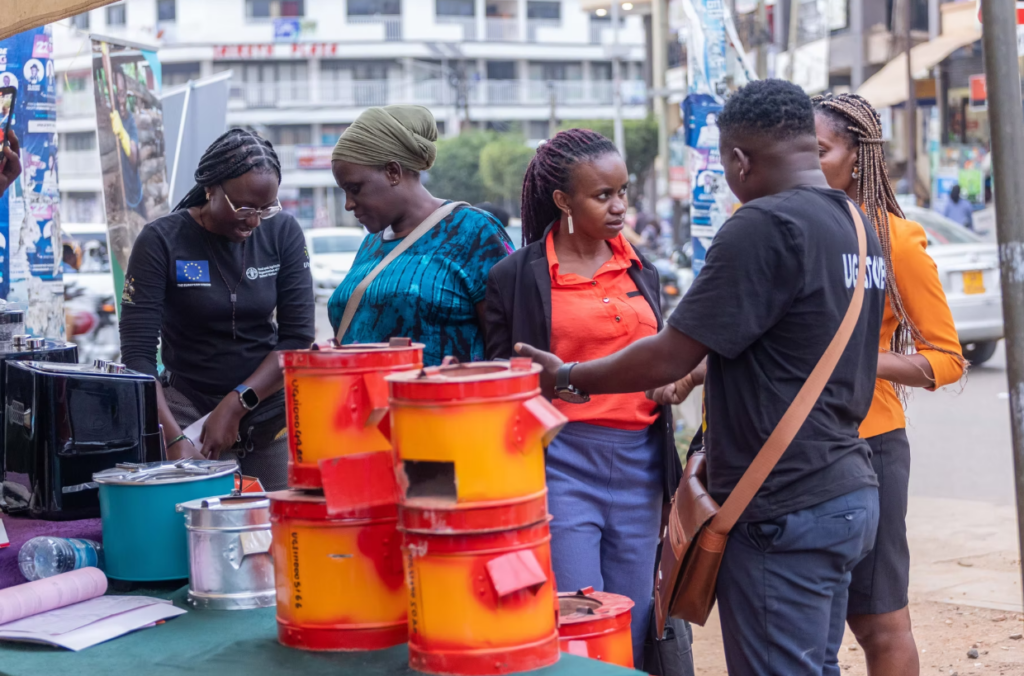
Cooking with solid fuels is linked to 815,000 premature deaths globally.
The smoke from partial combustion of firewood, charcoal, and kerosene in poorly ventilated homes or open fires exposes millions to particulate matter and carbon monoxide, both of which drive severe respiratory conditions and cardiovascular disease.
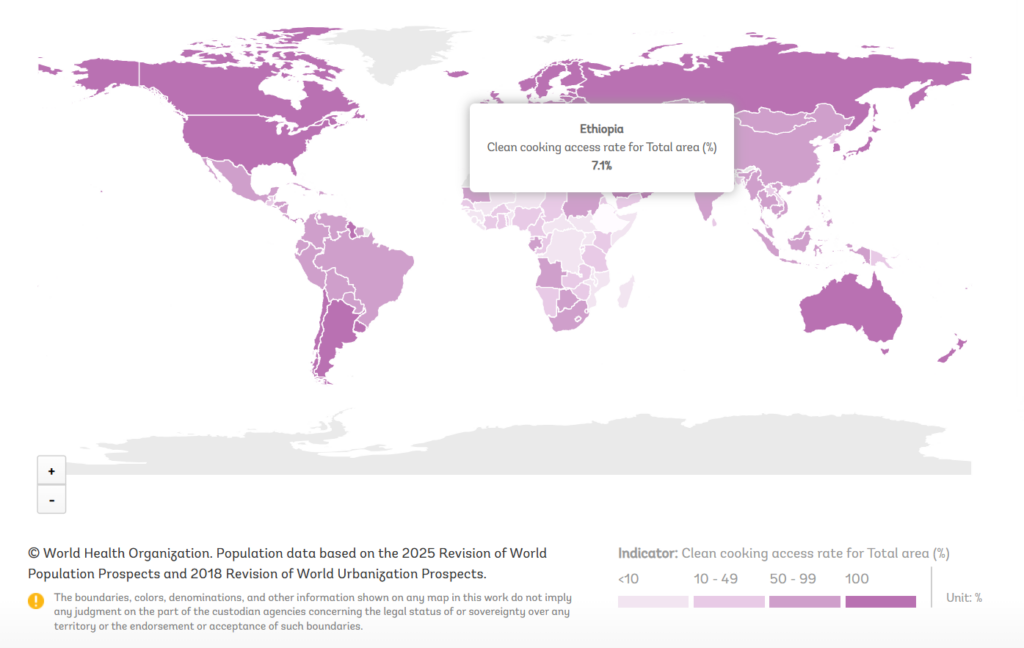
In some countries on the African continent, the percentage of those with access to clean cooking is still in the single digits. Yet for the 30 countries with national energy compacts, access has been steadily improving. These compacts serve as voluntary commitments to expand energy access under Mission 300.
“When we say ‘clean’ cooking, it’s from a health angle,” said Dr Yabei Zhang, a WBG senior energy specialist. “We see that by promoting clean cooking, there are multiple benefits, including health and climate benefits.”
Emissions from traditional cooking methods are equivalent to global CO2 emissions from international aviation and shipping, or 1.2 gigatons of CO2, according to the International Energy Agency.
Black carbon is an especially significant short-lived climate pollutant emitted during cooking, causing warming and health issues.
Traditional cooking methods, especially those that use charcoal, have also led to massive deforestation, the United Nations Framework on Climate Change has found.
“Over 275 million people live in woodfuel “hotspots,” which are areas where over 50% of woodfuel harvesting is unsustainable,” the UN-funded Clean Cooking Alliance found. “Clean cooking is a proven and critical part of the climate solution. Today’s highly efficient stoves can reduce fuel use by 30–60%, resulting in fewer GHG and black carbon emissions.”
The ‘cost of inaction’ vs energy independence
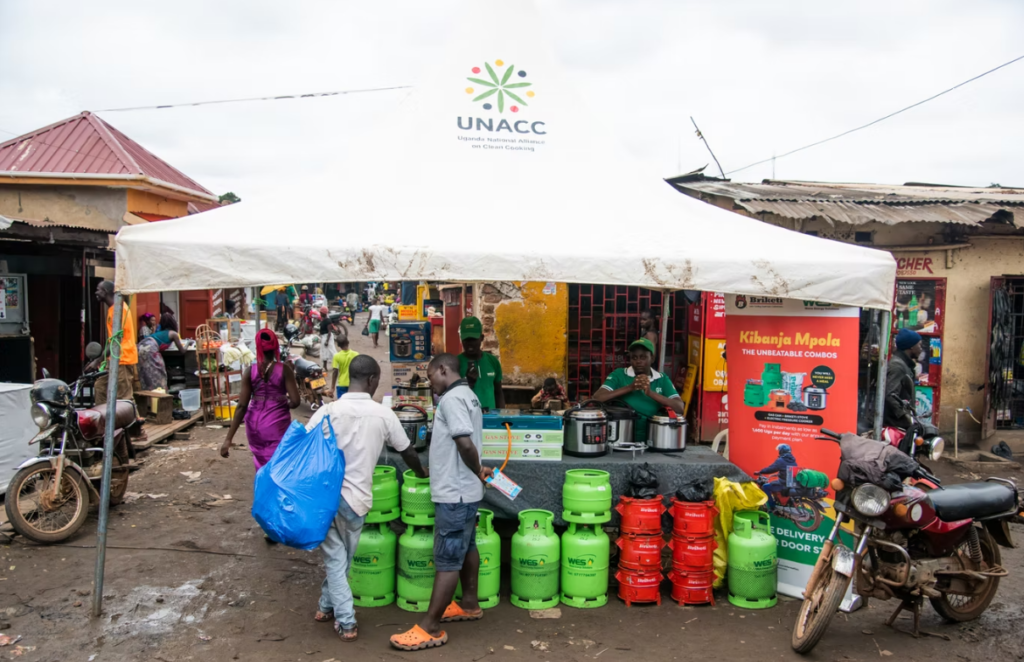
When pushed on whether the World Bank Group is prioritising investments in renewables over the more widely used liquified petroleum gas (LPG) like butane and propane, its representatives skirted questions about fuel sources.
Instead, the WBG spokespeople emphasised expanding access against waiting around “for the perfect solution.”
“There is a real cost of inaction,” Zhang said. “Waiting means people are going to suffer. Universal access [comes] first, then we worry about decarbonizing.”
Pushing decarbonization to a later date comes with its own issues, Rajneesh Bhuee, who leads efforts to divert international development away from fossil fuels at Recourse, an international non-profit watchdog.
“Right now, the World Bank and the International Energy Agency (IEA) are including LPG, biogas, and ethanol as clean cooking,” Bhuee said. “The IEA projects that 45% of clean cooking access will come from LPG.”
“But the question we always keep asking is: LPG and LNG will lock countries in fossil [fuels] for decades,” Bhuee added.
In countries like Kenya, Bhuee’s home nation, estimates of access to clean cooking remain under than 40%.
“We’re calling it a transition solution, but is there a timeline for when LPG phase-out will happen? We want to invest into something that can actually be able to provide that access right now.”
In the past five years, around 12 million Africans gained clean cooking access through LPG. One million gained access through other clean cooking solutions, according to IEA figures.
‘A tax’ on women and children
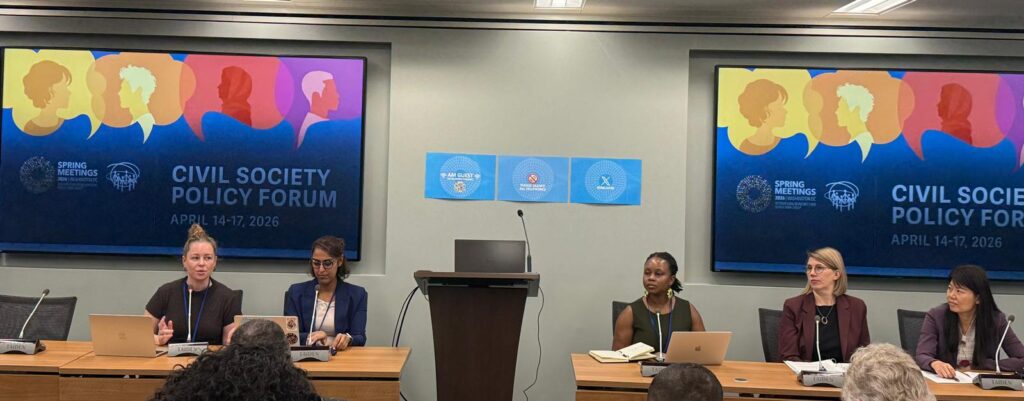
The lack of clean cooking is also a massive burden on women.
Investing in clean cooking unlocks not only climate and health benefits, but also economic gains, especially for women, Bhebhe explained.
The time needed to gather wood and prepare meals over inefficient stoves or open fires itself represents a kind of “time poverty,” limiting a woman’s ability to invest time in education or business.
“In Africa, we like our meals hot,” joked Mokgonyana,the campaign and energy advisor at Power Shift Africa. “That means a lot of time cooking for us women.”
With clean cooking technologies, the time to prepare food is reduced by up to 70%, according to the Uganda alliance on clean cooking.
Mokgonyana shared that the urgent need for clean cooking is personal: herself, her mother, grandmother, and sisters all experienced preparing food in unsafe environments.
“My daughter knows that the firewood that was collected last week is still at home because this stove saves fuel,” Mercy, a mother in Kiambi County, Kenya told the Clean Cooking Alliance.
“Cooking is something many of us take for granted: flick a switch and we immediately get heat with which to cook,” the UN Climate blog added. “For hundreds of millions around the world, cooking is a dangerous activity.”
Image Credits: Uganda National Alliance on Clean Cooking, Tracking SDG7, S. Samantaroy/HPW, Uganda National Alliance on Clean Cooking.
Combat the infodemic in health information and support health policy reporting from the global South. Our growing network of journalists in Africa, Asia, Geneva and New York connect the dots between regional realities and the big global debates, with evidence-based, open access news and analysis. To make a personal or organisational contribution click the donate button below.