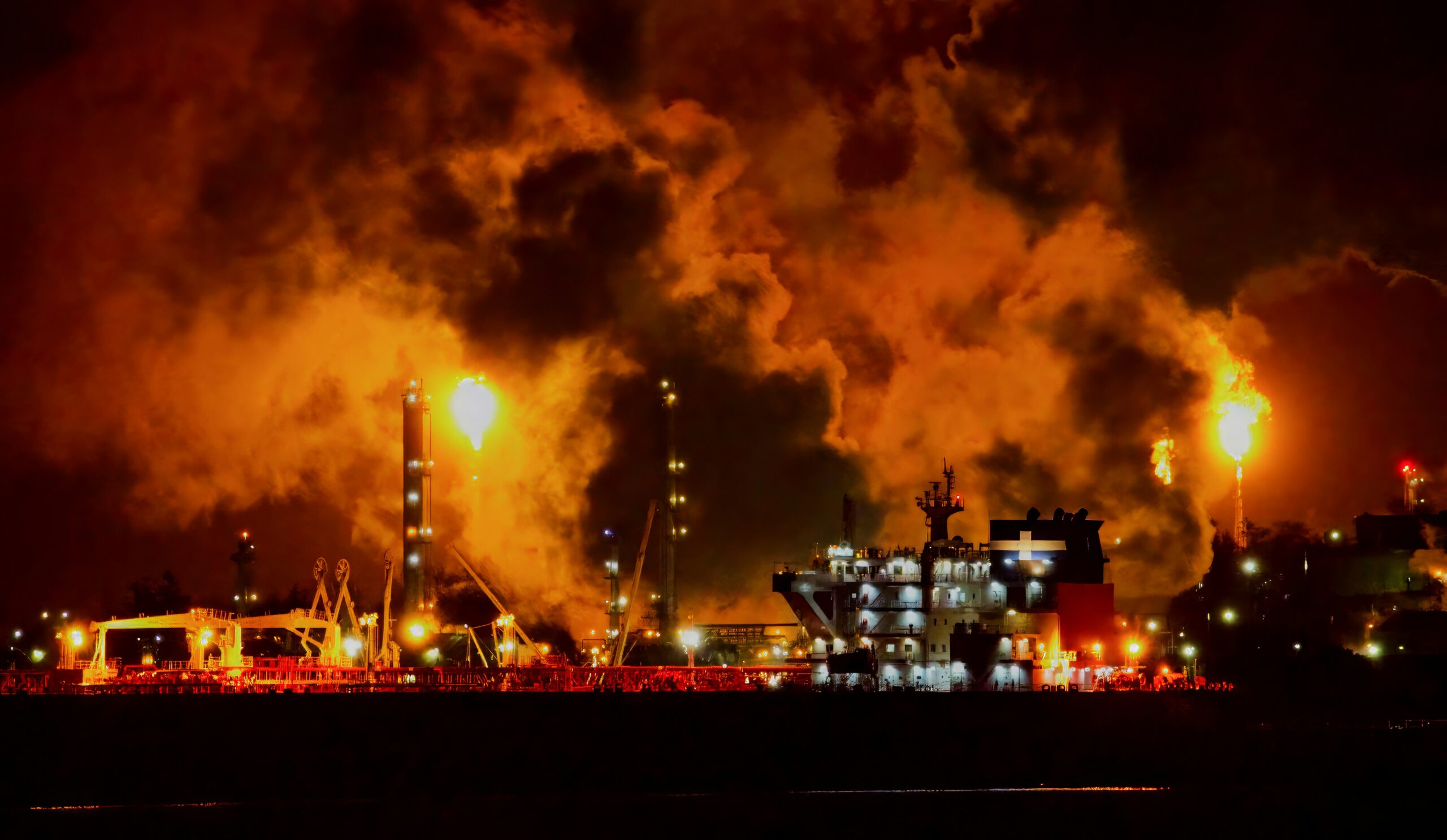
The world has failed to meet the Paris Agreement target of limiting global warming to 1.5ºC, the United Nations Environment Programme (UNEP) declared on Wednesday.
In a sprawling 141-page report, UNEP found there is no realistic pathway to prevent warming from exceeding the threshold. “The most stringent emission reduction pathways that were available around the time of the Paris Agreement are no longer feasible,” it states.
The finding is the first by a UN agency to treat the 1.5ºC target as no longer within reach – and the math doesn’t give its authors much choice. To stay under 1.5ºC, total emissions from 2026 onward cannot exceed 130 billion tonnes of CO2. With current emissions at roughly 40 billion tonnes per year and still rising, that restriction will be breached in just three years.
“Despite decades of scientific warnings, despite the growing scientific evidence, the resulting climate commitments have not produced sufficiently rapid emission reductions,” said Debra Roberts, a lead author and former co-chair of the Intergovernmental Panel on Climate Change (IPCC) Working Group II. “Exceeding 1.5ºC is now unavoidable.”
The report identifies just one pathway that would keep the world within its remaining carbon budget: global CO₂ emissions would have to fall steadily from 2025 to zero by 2031. Under current policies, the world is headed for 2.6C by century’s end.
“All of our pathways forward are overshoot pathways,” Roberts added. “We are clearly entering uncharted territory.”
With limiting the peak and length of the overshoot the last remaining option, UNEP is blunt: “This is by no means an acceptable or preferred pathway. It is simply the best remaining option.”
‘No good options’ above 1.5ºC
While scientific projections have long assessed that remaining beneath this threshold would be impossible on current emissions trajectories, the change in language by UNEP is an historic break in climate diplomacy from the hope of Paris to the ongoing deadlock over the phase-out of fossil fuels set to continue in November at COP31.
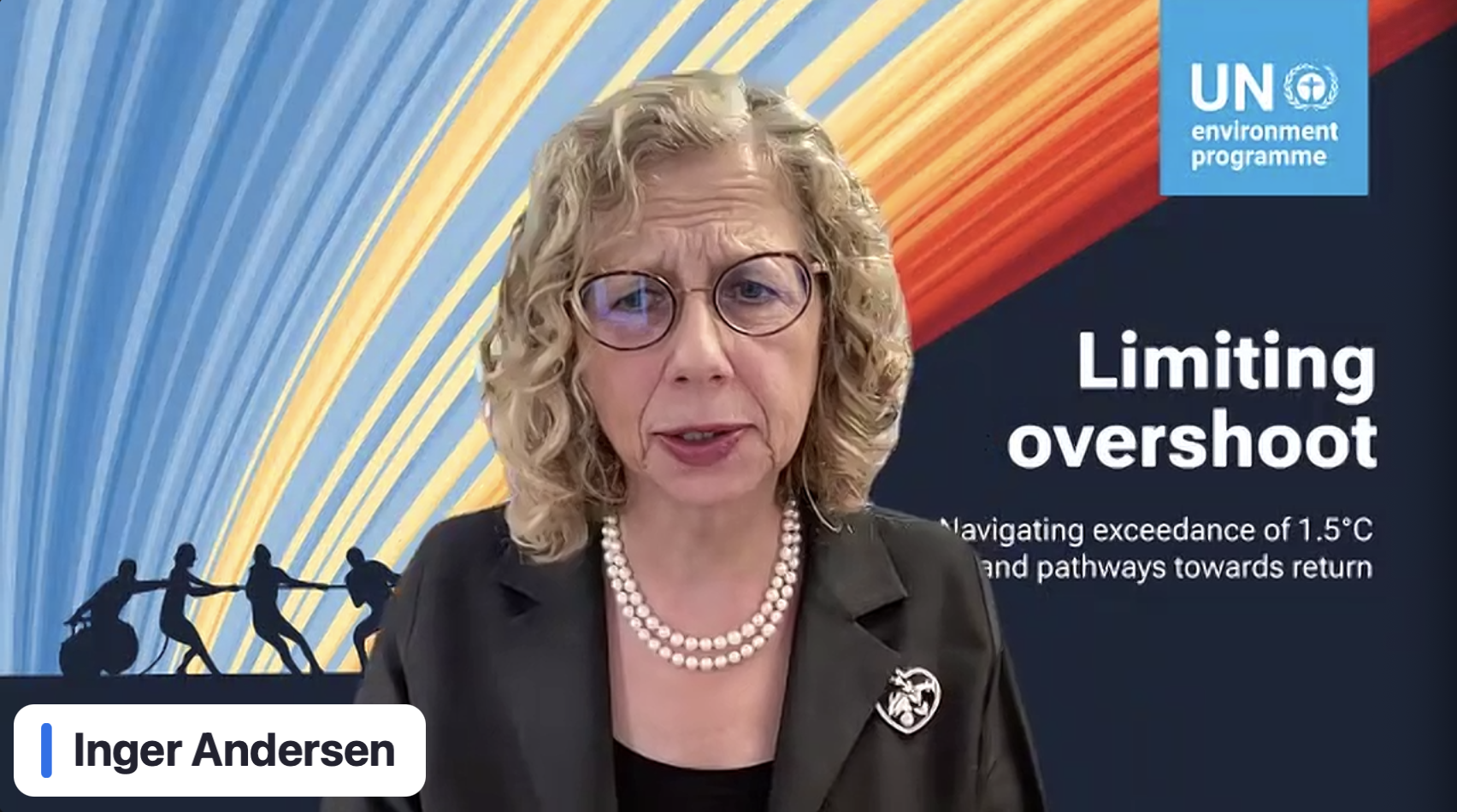
UNEP Executive Director Inger Andersen, launching the findings at the end of a summer that saw Arctic temperatures soar to 32ºC, wildfires scorch Europe and the Americas, and sea-level rise threaten hundreds of millions of coastal residents, said the evidence demands immediate action.
“Across the globe, extreme heat waves are already proving that climate change impacts will strike faster, hit harder, and last longer, costing more lives and causing deeper disruption,” Andersen said. “Obviously, we have climate procrastinated.”
Crossing the 1.5ºC mark would bring an “intensification of extreme weather,” loss of small island states, and growing risks to human health, food and water security. “There are no good outcomes if we remain above 1.5ºC,” she said.
With human-induced warming already nearing 1.4C and rising at around a quarter degree per decade, the World Meteorological Organization forecasts a three-in-four chance the 2026–2030 five-year mean will breach the Paris target.
At current levels, roughly every five years of delay adds at least a tenth of a degree of global warming to the maximum level we will experience.
“The future will bring many unknowns, but we do know that decisions taken now and in the next few years will determine if we have a chance of returning to 1.5ºC or below,” Andersen said.
The report is the first in a series of major assessments in the run-up to the UN climate summit, COP31, in Antalya, Turkey, in November, where governments will again confront a deadlock over how quickly to phase out fossil fuels.
For some observers, the report’s relative silence on the fuels driving the crisis – mentioned in passing just once in nearly 150 pages – is all the more striking as COP31 approaches.
“Although UNEP does a good job of describing the hole we’ve dug ourselves into, it does a poor job of showing us that there is a way out,” said Bill Hare, CEO of Climate Analytics, noting that the report only makes only a single passive reference to phasing out fossil fuels.
“Ultimately the report’s neglect of some fundamentally important mitigation analysis risks turning it into a call to apathy rather than a call to arms,” Hare said.
Fire, water, ice
The report lands as the latest warning of the upheaval climate change is causing globally, and how much worse it might get.
New threats to human health are already emerging. Rising temperatures are shifting vector-borne diseases to higher latitudes, increasing pathogen spillover risk, the report found. Food production could fall by 14% by 2050 under a high-emissions scenario, putting tens to hundreds of millions, concentrated in sub-Saharan Africa, South Asia and Central America, at risk of malnutrition.
Heat-related deaths during a 2025 European heatwave tripled, an increase attributed to global warming. Deadly heat seasons once expected every 100 years now arrive every 10 to 20 years. More than five billion people are projected to experience at least a month of extreme heat every year by 2050.
Critical environmental systems that regulate the climate – storing carbon in forests, soils and frozen ground, or reflecting sunlight back into space – are also at risk of irreversible damage.
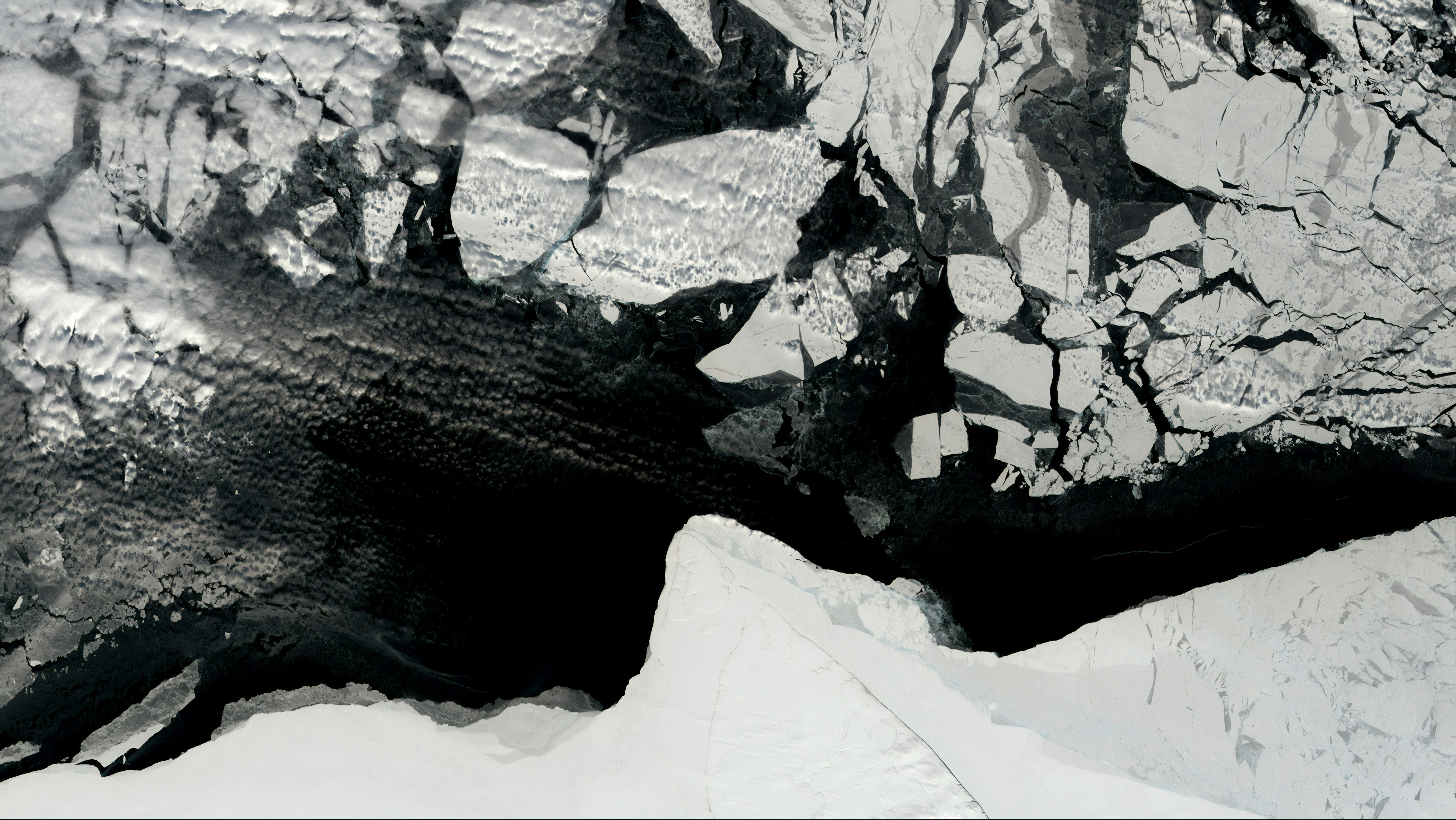
Parts of the Western Antarctic Ice Sheet may already have crossed thresholds for irreversible ice loss. More than 40% of total global glacier loss since the 1970s has occurred in just the last decade, with global peak glacier extinction possible as early as 2041.
More than 80% of tropical coral reefs bleached between 2023 and 2025, with warm-water corals now facing heat stress on a near-annual basis and “a low possibility” of surviving this century under any scenario. Essential carbon sinks like rainforests are facing die-off scenarios, with nearly 40% of the Amazon’s surface area at risk of disappearing by 2100.
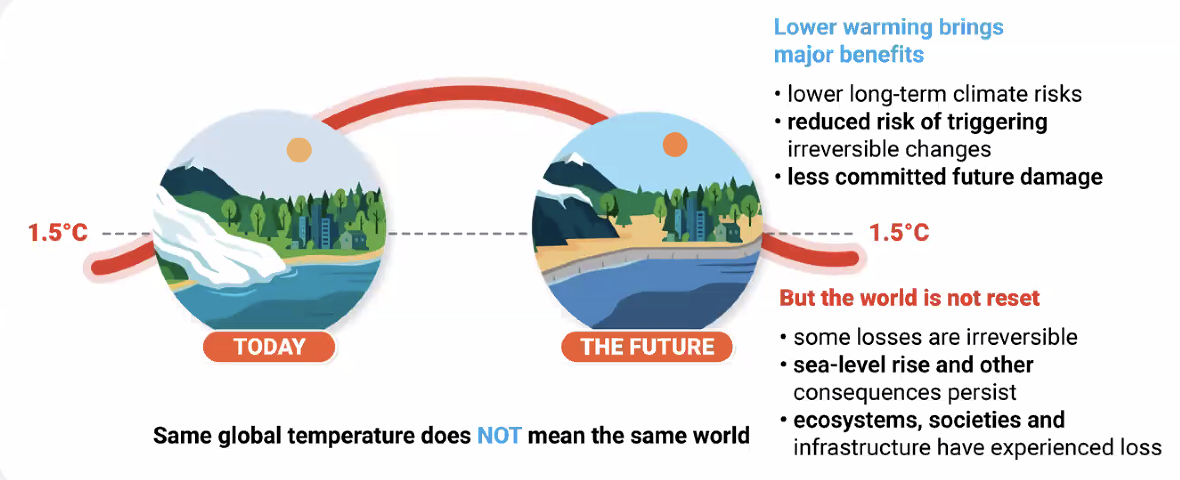
As damage mounts, returning to 1.5ºC – a major effort calculated in decades in a best-case scenario – does not constitute a rewind, the report stresses. Even if temperatures eventually fall, sea levels will continue rising, species driven to extinction will not return, and carbon released from thawing permafrost cannot simply be recovered. Ecosystems that collapse during overshoot cannot easily reassemble as temperatures fall.
“The loss of biodiversity will weaken natural systems on which our lives and livelihoods depend, and will impact our ability to withdraw carbon from the atmosphere,” said Roberts. “Returning to 1.5ºC doesn’t mean we return to the same world we left,” Roberts added.
‘Collapse of habitability’ on low-lying islands

For small island developing states, the stakes are ones of life and death. The five to 10 centimetres of sea-level rise expected by 2050 is projected to double flooding across the Indian Ocean and tropical Pacific, supercharging storm surges, turning freshwater salty, and pushing floods deeper inland than at any point in history.
For these nations, “the collapse of habitability has already begun,” the report warns.
“This report is a fork-in-the-road moment for the planet. It is hard to overstate the depth of emotion for those of us living on the frontline after having fought so hard to put the 1.5 degree limit at the heart of the Paris Agreement,” said Palau President Surangel Whipps Jr. “It is a further glimpse into a perilous future that has already arrived.”
“We need to see an urgent and unprecedented increase in political will and investment in a climate-safe future,” Whipps added. “Nobody can read this report and conclude otherwise.”
For these low-lying nations, the threat is already here. But the consequences of remaining above 1.5ºC for an extended period will ultimately reach far beyond their shores.
UNEP warns prolonged warming raises the risk of triggering irreversible tipping points in global systems, including the West Antarctic and Greenland ice sheets, the Amazon rainforest and the Atlantic Meridional Overturning Circulation, or AMOC, a vital system of ocean currents that helps regulate temperatures across the Atlantic and Europe.
Such changes could, the report warns, “reshape the world forever.”
“Exceedance of 1.5°C should not be interpreted as safe or acceptable,” it states. Even if a return to below 1.5°C is secured — an outcome the report describes as “deeply uncertain” — “many nations and communities will face irreversible losses and permanently changed conditions.”
The 1.8ºC ceiling
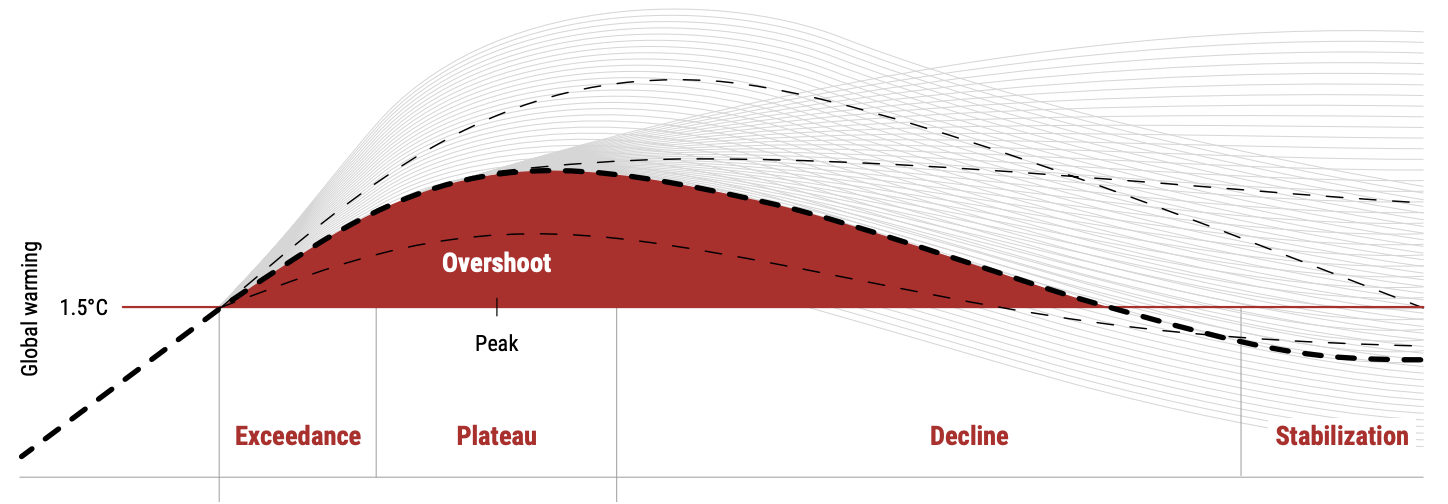
Under UNEP’s most optimistic scenario – full implementation of all national climate plans plus all net-zero pledges – peak warming still reaches approximately 1.8C. Getting there requires roughly halving global emissions by 2035.
“We’re really looking at 1.8ºC as being the kind of maximum, because the feasibility of the responses then becomes really, really questionable,” Roberts said. “You get a cascading effect from all the irreversible changes.”
Wildfires weaken forest carbon stocks, drought reduces hydropower, heat degrades solar panel efficiency, and rising temperatures drive methane emissions from wetlands, eroding the systems the world would depend on to reverse warming.
A decade of warming at the current rate, the report finds, could take 50 years to reverse even under optimistic assumptions. The lead for reducing emissions should fall on countries with “greater historical responsibility for climate change and capability to address it should act the hardest and fastest,” the report states.
That tension – and the point advanced in the report that many advanced economies will need to go beyond net-zero to achieve net-negative emissions – is likely to resurface at COP31 in Antalya, Turkey, later this year, as oil-producing and high-income states fight calls to phase out fossil fuels.
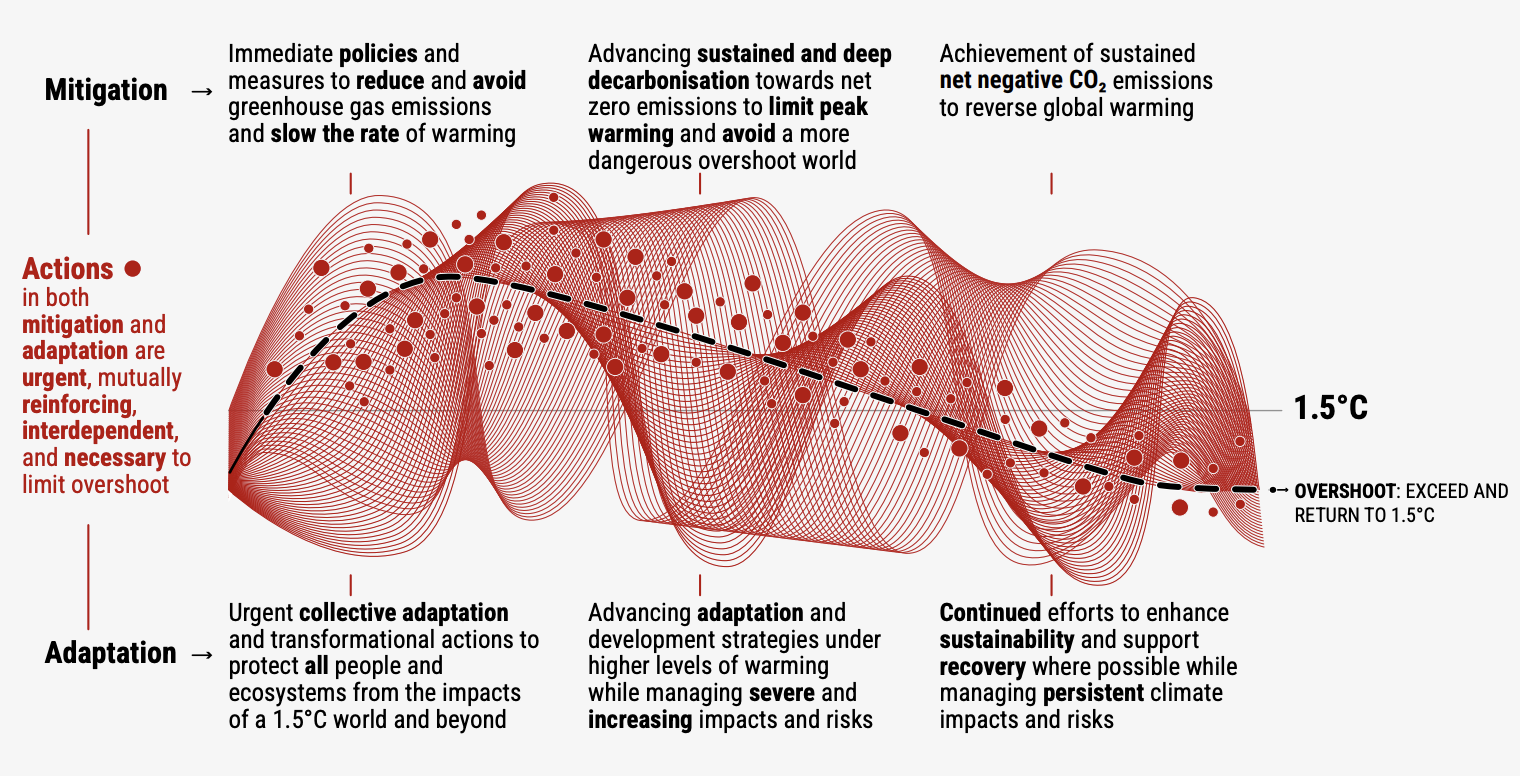
“This summer’s scorching heat, raging wildfires and deadly floods are a warning of what lies ahead,” UN Secretary-General António Guterres said. “We must make the overshoot above 1.5 degrees as small and short as possible. That demands an overshoot of ambition.”
Image Credits: Chris LeBoutiller, USGS, Unsplash/Ernests Vaga.
Combat the infodemic in health information and support health policy reporting from the global South. Our growing network of journalists in Africa, Asia, Geneva and New York connect the dots between regional realities and the big global debates, with evidence-based, open access news and analysis. To make a personal or organisational contribution click the donate button below.