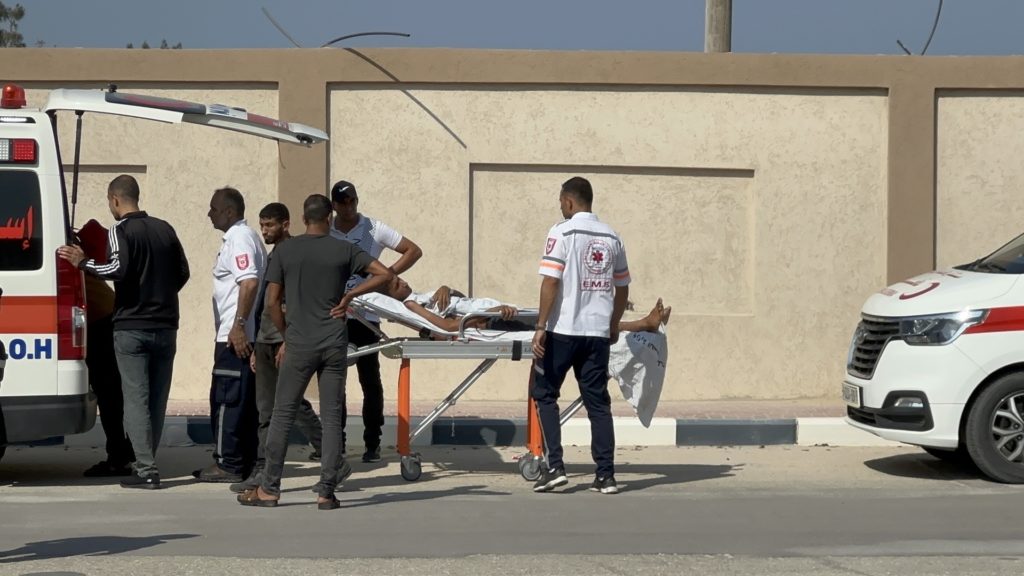
WHO’s Director General Dr Tedros Adhanom Ghebreyesus repeated calls for a “humanitarian pause” in the fierce fighting between Israel and Hamas-controlled Gaza to allow for the resupply of Palestinian hospitals in Gaza, and treatment of injured and ill, saying “we are running out of words to describe the horror.”
Speaking at a press briefing Thursday, Tedros welcomed Egypt’s agreement Tuesday to open two northern Sinai’s hospitals to critically ill or injured Palestinians, but noted that so far only 46 people have so far managed to cross over for treatment. Three field hospitals to be set up in Gaza are also in the planning now to handle the humanitarian emergency. But implementation would depend on safe passage arrangements. And such facilities cannot replace regular services, Tedros stressed, noting that 14 out of 36 hospitals in the Gaza Strip are not functioning right now.
Meanwhile, while the world’s attention is focused on Gaza and Israel, Sudan’s health system is also cracking under the strain of more than 7 million internally displaced people – one of the largest in the world, said WHO’s director general in his remarks.
“The already fragile health system is buckling under the load of injuries, outbreaks, malnutrition and untreated cases of diabetes, cancer and cardiovascular, kidney and respiratory disease,” Tedros said. “In addition to measles, rubella, malaria and dengue, outbreaks of cholera have been declared in three states.”
Horror still unfolding
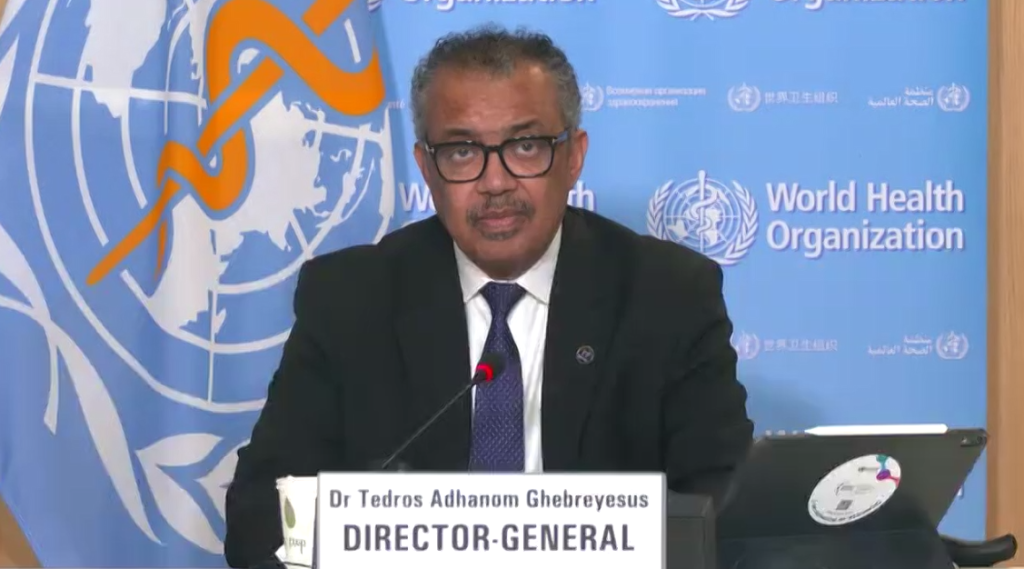
“Since Hamas’s horrific attacks on Israel, on 7 October, more than 10,000 people have been killed. including more than 8500 in Gaza, and 1400 in Israel,” Tedros said. “In both Israel and Gaza, Some 70% of those killed are women and children. More than 21,000 people are injured and more than 1.4 million people in Gaza have been displaced.
Despite the rising calls for a “humanitarian pause” including from US President Joe Biden, the conflict showed no signs of letting up yet. Israeli ground troops appeared to be tightening their grip around Hamas strongholds in Gaza City, in the north of the enclave, backed by aerial bombardment. Hamas missile attacks on Israeli cities continued for the 27th day, while in Lebanon, Hizbullah and Hamas stepped up pressure on Israel’s northern front, firing dozens of rockets into Israeli communities Thursday evening with a fiery direct hit in one city, Kiryat Shmona.
“Everywhere…. death, destruction, loss. So far, WHO has verified 277 attacks on health care, including 218 in the occupied Palestinian territory, and 19 in Israel,” Tedros remarked.
“The situation on the ground in Gaza is indescribable. Hospitals crammed with the injured lying in corridors…. Doctors performing surgery without anesthesia. Thousands of people seeking shelter from the bombardment. Families crammed into overcrowded rooms desperate for food and water. Toilets overflowing and the risk of disease outbreak spreading and everywhere.

“At the very least, we need a humanitarian pause in the fighting and ideally a ceasefire. We need unfettered access and safe passage agreed by both parties to ensure the security of access routes,”’” the WHO Director General warned.
“Let me be clear, there can be no justification for Hamas’s horrific attacks on Israel,” he said referring to the 7 October surprise rampage by Hamas gunmen into 22 Israeli communities near Gaza that left over 1300 Israelis shot, burned or bludgeoned to death, while 242 men, women and children were taken hostage.
“I understand the grief, the anger and the fear of the Israeli people. I also understand the grief, the anger and the fear of the Palestinian people,” Tedros said.
“WHO continues to call on Hamas to release the hostages, many of whom need urgent medical attention,” he added.
“We continue to call on Israel to restore supplies of electricity, water and fuel. We continue to call on both sides to abide by their obligations under international humanitarian law. And we call on who[ever] can, to de-escalate this conflict rather than inflame it.”
WHO supplies delivered – but not reaching all parts of the enclave
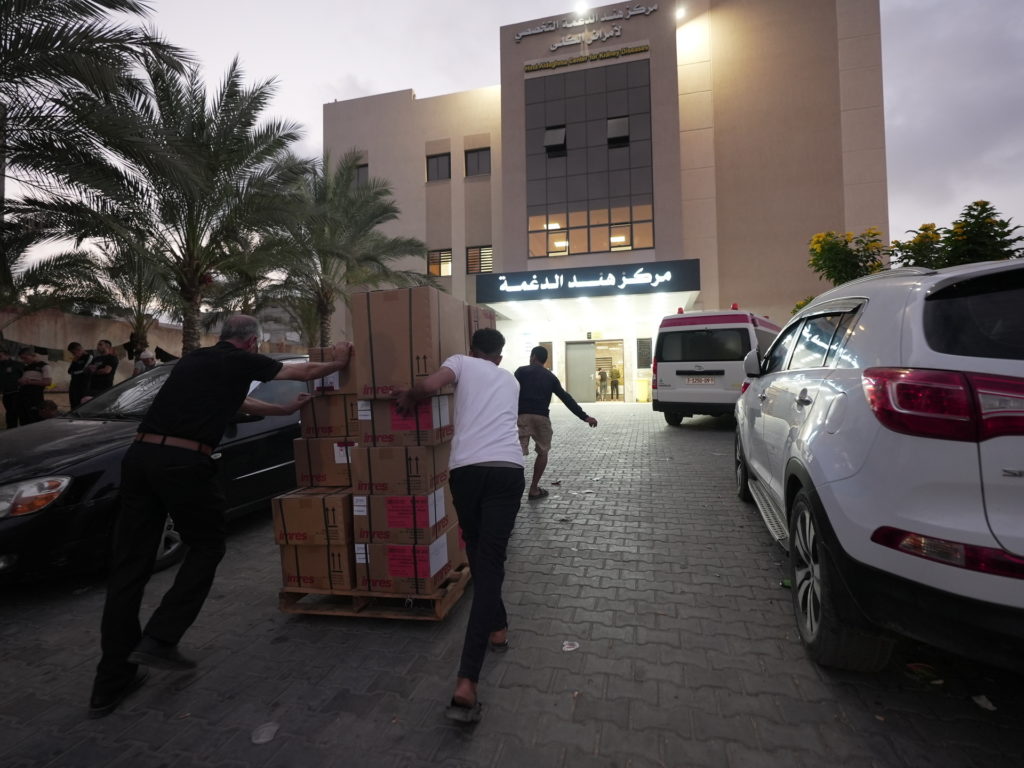
So far, WHO has been able to deliver some 54 metric tons of medical supplies to Gaza since an emergency corridor opened from Egypt, at the Rafah crossing, said Tedros. But he described this as a “drip feed” of aid in comparison to the scale required.
“Before the seventh of October, an average of 500 tracks a day were crossing in together with essential supplies. Since the seventh of October, only 217 tracks have entered in total. To sustain the humanitarian response on the scale needed, we need hundreds of trucks to enter Gaza every day.”
And with fierce fighting underway in northern Gaza between Israel and Hamas for the past several days, resupply of many health facilities has been impossible, said Mike Ryan, WHO’s Executive Director of Health Emergencies.
“Getting trucks over the border is one thing, getting them to the places in which they’re needed is another and that has not been facilitated that has not been supported, in fact, if anything quite the opposite,” he said.
Over the coming months, WHO is developing a plan to set up three field hospitals in Gaza, including one in the northern part of the enclave and two in the south, said Dr Richard Peeperkorn, WHO’s Jerusalem-based representative for the Occupied Palestinian Territories.
The field hospitals would be part of a $50 million operational plan, also including recruitment of specialized emergency medical teams from abroad (EMTs).
Even so, “the focus is first and foremost, on supporting existing health facilities, strengthening and maintaining services and instituting a trauma pathway,” Peeperkorn underlined. “We are now in an ultra-emergency phase. But in this humanitarian response, we have to focus on supporting, making sure that the existing health systems will be able to deliver.
“It would be really a bit delusional if you think that when a few EMTs from outside, or setting up a few hospitals, that we can supply appropriate or even a minimum level of health services for 2.2 million Gazans.
“To have, of course, this plan – to make sure it’s operational, we need, ideally, a humanitarian ceasefire. But we definitely need humanitarian corridors and then a sustained access to the needed supplies.”
Presence of Hamas centers under hospitals – irrelevant to obligation to protect them
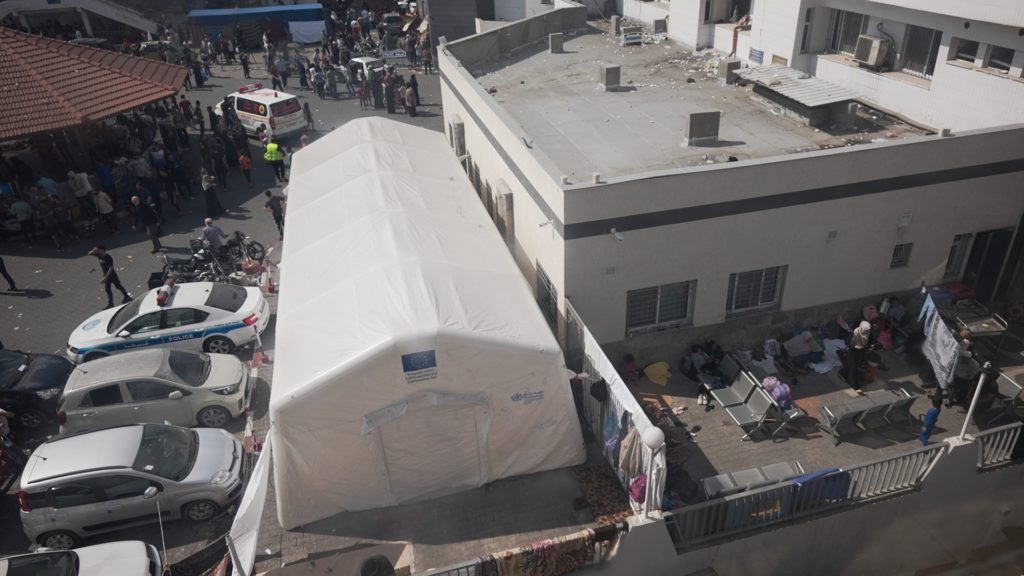
As for Israel’s assertions that Hamas has sited key military command and control centers as well as supplies, underneath some of Gaza’s major hospitals, particularly Al Shifa and Al Quds in the northern part of the enclave, Ryan said that this didn’t absolve Israel from the responsibility to shield the facilities from attack. Israel has told the hospitals that they need to evacuate patients and staff to the south, in order to stay clear of the conflict.
“The reality on the ground at Al Shifa and other hospitals is that we have thousands of health workers, thousands of patients, and probably hundreds of thousands of civilians sheltering at these multiple facilities particularly, and all over but in the north now,” Ryan said. “The rules are clear on this. Health care must be protected.
“We know what’s going on above the ground. We deal with the doctors, the nurses and the administrators of the hospitals, and they’re crammed full of patients, ongoing operations, intensive care, and much much else.
“We have no information on what may be happening elsewhere, or underneath these facilities. That’s not information we would have or could verify.”
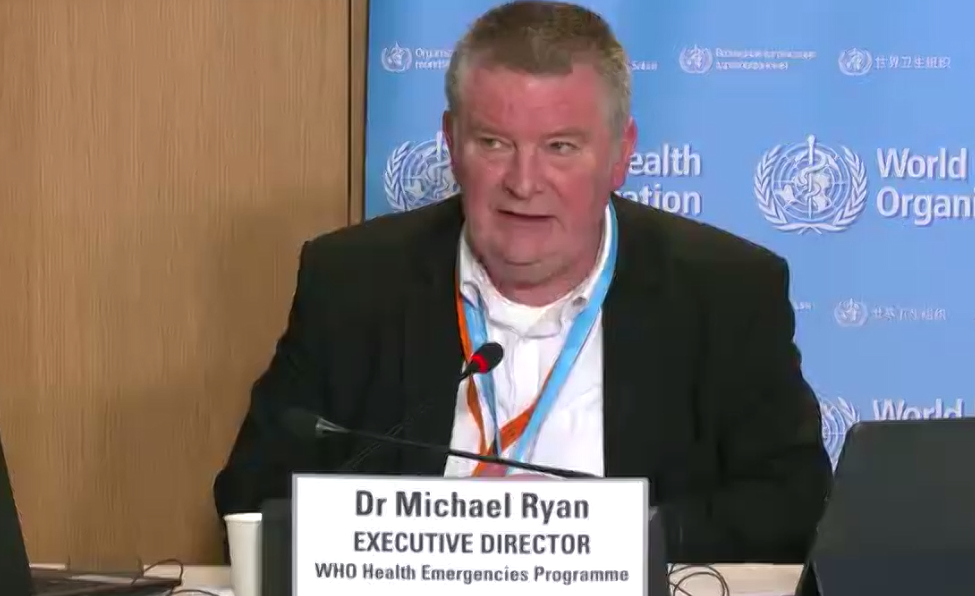
While Ryan acknowledged that any “misuse of facilities for military purposes is equally outlawed under international law… we have no independent verification whatsoever of any of the information.
“And in this situation where such an eventuality occurs, again, it is the responsibility of the occupying power to, not only agree with the local health authorities on an evacuation, but then if that does happen, that has to be fully facilitated, fully supported logistically, and those patients those doctors need to have a place of safety where the patients can receive an adequate and similar amount of care. None of those, none of those criteria are met.”
Mental health trauma on both sides
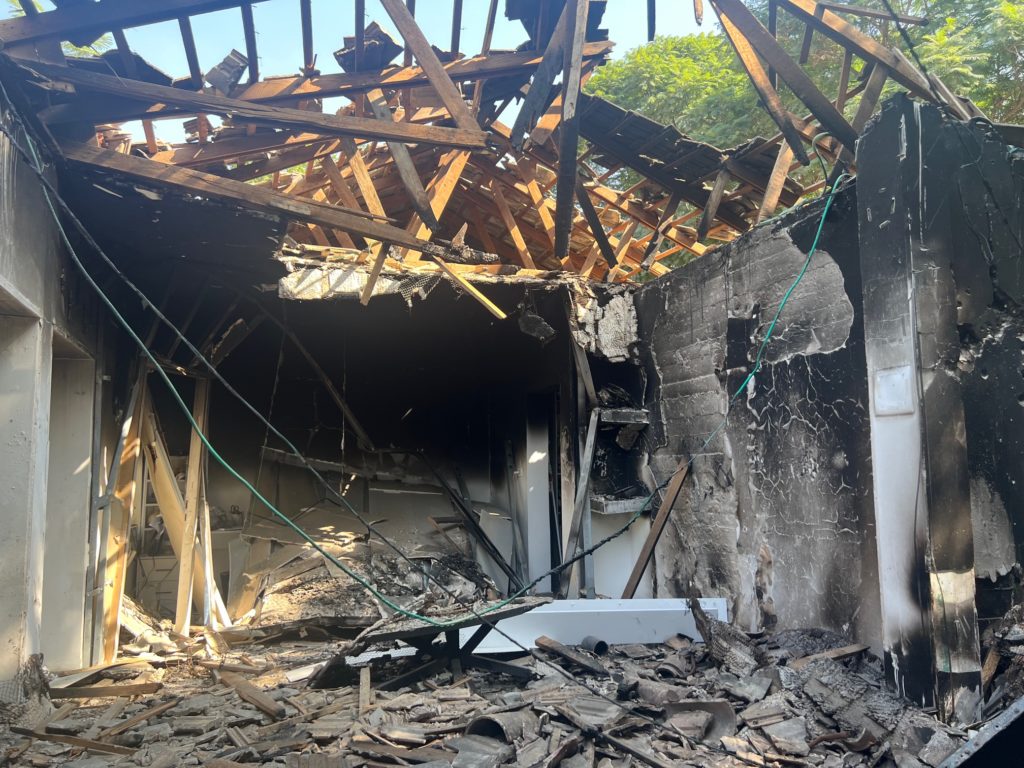
Israelis as well as Palestinians are suffering the snowballing mental health effects of the ongoing revelations around the Hamas massacre on 7 October and ensuing war, said Peeperkorn as well as WHO’s representative in Israel, Dr. Michel Thieren.
In Gaza, there is the lack of day -to-day access to basic necessities, as well as the constant risk of death from aerial bombardments, Peeperkorn observed.
While UN staff are often considered “a bit more privileged than the other Gazans… in many of my staff, they are completely desperate, utterly, utterly desperate, and utterly depressed, and no vision about life anymore. And this is a group that a lot of people would call privileged, so think about the rest of Gazans.
On the Israeli side, still-unfolding evidence of the rape, mutilation, or burning of many civilian victims of the 7 October Hamas incursion, has become seared in the collective Isareli consciousness. Along with that, are the concerns about the fate of the 242 hostages reportedly held by Hamas, including about 50 infants, children and older people, as well as women and men.
“It’s a whole shadow of trauma that is spreading across the country, the survivors, the families of hostages, the witnesses of atrocities,” said Thieren, who has been quoted saying that in Israel’s Kfar Aza, near the Gaza border, he saw scenes “that I never saw in Syria, Iraq, Sudan or anywhere else.”
“The displaced populations, the hosting communities of those displaced people and survivors. I would even say, the decision makers, the whole country is plunged into a night of trauma, and the trauma spreads like a virus.”
He noted that WHO’s European Regional Director Hans Kluge had just visited Israel to see the site of the 7 October mass killings first-hand, and discuss strengthened collaborations on mental health and rehabilitation.
Image Credits: WHO/EMRO, Health Policy Watch.
Combat the infodemic in health information and support health policy reporting from the global South. Our growing network of journalists in Africa, Asia, Geneva and New York connect the dots between regional realities and the big global debates, with evidence-based, open access news and analysis. To make a personal or organisational contribution click the donate button below.