Africa CDC’s Governing Board is expected to discuss the renewal of Director-General Jean Kaseya’s term on 22 November, according to a Health Policy Watch report. African governments should look beyond allegations and rebuttals. Whatever the outcome, they should ask for a documented basis for the decision and clear responsibility for keeping cross-border alerts, referrals and emergency support working.
Imagine that a district surveillance officer reports an unusual cluster of severe illness near a border. Some of those affected have recently crossed from a neighbouring country. The national public health institute needs to alert its counterpart, arrange laboratory confirmation and decide whether regional assistance is needed. The usual regional contact is unreachable. Who acknowledges the alert, who accepts the referral and who authorises support?
This is not a remote scenario. The ongoing Bundibugyo Ebola outbreak in the Democratic Republic of the Congo (DRC),most recently updated by the European Centre for Disease Prevention and Control on 16 November, makes reliable cross-border alerts, laboratory support and emergency assistance an immediate concern.
A joint update on 15 November describes how Africa CDC and WHO coordinate support to affected and at-risk countries. The hypothetical alert illustrates the test that any leadership outcome at the Africa Centres for Disease Control and Prevention (Africa CDC) must pass. Member states should therefore ask for two commitments: a documented basis for the leadership decision, and clear responsibility for keeping cross-border public health cooperation working under any outcome.
What the AU should establish
On 16 November, Health Policy Watch reported allegations about staff treatment, regional redeployments and financial controls. Africa CDC rejected the report the following day, denied that Kaseya had been suspended or sanctioned, and cited the African Union (AU) Commission Chairperson’s favourable performance appraisal. As of 18 November, the renewal item remained publicly unconfirmed.
The financial dispute turns on what an audit can and cannot show. Africa CDC says its 2025 financial statements received an unmodified audit opinion, meaning auditors found them fairly presented in all material respects, and that outstanding bank-reconciliation items were cleared.
Health Policy Watch reported control weaknesses described in an auditors’ management letter, the separate report in which auditors flag internal-control problems. Both can be true at once, so the AU needs the underlying records to assess corrective action.
The personnel allegations call for a different process: confidential review with a fair opportunity to respond.
In July, the AU Executive Council reiterated its call for a time-bound investigation into the use of external partner funds under Africa CDC, and directed periodic reporting on implementation of audit recommendations to the AU Commission leadership. Member states should ask what follow-up the Commission has received and which actions remain open.
Article 19 (5) of the revised Africa CDC Statute provides for a four-year term, renewable once. For appointment, it describes a Board-led selection process and Assembly endorsement on the recommendation of the Committee of Heads of State and Government. The AU should clarify how the rules apply to the current renewal review and what evidence supports the decision.
Through the regional consultations provided for in Article 10, the Board can also gather evidence of what countries received. Health ministers on the Board could invite each country in their region to bring one documented request for Africa CDC support and answer four questions: What did the country ask for? Who took responsibility? What was delivered? What remains open? Read alongside the appraisal and verified records, these accounts would give the Board concrete examples of how Africa CDC responds to country requests and help identify which commitments must carry forward.
What countries have an interest in sustaining
Countries also have concrete gains to protect. Africa CDC’s 2025–2027 development plan for national public health institutes commits to designating regional centres of excellence and expanding peer support, and its 2025 annual report records nine centre designations. Ministers should ask: Which centres can countries call on today? What have they delivered? Which services depend on funding or staff appointments nearing expiry?
The joint Africa CDC–WHO mpox response shows what is worth carrying forward: a continental incident management team that coordinated technical assistance to countries, a joint review that informed later work plans, and tracking of pledges and disbursements. For a country awaiting help, continuity means knowing who will handle its open request and whether the resources to deliver it exist.
What each outcome would require
If the term is renewed, the Governing Board should ask Africa CDC to assign owners and deadlines for verified corrective actions, track progress through existing AU oversight, and tell member states which open country requests and commitments will be delivered, and by when.
If a recommendation is deferred under the applicable rules, the responsible AU bodies should state what evidence is outstanding, set a review date and confirm who can authorise regional assistance in the interim. Otherwise, a pause in the decision could become a pause in support, and an officer at a border could be left without a clear route to approval.
If leadership changes, Africa CDC should hand over open country requests, emergency commitments and related funding arrangements to designated officials. Each country with a request in progress should know who is taking it forward, and whom to call if that person is unavailable.
What national institutes can test now
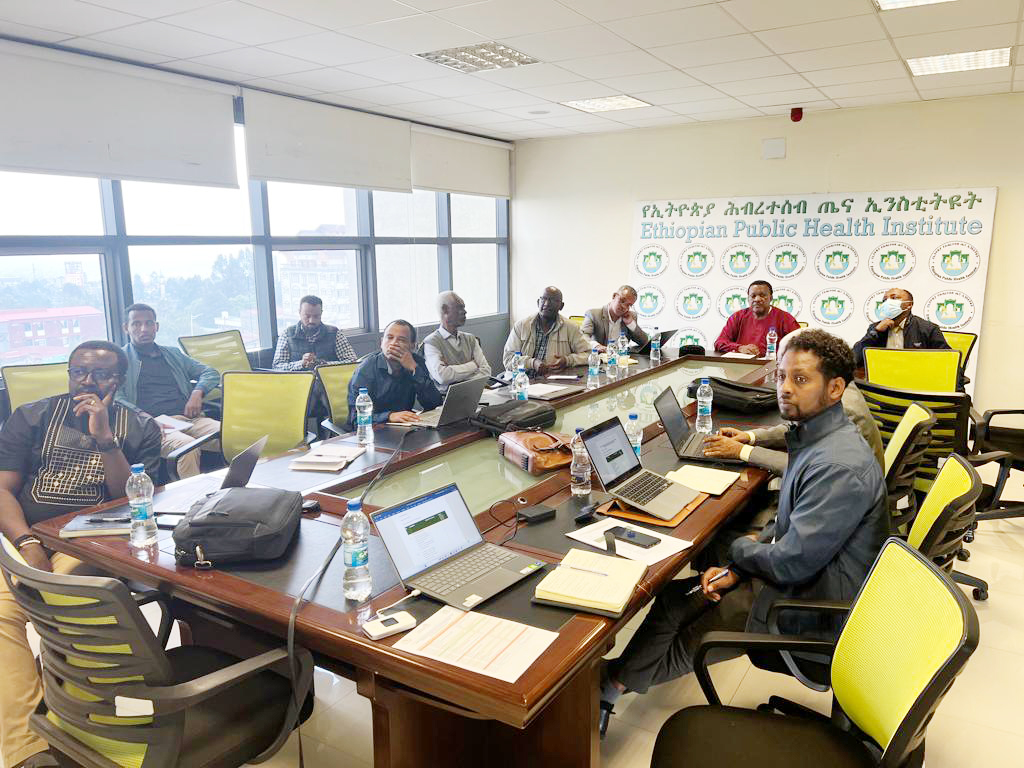
National institutes need not wait for the AU’s decision to test the route that an alert would take. The International Health Regulations (IHR) already set out countries’ responsibilities for assessing events and notifying WHO through National IHR Focal Points, and Africa CDC’s Development Framework 2.0 gives institutes a basis for organising regional cooperation around them. What is often missing is a rehearsal.
Regional experience shows why rehearsal matters. Uganda ran an Ebola field simulation exercise as part of its 2018–2019 preparedness work. When cases crossed into Kasese in June 2019, a WHO case study highlighted cross-border information sharing and local surveillance. The lesson is to test the route from local detection to national action and cross-border cooperation while there is still time to fix it.
A regional peer exercise could make this concrete. Any of the nine designated centres of excellence could convene one. In the Horn of Africa, for example, a host such as the Ethiopian Public Health Institute (EPHI), this author’s own institution, could bring together Ethiopia’s Ministry of Health, neighbouring counterparts and Africa CDC’s Eastern Africa Regional Coordination Centre.
Using WHO’s IHR simulation approach, participants would run the alert, the referral and the request for help through existing channels, assign each gap to a responsible institution and set a date to retest it.
The two commitments are simple. The Governing Board should record the evidence behind its recommendation. Africa CDC and national authorities should confirm the contacts, alternates and escalation routes that keep urgent cross-border cooperation working. Then, when the next alert comes, the surveillance officer at the border will know who will answer, where to send the referral and who can authorise help.
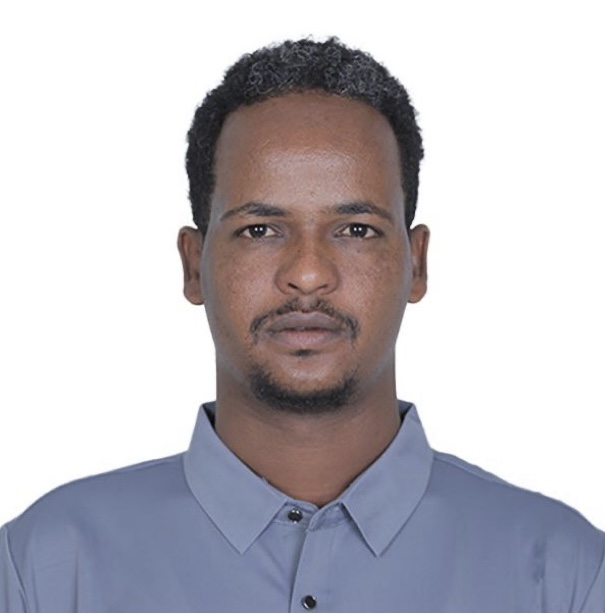
Feyiso Bati Wariso is a public health epidemiologist in the Infectious Diseases Research Directorate at the Ethiopian Public Health Institute (EPHI)in Addis Ababa. He was co-principal investigator on national SARS-CoV-2 seroprevalence surveys. His other research includes public health emergency workforce, Infectious disease and epidemics. The views expressed are his own.
Image Credits: X/Tedros Adhanom Ghebreyesus, Africa CDC.
Combat the infodemic in health information and support health policy reporting from the global South. Our growing network of journalists in Africa, Asia, Geneva and New York connect the dots between regional realities and the big global debates, with evidence-based, open access news and analysis. To make a personal or organisational contribution click the donate button below.