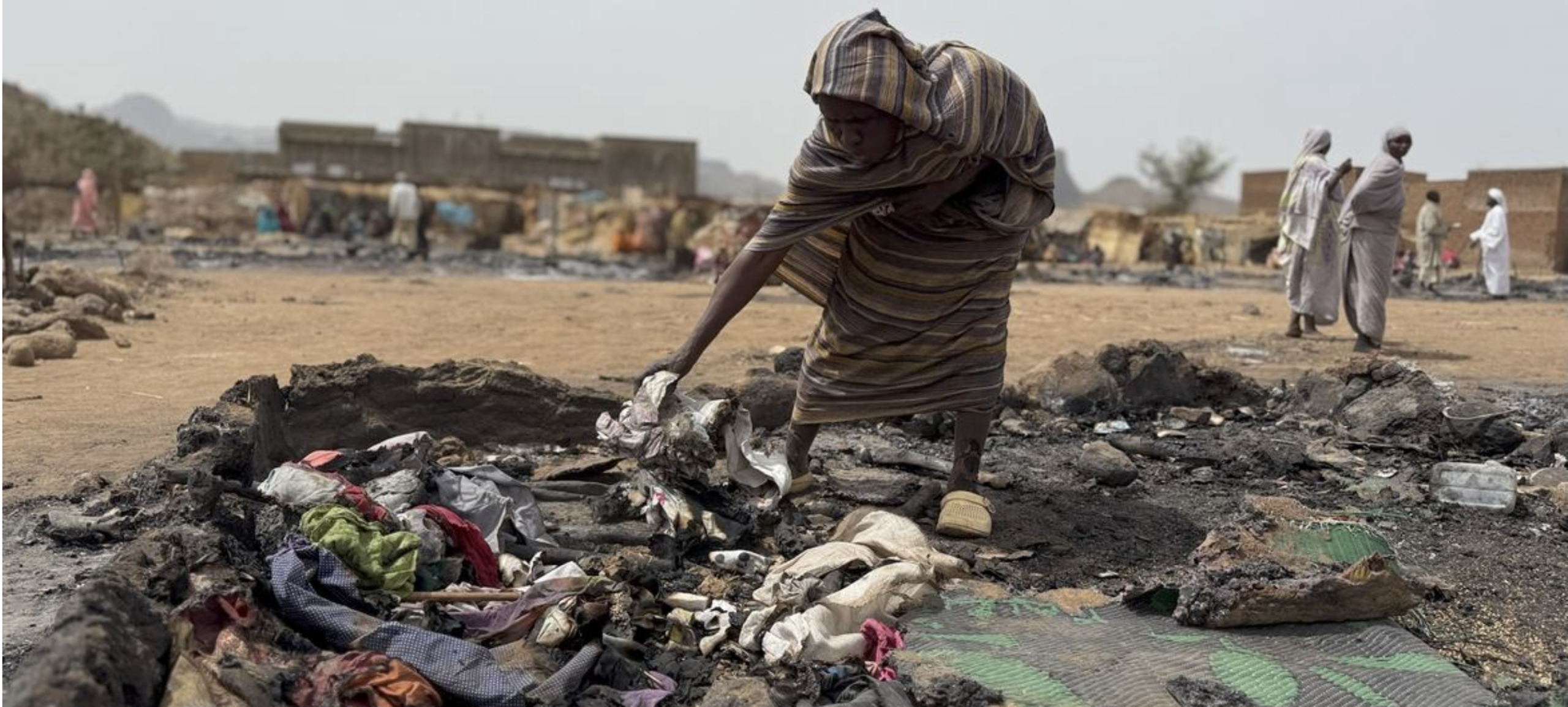
The world’s darkest ongoing war – defined by sexual violence, extermination, famine and genocide – enters its fourth year today. With no end in sight, tens of millions of Sudanese people are facing a historic humanitarian crisis of “industrial proportions,” according to the United Nations (UN).
Seven years after a new generation overthrew a three-decade dictator, two of his top lieutenants entrusted with shepherding the nation to democracy have become the commanders of its destruction. Sudan is torn in half, facing de facto partition in a land once hopeful of a democratic future.
“For three years, we have warned that Sudan was on the brink of catastrophe, and those warnings have gone unanswered,” said Richard Data, the International Rescue Committee’s Sudan director. “This is not just a conflict, it is a collapse of an entire country and a crisis that is rapidly engulfing the region.”
The civil war in Africa’s third-largest country has engulfed Sudan in the world’s largest displacement crisis and deepest quantifiable humanitarian emergency. Fourteen million people, a quarter of the population, have been forced to flee for their lives, including 4.3 million refugees who now find themselves in neighbouring nations unequipped to support them.
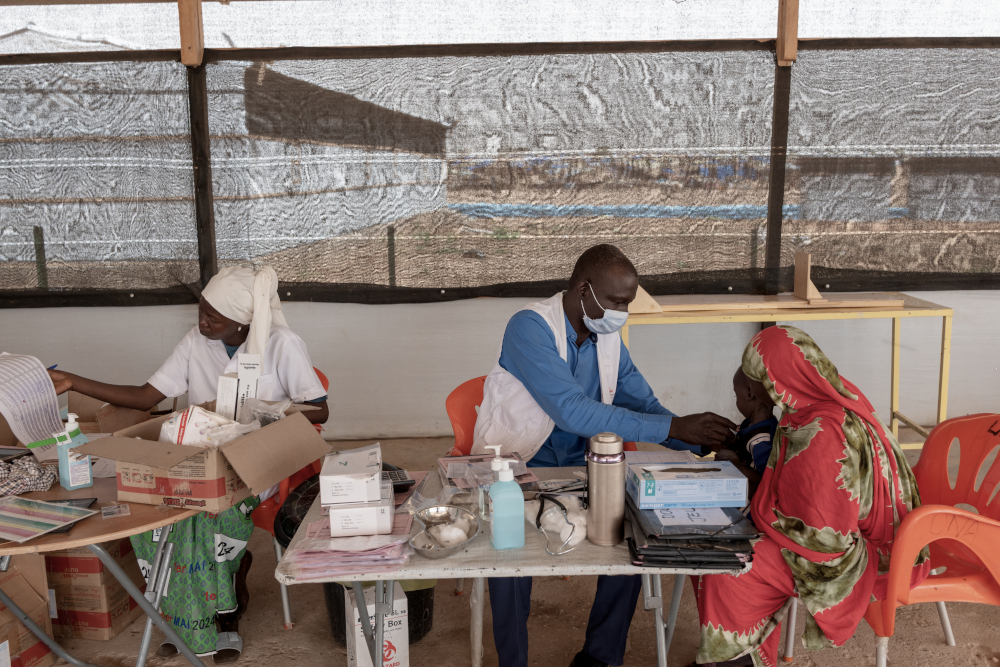
Thirty million of Sudan’s 50 million people required humanitarian aid last year. That number is expected to grow to 33.7 million in 2026, the World Food Programme (WFP) projects, as aid dwindles and the globe forgets about its most brutal conflict amid international focus on the Middle East War.
At least tens of thousands, with some estimates reaching 150,000 people, are dead as a result of the violence. In El Fasher, the capital of Darfur, 6,000 killings by the Rapid Support Forces (RSF) have been confirmed by the UN Human Rights Office. The actual toll is “undoubtedly significantly higher,” the agency said, noting reports of mass graves and blood-soaked streets visible from space via satellite imagery.
The RSF’s systematic violence against the non-Arab population of Darfur has led UN experts to quantify their actions as holding the “hallmarks of genocide.” Their detention facilities – “slaughterhouses.” Their violence – “amounting to the crime against humanity of extermination.”
“During the siege of El Fasher and surrounding areas, [the RSF] committed myriad crimes against humanity, including murder, torture, enslavement, rape, sexual slavery, sexual violence, forced displacement and persecution on ethnic, gender and political grounds,” the Independent UN Fact Finding Mission in Sudan found.
The incalculable violence, atrocities, and depth of the humanitarian crisis facing Sudan’s population continue to accelerate.
“Three years of war have already cost Sudan immeasurably,” said Amande Bazerolle, Sudan lead for Médecins Sans Frontières (MSF). “Allowing this trajectory to continue risks condemning an entire generation.”
Iran war butterfly effect endangers millions
As the world looks away from Sudan, the German government is holding an emergency meeting on the anniversary of the war in an attempt to marshal desperately needed funding.
Neither warring party was invited to the meeting in Berlin, which aims to raise $1 billion in aid for Sudan out of a total of $3 billion in costs set out in the 2026 crisis plan developed by international humanitarian organisations.
That number is down from $4.2 billion in the 2025 plan. Not due to falling needs, but falling ambition in acquiring aid from donor nations, particularly the US.
Sudan aid summits in the previous two years, held in Paris and London, fell well short of their targets. Current funding is around 16% of the needed levels, according to the UN Development Programme. The 2025 plan received around $1 billion in aid, under a quarter of its goal.
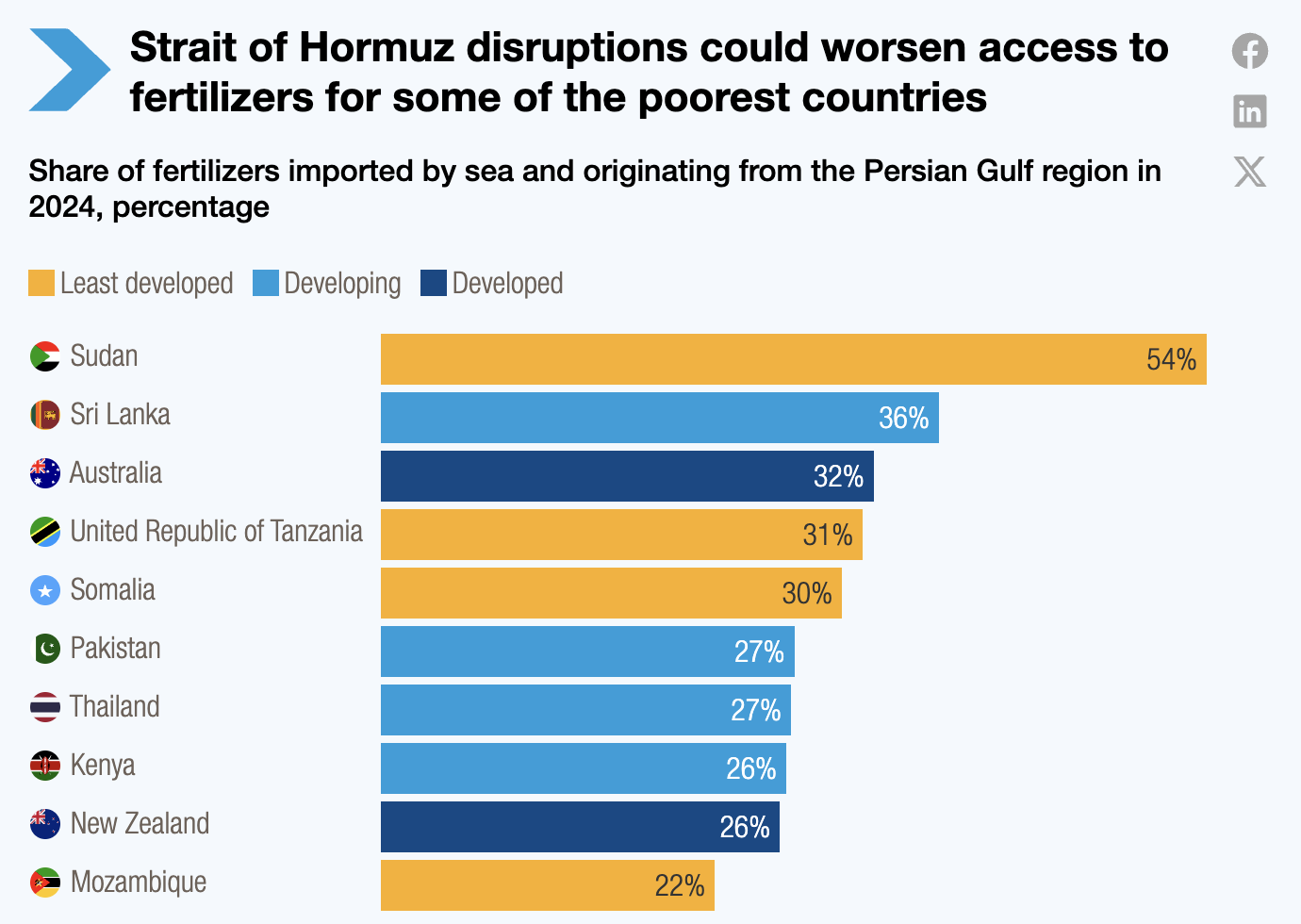
The war in the Middle East also poses a critical threat to Sudan’s agricultural system at a time of mass famine. Sudan is by far the most dependent nation globally on fertiliser passing through the Strait of Hormuz, accounting for 54% of its imports, UN Trade and Development (UNCTAD) figures show.
In addition, fuel prices – critical to its agricultural system heavily dependent on oil-powered irrigation from the Nile River – are up 24% since the Middle East war began, leaving millions struggling to afford basic necessities and threatening crops needed for food and livelihoods. Nearly 70% of Sudanese households relied on farming and agriculture for their income before the civil war.
As the war in Iran batters Sudan’s people, aid and agriculture, it is simultaneously contextualising the scale and achievability of its financial needs. The $3.2 billion funding gap in the Sudan humanitarian plan for 2025 – designed to keep 21 million people alive for an entire year – would be covered by three days of US military operations in the current war.
The Iran War Cost Tracker, based on Pentagon briefings and official estimates, places the running cost of the US war at around $52 billion – enough to cover 15 years of fully funded humanitarian response in Sudan.
Health supplies stranded, health system collapsed
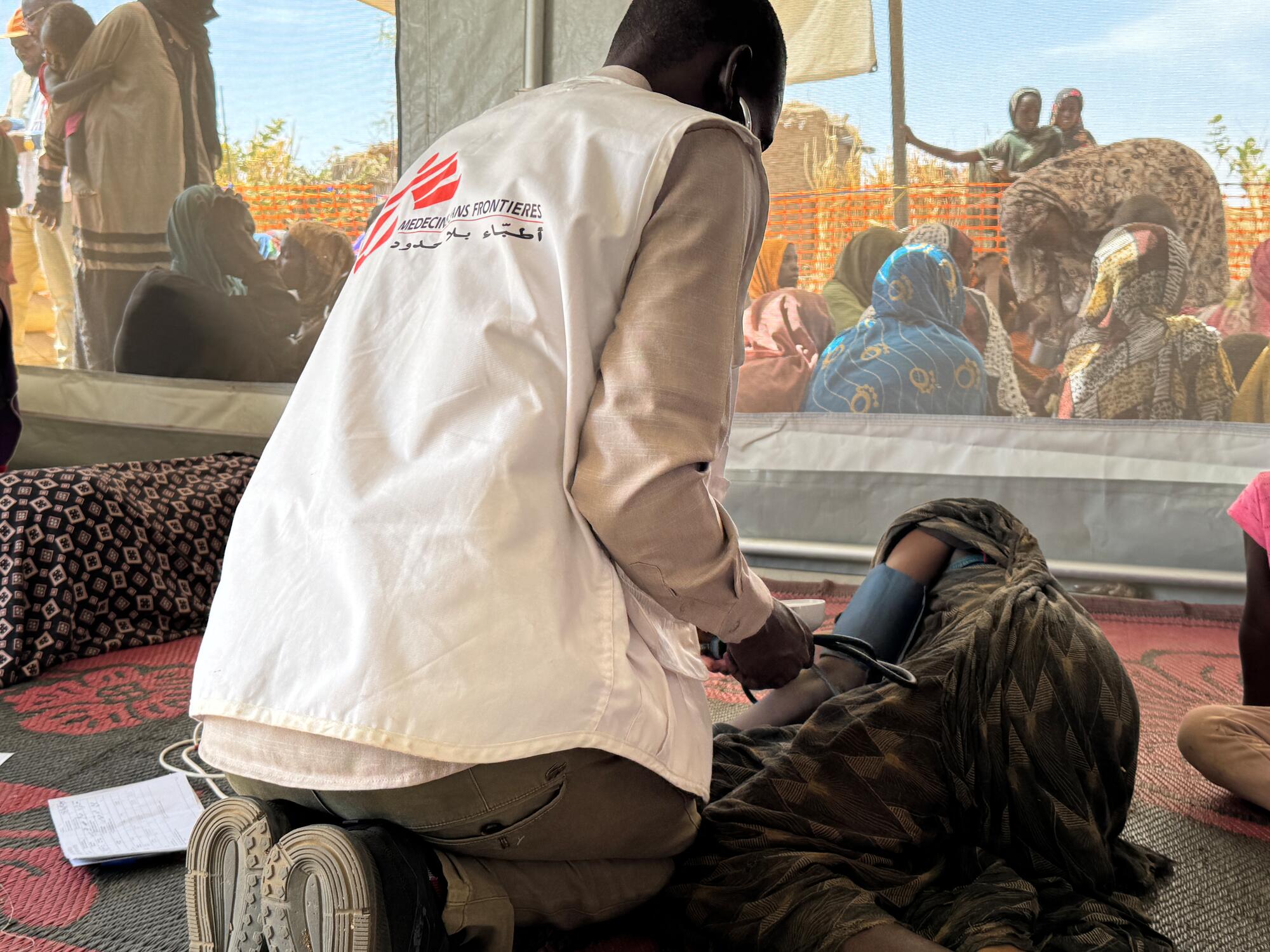
The war in Iran is also holding up lifesaving medical and humanitarian supplies as Sudan’s medical system collapses.
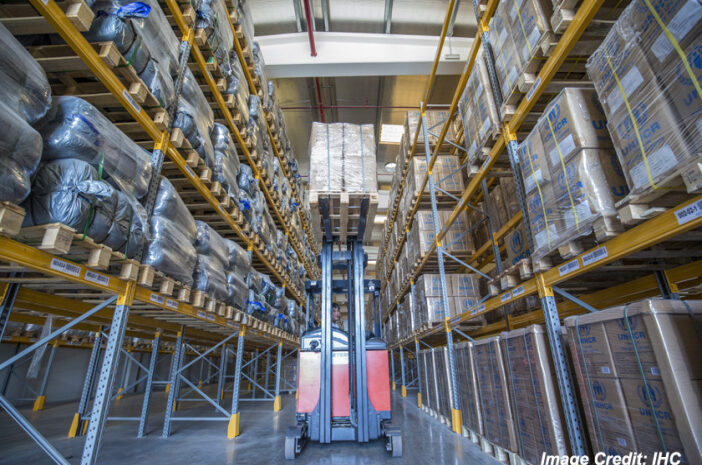
Save the Children reported that medical shipments for at least 400,000 people in Sudan are currently stranded in Dubai due to the closure of the Strait of Hormuz. The lost antibiotics, antimalarials, deworming treatments, pain and fever medicines, vitamins and pediatric drugs put more than 90 primary health care facilities across the country “at risk of running out of essential medicines,” the agency said.
The World Health Organization (WHO) also suspended operations from its global emergency logistics hub in Dubai due to the war, leaving Sudan without critical cholera supplies, among other medicines.
Sudan’s health system, staff and facilities are equally under constant attack.
In 2025, Sudan accounted for 82% of all global deaths from attacks on healthcare, according to WHO figures. Over 2,000 people were killed in the 213 confirmed attacks across the country since the start of the civil war. Both warring parties have attacked health facilities in the last two weeks, killing 80 people, including 15 children.
“Hospitals have been looted, bombed, and occupied,” MSF said. “Medical staff have been threatened, detained, or forced to flee. Ambulances are blocked from reaching the wounded.”
“Funding cuts are making an already dire situation even worse, with people once again paying the price: they are dying from preventable causes because Sudanese authorities and the world are failing to come to their aid.”
Over 80% of hospitals and primary health facilities in conflict areas are closed. Across the country, 37% of health facilities are “non-functional,” according to WHO. Twenty million people require health assistance as outbreaks of malaria, dengue, measles, polio, hepatitis E, meningitis, and diphtheria continue to spread, the UN health agency estimates.
“The health system has been crippled, leaving millions without essential care,” said Dr Tedros Adhanom Ghebreyesus, WHO’s director general. “Doctors and health workers can save lives, but they must have safe places to work and the medicines and supplies they need. Ultimately, the best medicine is peace.”
‘People are eating things that are not food’
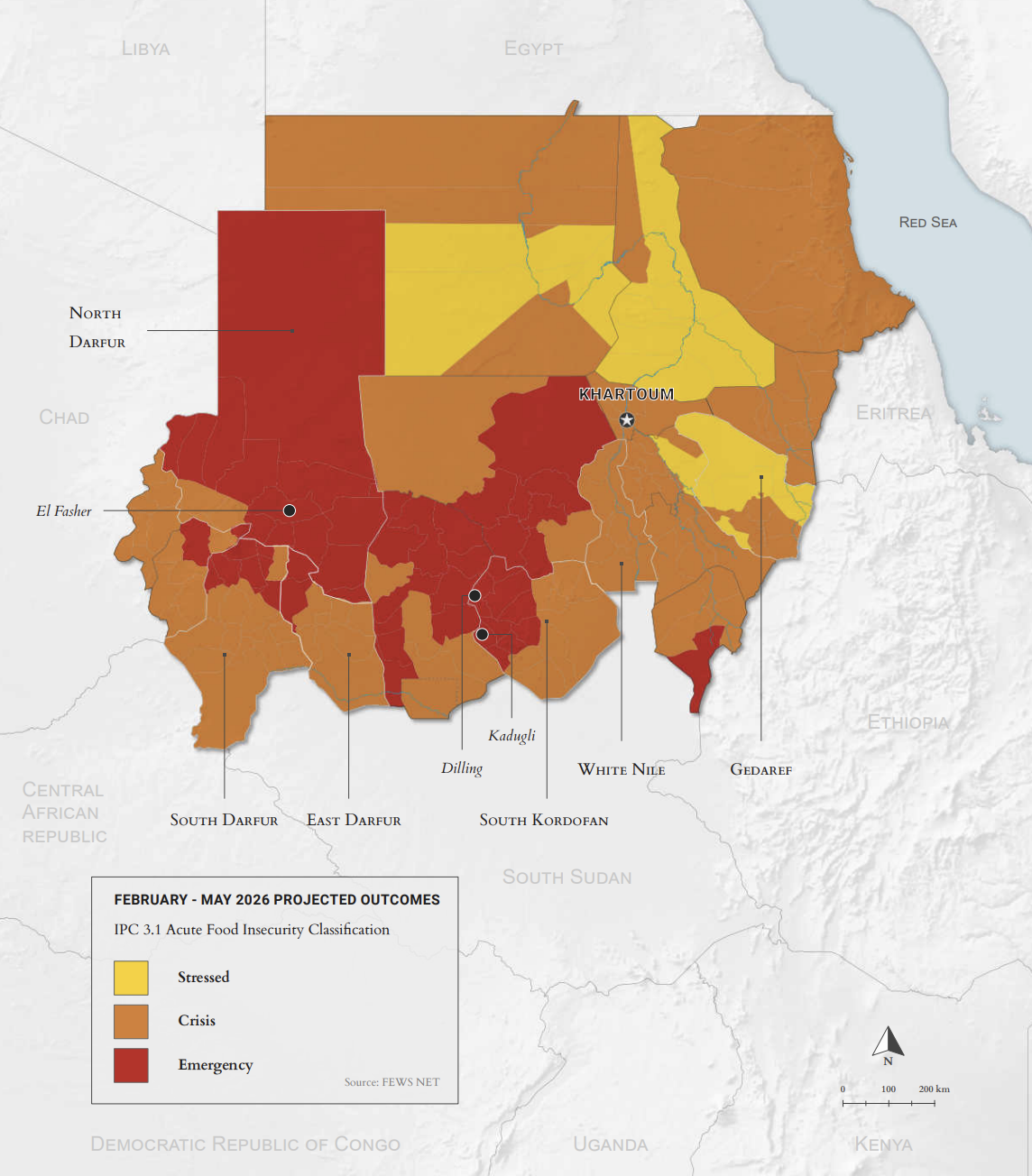
Famine has already gripped several provinces, including El-Fasher and Kadugli, the world authority on food security, the Integrated Food Security Phase Classification (IPC) system, declared in November.
The IPC identified further famine risk in more than 20 localities across North Darfur and South Kordofan, the current epicentres of the ongoing fighting. Beyond the famine zones, a total of 45% of the population experienced acute food insecurity in September last year.
The international response plan assessing the humanitarian needs in Sudan reported that over half – 61.7% – of people are now acutely food insecure. Millions of families have access to one or fewer meals a day, with many turning to boiling leaves or eating animal feed to survive.
Amid the crisis, WFP food assistance fell 14% since the start of the year due to a lack of financing.
“People are eating things that are not food anymore. That is how bad it is,” one community leader in South Kordofan told Action Against Hunger (AAH). “We no longer ask what we will eat. We ask who will eat,” Ikhlas, a resident in North Darfur, added.
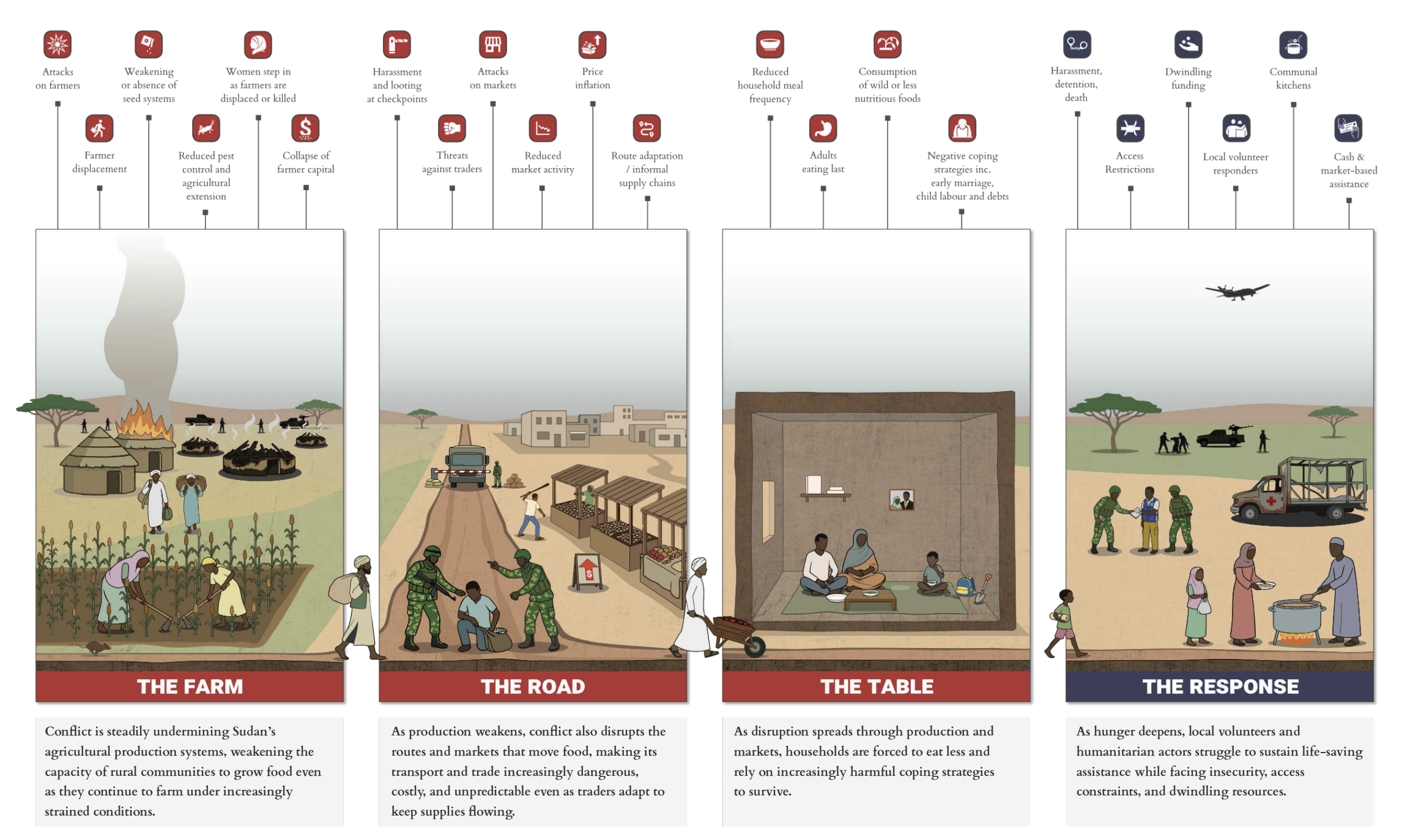
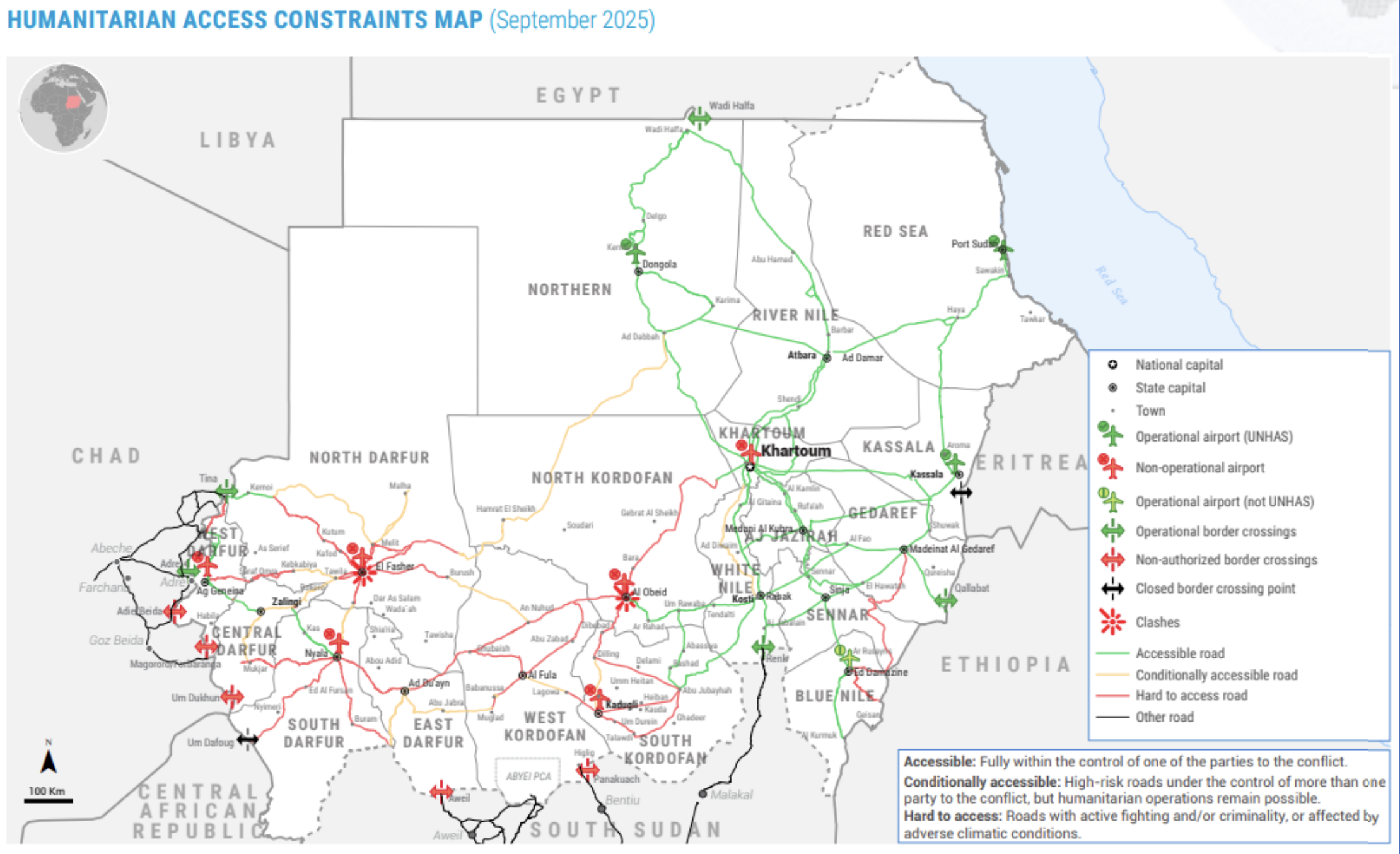
Moving food has also become a life-threatening exercise. Armed soldiers exact bribes on major road routes, frequently attacking and killing those attempting to bring food into the most besieged areas.
“Every road has checkpoints. At each one, they take money or food,” one trader in North Darfur told AAH. “By the time you arrive, nothing is left.”
The independent UN Fact-Finding Mission in Sudan found that both sides have used starvation as a weapon of war.
“The extent of hunger and displacement we see in Sudan today is unprecedented and never witnessed before,” the mission said. “Both the SAF and the RSF are using food as a weapon and starving civilians.”
“The RSF and its allies used starvation as a method of warfare and deprived civilians of objects indispensable to their survival, including food, medicine and relief supplies which may amount to the crime against humanity of extermination,” the UN mission added.
Sexual violence is defining warfare
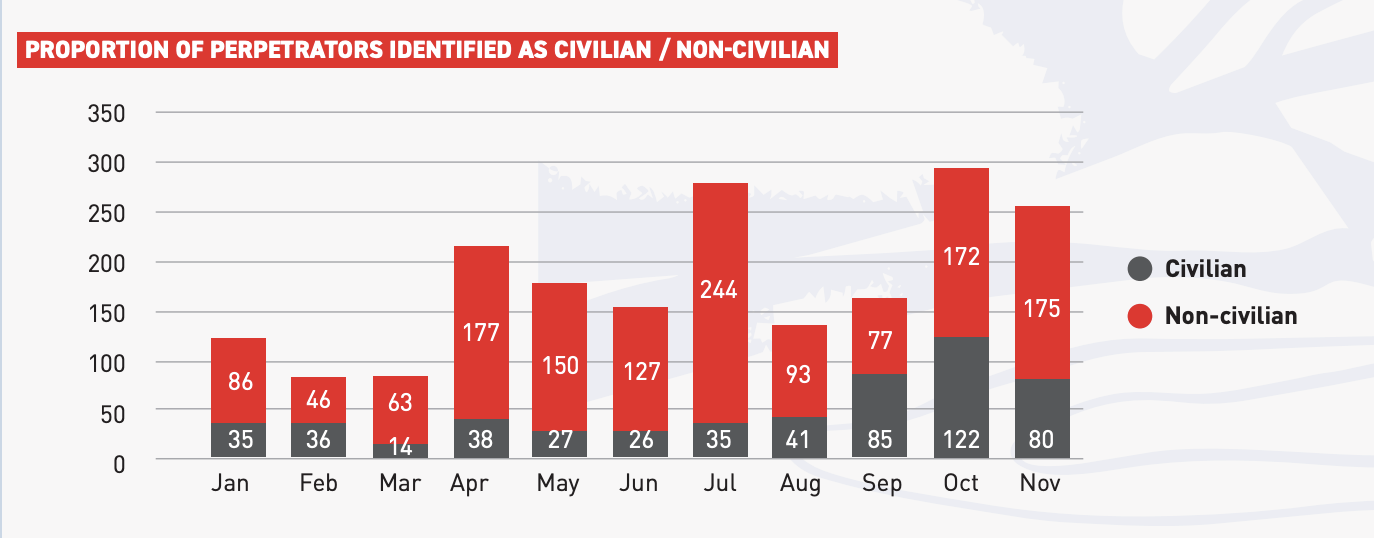
Sexual violence, mass rape, gang rape, forced marriage, and sexual slavery are inseparable from the war. Thousands of cases, primarily committed by RSF fighters in Darfur, have been documented since the war began.
The youngest case documented by UNICEF occurred against a girl who was just one year old.
“They took us to an open area. The first man raped me twice, the second once, the third four times,” a survivor told MSF. “Apart from the rapes, they beat us with sticks and pointed guns at my head.”
Gender-based violence has further compounded the food crisis for women and girls. The Action Against Hunger report, based on nearly 100 interviews with women in Sudan, found “simply being female has become a key predictor of hunger,” with female-led households three times more likely to experience food insecurity.
Routine activities to reach food – going to the farm, market, or waiting in water or food lines – put women at risk of rape and sexual violence. “These gendered threats are inseparable from the hunger crisis,” the report found. “Food scarcity both heightens exposure to violence and amplifies its consequences.”
“Sexual violence is a defining feature of this conflict – not confined to frontlines, but pervasive across communities,” said Ruth Kauffman, emergency health manager at MSF. “This war is being fought on the backs and bodies of women and girls.”
Disabled people have not been spared in the RSF’s assault. Human Rights Watch has confirmed deliberate targeting of disabled civilians amid the siege of El Fasher, adding to the interminable depths of violence in the world’s darkest war.
“The Rapid Support Forces treated people with disabilities as suspects, burdens, or expendable,” said Emina Ćerimović, associate disability rights director at Human Rights Watch. “We heard how they accused some victims, particularly those missing a limb, of being injured fighters and summarily executed them.”
“Others were beaten, abused, or harassed because of their disability, with fighters mocking them as “insane” or for not being a “complete person,”” Ćerimović added.
Foreign money and arms continue to fuel the war engine
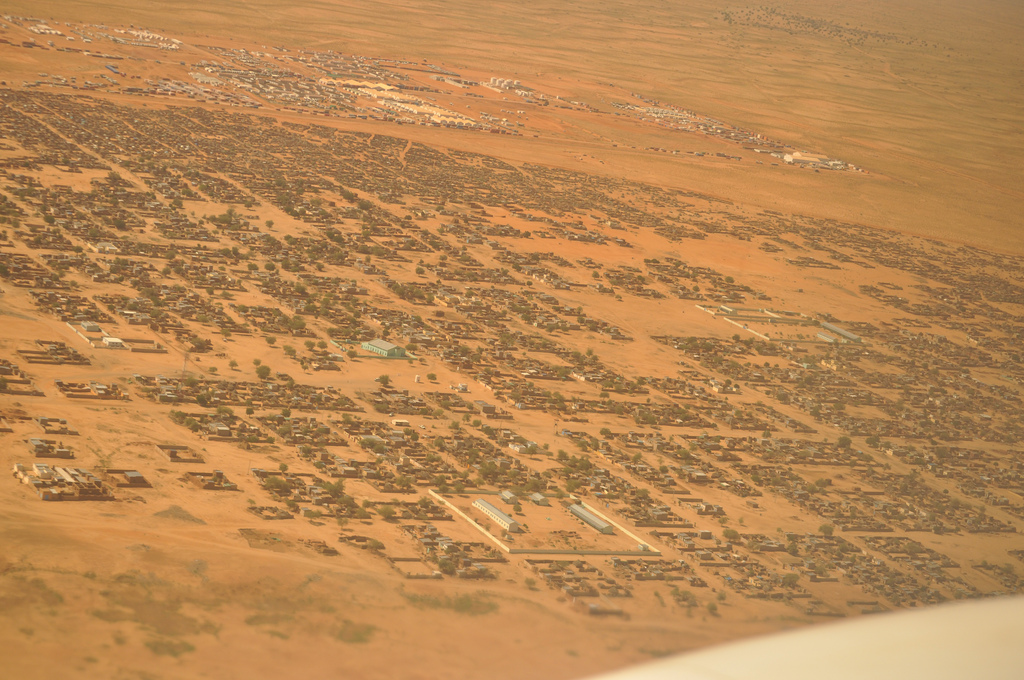
Hopes of ending the violence are stymied by continued foreign military and financial assistance to the warring parties.
The United Arab Emirates, in particular, has been accused of being the primary backer of the genocidal RSF, with little diplomatic consequence on the world stage. Drone attacks critical to RSF advances operate from bases claimed by the UAE as humanitarian posts, which a New York Times investigation found also serve as weapons smuggling hubs.
Turkey, Egypt and Saudi Arabia are the key backers of the Sudanese army. All governments deny accusations of involvement in the war.
“There are many external actors involved in this war,” Luca Renda, the UN Development Programme’s Sudan representative, said at the Berlin aid summit. “And as long as this continues, unfortunately, the chances of peace are very slim.”
No reliable estimates exist for the total value of foreign military assistance flowing to either side. What is known is that the weapons keep arriving — routed through intermediaries, in violation of a UN arms embargo — while the humanitarian funding that could keep Sudan’s people alive does not.
“The UAE, Iran, Turkey, Pakistan and others must stop supplying arms and support immediately,” Mo Ibrahim, Sudanese-British billionaire and founder of the Mo Ibrahim Foundation, wrote in the Financial Times on Tuesday. “All those countries profess love for the Sudanese people. We welcome your affection but not your bullets and drones.”
“You are enabling the bloodshed and famine and causing the displacement of innocent civilians. Instead, you should put pressure on both sides to stop this madness.”
Image Credits: UNICEF, WHO/Nicolò Filippo Rosso, Dubai Humanitarian , MSF, UN Sudan Envoy.
Combat the infodemic in health information and support health policy reporting from the global South. Our growing network of journalists in Africa, Asia, Geneva and New York connect the dots between regional realities and the big global debates, with evidence-based, open access news and analysis. To make a personal or organisational contribution click the donate button below.