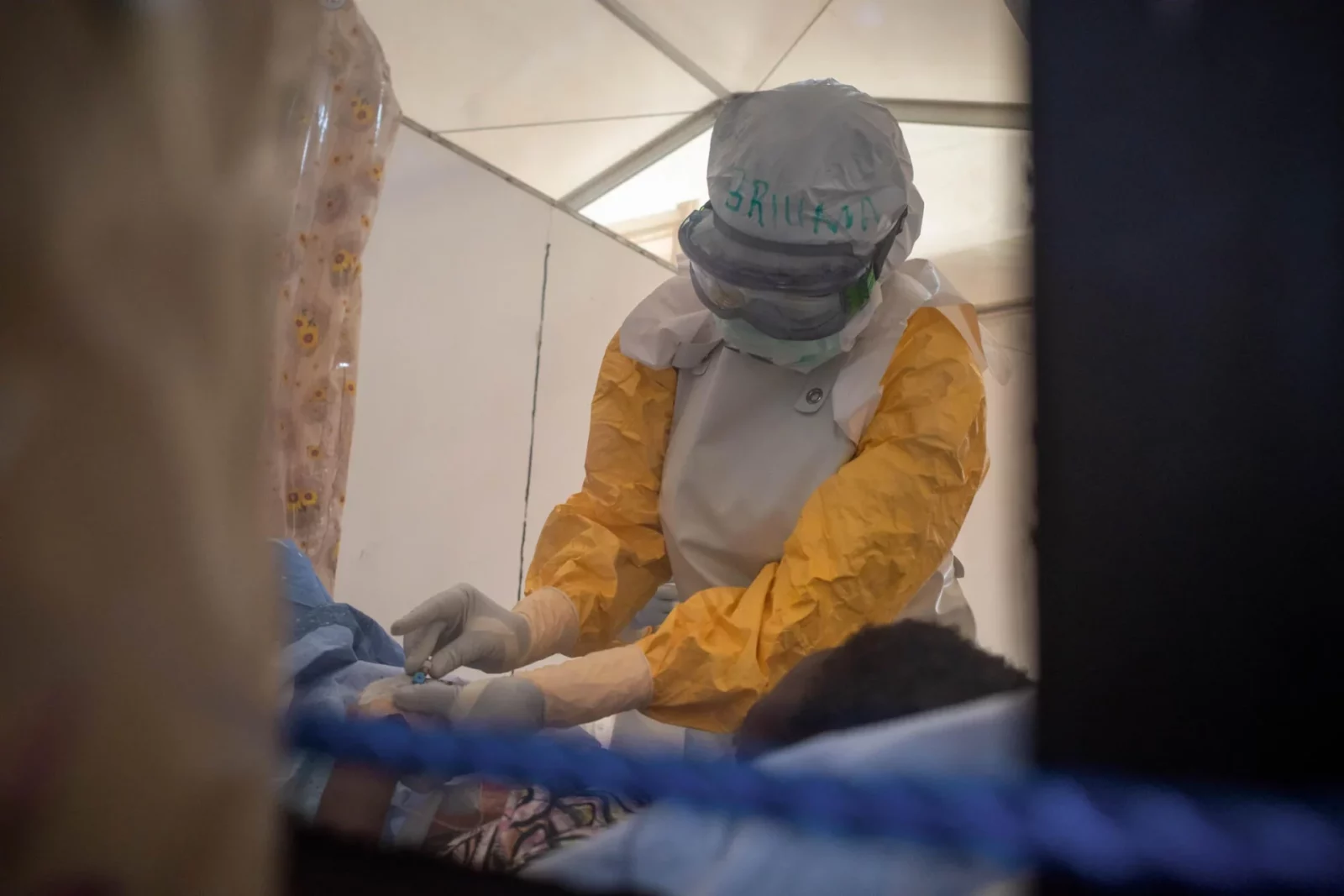
Armed conflict is one of the biggest obstacles to containing the Ebola Bundibugyo in the Democratic Republic of Congo (DRC), warns the World Health Organization (WHO) on the eve of the outbreak’s sixth month.
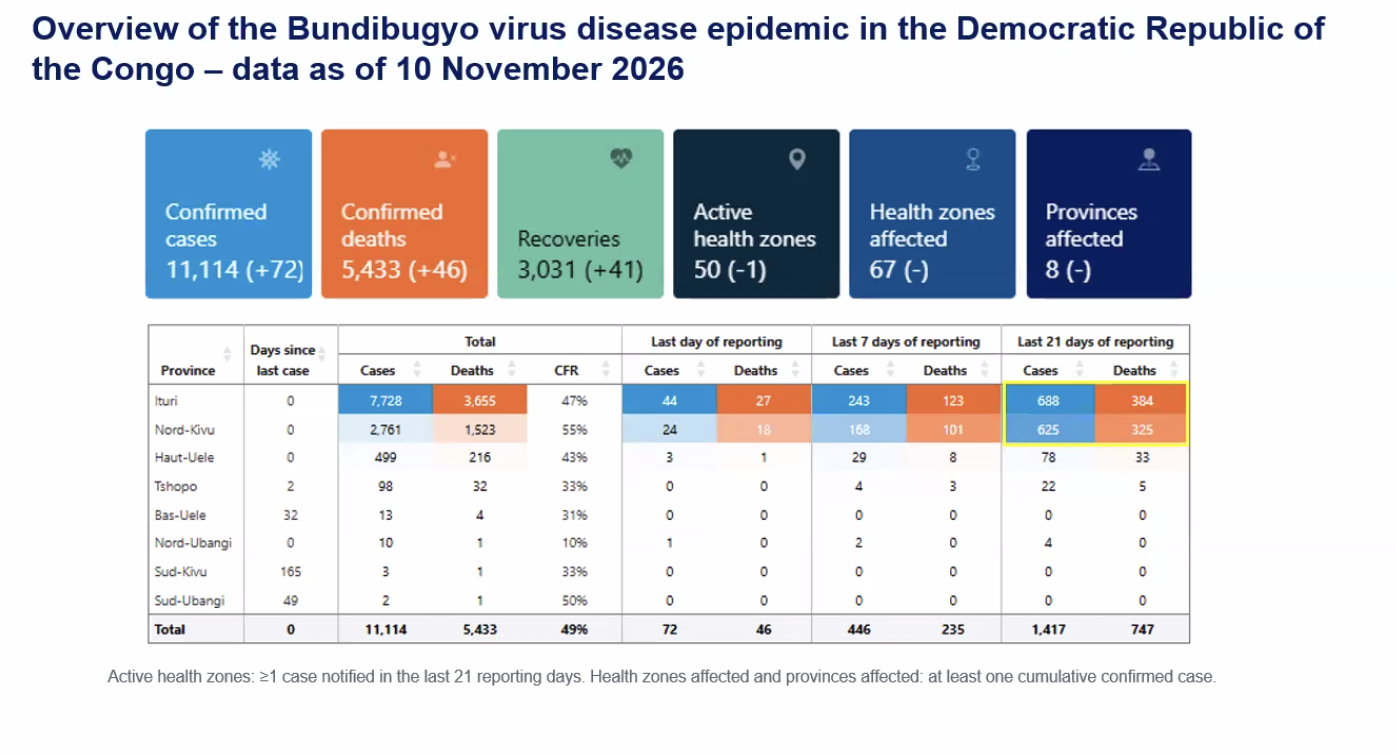
Some 11,114 cases and 5,433 deaths have been confirmed, with a death rate of 48% in the DRC, since the outbreak was announced on 15 May.
Three Ebola patients and 1,000 contacts fled last week after rebels attacked the North Kivu town of Cantine-Aloya last week, WHO Director-General Dr Tedros Adhanom Ghebreyesus told heads of state this week.
Sixty-six people, including three health workers, were killed and three health facilities were burned down during the attack, which officials blamed on the Islamic extremist group, the Allied Democratic Forces (ADF).
“This appalling attack represents both a major humanitarian emergency and a significant setback to the response,” said Tedros, appealing to WHO member states to assist in keeping
Meanwhile, another rebel group, the Front for the Reformation of the Nation (FRN) – formerly known as M23 – launched a new offensive in South Kivu last week, causing more people to flee their homes.
Halt in hostilities
“We need an urgent halt in hostilities and violence. Health workers and humanitarian teams must be able to reach affected communities safely, and patients must be able to seek care without fear,” Dr Roseline Belizaire, WHO Africa’s head of health emergencies, told a media briefing on Thursday.
She said that the violence is driving population displacement, which is “increasing the risk of further spread, particularly along major transport routes such as the Congo River”.
Earlier this week, the International Organization for Migration (IOM) reported that it had detected 71 people with Ebola by screening people on informal transit routes in the DRC that were not monitored by authorities.
An IOM assessment in Tshopo Province, which is one of the areas affected by Ebola, “identified 19 strategic river locations where additional surveillance points may be needed”, it noted.
However, the IOM said it is short of almost $60 million to cover a comprehensive Ebola response, including health screening and support at displacement sites and informal transit routes.
 Money not reaching frontline workers
Warning that the outbreak is “out of control”, Médecins Sans Frontières (MSF) said this week that there is “a troubling disconnect between the considerable resources mobilised for the response and what is actually reaching patients, frontline workers, and communities”.
“Despite the vast amounts of money provided for the response, many frontline responders are left trying to contain the outbreak with empty hands and empty pockets,” said MSF president Dr Javid Abdelmoneim.
“Our teams are often left speechless by the dysfunctions they witness in many areas. Six months into the response, this situation is simply unacceptable.”
One of MSF’s main concerns is the “persistent failure of the epidemiological surveillance system”.
“Despite the resources officially allocated to this critical activity, surveillance remains deeply problematic, with entire areas poorly covered or even completely neglected. Over the past month, close to two-thirds of reported Ebola-related deaths have occurred in communities rather than in treatment centres,” MSF noted.
Abdelmoneim added that only 9% of Ebola patients treated by MSF in Ituri province, the epicentre of the outbreak, had been identified as contacts by the surveillance system.
“Although community mistrust makes surveillance difficult, urgent improvements in oversight, staffing, and operational support are essential,” he stressed.
Deaths in communities
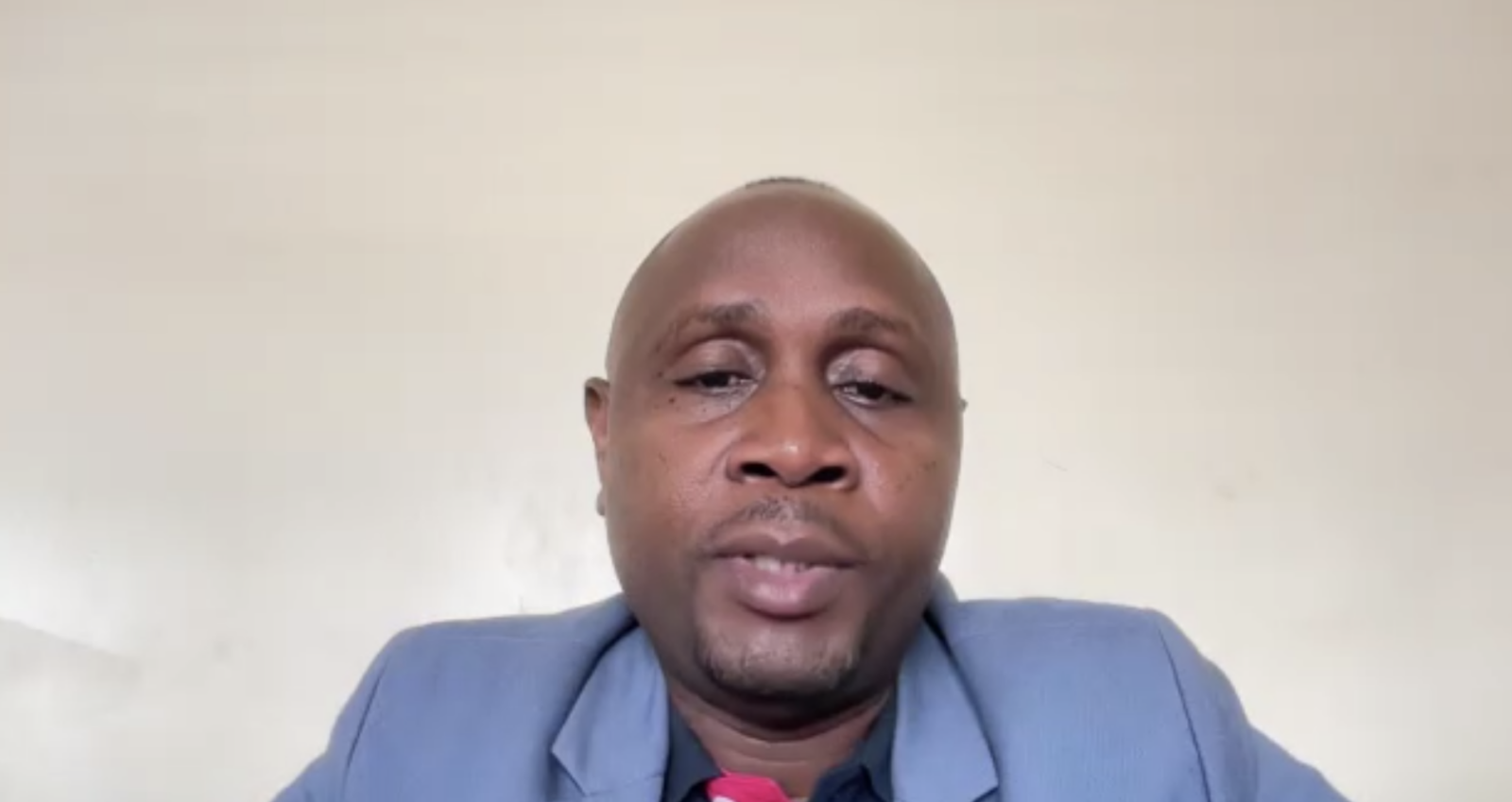
Dr Chikwe Ihekweazu, WHO’s Assistant Director General, also noted that around 60% of Ebola deaths were reported in communities – which included private and traditional health facilities.
DRC Health Ministry official Professor Steve Ahuka said that there are many private health facilities in the DRC and people “use them massively”.
However, many deaths were taking place in these facilities, where infection control was poor as they lack isolation units.
Ahuka and Belizaire appealed for more funds to enable staff to remain in the field, particularly as the Eastern DRC was going into the rainy season, which would also make access more difficult.
Image Credits: Medecins sans Frontieres.
Combat the infodemic in health information and support health policy reporting from the global South. Our growing network of journalists in Africa, Asia, Geneva and New York connect the dots between regional realities and the big global debates, with evidence-based, open access news and analysis. To make a personal or organisational contribution click the donate button below.