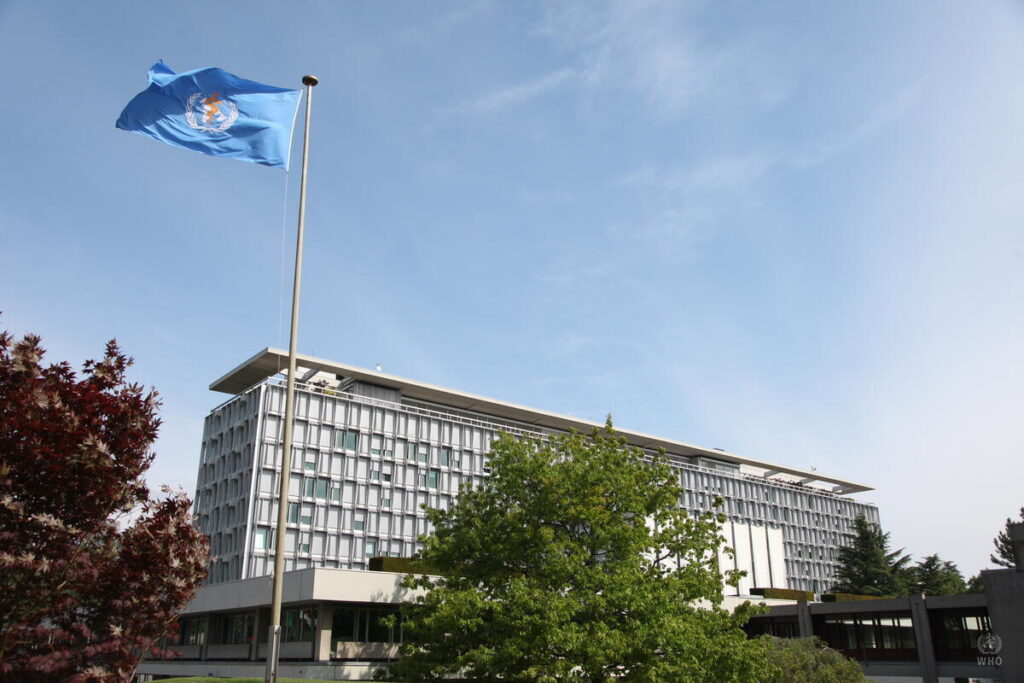
Seven candidates face the first candidates’ forum on 18 -19 November. Part I of this series learned from the eight previous holders. Part II took stock of the world’s health and of WHO itself. Part III writes the vacancy notice: what one person can reasonably do in five years and the questions electors should put to aspirants to judge suitability.
The seven hopefuls on the official list to succeed Dr Tedros as the Director-General of the World Health Organization (WHO) will appear before an initial member states’ forum in Geneva on 18 -19 November (starting at 9.30am CET). All can watch, and the WHO’s transparency is commendable.
Contrast this with the relatively obscure selection process for the UN Secretary-General. Arguably, the WHO election is more consequential for the world than at the UN because, despite prevailing geopolitics, the WHO leader still has more ability to exercise their authority than the UN Secretary-General.
The WHO process envisages shortlisting three candidates at the Executive Board on 25 January – 2 February 2027 and a further candidates’ forum on 15 March, before the World Health Assembly votes by secret ballot on 23-30 May. The ninth Director General assumes office on 16 August 2027.
All candidates deserve praise for offering themselves for public service at a critical time. And for opening themselves to global scrutiny by providing impressive curriculum vitae and leadership proposals that are, in some cases, elaborated on personal websites. Many are criss-crossing the world, inviting engagement and dialogue.
Searching blindly
The leisurely process provides ample opportunity to appraise the best fit for the Director-Generalship. But how to do that when there is no clear job description? What benchmarks should electors use to evaluate candidates? Without that, we could be easily sidetracked by their slick social media campaigns.
This article corrects the deficiency by proposing a job description and questions that electors should ask all aspirants.
But first, to clarify what many have confused. This is not a job specification for WHO, which member states set through the General Programme of Work. Neither does it ask the Director-General to realise health for all which is a collective aspiration and not an individual assignment. Such conflation between the persona of WHO’s chief officer and the Organization itself causes the royal fallacy that has traditionally afflicted the office. Separating them is the start of accountability.
How this job description was built
The Director-General’s job description should be about what one person can reasonably do within five years, given institutional constraints and global circumstances. That principle shapes the objectives that the Director-General should lead on, and their targets to deliver by their own agency through proposing, persuading, directing, and deciding, and conversely, via reducing or stopping.
The rationale for these objectives and targets was provided at part II of this analysis. That identified the seven key “world health determinants” that set the Director-General’s compass, one institutional reality they cannot escape, and five constitutional obligations they must discharge. The earlier analysis at part I looked at eight previous incumbents through four crucial tests to identify the personal skills and characteristics that determined their successes and failures in office.
What follows is written in the register the Assembly has never used for this post: a vacancy notice.

Vacancy notice: POST
Director-General, World Health Organization. The post holder will be the Organization’s chief technical and administrative officer under Article 31 of the Constitution.
DURATION
Five years from 16 August 2027, renewable once by the World Health Assembly subject to performance evaluation against this job description.
LOCATION
Duty station: Geneva. Expected to travel frequently, including to conflict, disaster, and disease outbreak zones. Travel by business class over nine hours; otherwise economy.
REMUNERATION
Reviewed annually by WHA. The total current package is around $540,000 a year. Consists of net salary $222,101 after the UN’s internal staff assessment (gross $298,001, free of national income tax) and Geneva cost-of-living adjustment currently at about 94% of net salary. Plus representation allowance ($21,000), indexed housing allowance (currently about $85,000), employer contribution of two-thirds of pensionable contribution in the UN Joint Staff Pension Fund, education grant for children, dependency allowances, health insurance.
Official vehicle with driver, and security provided. Travel and removal costs on appointment and termination and travel costs for home leave every two years. Leave of 30 days per year and ten official holidays.
PURPOSE OF THE JOB
To keep WHO universal, believed, and delivering value for Member States.
Note that the holder is not responsible for the health of the world but for personal decisions that enhance WHO’s constitutional duties.
OBJECTIVES
Authority. Re-invigorate WHO’s role as convenor and coordinator of a global health system it no longer commands (Article 2(a)).
Norms. Sharpen and defend the normative core – fewer standards, better defended – and restore the quality of data and measurement systems on which every standard depends (Articles 2(k), (s), (t), (u)).
Emergencies. Reset the compact with Member States on what WHO does in emergencies: upstream roles, pre-committed decision rules, operations led regionally and nationally (Articles 2(d), (g)).
Countries and regions. Deliver country support through the regions as a design rather than a lament, with regional directors accountable for results and conduct (Articles 2(c), (e), 44–54).
Money. Place WHO on a funding contract in which core tasks are financed from assessed contributions, earmarked money declines, and headquarters’ share falls.
Trust. Restore confidence in the secretariat’s integrity, in its staff and in its chief’s candour.
FIRST-TERM TARGETS 2027–2032, AND HOW PERFORMANCE WILL BE JUDGED
Each target names what the holder must personally do. Where the results depend on Member States, they measure the holder’s actions – tabling, publishing, deciding.
Trust. Commission biennial independent Member States and staff confidence surveys. Clear the backlog of 361 open abuse and harassment cases within twelve months of taking office and publish the disposition of each category. Cap and publish travel spending.
Membership. No further withdrawals. Clarify Argentina’s status and keep a documented pathway open for re-engaging the United States without concession on the Organization’s constitution and independence.
Norms. Complete by 2028 the sunset review of the Assembly’s 3,200 resolutions and publish a list of the core norms WHO will maintain and defend.
Financing. Secure the 2027, 2029 and 2031 increases in assessed contributions already decided in principle, reaching half the base budget by 2030-31 from today’s 40%. Table by WHA81 a plan to phase out earmarked voluntary contributions for core work. Publish annually the share of flexible funds and the headquarters share of the base budget, which stands at 26% for 2026–27, with a trajectory towards 20%.
The next programme. Develop limited core tasks and the Fifteenth General Programme of Work built on above principles for adoption in 2028, replacing GPW14.
International Health Regulations. Report annually the global and regional SPAR capacity scores and name the States Parties that have not submitted or have declined a Joint External Evaluation. Raise the global average SPAR score from the low sixties towards 75% by 2032.
Pandemic settlement. Prioritise the Bundibugyo epidemic, aiming for closure by the end of 2027 if not beforehand. Broker the pathogen access and benefit-sharing annex (PABS) so that the Pandemic Agreement opens for signature at WHA80 in May 2027 or, at the latest, by WHA81. Table own proposal if negotiators deadlock. Encourage and track ratifications towards the 60 required for entry into force. Reduce the median time to prequalify a vaccine or medicine.
Emergencies. Initiate member states consultations on what they can expect from WHO in emergencies and secure a WHA decision accordingly by 2028 that also defines what they must do themselves. Publish the Director-General’s decision rules (e.g. thresholds of spread, severity and uncertainty, time for convening a committee) so that a public health emergency of international concern (PHEIC) decision is consistently explicable. Track and reduce the time between ‘signal’ and published risk assessment Indicators. Capitalise the Contingency Fund for Emergencies in steps towards $100 million by 2032 with a reliable replenishment modality.
Better Counting. Increase usability and confidence in mortality statistics by improving the quality of registration, certification, and coding under the International Classification of Diseases. Prepare annual reports with named countries to raise the proportion of deaths registered with a meaningful cause from the current less than half. Reduce reliance on modelling to cover data gaps and insist on moving towards actual counting such as for healthy life expectancy, AIDS deaths, and lives saved from particular interventions. Publish by 2030, WHO’s first annual estimate of climate-attributable mortality.
Compacts with Regions. Propose to the Assembly by 2029 a binding code of conduct for regional director elections and an accountability compact between the Director-General and the six regional directors covering results and conduct. Commission and publish independent annual reports of compliance by regional directors with these compacts.
Succeeding the Sustainable Development Goals. Table by 2029 an honest accounting of which 2030 health targets were missed and why, and table WHO’s proposal for the health framework within the successor to the SDGs.
NECESSARY KNOWLEDGE AND EXPERIENCE
– Science and public health literacy to a high level.
– Communication abilities to explain good science from bad to policymakers and the public and justify decisions and advice accordingly.
– Fluency in money: the ability to read and critically question a budget, and to judge value-for-money.
– Experience of leading a large institution through contraction phases and of managing contentious changes.
– Track record of establishing accountability systems, including towards a board or legislature.
– Shrewd people skills to assess and make sound senior personnel appointments, listening to critics, and managing staff performance and morale.
– Direct competence in intergovernmental negotiations, including judging conditions that may or may not be acceptable under the Organization’s principles.
– Ability to reach across diverse groups of interests. Fluency in more than one working language is an asset.
– Auditable probity through a proven track record of integrity in previous roles.
PERSONAL ATTRIBUTES
– Humility of temperament that resists flattery and rejects building a personal cult or brand, especially through curated social media projections.
– Nerve to subtract through stopping redundant or unnecessary activities.
– Survivable independence through judging the battles with powerful interest groups that can be won and the timing to fight them.
– Making sound, timely decisions with incomplete information or under contentious circumstances and explaining and owning them.
– Candour. Truthful and transparent under all circumstances, including those that may be embarrassing personally or organisationally.
– Sharing temperament inclined towards building coalitions and partnerships to address common challenges.
– Resilience under undeserved blame without collapsing or lashing out at critics.
NOT REQUIRED
A medical degree. Prior WHO service. The right passport. The right gender. The endorsement of anyone who expects to be repaid.
CAVEAT TO BE NOTED BY ELECTORS
The holder cannot appoint regional directors and cannot compel Member States to follow WHO guidance or spend money not provided to the Organization.

Asking the right questions
Relying on candidate vision and published manifestos is insufficient as they say quite similar and sensible things with which one can hardly disagree. Thus they have little power to ‘discriminate‘ between the merits of aspirants.
Therefore, as the past is the best guide to the future, the electors should press them hard on what they have actually done, not what they intend.
The first forum allows each candidate to make a short presentation and answer questions from Member States. With time being short, the discipline rests on questions that assess specific elements of the vacancy notice in a precise manner. The veracity of the answers can be easily verified against published curriculum vitae and track records. And the candour of answers is a powerful indicator of the character of candidates.
So, here are some key questions:
- On correctly reading our era: With so many global health needs amidst challenging geopolitics, what are the top two or three issues that you will keep front and centre as DG?
- On core tasks. What would you consider WHO’s minimal core tasks? Have you ever tried making such a limiting definition in a current or past job when resources were constrained?
- On subtraction. Name three things WHO does today that you would stop in your first year, and the constituency that will object to each. In your current or last post, what did you close, and what did it cost you?
- On money. Have you led any organisation through a significant budget cut? What did you cut, what did you protect, and what went first? Will you table a plan and timetable to end earmarked voluntary contributions for core work?
- On independence. Describe a decision in your career that cost you the support of your own government or your largest funder. What happened next, and would you do it again?
- On resilience. What will you do when you get blamed for a failure that is not your own? Give an example of when you have been in a similar situation, and how you handled it?
- On the emergency call. Which emergency decision (eg disease outbreaks) in your career did you get wrong, too early or too late? What did you say about it publicly afterwards? What decision rules would you publish for declaring an international emergency? Would you declare the 2027 heat death projections from combined climate crisis and El Niño as a Public Health Emergency of International Concern?
- On counting. When a Member State’s official figures are obviously incorrect – for example, on an epidemic, a famine, a war – will you publish WHO’s own? Give an instance in which you have contradicted an official number in public.
- On the regions. Whom in your current or past institution could you not remove, and how did you manage them? What, specifically, will you propose to the Assembly on the election and accountability of regional directors?
- On the pandemics annex. What would you trade to close the pathogen access and benefit-sharing annex by May 2027, and with whom? Which of your nominating government’s positions would you abandon to get it?
- On the United States and China. What would you refuse to do to bring Washington back? What would you refuse Beijing in return for its money? Name one of each.
- On probity. Who is funding your campaign, what has been promised in return, and will you publish both now rather than after the vote? Which of your supporters expects a post?
- On legacy. At the end of your term, what is the legacy you wish to leave behind? Give an example of the most important legacy you created in your current or previous job – meaning did you leave the office itself stronger or weaker in terms of respect, authority, and trust? Conversely give an example of what you left undone or failed in that you regret most.
- On motive. What do you want this job for? And what are you willing to sacrifice to get it?
Binding the electors
Of course, these questions also hold up a mirror for Member States as much as for the candidates. First: will they pay the assessed future increases they have already voted for, and will they stop earmarking what they give above that? Second: will they give the successful candidate the necessary instruments such as a binding code of conduct, a say in who leads the regions, and a mandate on emergencies that is defensible when it is tested?
Or will they elect someone to fail and blame them when they do? For 78 years, Member States have done just that by demanding results from Directors-General while withholding the means to deliver them. Present-day electors must acknowledge that no candidate, however able, can succeed on their own. And that the terms of this vacancy notice bind them to discharge their own responsibilities as much as the duties they impose on the person they elect.
Part II of this series asked who marks the Director-General’s homework and noted that every previous holder who wanted the constitutionally-permitted second term got one. Not all deserved it.
So, the remedy proposed here is a contract with clear objectives and targets that comprise a personal scorecard for the WHA to review before renewal in 2032. None of this requires a constitutional amendment but requires Member States to know clearly what they want done.
The named candidates are not going to be ranked or graded in this series which aims only to give the people who will vote in May, and the world that will watch them, a standard that did not exist when the campaign began.
Of course, Director-General selections are inherently political contests. But considering the haphazard nature of previous appointments and their variable performance results, greater selection rigour can, at the very least, reduce the chance of a bad selection.
A child born in WHO’s founding years could expect 46 years of life; one born today, 73. The next Director-General is not asked to add even a moment to that. What is demanded from them, in a defunded and divided decade, is what one honest and humble leader can reasonably deliver. That is the job in a nutshell, and it is past time to write it that way.
Mukesh Kapila is professor emeritus of global health and humanitarian affairs at the University of Manchester, and a board member of Health Policy Watch. The opinions expressed are solely those of the author.
Image Credits: WHO, WHO/X, WHO .
Combat the infodemic in health information and support health policy reporting from the global South. Our growing network of journalists in Africa, Asia, Geneva and New York connect the dots between regional realities and the big global debates, with evidence-based, open access news and analysis. To make a personal or organisational contribution click the donate button below.