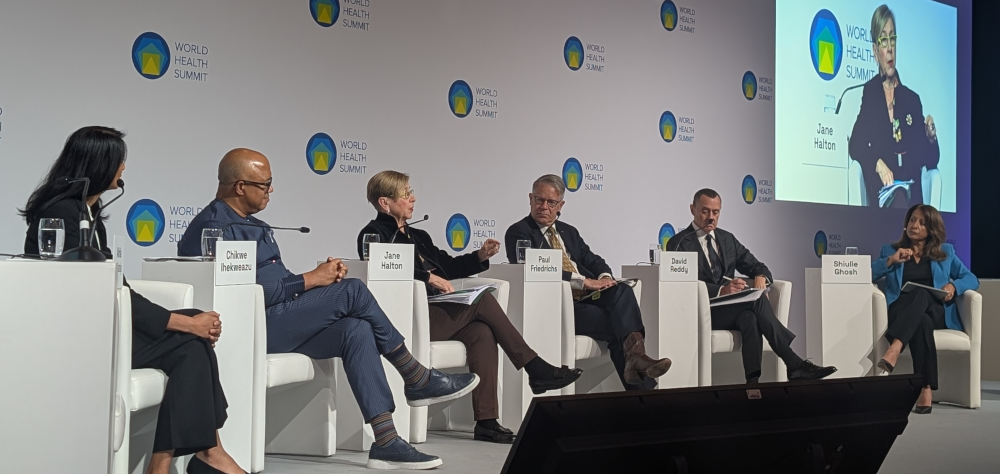
Speaking at a flagship World Health Summit panel global health officials and pharmaceutical executives urged governments to reframe pandemic preparedness as ‘biodefence’ – a core national security asset and not a discretionary health expenditure.
BERLIN – That strategic pivot is becoming urgent as both global health and aid budgets shrink and multilateral diplomacy on pandemic prevention, preparedness and response stalls.

The Pandemic Agreement is in a gridlock with member states still at odds over the details of a Pathogen Access and Benefit-Sharing (PABS) system – the contentious annex governing the sharing of biological samples and sequence data that must be concluded before the broader WHO Pandemic Agreement can be ratified by member states and come into force.
“By May 2027, we need countries to come together and agree the PABS to the pandemic agreement,” urged Chikwe Ihekweazu, executive director of the WHO Health Emergencies Programme during the panel discussion, co-hosted by the International Federation of Pharmaceutical Manufacturers and Associations (IFPMA), “Otherwise, our generation will live in regret.”
His warning comes amid accelerating health security risks – ranging from the active Ebola epidemic in the Democratic Republic of the Congo and a recent hantavirus outbreak aboard a vessel carrying crew members from 23 nations off Cape Verde to ‘dual use’ threats from military research or use of artificial intelligence by hostile actors to generate dangerous new pathogens.
Compounding threats drive health security risks

Currently, however, the spillover of zoonotic diseases into human populations remains the primary catalyst for disease outbreaks, as environmental damage, climate pressures, and habitat destruction accelerate pathogen transmission between animals and humans. Resurgences in active conflict zones, such as in eastern DRC, demonstrate how transmission of such pathogens can quickly overwhelm fragile health infrastructure.
Reinforcing the urgency for better health security measures, David Reddy, director general of IFPMA, cautioned governments against ignoring long-term biological risks while focusing on immediate geopolitical crises.
“The next pandemic may not be the closest snake, but it might be the biggest, meanest snake we’ve ever seen, and it is worth considering where that might be hiding and doing something about it,” Reddy said.
Simultaneously, antimicrobial resistance (AMR) poses a silent, increasing threat that risks eclipsing the mortality of acute pandemic outbreaks.
“It’s estimated that the number of deaths between 2025 and 2050, if we aren’t able to address antimicrobial resistance, could be in the order of 39 million people, which is just extraordinary and outstrips pandemics,” Reddy added.
AI’s double-edged sword
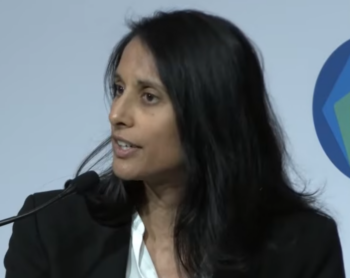
Technological innovation is helping to overcome traditional market failures in antibiotics manufacturing. With generative models screening chemical space 10,000 times faster than traditional laboratories, artificial intelligence is transforming R&D for novel antibiotic compounds to counter AMR.
“Within three days, AI was able to come up with a solution that our medicinal chemists were equal parts amazed and troubled by,” said Akila Kosaraju, CEO and co-founder of Phare Bio, at the panel, sparking laughter and surprise among the audience.
At the same time, experts warned that AI models lower technical barriers by substituting for decades of tacit laboratory experience. Open-source genome models enable non-expert actors to computationally design novel viral sequences and optimize pathogens for higher transmissibility, lethality, or immune evasion.
These technological threats compound the potential risks of pathogen escape from the growing number of high-containment Biosafety Level 4 (BSL-4) laboratories, three-quarters of which are located in densely populated urban centres, according to analyses by the RAND Corporation, a global health security think tank.
Economic case for proactive ‘biodefence’
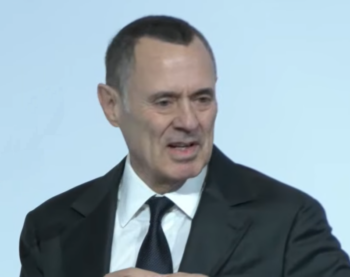
Despite technological advances, security against expanding biosecurity risks remains imperative and requires framing as a strategic investment rather than a discretionary expense. Industry leaders contrasted the $31 billion annual price tag of global preparedness with the catastrophic multi-trillion-dollar cost of inaction.
“Preparedness does not begin when a crisis hits,” said Reddy, citing industry calculations estimating that the overall economic cost of COVID-19 amounts to $13.8 trillion globally.
“It is built through the choices countries make every day to value innovation and invest in resilient health systems.”
Soaring defence budgets and plunging health aid

This warning comes as funding is being rebalanced towards national defence spending, while global development assistance is contracting sharply. Net official development assistance (ODA) is projected to drop 6.9% in 2026 following a record 23.3% collapse in 2025, according to OECD data. Sectoral health aid faces the deepest cuts of all, projected to fall between 29% and 46% from 2024 levels, pulling global health funding well below pre-pandemic baselines.
In contrast, global military expenditure reached an all-time high of $2.89 trillion in 2025 after eleven consecutive years of growth, according to Stockholm International Peace Research Institute data.
Noting that meeting annual global health security needs ($31 billion) represents just 1% of world military spending, Paul Friedrichs, senior biopreparedness fellow at the RAND Corporation and former White House pandemic advisor, urged governments to view biodefence as a strategic national security investment rather than a discretionary health expenditure.
Eliminating friction for 100-day response
As biological threats compound, Coalition for Epidemic Preparedness Innovations (CEPI) chair Jane Halton warned that global health security faces “genuine gaps in governance and oversight” alongside critical delays in outbreak response.

To operationalize the G7- and G20-backed 100-Day Mission, CEPI advocates eliminating administrative “white space” by pre-positioning clinical trial networks and establishing “R&D safe harbours” that grant scientists immediate pathogen data access on day zero.
Under CEPI’s proposed framework, developers would defer full PABS benefit-sharing obligations until reaching defined downstream commercialization thresholds, preventing upfront contractual negotiations from stalling early R&D.
“When it comes to these risks, you need three words: Speed, speed, speed,” emphasised Halton during the panel debate.
Debate over speed and industry red lines
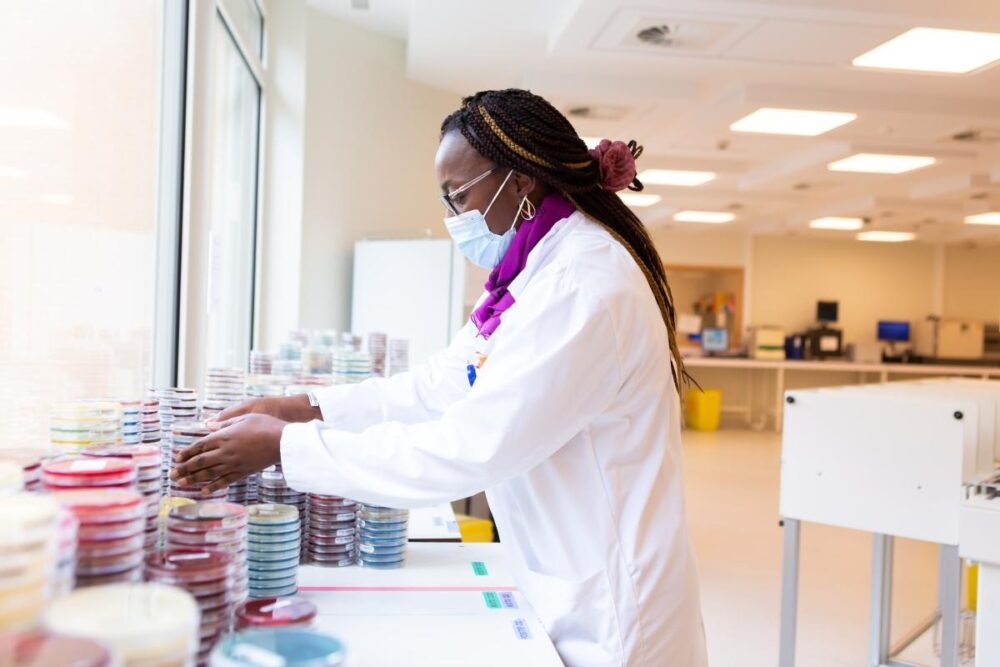
Differing slightly from CEPI’s downstream trigger proposal, Reddy reiterated the pharmaceutical industry’s central red line in pandemic negotiations: unhindered, day-zero access to pathogen genetic data without transactional preconditions or upfront compliance hurdles.
While supporting multilateral approaches to pandemic preparedness and health security, IFPMA maintains that contractual preconditions risk creating fatal research delays, arguing that actual emergency bottlenecks stem from regulation, financing, and supply logistics rather than data access.
Citing IFPMA data, Reddy emphasised that predictable intellectual property frameworks are essential to sustain high-risk private R&D, noting a 91% clinical failure rate for new drug candidates. Addressing the unique market dynamics of novel antibiotics, Kosaraju added that companies face up to 33 years to recover development investments.
To preserve research speed, industry advocates for a non-exclusive system that leverages existing open databases and WHO-coordinated laboratory networks, allowing manufacturers to enter voluntary partnerships and licensing agreements on mutually agreed terms rather than facing upfront contractual roadblocks.
The battle over binding PABS terms
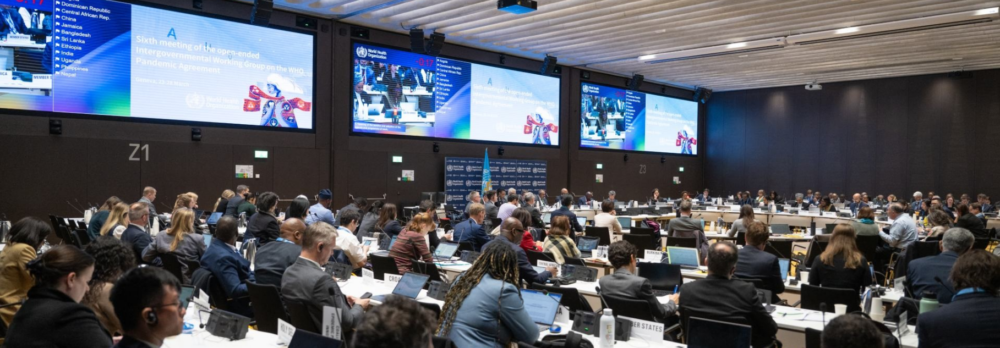
Negotiators from the Africa Group and the Group of Equity have consistently countered that voluntary mechanisms failed during COVID-19.
The WHO Pandemic Agreement, approved by member states in 2025, commits countries to providing 20% of needed medicines and vaccines to WHO for equitable distribution – 10% as donations and 10% at affordable prices, when the next such global threat emerges.
However, the precise mechanisms of how that will work were supposed to be defined by the PABS Annex. And over a year into negotiations, developing and high-income nations remain at odds as to exactly how to achieve those targets.
Developing nations continue to push for a legally binding PABS mechanism with mandatory technology transfers and binding requirements on manufacturers for allocations of their production – in exchange for access to pathogens sequences and data.
Many developed countries, meanwhile, have said that any constraints on the immediate sharing of pathogen data could hinder development of critical countermeasures – a position industry supports in principle.
Asserting health sovereignty in the Global South
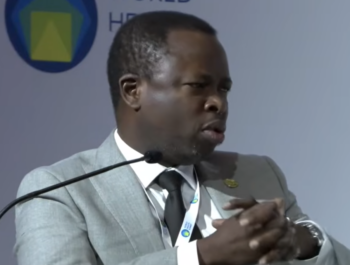
Highlighting the lessons of recent health crises, Raji Tajudeen, head of public health institutes at Africa CDC, underscored that African states are asserting health sovereignty to build regional self-reliance. The Africa CDC is operationalising the African Medicines Agency and coordinating pooled regional procurement, supported by 28 African nations that recently mobilised over $130 million in domestic funds for the continental Ebola outbreak response.
These regional initiatives align with broader reform frameworks such as the Accra Reset and the Lusaka Agenda, which advocate treating health security as an essential global public good requiring country-led coordination. Yet, as collapsing development aid, proliferating biosecurity risks, and commercial impasses converge, global monitoring reveals that implementation continues to lag dangerously far behind political rhetoric.
“Infectious diseases cannot be dealt with one country at a time,” concluded Ihekweazu. “Sovereignty is not opposed to universality.”
See related story:
With Only Three ‘No’ Votes, UN Adopts Political Declaration on Pandemic Preparedness
Image Credits: U.S. Army National Guard/Edwin L. Wriston, Felix Sassmannshausen/HPW, WHS/HPW, European Union, WHO / Mark Nieuwenhof.
Combat the infodemic in health information and support health policy reporting from the global South. Our growing network of journalists in Africa, Asia, Geneva and New York connect the dots between regional realities and the big global debates, with evidence-based, open access news and analysis. To make a personal or organisational contribution click the donate button below.