The World Health Organization (WHO) has only mobilised 37% of the funds it needs for the Eastern Mediterranean Region (EMRO) amid a “deteriorating health situation”, regional director Dr Hanan Balkhy told a media briefing on Wednesday.
Welcoming the two-week ceasefire between Iran and the United States-Israel, Balkhy called for the “permanent cessation of hostilities”, warning that the damage from the regional wars would take generations to address. She also called for the ceasefire to apply to Lebanon, which Israel claims is not covered.
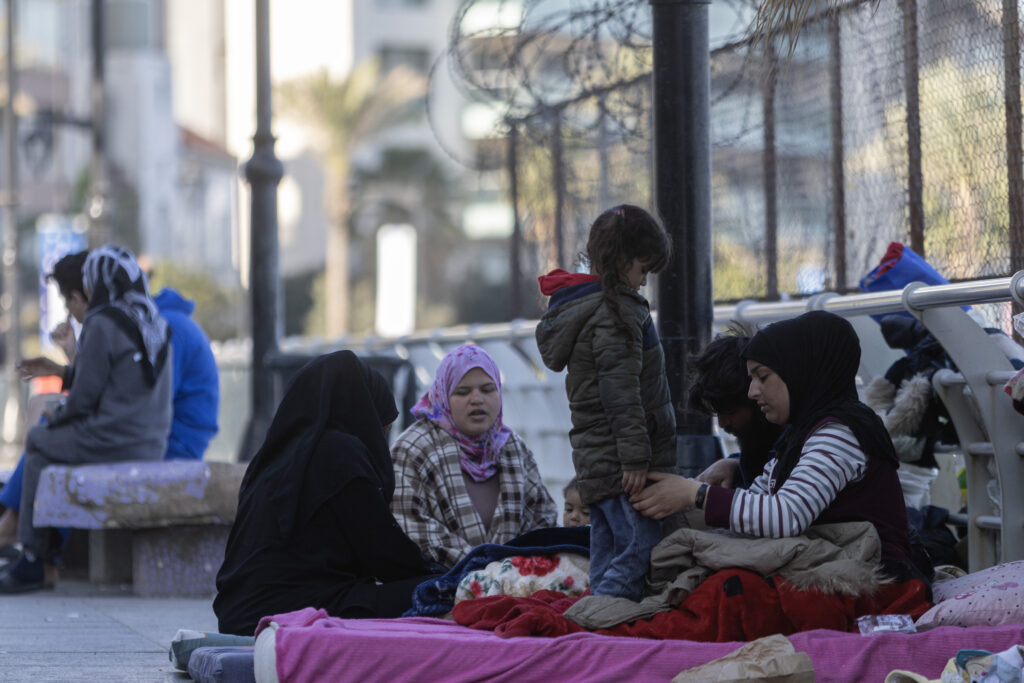
Fourteen countries in EMRO are affected by wars, and over 4.3 million people have been displaced as a result. The damage in the region ranges from physical and psychological trauma to destroyed health facilities, and missed targets on maternal and child health and non-communicable diseases (NCDs), she explained.
“Stability is on a knife-edge across the region,” said Balkhy. “Public health risks are rising. Displacement is increasing the threat of outbreaks. Essential services are being disrupted, and environmental hazards are raising serious concerns about safe drinking water, air pollution and longer-term health impacts.
Aside from violent conflict large parts of the region, a recent 5.8 magnitude earthquake in Afghanistan has also affected health services.
“Even before this escalation of hostilities, emergency operations were critically underfunded,” Balkhy said. “Of the $689 million required for 2026, only 37% has been secured. This week, the WHO launched a $30.3 million flash appeal to support the health response in Lebanon, Iran, Iraq, Syria and Jordan.”
The flash appeal includes almost $7 million to provide trauma response and basic health services in Lebanon, and $5.2 million to provide the same in Iran.
Environmental concerns
Balkhy also warned of the environmental impact of the war, particularly on water and energy supplies, and air pollution.
“The Middle East is among the most water-stressed regions globally. The Gulf hosts approximately 400 desalination plants producing 40% of the world’s desalinated water. Several countries rely on desalination for up to 90% of their municipal water supply,” she added.
One of Iran’s desalination plants is inoperable after being bombed, while there have been “near misses or debris damage” near plants in Bahrain, Kuwait and the United Arab Emirates (UAE), Balkhy said.
She also warned of respiratory illnesses from degraded air quality.
“We cannot live without water and oxygen. We need both of them. The damage that’s happening to the environment could contaminate the water and the air.”
Nuclear fears
“We are also extremely concerned about the increasing risk of radiological or nuclear incidents,” said Balkhy.
The International Atomic Energy Agency (IAEA) has notified the WHO of eight strikes in the vicinity of Iranian nuclear facilities, “marking an alarming pattern”, she noted.
One of the strikes hit 75 metres from the perimeter of a nuclear site, according to the IAEA.
“Any strike near a nuclear facility could have severe and far-reaching consequences for public health and the environment.”
The WHO is working with national authorities and partners to strengthen preparedness and response measures for potential chemical, biological, radiological or nuclear (CBRN) incidents, she added.
“Continued military activity near an operating plant with large amounts of nuclear fuel could have severe consequences for people and the environment in Iran and beyond.”
While WHO has expertise in dealing with health crises, “when it comes to CBRN, when it comes to radiological and nuclear incidents, the level of expertise becomes thinner and thinner.
“WHO’s job is to keep health systems prepared for exactly that kind of low probability, high impact event. But it is not easy, and the best way out of this is to sustain the ceasefire and the peace .”
Global impact of health system collapse
Following the US-Israeli attack on Iran on 28 February, hostilities between Israel and the Lebanese-based Hezbollah have escalated and Israel has sent ground troops into the country last month.
Dr Abanisar AbuBaker, WHO Representative in Lebanon, said that “So far, six hospitals have been closed, 200 hospitals have been damaged, and 51 primary healthcare centres are closed.”
One in five people – around a million – have been displaced in Lebanon, nearly 5000 have been injured, and more than 1500 have died.
Since 1 April, WHO has mobilised over 187 metric tonnes of medical supplies valued at more than $3.1 million for high priority settings.
In Lebanon, a convoy has delivered 22 tonnes of supplies, supporting 50,000 patients. A 22.2 tonne convoy is currently on its way to Gaza, with enough supplies for 110,000 patients, while a 78.5 tonne air shipment to Afghanistan is underway, aimed at reaching over five million people in need.
“In a region already carrying half of global humanitarian needs, health system collapse will not stay contained. That is a very unfortunate situation. It will have regional and global consequences,” Balkhy warned.
“At the same time, other crises continue to unfold, from Sudan’s massive humanitarian emergency to the recent 5.8 magnitude earthquake in Afghanistan, further stretching already overwhelmed systems.
“Even before this escalation of hostilities, emergency operations were critically underfunded.”
Image Credits: World Food Programme .
Combat the infodemic in health information and support health policy reporting from the global South. Our growing network of journalists in Africa, Asia, Geneva and New York connect the dots between regional realities and the big global debates, with evidence-based, open access news and analysis. To make a personal or organisational contribution click the donate button below.