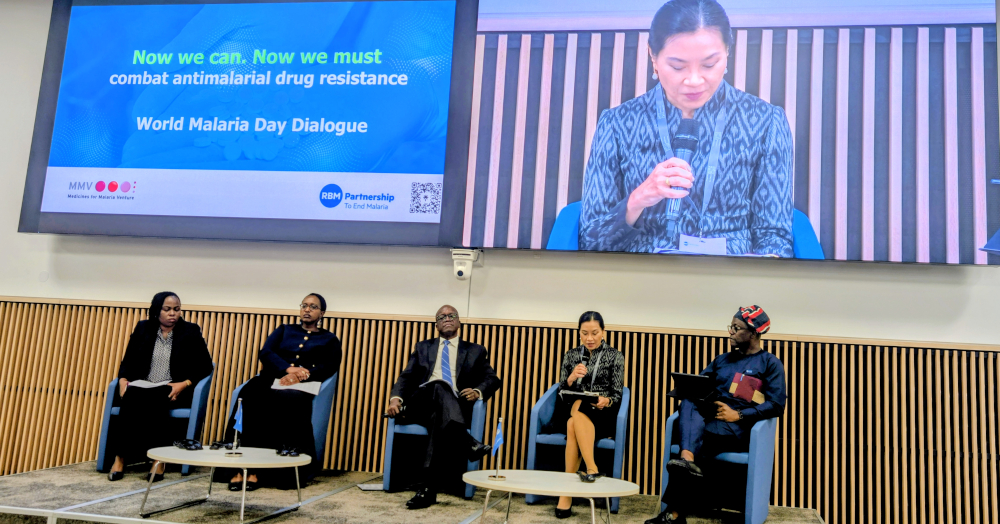
GENEVA – As global health leaders gathered in Geneva on Monday to commemorate this year’s World Malaria Day, an advocacy forum featuring high-level diplomats addressed the rising threat of antimalarial drug resistance.
Celebrations of medical progress and clinical discussions quickly gave way to discussion about a rapidly escalating malaria funding crisis, with more funding cuts are on the horizon.
Quantifying the human cost of this stagnation, Dr Michael Adekunle Charles, moderator of the event and CEO of the RBM Partnership to End Malaria, noted that Africa is fundamentally off track to meet elimination targets. “It is the equivalent of five jumbo jets crashing on a daily basis – in the 21st century in the year 2026,” he said.
The high-level event, co-hosted by the RBM Partnership to End Malaria and Medicines for Malaria Venture (MMV), balanced stark clinical realism with a pragmatic call to action.
Faced with retreating Western donors and mutating parasites, African diplomats demanded a decisive shift towards health sovereignty, local manufacturing, and integrated regional investments.
The rise in resistance coincides with the financial landscape for global health moving from temporary supply disruptions to deep, structural declines in official development assistance.
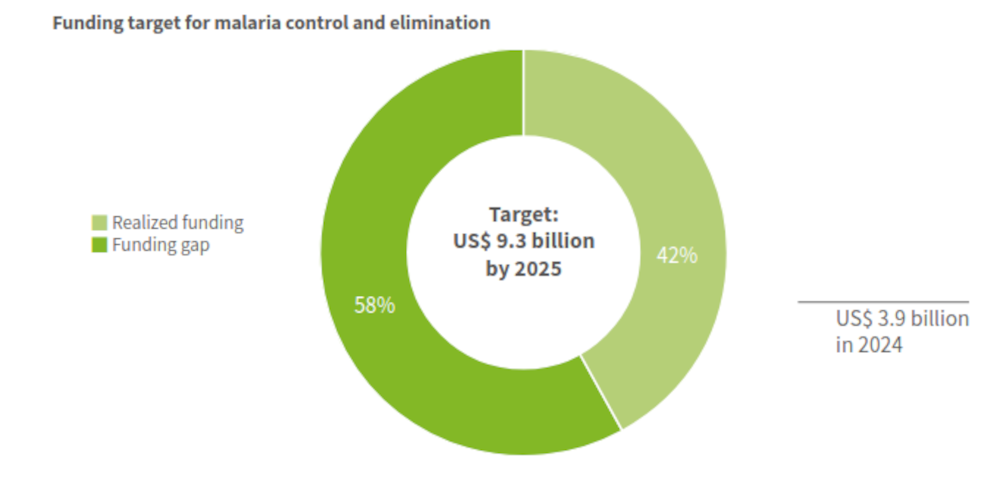
In 2024, total malaria funding reached $3.9 billion, a mere 42% of the $9.3 billion required annually to remain on track toward global elimination targets, directly compounding the malaria funding crisis.
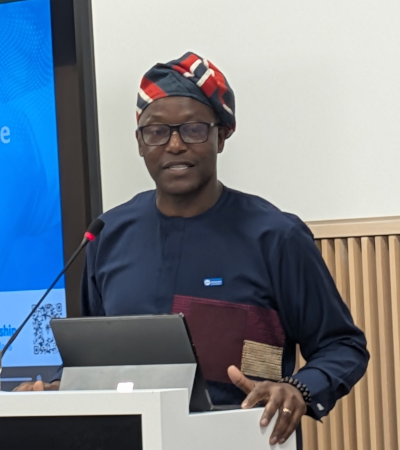
Acknowledging the shifting financial landscape, Charles noted that discussions of global health policy are obsolete without addressing the immediate need for domestic financial commitments.
“If you have a conversation without talking about financing right now, then you have missed the topic entirely,” said Charles in an interview with Health Policy Watch following the panel. “But it is about investments, not just funding from the West,” he added.
Before the financial realities fully set in, attendees paused to reflect on the visceral, human toll of the disease that continues to devastate rural communities, where the disease accounted for over 265 million clinical cases across Africa in 2024, according to the WHO World Malaria Report.
Sharing his own experience from the podium, Ambassador Arthur Kafeero, deputy permanent representative of Uganda to the United Nations, highlighted his visceral childhood memories of surviving severe malaria during the panel discussion.
Biological threats demand urgent containment
Despite remarkable pharmacological victories, the overarching malaria funding crisis threatens to severely undermine current front-line treatments, as mutating parasites rapidly spread across the African continent and delay parasite clearance.
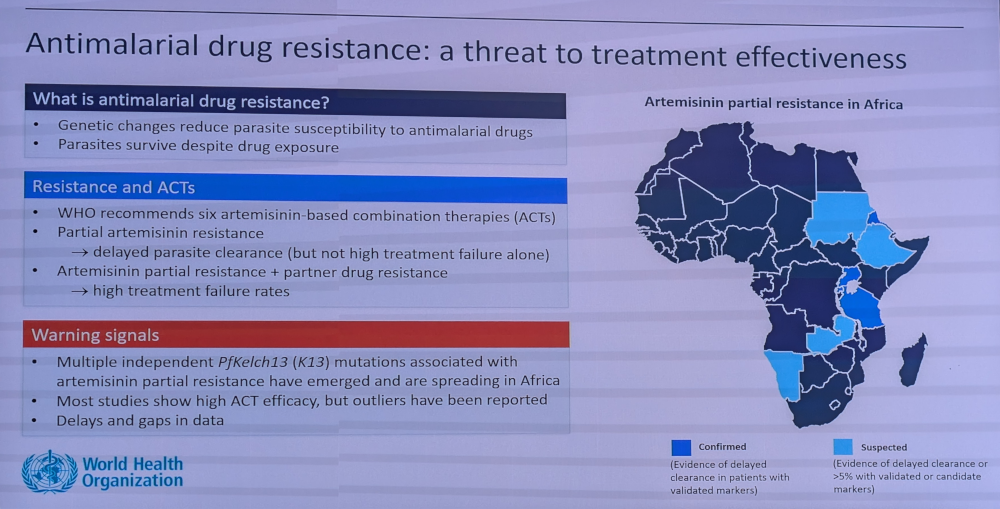
Charlotte Rasmussen, technical officer at the World Health Organization, took the stage early in the event to confirm that artemisinin partial resistance is steadily spreading across Africa. She clarified that while artemisinin-based combination therapies (ACTs) still remain highly effective across most of the continent provided the partner drug works, the undetected spread of resistant strains places a greater burden on these partner drugs.
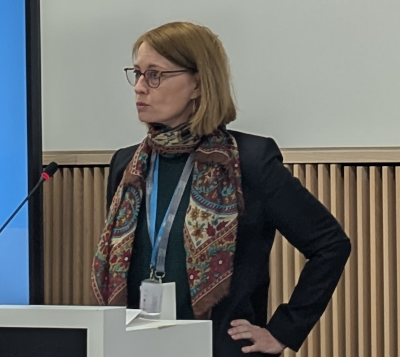
This exacerbates the broader malaria funding crisis through prolonged illnesses and repeated hospital visits for patients failing to clear the parasite. “Any delay in the response would increase the impact, so the cost depends on how early we detect it and how effectively we respond,” said Rasmussen during her briefing.
According to recent surveillance data, four African nations – Eritrea, Rwanda, Uganda, and the United Republic of Tanzania – have now officially confirmed artemisinin partial resistance.
Genetic variations in the parasite have also compromised the accuracy of standard rapid diagnostic tests, necessitating enhanced, resource-intensive genomic surveillance networks that are increasingly difficult to finance and maintain amid the malaria funding crisis.
If this genetic resistance is allowed to progress to full treatment failure, experts warn of a catastrophic surge in mortality that would entirely reverse decades of public health progress, potentially leading to more than 50 million treatment failures in the year 2060 alone. Mathematical modelling from Imperial College London suggests that delaying a transition to alternative therapies could rapidly overwhelm fragile medical infrastructure, costing affected nations well over $1 billion over the next 15 years.
“The current funding gap means that we’re probably going to detect it more slowly and that we’re not going to be able to respond as effectively,” said Rasmussen during her presentation to the forum attendees.
‘More budget cuts will come’
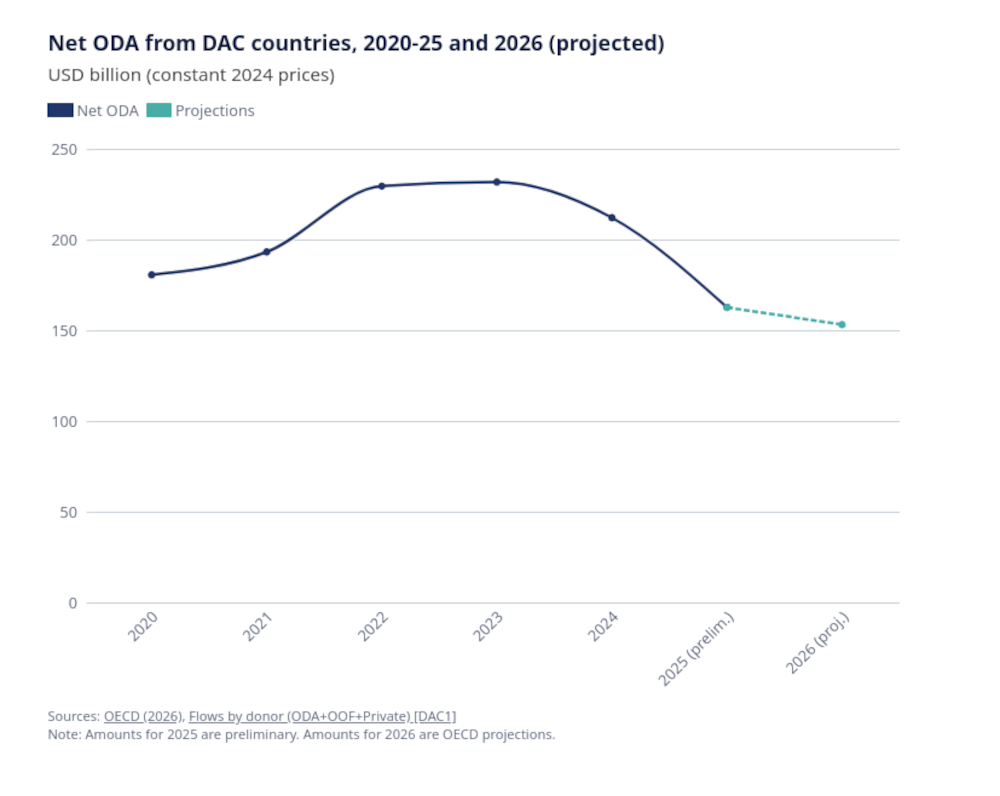
“Now the situation has changed, changes are huge, and more budget cuts will come,” said Erika Placella, representing the Swiss Development Cooperation, during a virtual address broadcast to the room.
Traditional donor nations, severely impacted by domestic fiscal pressures, are demanding a complete reset of the highly fragmented global health architecture in response to the macroeconomic malaria funding crisis. Representatives from major international financing bodies warned attendees that the era of relying heavily on external funding for basic disease control is definitively ending, forcing a necessary evolution in international diplomacy.
Western donors are urging more structural reform, arguing that supporting standalone, siloed disease programmes is no longer economically viable or sustainable in the current constrained fiscal environment.
They are also pushing for more integrated primary care investments that strengthen entire national health systems to weather the ongoing malaria funding crisis and deliver holistic maternal and child care.
“It’s now time to talk about functions and not about institutions,” said Placella during her virtual address to the forum.
Sovereign science counters donor retreats
This unprecedented reduction in external aid has catalysed a powerful movement towards African health sovereignty, fundamentally reshaping how the continent intends to manage the ongoing malaria funding crisis.
High-level political commitments, including the African Union roadmap and the Yaoundé Declaration, are establishing the framework for this transition, although leaders acknowledge that domestic financing must shift rapidly from aspiration to obligation to ensure a sustainable path forward independent of foreign aid.
New Chapter for Africa’s Malaria Response Through Accountability and Sovereignty
Regional health ministries are prioritizing the rapid expansion of localized production facilities to secure medical supply chains against future international funding shocks resulting from the malaria funding crisis. “We need to build or strengthen local and regional manufacturing capacity to improve supply security,” said Uganda’s UN representative Kafeero during the panel discussion.
To ensure next-generation antimalarials reach patients before current treatments completely fail, global health leaders are also stressing the critical need for streamlined regulatory pathways across the continent.
Rather than waiting for standard, lengthy approval processes, experts argue that African institutions must take the lead in bringing new drugs to market.
MMV CEO Martin Fitchet advocated for “coordinated and accelerated regulatory approval and review using the new AMA Africans medicine’s agency to usher and speed these agents along in the targeted geographies where they could have the most impact where we know this problem is the greatest”.
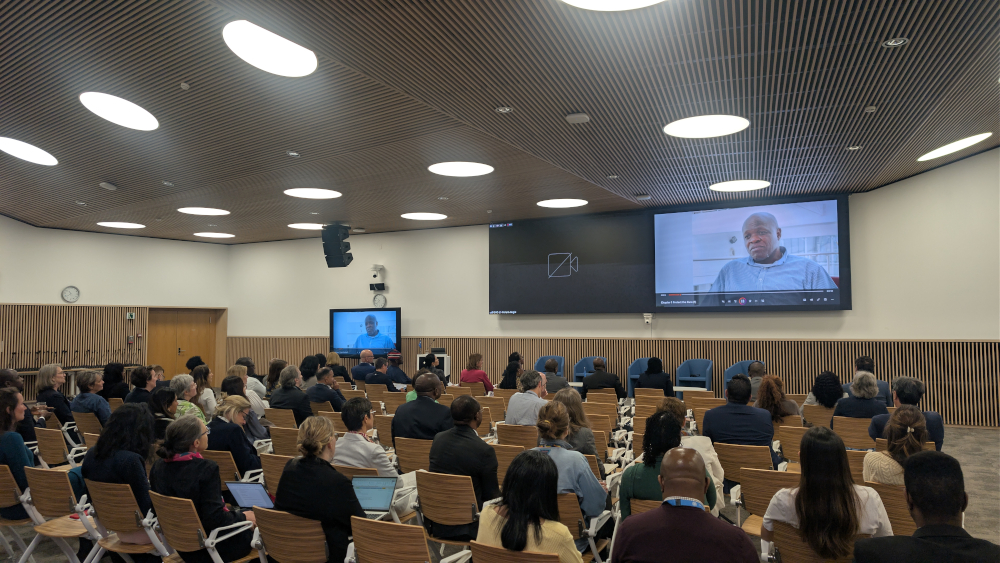
There was broad consensus that the push for health sovereignty must be underpinned by collaborative regional networks, such as those within the East African Community, to effectively track migrating parasites and align cross-border treatment protocols.
By pooling technical expertise and sharing genomic surveillance data in real-time, neighbouring countries can deploy joint responses before localized resistance outbreaks escalate into wider regional crises.
Ambassador Pratana Disyatat, deputy permanent representative of Thailand to the United Nations, discussed how her region is manage migrating parasites.
“We have targeted interventions for high-risk populations such as along the borders we have mobile malaria clinics. We have a cross border referral systems,” said Disyatat.
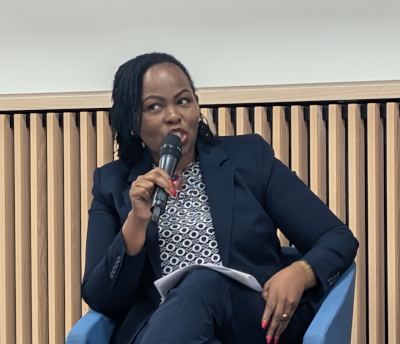
Several African nations are already taking aggressive domestic steps to update their treatment protocols in response to the rapidly changing biological and financial landscape.
Kenya, for instance, has recently updated its national malaria policy and developed a costed plan following its early implementation of multiple first-line therapies (MFT), ensuring its health systems can adapt swiftly to emerging drug resistance markers while training community health workers.
Similarly, Rwanda has officially adopted a national strategy to deploy MFT to actively slow the spread of resistance.
“We are trying to improve compliance to current treatments by strengthening community health programs and training the health workers,” said Kenya’s Ambassador Fancy Too.
Panelists encouraged public health officials to integrate informal medical providers and private medicine retailers into national surveillance systems. With a large proportion of patients seeking initial care outside public facilities, engaging this sector is essential to monitor drug efficacy, track supply chains, and protect highly vulnerable demographics.
Innovating amidst severe financial shortfalls
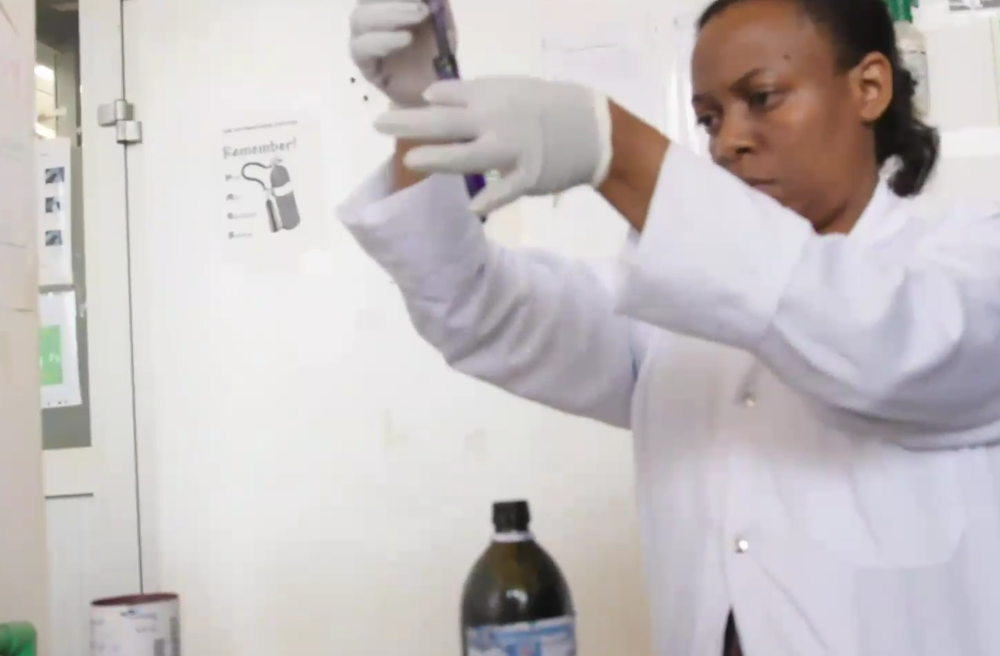
Funding the robust research required for future innovations remains a persistent challenge, demanding creative financing and a willingness to prioritize long-term pharmaceutical development alongside immediate clinical access.
Innovators are rapidly developing triple artemisinin-based combination therapies to actively protect existing partner drugs from the highly resilient parasite resistance currently spreading across the continent, alongside long-acting preventive injections to protect vulnerable populations from contracting the disease across an entire season.
Health leaders explicitly warn that halting this critical research pipeline to cover immediate budgetary shortfalls caused by the malaria funding crisis would result in catastrophic casualties in the near future.
To secure the fight against malaria, scaling up continental pharmaceutical industries relies heavily on empowering institutions like the African Medicines Agency to expedite regulatory approvals for these next-generation therapeutic drugs.
MMV’s Fitchet bluntly acknowledged the daunting reality of the situation to forum attendees. “I don’t know where the money is going to come from, but it’s imperative that we invest in the right programmatic roll out to protect the agents we have now and in the investment in the future,” he urged. “If we don’t invest in access now, people will die. If we don’t invest in R&D for now as well, many more will die tomorrow.”
Image Credits: Felix Sassmannshausen/HPW, WHO, WHO/Felix Sassmannshausen, OECD, RBM.
Combat the infodemic in health information and support health policy reporting from the global South. Our growing network of journalists in Africa, Asia, Geneva and New York connect the dots between regional realities and the big global debates, with evidence-based, open access news and analysis. To make a personal or organisational contribution click the donate button below.