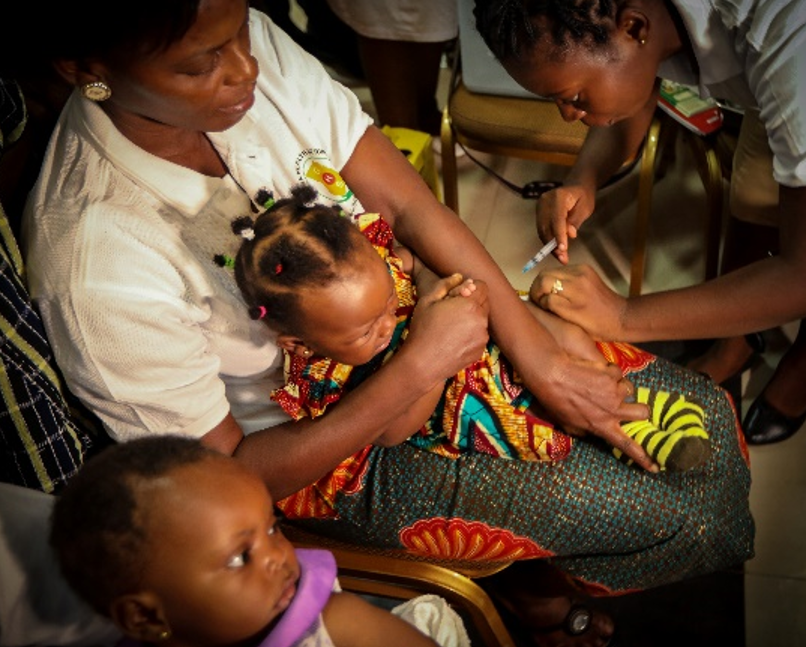
The African Union Commission, the African Leaders Malaria Alliance (ALMA) and the RBM Partnership to End Malaria each play a distinct role in Africa’s malaria response, from continental policy direction to member state leadership and accountability, to coordination of the broader global and regional partnership.
This World Malaria Day (25 April), we write together because the moment demands exactly that: global coordination, continental resolve, and sustained political leadership.
This joint reflection is more than symbolic. It signals a renewed commitment to stronger coordination, more effective delivery, and shared accountability for results.
This moment requires honesty. Yes, Africa has made remarkable progress against malaria, since 2000. More than 1.64 billion cases have been prevented and 12.4 million lives have been saved.
Yet the trend is moving in the wrong direction. In 2024 alone, Africa recorded 270.8 million malaria cases and nearly 600,000 deaths. Most devastating of all, 75% of those deaths were children under five.
The hard-won gains of the early 2000s have stalled, and with the continent is now off track to meet the targets of the African Union’s Catalytic Framework to End HIV, TB and Eliminate Malaria in Africa by 2030.
This is not a moment for incrementalism. It is a moment for renewed political commitment from member states.
An intensifying perfect storm
Africa’s malaria response is being tested by a convergence of pressures: shrinking external financing, climate change, insecticide and drug resistance, and the growing burden of humanitarian crises.
The global health financing landscape is shifting in ways that are structural, not cyclical. This is not a temporary disruption. The global health financing landscape is changing in ways that are structural, not cyclical. The era in which malaria control could rely heavily on external funding is coming to an end.
For Africa, this is an inflection point. The question before us is clear: do we allow these changes to deepen vulnerability, or do we use them to build something stronger and more durable? Do we continue to depend on systems designed and financed elsewhere, or do we seize this moment to build a continent that controls malaria on its own terms, financed increasingly by its own resources, driven by its own institutions, and supported, rather than led, by global partners?
This is the real challenge before us. And it is also the opportunity.
Accountability for the ‘Big Push against Malaria’
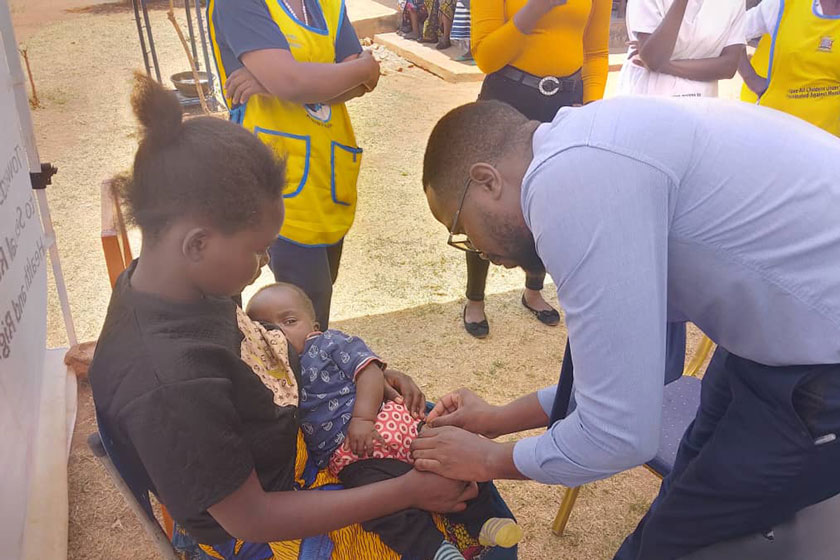
In response to the rising malaria cases and associated deaths, at last year’s AU Summit, African Heads of State and Government endorsed the African Union Roadmap to 2030 and Beyond. This roadmap is not simply another declaration. It is an acceleration plan designed to get Africa back on track to meet the targets of the AU Catalytic Framework.
At the same time, the RBM Partnership is stewarding the “Big Push against Malaria”, a new approach grounded in endemic country leadership, sustainable solutions, and health sovereignty. Its purpose is to align global, regional, and national actors behind country-defined priorities and nationally owned, optimised plans.
A key shift is how we hold ourselves accountable to those commitments, especially at the national level.
In February, Zambia became the first AU Member State to roll out a new monitoring and accountability approach aligned with this effort. Building on its existing malaria scorecard management tool, the country has enhanced how it tracks progress at national and subnational levels.
To reflect the interconnected factors that influence malaria outcomes, this new approach expands coordination across sectors, engaging Ministries beyond health, such as finance, agriculture, water and sanitation, and environment. By strengthening existing systems rather than creating parallel ones, Zambia is demonstrating how accountability can be embedded into existing governance systems and how political commitments made at higher levels can be followed through to actual delivery.
This is the kind of leadership Africa needs: practical, country-owned and measurable.
Accountability needs strong, sovereign foundations
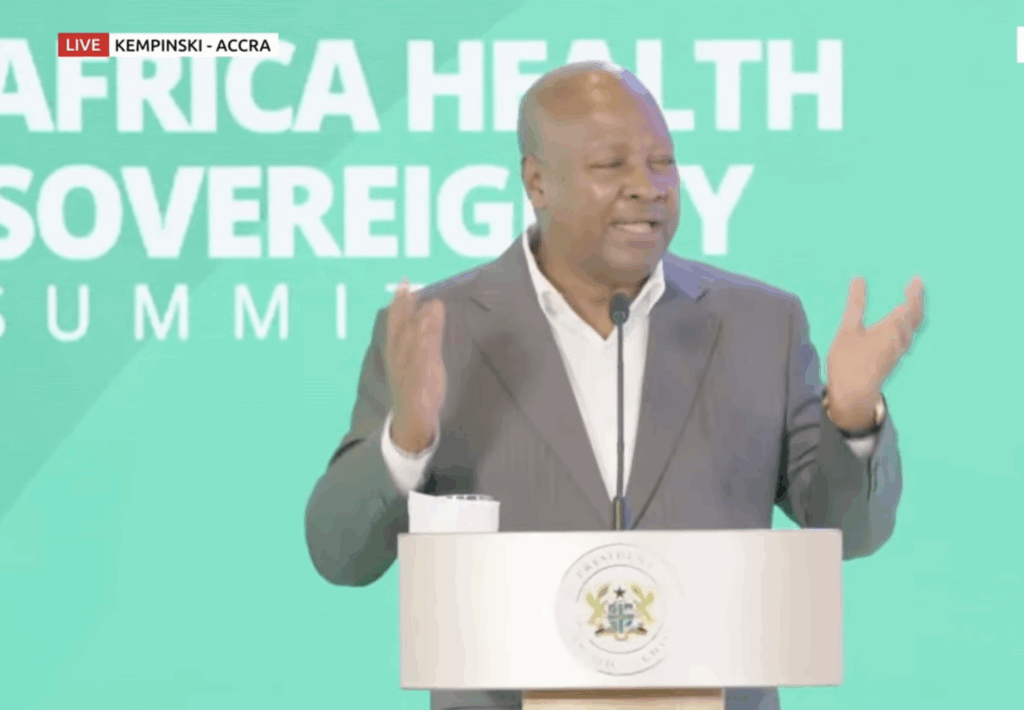
Accountability alone, however, will not carry this agenda. We need African health sovereignty.
First, domestic financing must shift from aspiration to obligation. More than two decades after the Abuja Declaration, fewer than five countries have met the target of allocating at least 15% of annual national budgets to health. Malaria financing must be seen as an investment in national security, economic productivity and human development.
Second, Africa must reduce its dependence on imported malaria commodities, diagnostics and medicines. A continent that bears the heaviest malaria burden should not remain dependent on external supply. We must manufacture in Africa, for Africa. The African Medicines Agency, the African Continental Free Trade Area, and Africa’s growing pharmaceutical capacity already provide a foundation. What is needed now is scale, speed and political backing.
Third, surveillance and data systems must be treated as sovereign infrastructure. No country can eliminate malaria if it does not know where transmission is happening, how patterns are changing or which interventions are working. Surveillance is not a technical add-on. It is the backbone of a credible elimination strategy. As the Africa CDC strengthens continental health intelligence systems, malaria must be central to that architecture.
Fourth, malaria elimination must also be fully integrated into primary health care. Universal health coverage and malaria elimination are not competing agendas. They reinforce one another. Every investment that strengthens local health systems, expands access to frontline services and improves continuity of care also strengthens the malaria response.
The commitments already exist through the African Union’s Catalytic Framework to End HIV, TB and Eliminate Malaria in Africa by 2030. What is now required is financing that matches ambition and political follow-through that turns declarations into delivery.
Malaria-free Africa is within reach
A malaria-free Africa is within reach. Countries such as Algeria, Cabo Verde and Egypt have demonstrated what sustained commitment, political leadership and coordinated action can deliver. The progress proves that elimination is possible on the continent.
But a malaria-free Africa is not a gift conferred by others, it is a condition created through sovereign investment, determined leadership, accountable systems and enduring institutions.
The tools exist. The science is stronger than ever. The institutions are in place. What Africa needs now is the discipline to hold itself accountable and the resolve to act with urgency.
Ending malaria is one of Africa’s greatest health opportunities. It is also one of the clearest proofs of what genuine self-determination in global health looks like.
This is the new chapter before us.
Africa must write it with accountability.
Africa must finance it with sovereignty.
And Africa must deliver it with leadership.
Ambassador Amma A Twum-Amoah is the African Union Commissioner for Health, Humanitarian Affairs and Social Development.
Dr Joy Phumaphi is executive secretary of the African Leaders Malaria Alliance (ALMA) and former Health Minister of Botswana.
Dr Michael Adekunle Charles is CEO of the RBM Partnership to End Malaria
Image Credits: Temwanani Mtonga/ Gavi, WHO/Fanjan Combrink.
Combat the infodemic in health information and support health policy reporting from the global South. Our growing network of journalists in Africa, Asia, Geneva and New York connect the dots between regional realities and the big global debates, with evidence-based, open access news and analysis. To make a personal or organisational contribution click the donate button below.